75件中 21~30件目を表示中 (日付順)
ポリシーブリーフ
The concept of 1.5-degree lifestyles involves changes in household consumption for achieving levels of per person carbon footprint compatible with the 1.5°C target of the Paris Agreement (IPCC, 2018). This requires, on average, emitting the equivalent of 2.5 tons of CO₂ per person per year by 2030, and 0.7 tons of CO₂ per person per year by 2050...
ポリシーレポート
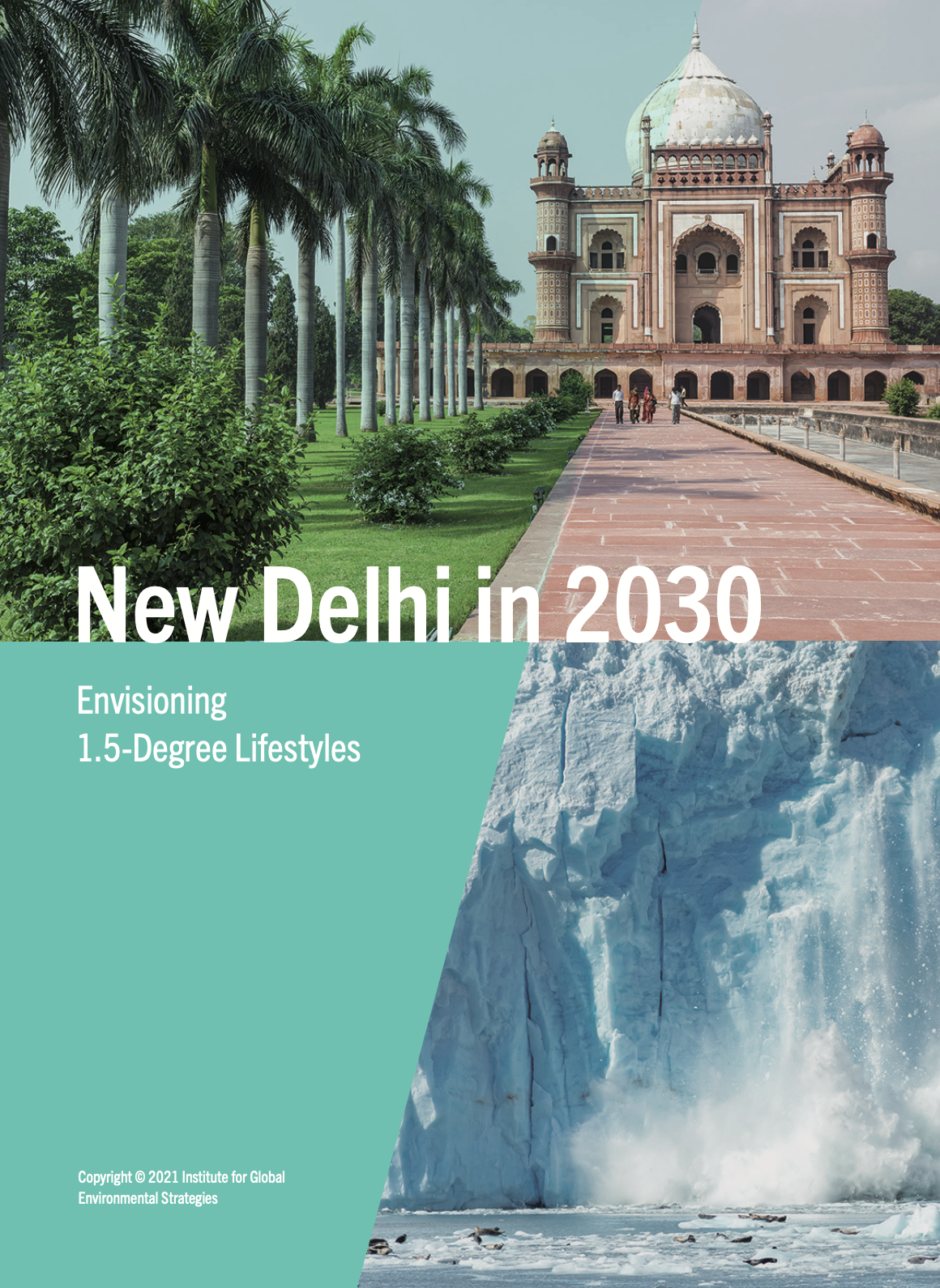
'New Delhi in 2030: Envisioning 1.5-Degree Lifestyles' shares findings of the ‘Envisioning Future Low-Carbon Lifestyles and Transitioning Instruments’ demonstration project, 2019-2021. This project was implemented under the United Nations’ One Planet network and funded by the Government of Japan through its contribution to the 10YFP Trust Fund...
キーワード:
ポリシーレポート
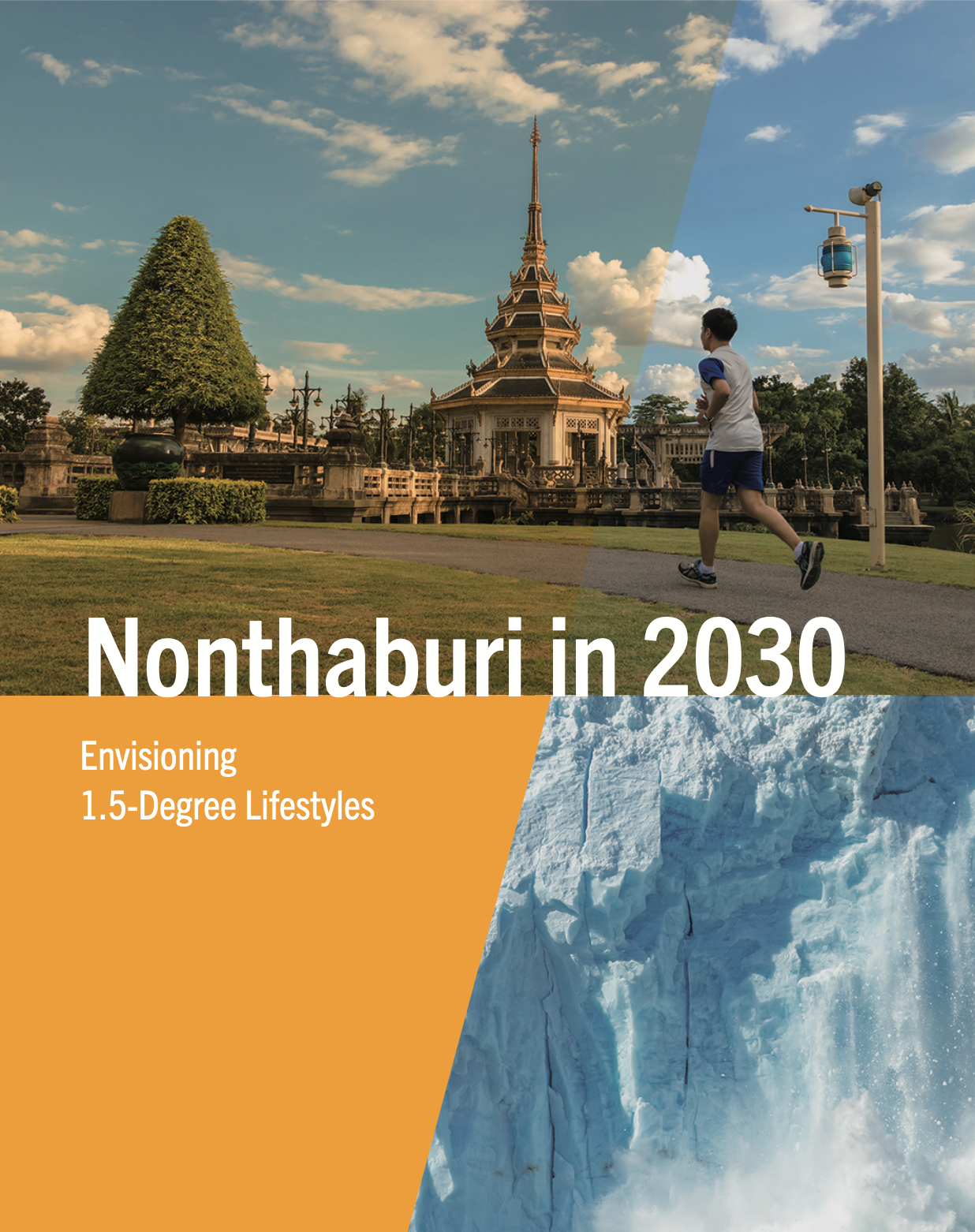
'Nonthaburi in 2030: Envisioning 1.5-Degree Lifestyles' shares findings of the ‘Envisioning Future Low-Carbon Lifestyles and Transitioning Instruments’ demonstration project, 2019-2021. This project was implemented under the United Nations’ One Planet network and funded by the Government of Japan through its contribution to the 10YFP Trust Fund...
キーワード:
ポリシーレポート
'Yokohama in 2030: Envisioning 1.5-Degree Lifestyles' shares findings of the ‘Envisioning Future Low-Carbon Lifestyles and Transitioning Instruments’ demonstration project, 2019-2021. This project was implemented under the United Nations’ One Planet network and funded by the Government of Japan through its contribution to the 10YFP Trust Fund...
キーワード:
広報物

The '1.5-Degree Lifestyles Magazine' shares stories about everyday sustainable living. It is part of the ‘Envisioning Future Low-Carbon Lifestyles and Transitioning Instruments’ project, 2019-2021. This demonstration project is implemented under the United Nations’ One Planet network and funded by the Government of Japan through its contribution to...
キーワード:
ポリシーレポート
'Kyoto in 2030: Envisioning 1.5-Degree Lifestyles' shares findings of the ‘Envisioning Future Low-Carbon Lifestyles and Transitioning Instruments’ demonstration project, 2019-2021. This project was implemented under the United Nations’ One Planet network and funded by the Government of Japan through its contribution to the 10YFP Trust Fund...
キーワード:
政策プロセスへの提言
COVID-19’s wide-ranging social, environmental, and economic impacts has led to calls for policymakers to restore planetary health. The Institute for Global Environmental Strategies’ (IGES) COVID-19 position paper 3.0 aims to help policymakers translate support for a healthy planet into actionable recommendations and ambitious policy directions...
政策プロセスへの提言
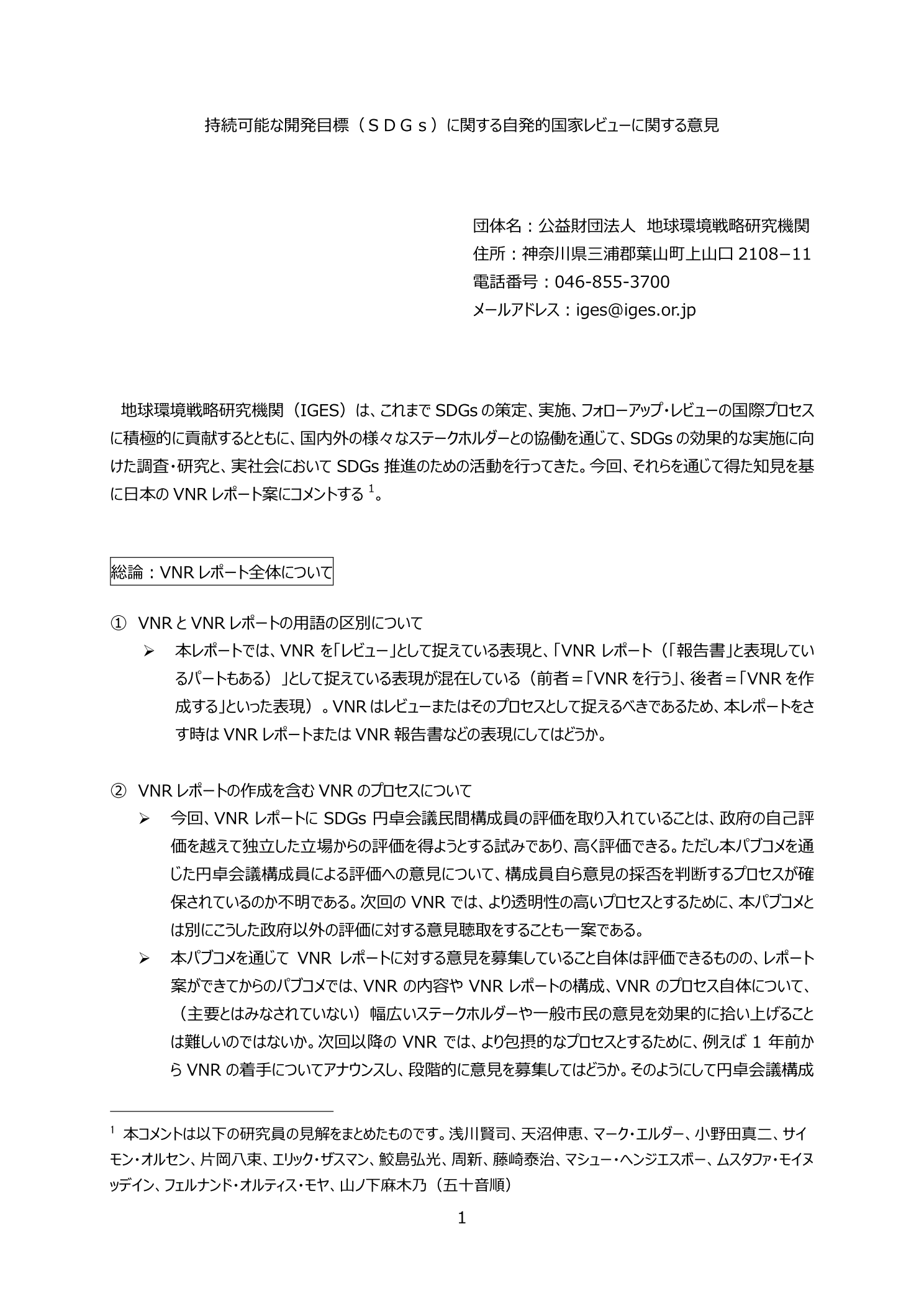
公益財団法人地球環境戦略研究機関( IGES )は、内閣官房と外務省が意見募集した「持続可能な開発目標( SDGs )に関する自発的国家レビュー( VNR )」に対して、パブリックコメントを提出しました。 SDGs の達成に向けた取り組みを着実なものとするためには、 SDGs の実施をモニタリングし、レビュー(評価)し、その結果に基づいて取り組みの改善を図るプロセスが非常に重要であるため、 SDGs を承認した国連加盟国は、自発的国家レビュー( Voluntary National Review : VNR )という形で進捗を報告することが求められています。 VNR は毎年 7 月に開催されている「国連持続可能な開発のためのハイレベル政治フォーラム( HLPF )」で発表が行われており...
査読付論文

環境経済・政策研究所収
先行研究をレビューし、テレワークの着手障害、継続障害に企業の業種が影響を与えているという仮説を設定した。第二に、コロナ禍における企業のテレワークに関するアンケート調査をもとに上記仮説の検証を行った。
キーワード:
委託報告書
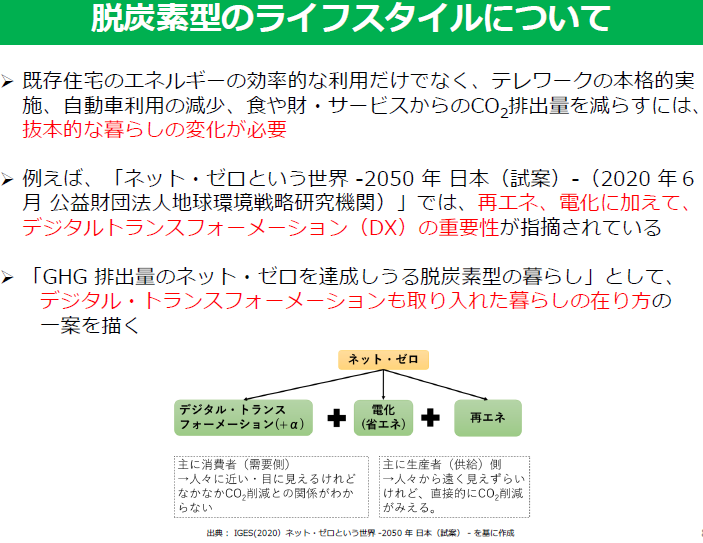
脱炭素社会の実現を見据えて、九都県市(埼玉県、千葉県、東京都、神奈川県、横浜市、川崎市、千葉市、さいたま市、相模原市をいう。以下同様。)の都市区域における脱炭素型のライフスタイルに関する調査を行う。具体的には、九都県市都市区域内における、温室効果ガス(GHG)排出量、エネルギー、交通、住宅などのデータを収集し、行政区域または業種などの枠組み毎に、2050 年頃までにGHG 排出量のネット・ゼロを達成しうる脱炭素型のライフスタイル(例:仕事、移動、余暇など)の在り方について整理する。調査の際には、国内外におけるネット・ゼロ社会に向けた戦略作成に関する国や地方政府の取組事例等を参考にする。また、本調査は昨今の新型コロナウィルス感染症拡大による、新たな社会との調和についても加味したものとする。
2件中 1~2件目を表示中 (日付順)
プロジェクト
Updated: 2024年10月
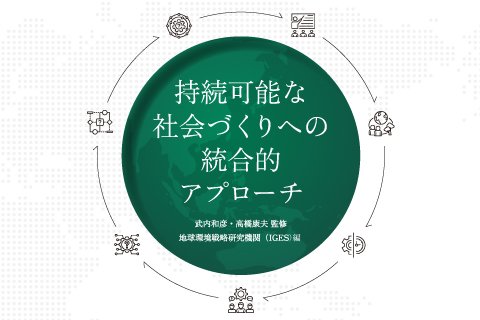
IGES書籍『持続可能な社会づくりへの統合的アプローチ』を出版
公益財団法人地球環境戦略研究機関(IGES)は 『持続可能な社会づくりへの統合的アプローチ』(武内和彦・高橋康夫監修、IGES編)を2024年7月30日に丸善出版より出版しました。 今日、世界は、深刻化する気候変動や生物多様性の損失といった地球規模の諸課題に直面しています。それらの問題には多様な主体が関わっており、問題が生じる要因とその影響は相互に密接に関連しています。そのため、問題解決には、単一の学問領域のみならず複数の学問領域の科学知の動員と社会との連携が不可欠です。 本書は、環境・社会...
プロジェクト