

346件中 41~50件目を表示中 (日付順)
レポートチャプター
Sixth ASEAN State of the Environment Report所収
• Climate change is already causing serious negative impacts in the region. In the future, extreme weather and sea level rise will cause mounting economic costs in terms of damage to health, infrastructure, and food security. • ASEAN Member States (AMS) have a variety of policies and responses to climate change adaptation and disaster risk...
ポリシーレポート
The ASEAN State of the Environment Report (SOER) is a regular flagship publication of the ASEAN Senior Officials on Environment (ASOEN) which is periodically published every 3-5 years. The SOERs present a comprehensive review of the state and trends of the environment, the pressures on it and the drivers of those pressures, and the national and...
プロシーディングス
Since the 26th Conference of Parties (COP26) of the United Nations Framework Convention on Climate Change (UNFCCC) in 2021, global society, including Asian countries, has entered the phase of how to implement a long-term transition roadmap to net-zero greenhouse gas emissions (GHGs). Given vital needs for the development in many Asian countries, a...
テクニカルレポート
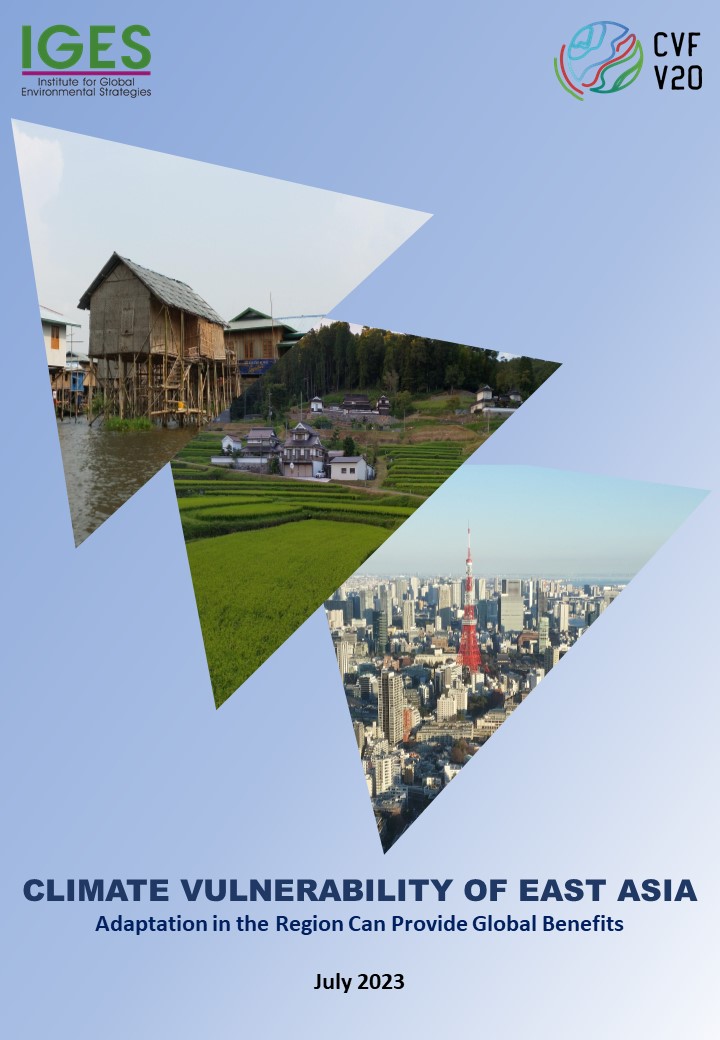
This derivative regional analysis covers the East Asian region consisting of China, Hong Kong, Japan, Macau, Mongolia, North Korea, South Korea, and Taiwan. While the Climate Vulnerability Monitor 3 rd Edition (Climate Vulnerable Forum & V20 2022) provides a global overview of climate vulnerability with national-level data, the emphasis of this...
プレゼンテーション
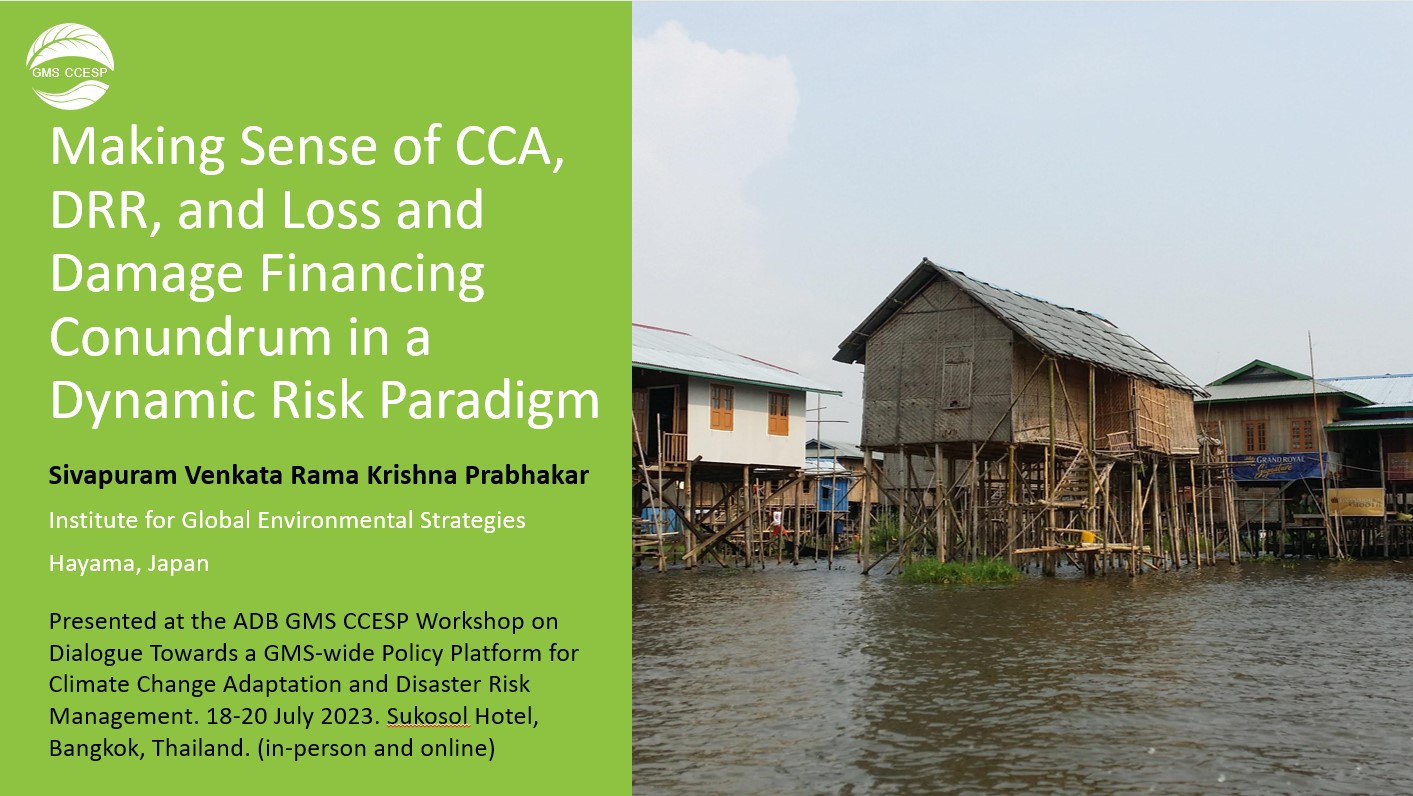
Dialogue Towards a GMS-wide Policy Platform for Climate Change Adaptation and Disaster Risk Management
We are experiencing a rapid increase in multi-dimensional risks. Risks that are highly interconnected across scales, sectors and regions. Unfortunately, the current risk financing regime is highly fragmented and lacks the perspective informed of multi-dimension risk reduction. Often, financing is targeting the ‘affected’ rather than ‘effector’...
キーワード:
プレゼンテーション
Making Cities Resilient 2030 Webinar
Avoiding disasters is an interesting and helpful idea to understand where we have made progress in risk reduction and where we can make further inroads. This presentation looks at the idea of avoiding disasters deeply and discusses the needed approaches to quantify and bring evidence to the front. It proposes that while evidence on avoiding...
ブックチャプター
The global trnsboundary climate risk report 2023所収
The expansion of industries and the manufacturing of critical industrial components across multiple territories has set the stage for the perpetuation of transboundary climate risks in global supply chains by taking local risks to a global scale.
プレゼンテーション
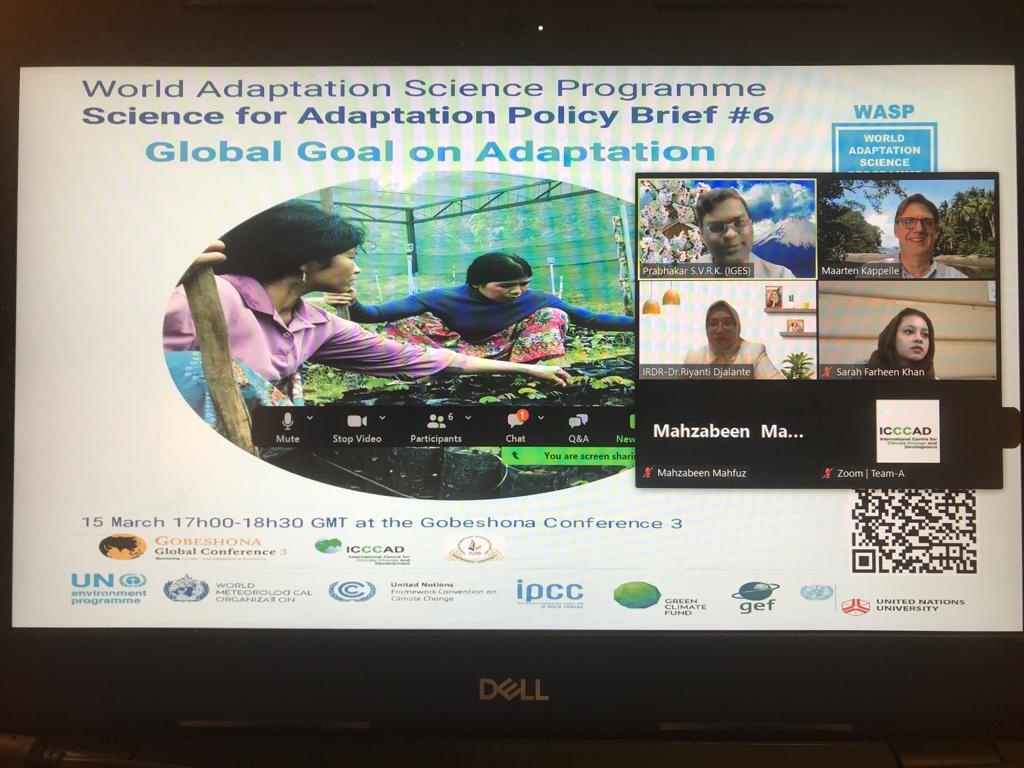
World Adaptation Science Program session on global goal on adaptation
When we say operationalization of something, we may tend to think that the goals are already set and that we are talking about how to implement goals. However, that is not the case here. We don’t have a well-defined global goal/s on adaptation yet. We only have a broad direction on GGA from the Paris Agreement and there is a growing work by...
キーワード:
委託報告書

This report provides an overview of the work carried out in collaboration with CVF/V20 on the development of regional derivative analysis for East Asia. The report narrates the workshop proceedings that were participated by various experts and practitioners discussing the findings of the CVM3. The presentations included an overview of the CVM...
プロシーディングス
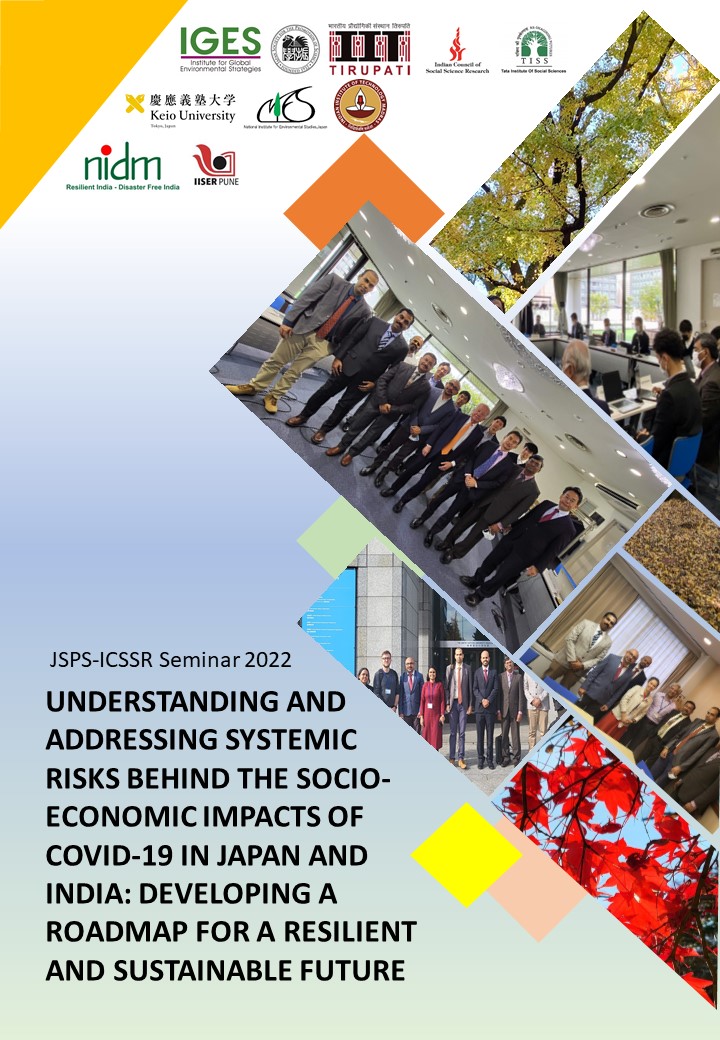
Understanding and Addressing Systemic Risks Behind the Socio-economic Impacts of COVID-19 in Japan and India: Developing a Roadmap for a Resilient and Sustainable Future
These proceedings pertain to the JSPS-ICSSR seminar entitled ‘Understanding and Addressing Systemic Risks Behind the Socio-economic Impacts of Novel Coronavirus Disease (COVID-19) in Japan and India: Developing a Roadmap for a Resilient and Sustainable Future’. Led by the Institute for Global Environmental Strategies (IGES) and the Indian Institute...
4件中 1~4件目を表示中 (日付順)
プロジェクト

Updated: 2025年3月
環境研究総合推進費1CN-2206(2022~2024年度) ASEANにおけるネットゼロかつレジリエントな社会実現に向けた国家の緩和適応統合長期ロードマップに関する研究
IGESでは、ASEAN気候ビジョン2050が示すネットゼロかつレジリエントなASEAN共同体の構築に向けて、ASEAN主要4カ国(インドネシア、フィリピン、タイ、ベトナム)を対象とする、緩和・適応を統合的に推進する長期ロードマップ策定に関する研究を実施しています(環境研究総合推進費1CN-2206:2022年4月~2025年3月)。 本研究事業の成果は、国家の長期戦略(LTS)、国が決定する貢献(NDC)、国家適応計画(NAP)、セクター別計画、開発計画等をはじめ...
プロジェクト
Updated: 2026年7月
ASEAN気候変動戦略行動計画 2025-2030プロジェクト
ASEAN気候変動戦略行動計画(The ASEAN Climate Change Strategic Action Plan:ACCSAP)2025-2030は、2030年までの、ASEANにおける気候変動ロードマップです。 IGESは、2021年にASEAN地域の気候変動の状況を、はじめて統合的にまとめたレポートととして「ASEAN State of Climate Change Report(ASCCR)」の作成に貢献しました。ACCSAPはこのASCCRで特定された優先順位の高い行動を...
プロジェクト
Updated: 2026年8月
気候変動下における日本とインド太平洋地域の安全保障の実現:経済安全保障との関連を中心に
気候安全保障に関する特集ページでは、気候安全保障に関連する研究成果と関連情報を発信しています。具体的には、国際動向の調査をはじめとして、エネルギー安全保障、食料安全保障、気候変動を一因とする人の移動、気候変動適応と安全保障、海洋安全保障など、多岐にわたるテーマを掘り下げ、多様な観点から議論していきます。
プロジェクト
Updated: 2023年8月
持続可能な開発に関するアジア太平洋フォーラム(APFSD)特集
「持続可能な開発に関するアジア太平洋フォーラム(APFSD)」は、国連アジア太平洋経済社会委員会(UNESCAP)が毎年開催する国際会議で、「持続可能な開発に関するハイレベル政治フォーラム(HLPF)」に向けて、アジア太平洋地域のSDGsの取り組み状況を把握することを目的としています。この特集ページではIGES研究員によるレポートや、その他APFSD関連の情報を掲載しています。