

346件中 31~40件目を表示中 (日付順)
査読付論文
Journal of Coastal Conservation所収
Globally, mangroves have been promoted to protect the coastal ecosystems and human settlements against weather vagaries including climate change impacts. However, climate change can also affect the mangrove ecosystems, affecting their ability to mitigate losses and damages caused by climate change. Recognizing the need to understand the impact of...
キーワード:
プレゼンテーション
Roundtable Meeting with Higher Level Functionaries for Strengthening the Climate Security Outcomes of Adaptation Planning
Climate security refers to the direct and indirect impacts of climate change on peace and security. It also refers to the impact of climate change on the political stability, human security, national security, etc. Climate change as a threat multiplier, can exacerbate the underlying traditional security issues and human security issues. Hence...
プレゼンテーション
APRU 2024 Multi-hazard Workshop: All-Hazards Approach (AHA) / Science and Technology for DRR IRIDeS, Tohoku University
In a globalized world, disaster impacts seldom remain within political boundaries but often spill over beyond national boundaries. These transboundary risks bring an added complexity to the way the multi-hazard risks impact society. Until now, most risk assessments are focused within one’s political boundaries, and that worked with limited...
キーワード:
プレゼンテーション
Gobeshona 4 Global Conference: Locally- Led Adaptation (LLA) and resilience
Adaptation effectiveness (AE) refers to how policies and actions reduce present and future climate risks. It is a systems concept that requires a unit of measurement, expression in value terms, a baseline, and a goal. Pre-requisite/enabling conditions such as equity, justice, and fairness are essential. Over the years, progress in adaptation has...
キーワード:
ブックチャプター
Disaster Risk and Management under Climate Change所収
Equity and fairness have a high significance in Disaster Risk Reduction and Climate Change Adaptation as it is evident that disasters affect communities differently depending on their developmental levels, and social status. Any public policy or intervention on disaster risk reduction deals with communities that are at different ‘starting lines’ in...
プレゼンテーション
COP28 side event ‘Dealing with Loss and Damage'
Just like adaptation, L&D has grown into an extensive science and policy area and things are very complicated even for the researchers to take a stock of it and to provide solutions. A large part of this confusion is coming from the disjoint between the global negotiations and at the national level. While at the ground level, most L&D solutions are...
プレゼンテーション
Scaling up Climate Action through Adaptation Effectiveness
Adaptation effectiveness cannot be achieved by focusing on one stage of the adaptation process, rather it needs an all-encompassing approach. The current undue attention on a few stages of adaptation planning needs to be reconsidered. Adaptation effectiveness is vital to inform both national and local level adaptation actions as well as progress...
ブックチャプター
Adaptation Gap Report 2023: Underfinanced. Underprepared. Inadequate investment and planning on climate adaptation leaves world exposed所収
▶ In the United Nations Framework Convention on Climate Change (UNFCCC), loss and damage has emerged as a third key pillar of climate policy, alongside mitigation and adaptation, to address ever-increasing climate impacts in developing countries that are particularly vulnerable to the adverse effect of climate change. ▶ Losses and damages arise...
ポリシーブリーフ
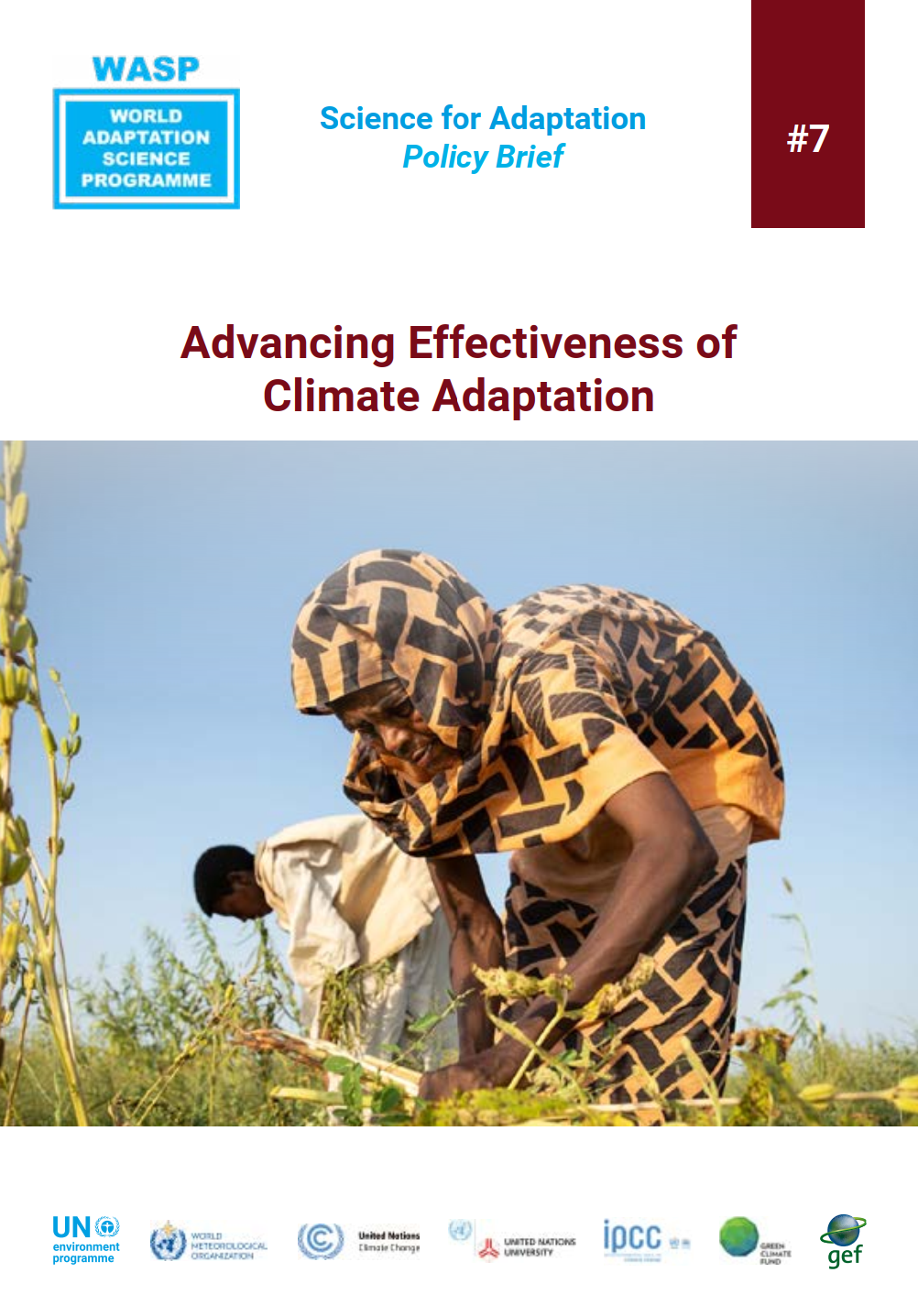
Evaluating the effectiveness of adaptation policies and actions is key to understanding whether they have reduced climate risks and achieved other intended outcomes. The goals are to ensure that adaptation is adequate to address climate risks, do not foster negative unintended consequences over space and time, and inform adaptation financing. The...
プレゼンテーション
Session #464 Effective adaptation: What is it and how can we measure and manage it?
Evaluating the effectiveness of adaptation policies and actions is key to understanding whether they have reduced climate risks and achieved other intended outcomes. The goals are to ensure that adaptation is adequate to address climate risks, do not foster negative unintended consequences over space and time, and inform adaptation financing...
4件中 1~4件目を表示中 (日付順)
プロジェクト

Updated: 2025年3月
環境研究総合推進費1CN-2206(2022~2024年度) ASEANにおけるネットゼロかつレジリエントな社会実現に向けた国家の緩和適応統合長期ロードマップに関する研究
IGESでは、ASEAN気候ビジョン2050が示すネットゼロかつレジリエントなASEAN共同体の構築に向けて、ASEAN主要4カ国(インドネシア、フィリピン、タイ、ベトナム)を対象とする、緩和・適応を統合的に推進する長期ロードマップ策定に関する研究を実施しています(環境研究総合推進費1CN-2206:2022年4月~2025年3月)。 本研究事業の成果は、国家の長期戦略(LTS)、国が決定する貢献(NDC)、国家適応計画(NAP)、セクター別計画、開発計画等をはじめ...
プロジェクト
Updated: 2026年7月
ASEAN気候変動戦略行動計画 2025-2030プロジェクト
ASEAN気候変動戦略行動計画(The ASEAN Climate Change Strategic Action Plan:ACCSAP)2025-2030は、2030年までの、ASEANにおける気候変動ロードマップです。 IGESは、2021年にASEAN地域の気候変動の状況を、はじめて統合的にまとめたレポートととして「ASEAN State of Climate Change Report(ASCCR)」の作成に貢献しました。ACCSAPはこのASCCRで特定された優先順位の高い行動を...
プロジェクト

Updated: 2026年8月
気候変動下における日本とインド太平洋地域の安全保障の実現:経済安全保障との関連を中心に
気候安全保障に関する特集ページでは、気候安全保障に関連する研究成果と関連情報を発信しています。具体的には、国際動向の調査をはじめとして、エネルギー安全保障、食料安全保障、気候変動を一因とする人の移動、気候変動適応と安全保障、海洋安全保障など、多岐にわたるテーマを掘り下げ、多様な観点から議論していきます。
プロジェクト
Updated: 2023年8月
持続可能な開発に関するアジア太平洋フォーラム(APFSD)特集
「持続可能な開発に関するアジア太平洋フォーラム(APFSD)」は、国連アジア太平洋経済社会委員会(UNESCAP)が毎年開催する国際会議で、「持続可能な開発に関するハイレベル政治フォーラム(HLPF)」に向けて、アジア太平洋地域のSDGsの取り組み状況を把握することを目的としています。この特集ページではIGES研究員によるレポートや、その他APFSD関連の情報を掲載しています。