Following the 2015 Paris Agreement, Indonesia joined a growing list of countries pledging to mitigate its greenhouse gases (GHGs) in a nationally determined contribution (NDC). Whether Indonesia will be able to achieve its proposed NDC reduction target of 29 percent (against a 2020 baseline) by 2030 will hinge on how effectively governments at...
9180件中 3751~3760件 (日付順)
The Final Strategy Formulation Workshop for the Development of Waste Management Strategy and Action Plan of Phnom Penh
The Final Strategy Formulation Workshop for the Development of Waste Management Strategy and Action Plan of Phnom Penh was jointly organized on 9 January 2018 by Phnom Penh Capital Hall (PPCH), IGES-CCET, and Nexus for Development, marking an important milestone for the development of city’s waste management policy. The workshop was the last step...
The Final Strategy Formulation Workshop for the Development of Waste Management Strategy and Action Plan of Phnom Penh
The Final Strategy Formulation Workshop for the Development of Waste Management Strategy and Action Plan of Phnom Penh was jointly organized on 9 January 2018 by Phnom Penh Capital Hall (PPCH), IGES-CCET, and Nexus for Development, marking an important milestone for the development of city’s waste management policy. The workshop was the last step...
The Final Strategy Formulation Workshop for the Development of Waste Management Strategy and Action Plan of Phnom Penh
The Final Strategy Formulation Workshop for the Development of Waste Management Strategy and Action Plan of Phnom Penh was jointly organized on 9 January 2018 by Phnom Penh Capital Hall (PPCH), IGES-CCET, and Nexus for Development, marking an important milestone for the development of city’s waste management policy. The workshop was the last step...
As a part of its wider outreach efforts to raise visibility of IETC and CCET as a collaborative project between UNEP and IGES, CCET has launched a website to communicate the organization, its mandate and operations, as well as to disseminate the knowledge products developed through its operations, with an expectation that it would evolve into an...
廃棄物資源循環学会誌
編者:
2001 年に OECD が『Extended Producer Responsibility:A Guidance Manual for Governments』(以下,ガイダンスマニュアル) を発表して 15 年が経過した。その間,拡大生産者責任 (EPR) 制度の数は大きく増加しており,2013 年の OECD の調査では,確認できた384 の EPR 政策のうち 70 % 以上が 2001 年以降に導入されたと報告されている。384 の政策の約 90 % は先進国での導入 (州単位を含む) であるが,近年は中所得国にも広がってきている。この間,EPR に係る研究・経験が蓄積される一方,新たな課題も浮上してきた。 EU のプロジェクトにおいても EPR 政策がレビューされ...
Energy所収
Based on a household energy use survey, this paper explores the technical and economic potential of residential energy savings in a Chinese city, Xiamen. The survey adopted a similar questionnaire used by the U.S. EIA's Residential Energy Consumption Survey (RECS), covering the end-uses of cooking, water heating, plug-in appliances, lighting and...
廃棄物資源循環学会誌所収
特集 拡大生産者責任の国際動向 ―ガイダンスマニュアル改訂版を中心としての出版にあたっての背景説明など。
廃棄物資源循環学会誌所収
2001年に,OECD (経済開発協力機構) が拡大生産者責任 (EPR) 政策の政府向けガイダンスマニュアルを発表して以来,EPRの原則に基づいた使用済み製品の引き取り・リサイクル政策は,導入国数,政策の対象とする製品ともに拡充してきている。不適切な廃棄物管理やインフォーマルなリサイクル活動による環境負荷や社会問題に直面してきた途上国では,EPR政策の導入がある種の希望をもってみられてきた。本論文では,アジア新興国・途上国でのEPR政策の展開を紹介し,途上国でEPR政策を導入する上での課題を整理する。その上で,OECD政策ガイダンス改訂版はこれらの途上国の抱える課題にどう応えているかを論じる。最後に,途上国のリサイクル政策へのEPR適用の経験から何が学べるのかについて,論じる。
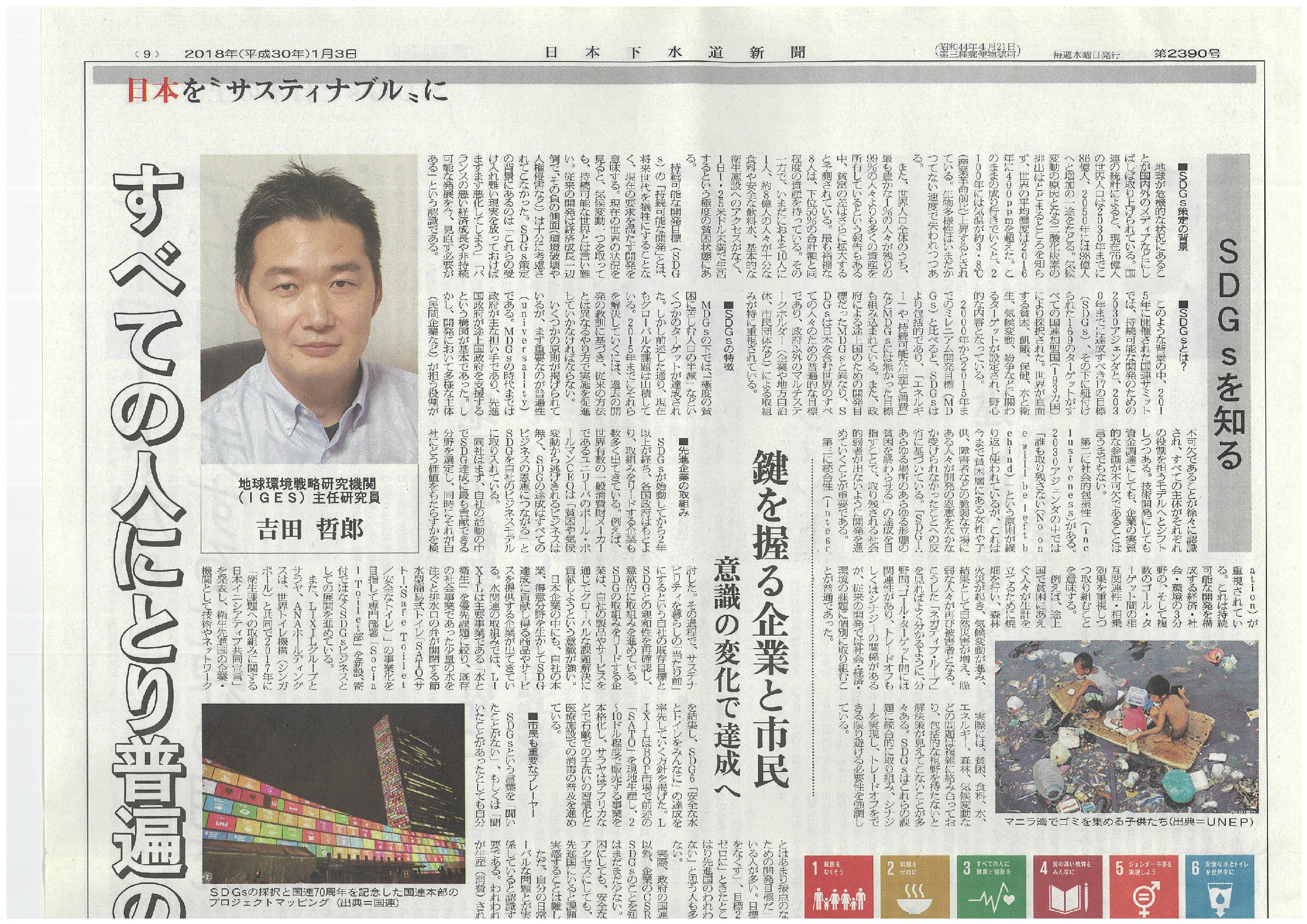
地球が危機的な状況にあることが国内外のメディアなどにしばしば取り上げられている。国連の統計によると現在76億人の世界人口は、2030年までに86億人、2050年に98億人と増加の一途を辿り、気候変動の原因となる二酸化炭素の排出は留まるところを知らず、世界平均濃度は2016年に400ppmを超え、このままの成り行きでいくと気温が2100年には約3.8℃(産業革命前比)上昇するとされ、生物多様性もいまだかつてない速度で失われている。また世界で最も豊かな1%の人々が、地球上の残りの99%の人々よりも多くの資産を所有しているという報告もあり、貧富の差は更に拡大すると予測されている。世界で最も裕福な8人が、世界人口全体の下位50%を合わせた額と同程度の資産がある一方で、未だに世界人口の約10人に1人...