

119件中 61~70件目を表示中 (日付順)
ブリーフィングノート
The 2021 United Nations Environment Assembly (UNEA 5.1) took place on February 22-23 2021. As the United Nations Environment Programme's (UNEP) universal-membership governing body, UNEA plays an important role in international environmental governance. Held biennially, UNEA brings together the UN’s 193 member states and other stakeholders to...
ポリシーブリーフ
Key Messages A reason COVID-19 has had such far-reaching impacts is it stems from multiple interconnected risks. The difficulties that policymakers face in managing related risks not only deepen vulnerabilities to COVID-19 but other planetary crises. Explicitly recognizing and acting to achieve the co-benefits of integrated air pollution, climate...
研修用教材
With more than half the world’s population classified as urban, whether the world achieves global climate change goals increasingly rests on cities. Yet, many policymakers at the city level place clean air and public health before mitigating climate change. Fortunately, since emissions contributing to air pollution and climate change often come...
委託報告書

令和元年6月、我が国はG20の議長国として、大阪府大阪市にてG20大阪サミットを、長野県軽井沢町にてG20持続可能な成長のためのエネルギー転換と地球環境に関する関係閣僚会合を開催した。これらの会合では、世界の持続可能な成長に向けたエネルギー転換と地球環境などについて議論が行われた。特に後者は、G20史上初めて環境大臣が一堂に会す意義深い機会となった。令和元年12月からは、サウジアラビアがG20議長国となった。サウジアラビアは日本がG20に導入した環境に関するワークストリームを引き継ぐ形で、9月16日に環境大臣会合を開催した。また、11月23日には気候変動やその他の環境課題を含む幅広い課題を議論したリヤド・サミットが開催された。 本業務では、令和2年度におけるG20...
ディスカッションペーパー
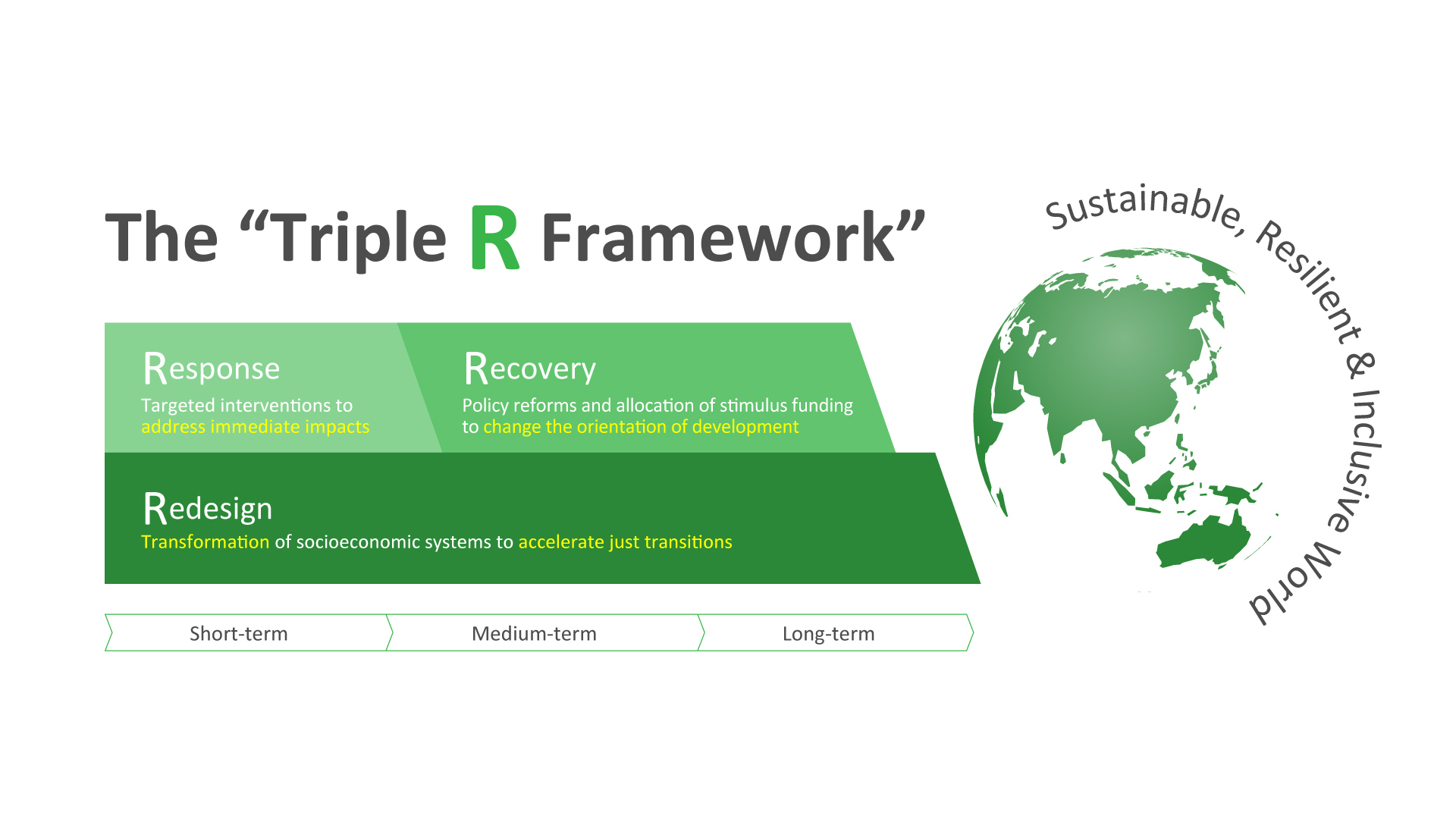
Many decision makers are contemplating whether policies and investments made in the wake of COVID-19 are inclusive, resilient and sustainable enough to bring about a course change in development . T his paper outlines the design features of framework that helps policymakers steer a more inclusive, resilient and sustainable course. What the...
政策プロセスへの提言
新型コロナウイルス感染症(以下、COVID-19)は、地域における健康上の危機から、世界においてすべてを覆い尽くす世界的大流行(パンデミック)・経済災害へと大きく変化した。COVID-19の感染は急速に広がり、世界のほぼすべての地域の人々の日常生活が大きな影響を受けている。実際、2020年10月には、世界で5,000万人以上が公式にウイルス陽性と診断され、その結果150万人以上が死亡し、北半球が冬を迎え、屋内での時間が増えるにつれ、これらの数字は急速に増大しつある。このような事態は、地方から国、国際に至るあらゆるレベルの公的主体が、現状への対策および将来への復興プログラムに関して、分野と国境を越えて密接に調整し協力する必要性を明確にしている。 IGESでは、上記のような認識に基づき...
政策プロセスへの提言
COVID-19 has morphed from a dangerous regional health threat to an all-consuming global pandemic and economic disaster. COVID-19’s rapid spread has had far-reaching implications on the everyday lives of people in nearly all corners of the world. In fact, as of October 2020, at least 50 million people globally have tested positive for the virus, and...
ポリシーブリーフ
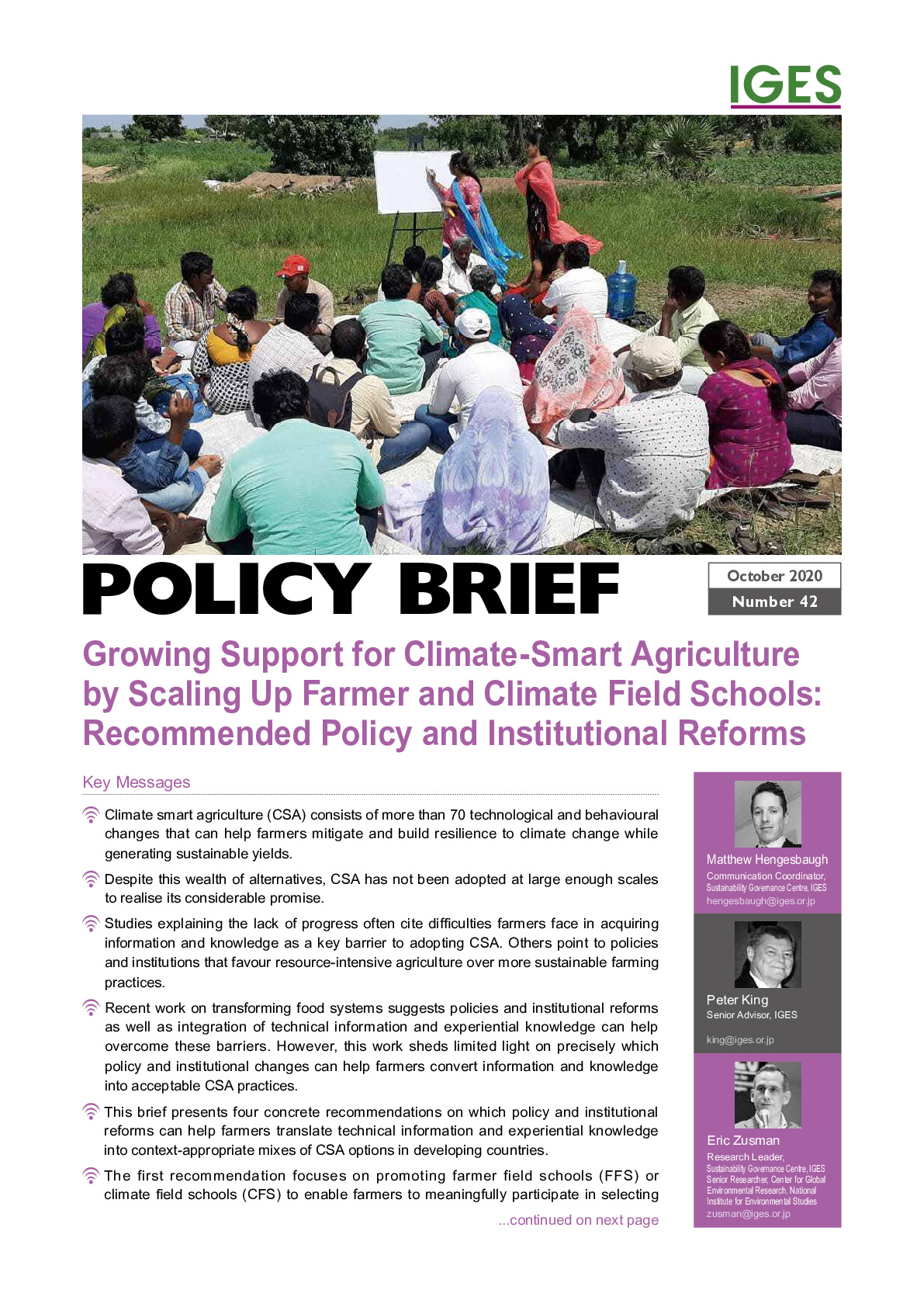
Climate smart agriculture (CSA) consists of more than 70 technological and behavioural changes that can help farmers mitigate and build resilience to climate change while generating sustainable yields. Despite this wealth of alternatives, CSA has not been adopted at large enough scales to realise its considerable promise. Studies explaining the...
プレゼンテーション

Asian Productivity Organization (APO) Productivity Talk
While COVID-19 has caused tremendous socioeconomic loss and suffering, it has also opened opportunities for an environmentally sustainable future. This APO Talk with Institute for Global Environmental Strategies (IGES) Research Leader Dr. Eric Zusman, Programme Director Andre Mader, and Communications Coordinator Matthew Hengesbaugh suggests that...
ディスカッションペーパー
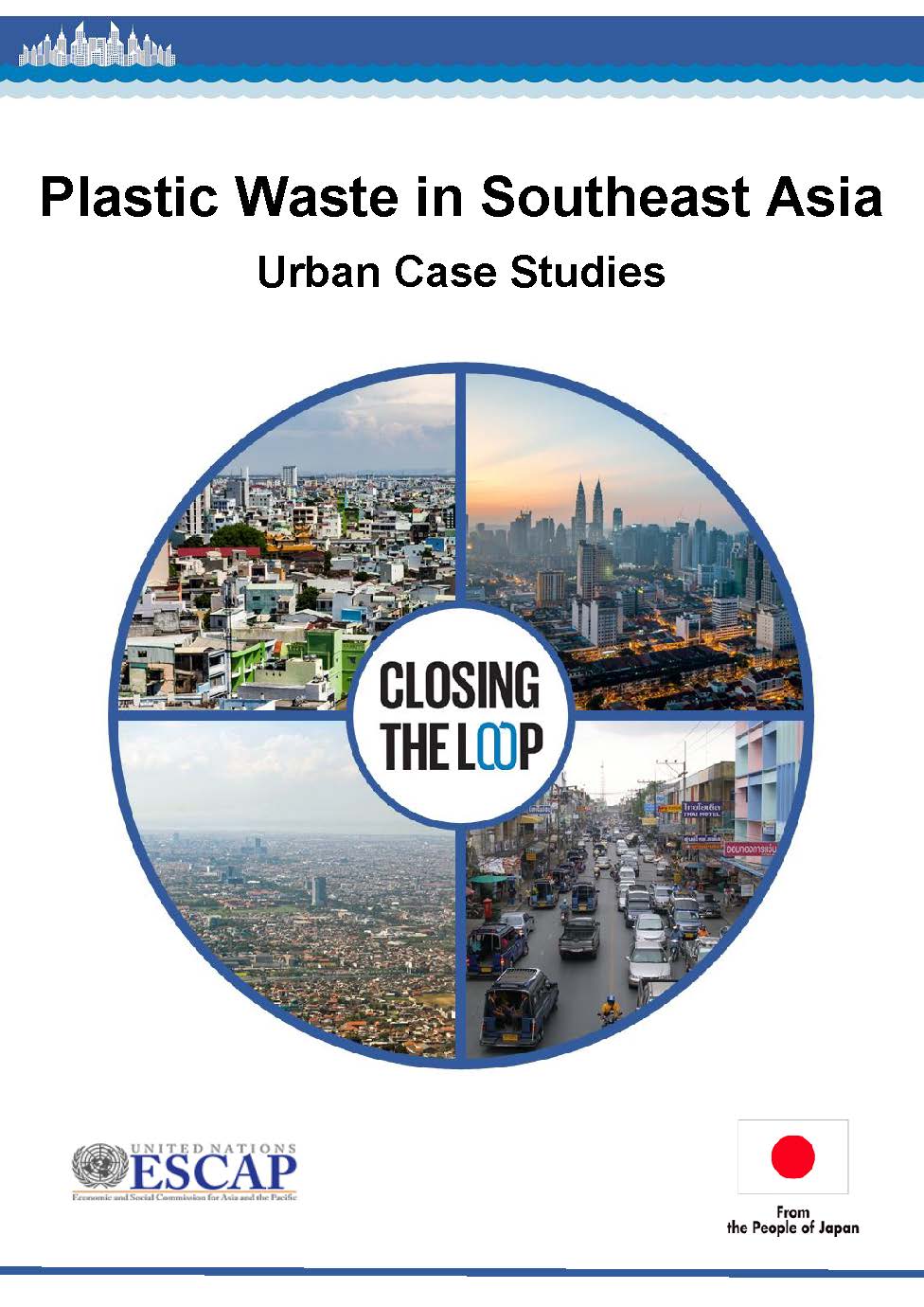
Unmanaged plastic waste poses a major socio-economic, environmental and health risk to urban and marine environments in the Asia Pacific. Each year South-east Asian countries produce 11.7 million metric tonnes of plastic waste, of which over 60% is derived from urban areas. Therefore a focus on effective city governance will be vital to tackle the...
1件中 1~1件目を表示中 (日付順)
プロジェクト
Updated: 2023年8月
持続可能な開発に関するアジア太平洋フォーラム(APFSD)特集
「持続可能な開発に関するアジア太平洋フォーラム(APFSD)」は、国連アジア太平洋経済社会委員会(UNESCAP)が毎年開催する国際会議で、「持続可能な開発に関するハイレベル政治フォーラム(HLPF)」に向けて、アジア太平洋地域のSDGsの取り組み状況を把握することを目的としています。この特集ページではIGES研究員によるレポートや、その他APFSD関連の情報を掲載しています。