Identifying effective development and rapid decarbonization pathways for developing countries are essential to realize sustainable and equitable future global societies. Increasingly cheaper solar photovoltaics (PV) on rooftop is one of the keys to build such urban power systems, integrated with battery and/or electric vehicles (EVs). Here, we...
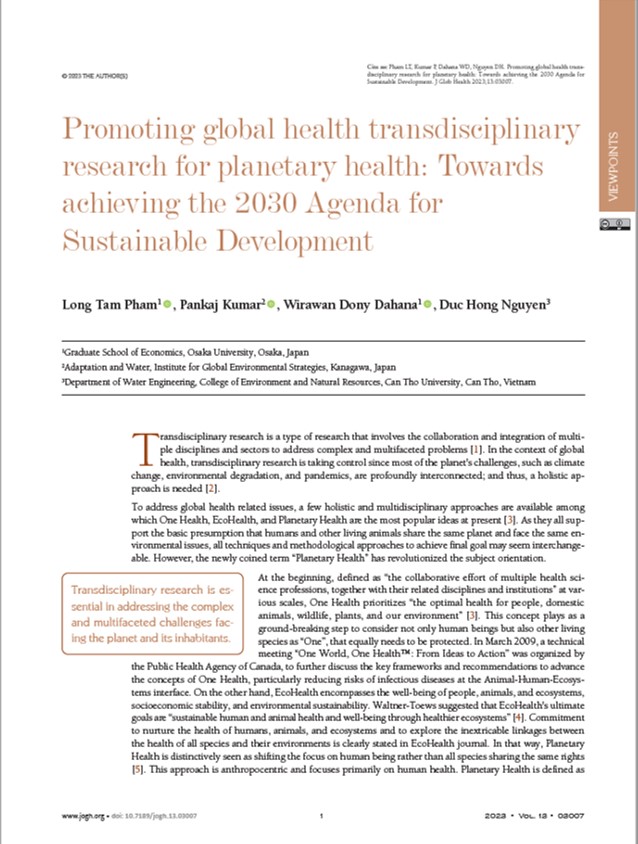
Transdisciplinary research is essential in addressing the complex and multifaceted challenges facing the planet and its inhabitants. For us, the issue is not which of the three holistic approaches – One Health, EcoHealth, or Planetary Health – is more applicable to sustainable development. Instead, the debate is whether the ideas and associated...
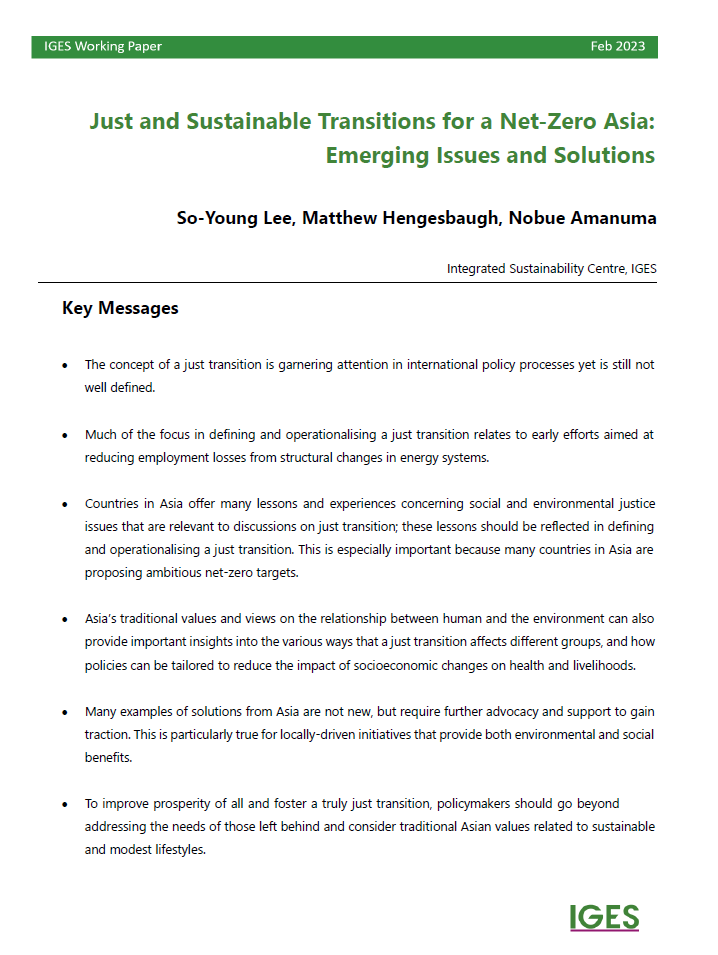
Climate-driven injustice is a significant economic and social concern associated with transition towards net-zero future, and that requires global and domestic environmental policies to be more sustainable and socially just. To help policymakers envision what policies might be deployed to make a net-zero transition just, this paper reviews concepts...
The participation and engagement of non-state actors (NSAs), including civil society, businesses, local governments, academia, and NGOs, plays an essential role in the implementation of the Global Stocktake (GST). NSAs can join the GST by making submissions and attending its technical dialogues. Their active participation fills various gaps in...
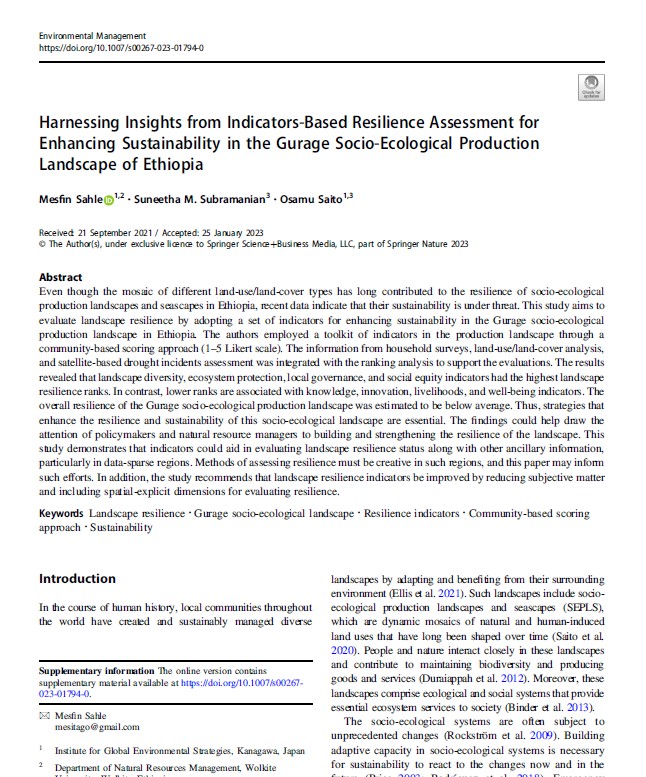
Even though the mosaic of different land-use/land-cover types has long contributed to the resilience of socio-ecological production landscapes and seascapes in Ethiopia, recent data indicate that their sustainability is under threat. This study aims to evaluate landscape resilience by adopting a set of indicators for enhancing sustainability in the...
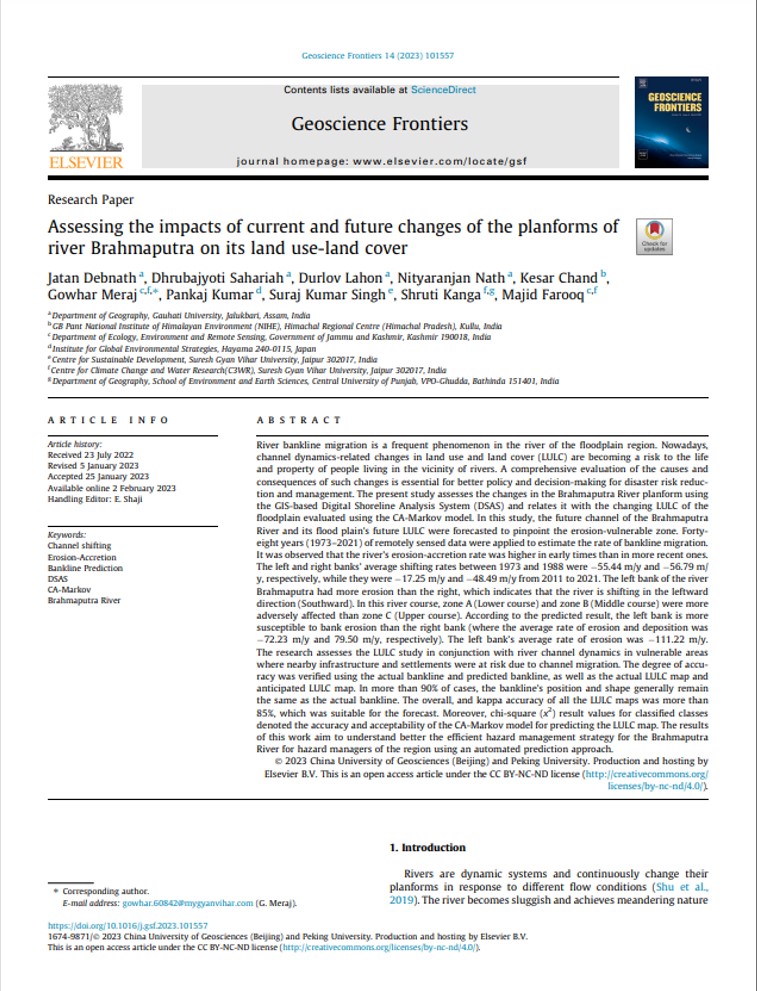
River bankline migration is a frequent phenomenon in the river of the floodplain region. Nowadays, channel dynamics-related changes in land use and land cover (LULC) are becoming a risk to the life and property of people living in the vicinity of rivers. A comprehensive evaluation of the causes and consequences of such changes is essential for...
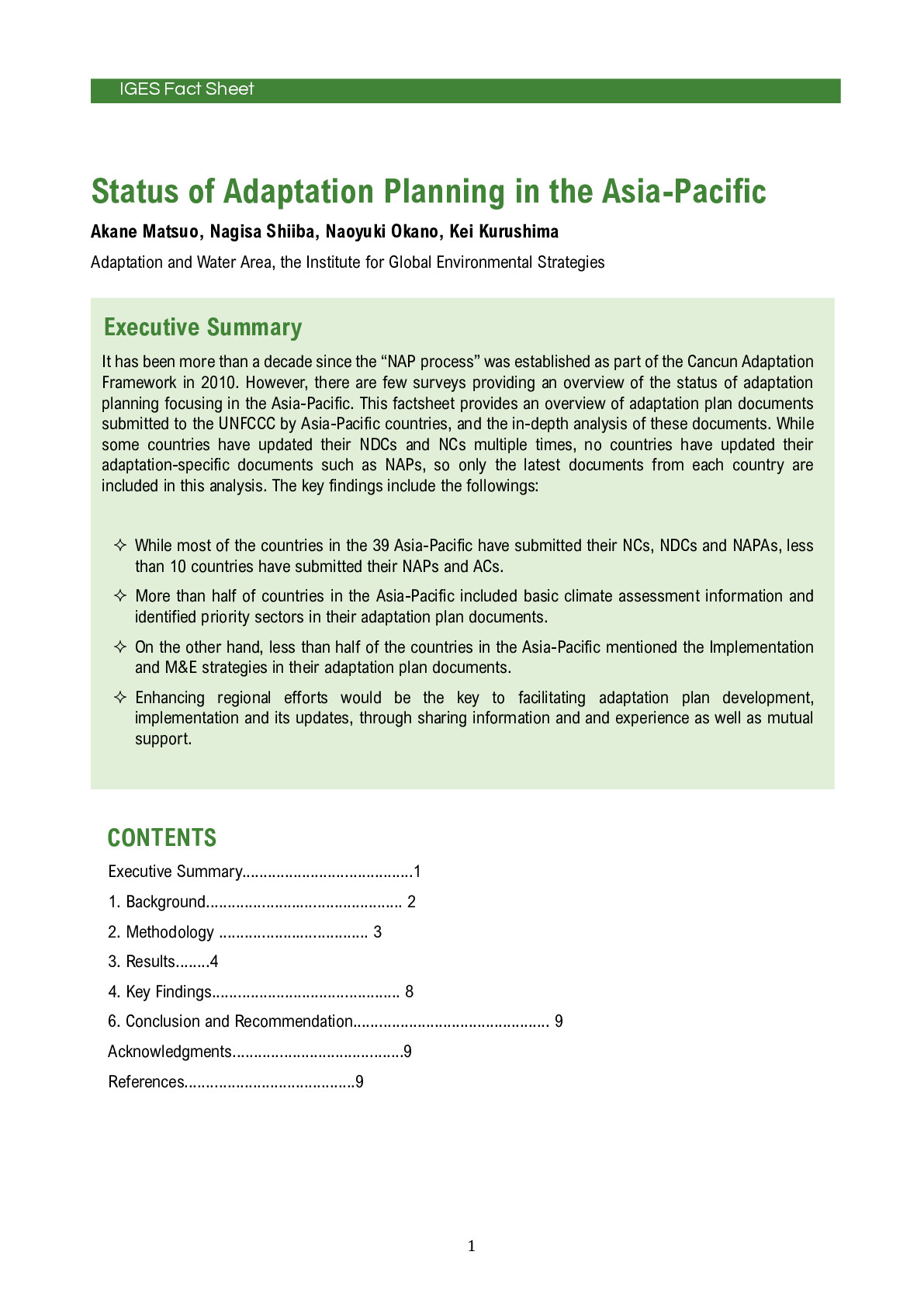
It has been more than a decade since the “NAP process” was established as part of the Cancun Adaptation Framework in 2010. However, there are few surveys providing an overview of the status of adaptation planning focusing in the Asia-Pacific. This factsheet provides an overview of adaptation plan documents submitted to the UNFCCC by Asia-Pacific...