Results 1 - 10 of 124 (Sorted by date)
Policy Brief
UNU-IAS Policy Brief Series
Author:
The adoption of the 59 Belém Adaptation Indicators in 2025 marked a major step toward assessing progress on the Paris Agreement’s global goal on adaptation. This policy brief examines how the indicators can support global assessment, national monitoring, evaluation and learning while preserving country-driven adaptation. It identifies...
Policy Brief
Science-Policy Brief for the Multistakeholder Forum on Science, Technology and Innovation for the SDGs
Author:
Norichika
Kanie
Abdul Hamid
Zakri
Csaba
Korosi
Alizan
Mahadi
Takashi
Hatori
Kazuo
Kuroda
Keiichi
Mochida
Keiko
Yonekura-Sakakibara
Kazuki
Saito
Ichiro
Sato
Makoto
Taniguchi
Motoko
Kotani
The Pact for the Future adopted in September 2024 calls for the 2027 SDG Summit to discuss advancing development goals beyond 2030. Since Autumn 2025, this theme has been discussed in some meetings and workshops. For example, the World EXPO in Osaka, Japan hosted a forum on “SDGs +Beyond”; “Future of Sustainable Development” workshop was held at...
Policy Brief
Author:
Single-use plastics (SUPs) remain a major contributor to environmental degradation in ASEAN+3 despite a decade of national bans, regional declarations, and growing circular economy commitments. Yet most policy frameworks continue to rely on product-focused interventions – bans, charges, and recycling mandates – without adequately considering the...
Policy Brief
Author:
Nidhi
Srivastava
Pía
Marchegiani
Sandeep
Pai
Critical energy transition minerals (CETMs) are vital for clean energy technologies, but their life cycle is associated with substantial environmental, social, and governance risks. These risks disproportionately affect local communities and countries in the Global South, where much of CETM extraction takes place. Despite bearing the burden of...
Policy Brief
Author:
Marcin
Pawel Jarzebski
Martiwi
Diah Setiawati
Yasushi
Katsuma
Kensuke
Fukushi
Nidhi
Nagabhatla
Daniel
Karthe
Made
Sudarma
Geetha
Mohan
Binaya
Kumar Mishra
Serena
Caucci
Kazuhiko
Takemoto
Jian
Pu
Saroj
Chapagain
Akio
Takemoto
Water valuation is pivotal for sustainable development in water-scarce regions and high-consumption cities in Asia. It enables efficient design of circular water conservation, including water reuse, to alleviate pressure on scarce water resources and maintain water quality through reduced pollution loads, decentralized treatment solutions and...
Policy Brief
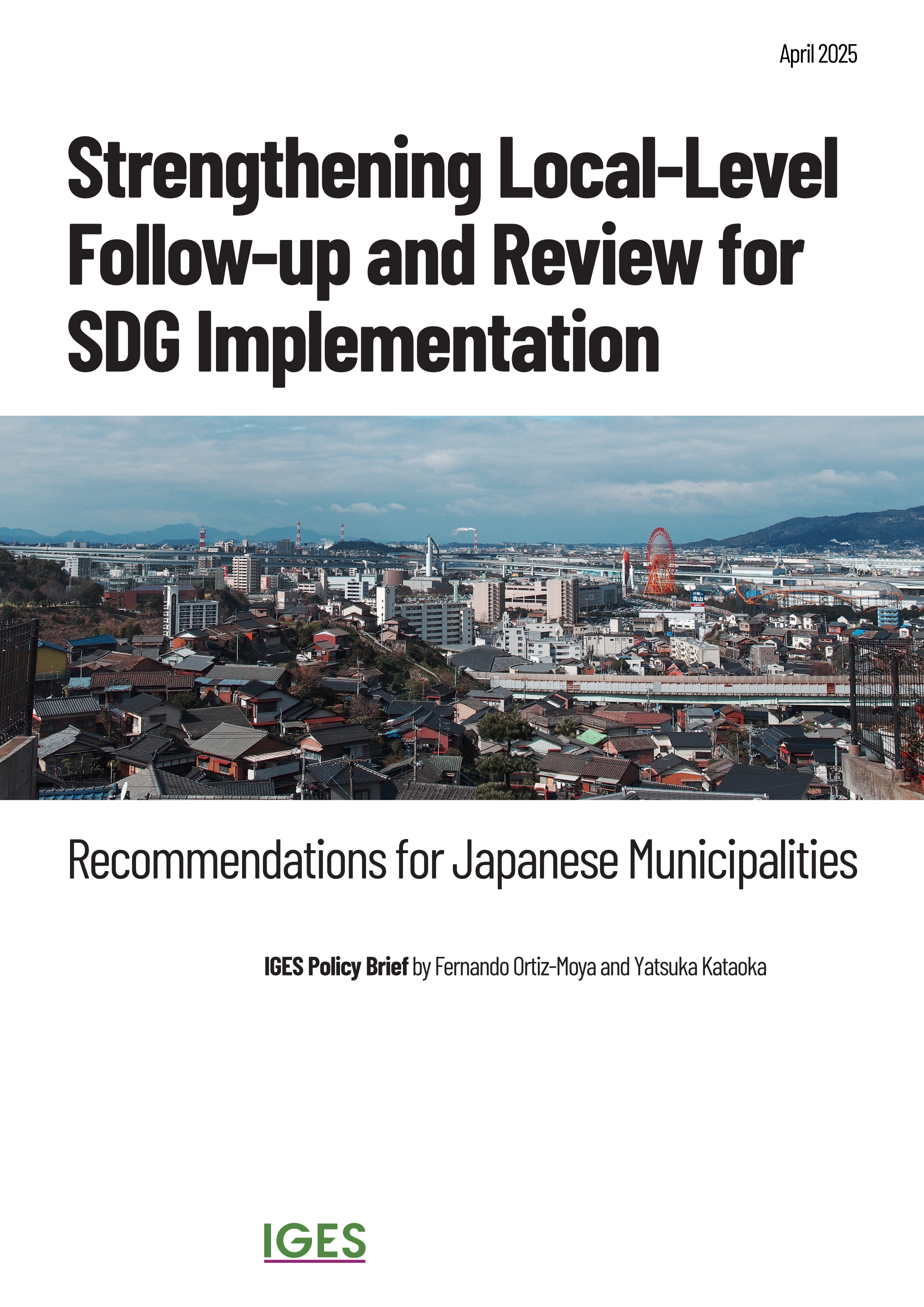
Local-level follow-up and review (FUR) is essential for realising the 2030 Agenda, given municipalities' crucial role in delivering SDG targets. However, Japanese municipalities face significant challenges, including capacity constraints, demographic shifts, financial limitations, and the absence of mandatory national SDG directives. This policy...
Policy Brief
Think 7 Policy Brief
Author:
Adeel
Kadri
Janani
Vivekananda
This T7 Policy Brief discusses the G7 countries' roles in addressing the global security challenge caused by climate change and energy insecurity. It is a collaborative output of adelphi (Germany), Manzil Pakistan, and IGES. Key Points: Climate change undermines national and human security in and beyond G7 countries, especially in fragile regions...
Policy Brief
Author:
Climate change adaptation and loss and damage associated with climate change impacts are often confused at the practical level. These two concepts developed through negotiations under the UNFCCC mechanisms with certain political backgrounds, and they have been discussed separately since the Paris Agreement was adopted. However, apart from...
Keywords:
Policy Brief
This policy brief examines the implications for ASEAN Member States (AMS) of the European Union’s Carbon Border Adjustment Mechanism (CBAM) and suggests an overall direction for responses. The EU’s CBAM aims to minimize carbon leakage and the loss of the EU’s trade competitiveness due to its more ambitious climate mitigation policies, particularly...
Policy Brief
Author:
Edmond Totin, Bhim Adhikari, Chandni Singh, Nick Simpson, and Petra Tschakert
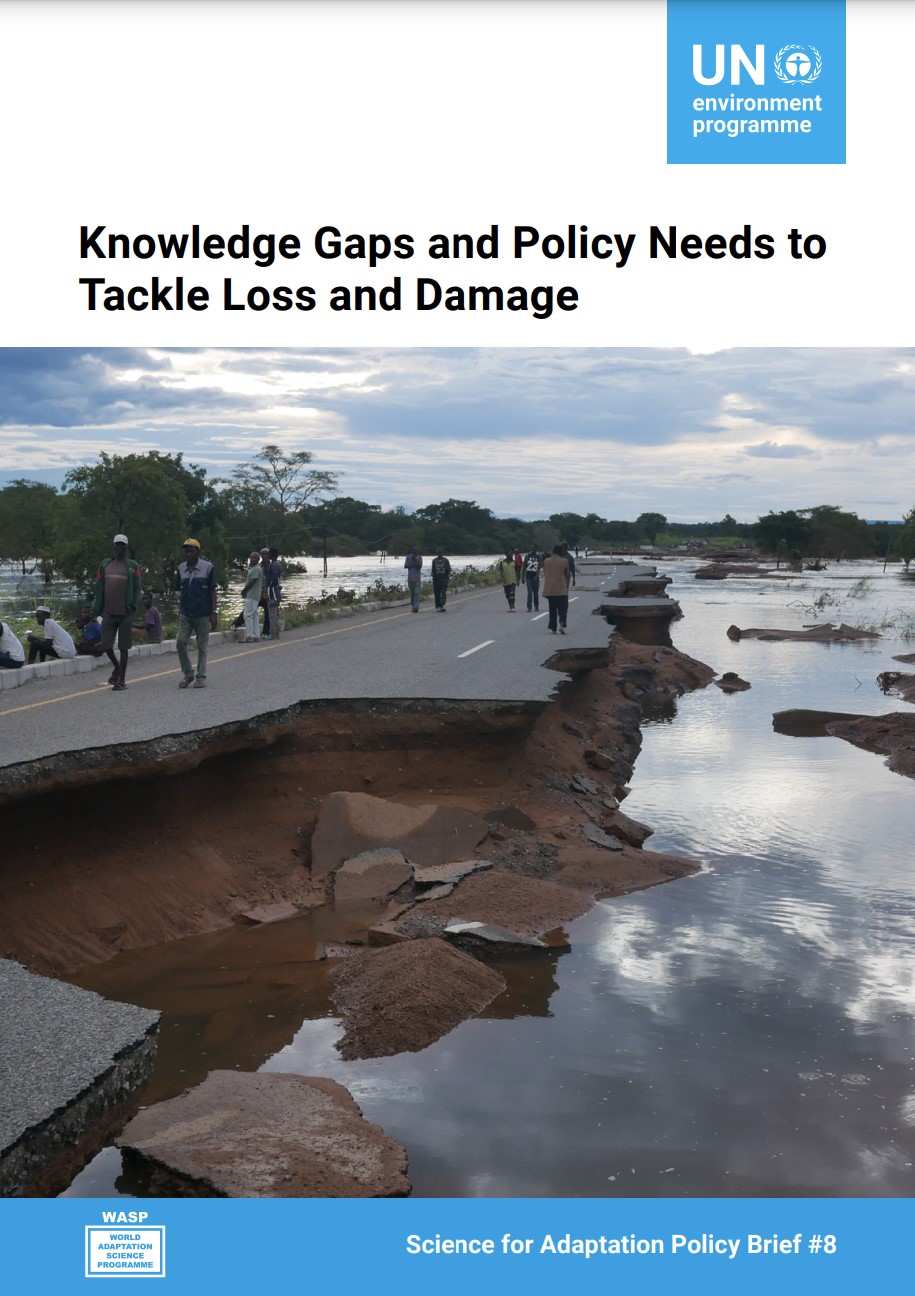
Key messages: 1. Climate change results in substantial loss and damage to societies and natural systems when it is not mitigated by reducing greenhouse gas emissions or averted through adaptation. Loss of life, extinction of species and ecosystem destruction are a few of the irreversible repercussions already attributed to unabated climate change...