
8932件中 3141~3150件 (日付順)
プレゼンテーション
First Sub-Regional workshop on Preparation of status Report and Sub-regional Roadmap for Implementing the Global Waste Management Goals toward Addressing SDGs in South Asia
Home to roughly 1.8 billion people, South Asia generates approximately 334 million tonnes of waste per year of which 174 million tonnes (57%) is organic in content. In addition to the increase in municipal solid waste, managing complex and emerging waste streams, including e-waste, food waste, construction and demolition waste, disaster waste...
委託報告書
Key Messages - Indonesia is the fourth most populous country in the world with a total population of more than 260 million people, of which more than half of them are now living in urban areas, and less than 2% are connected to centralised sewer network and treatment system. This situation creates a huge burden for urban environment and...
委託報告書
Although an enormous progress has been made over the last 25 years regarding the increased access to improved on-site sanitation such as septic tanks in urban areas of Indonesia, but unfortunately most of them are soak pits of poorly designed, constructed, open bottomed septic tanks. Particularly, due to lack of regular de-sludging and maintenance...
プロシーディングス
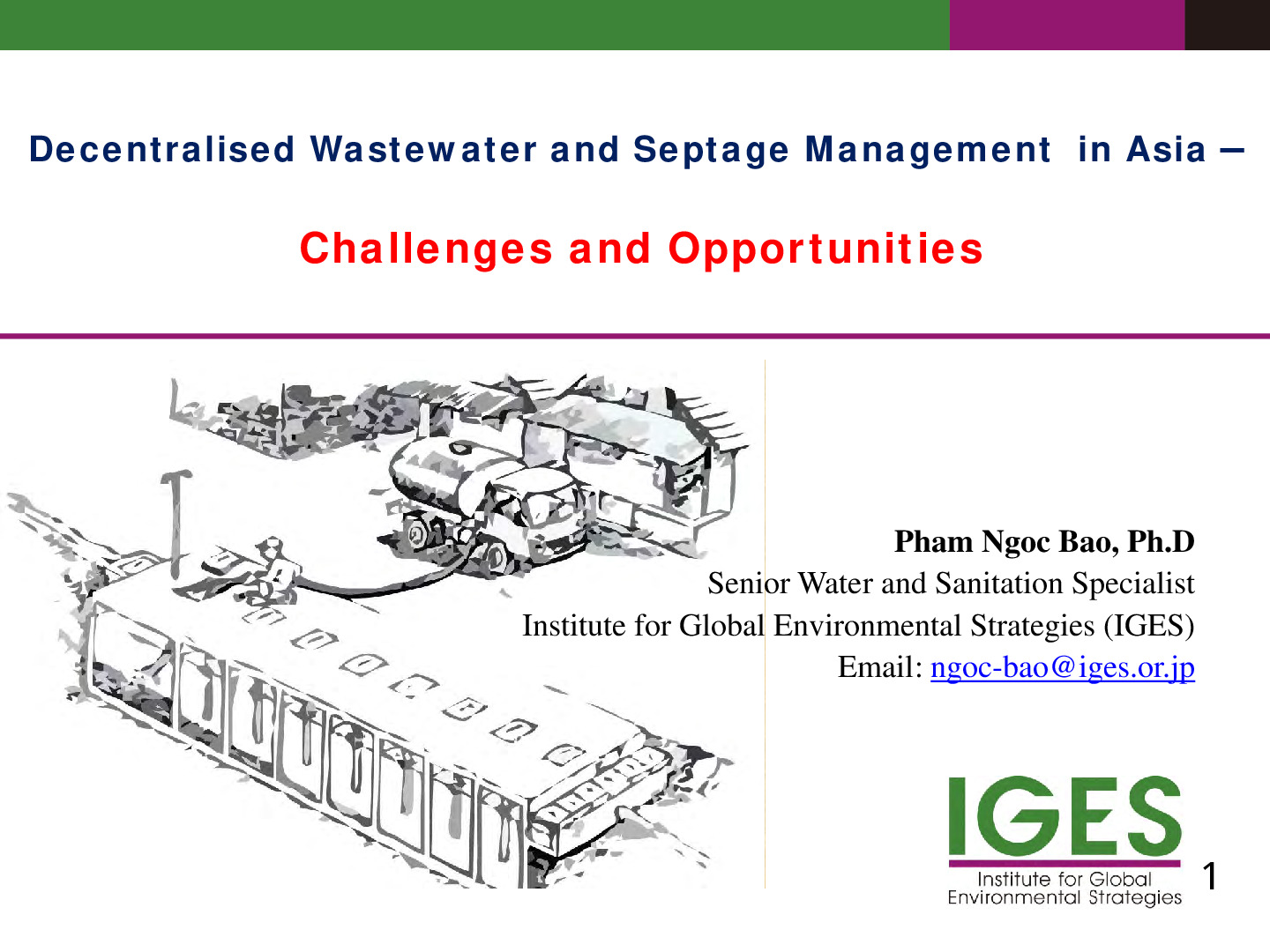
WEPA International Workshop on “Roles of decentralized wastewater and septage management in addressing the challenges and accelerating the progress of Sustainable Development Goal 6 (SDG6) in Asia”
The Asia-Pacific region, with over 4.6 billion people by 2016, is the home of nearly 60% of the world population. Rapid population growth, urbanization, industrialization and changes in consumption patterns, including shifting diets toward highly water-intensive foods such as meats, which have led to a significant increase in water demand, and...
プレゼンテーション

Policy Development Workshop on Applying the Urban Nexus Concept to Implementing Global Agendas
The presentation highlighted Urban nexus as a means of implementation to deliver on the global agendas. It also showcased some good practices of urban nexus in Asia.
研修用教材
This document aims to provide a comprehensive and easy-to-understand description of the Joint Crediting Mechanism (JCM) including JCM concept, JCM project cycle, JCM related bodies, JCM project methodology, project design document (PDD), Registration process, post registration activities, procedure for issuance of credits, and procedure for...
委託報告書
平成30年度 二国間クレジット制度の下でのREDD+プロジェクトの 実施促進に向けた調査・分析等委託業務 報告書
平成30年度環境省委託事業:二国間クレジット制度の下でのREDD+プロジェクトの 実施促進に向けた調査・分析等委託業務 報告書
プレゼンテーション
「シリーズ:脱炭素化社会構築に向けた挑戦」
本プレゼンテーションは、パリ協定第13条の透明性枠組みの実施ルールについて、途上国の視点から見たポイントをを切り口に解説します。 ① 「強化された」透明性枠組みの実現 ② 柔軟性の導⼊ ③ 核となる温室効果ガスインベントリ ④ 新たな試み、NDCの進捗に関する指標 ⑤ ⽀援活⽤の透明性の向上
広報物
本パンフレットは、IGES-KRCがインドのエネルギー資源研究所(TERI)と共同で2016年度に設立しインドで運用をおこなっている日本-インド技術マッチメイキングプラットフォーム(Japan-India Technology Matchmaking Platform: JITMAP)について広く発信し、認知度の向上並びに新たな参加主体の拡大等を目的として、環境省の委託事業「平成30年度 海外におけるCO2排出削減技術評価・検証事業」における活動の一環として作成した。 JITMAPは、技術の供給側である日本企業および需給側であるインド企業間のビジネスマッチメイキングを支援することにより、インドにおける日本の低炭素技術移転を促進するためのマルチステークホルダープラットフォームである。
委託報告書
パリ協定に掲げる今世紀後半に脱炭素社会(温室効果ガス排出量が正味ゼロの状態)を実現させるためには、経済成長が著しいアジアにおいて、持続可能な低炭素社会の構築に向けた動きを加速させることが必要である。近年、経済成長著しいアジアの都市では、急激な都市化により、資源やエネルギー消費量が増大し、交通量増加に伴う交通渋滞が頻発しており、生活や経済活動に伴う廃棄物、排水、排ガス、温室効果ガス(GHG)等の排出量が増加するなど、住民の生活環境の悪化を招いている。これらの都市の経済成長を維持しながら快適な生活環境を守っていくには、効率的な資源循環や省エネ施策を推進し、環境負荷を最小限に留める持続可能な都市形成にシフトしていかなければならない。 我が国は、開発途上国においてこのような取組を支援すべく...