

Principal Policy Researcher
Professional Experience:
> Obtained funding from/managed/participated in research projects funded by: Suishinhi, Kakehnhi, ADB, APN, APAN and IFAD
>Worked in the following positions: Senior Policy Researcher, IGES, Japan (2010 onwards), Policy Researcher, IGES, Japan (2007-2010), JSPS Postdoctoral Fellow, Kyoto University, Japan (2005-2007), Visiting scholar, National Drought Mitigation Center (NDMC) at University of Nebraska–Lincoln (March 2007), Drought Specialist and Program Associate-DRM, United Nations Development Program-GoI DRM Program, New Delhi, India (2004-2005), Research Fellow, Rice-Wheat Consortium for the Indo-Gangetic Plains of International Maize and Wheat Improvement Center (CIMMYT), New Delhi, India (2001-2003), Research Fellow, Indian Agricultural Research Institute, IARI, New Delhi, India (2001), Research Fellow, International Crops Research Institute for Semi-Arid Tropics (ICRISAT), Hyderabad, India (1996).
Research Topics & Areas of Expertise
Currently engaged in the following research areas:
Measuring effectiveness of adaptation actions, Adaptation decision making frameworks, Scaling up risk insurance, Loss and damage associated with climate change, Equity and fairness in community based adaptation, Adaptive policies, Training needs assessment for climate change adaptation and Displacement and migration.
Education
Education:
1. PhD from Indian Agricultural Research Institute (IARI), New Delhi, India, 2001
2. PGD in Planning and Management, University of Hyderabad, India, 2004
3. MS (Ag) from Andhra Pradesh Agricultural University, India, 1996
4. BSc (Ag) from Andhra Pradesh Agricultural University, India, 1994
Results 31 to 40 of 346 (Sorted by date)
Peer-reviewed Article
In Journal of Coastal Conservation
Globally, mangroves have been promoted to protect the coastal ecosystems and human settlements against weather vagaries including climate change impacts. However, climate change can also affect the mangrove ecosystems, affecting their ability to mitigate losses and damages caused by climate change. Recognizing the need to understand the impact of...
Keywords:
Presentation
Roundtable Meeting with Higher Level Functionaries for Strengthening the Climate Security Outcomes of Adaptation Planning
Climate security refers to the direct and indirect impacts of climate change on peace and security. It also refers to the impact of climate change on the political stability, human security, national security, etc. Climate change as a threat multiplier, can exacerbate the underlying traditional security issues and human security issues. Hence...
Presentation
APRU 2024 Multi-hazard Workshop: All-Hazards Approach (AHA) / Science and Technology for DRR IRIDeS, Tohoku University
In a globalized world, disaster impacts seldom remain within political boundaries but often spill over beyond national boundaries. These transboundary risks bring an added complexity to the way the multi-hazard risks impact society. Until now, most risk assessments are focused within one’s political boundaries, and that worked with limited...
Keywords:
Presentation
Gobeshona 4 Global Conference: Locally- Led Adaptation (LLA) and resilience
Adaptation effectiveness (AE) refers to how policies and actions reduce present and future climate risks. It is a systems concept that requires a unit of measurement, expression in value terms, a baseline, and a goal. Pre-requisite/enabling conditions such as equity, justice, and fairness are essential. Over the years, progress in adaptation has...
Keywords:
Book Chapter
In Disaster Risk and Management under Climate Change
Equity and fairness have a high significance in Disaster Risk Reduction and Climate Change Adaptation as it is evident that disasters affect communities differently depending on their developmental levels, and social status. Any public policy or intervention on disaster risk reduction deals with communities that are at different ‘starting lines’ in...
Keywords:
Presentation
COP28 side event ‘Dealing with Loss and Damage'
Just like adaptation, L&D has grown into an extensive science and policy area and things are very complicated even for the researchers to take a stock of it and to provide solutions. A large part of this confusion is coming from the disjoint between the global negotiations and at the national level. While at the ground level, most L&D solutions are...
Keywords:
Presentation
Scaling up Climate Action through Adaptation Effectiveness
Adaptation effectiveness cannot be achieved by focusing on one stage of the adaptation process, rather it needs an all-encompassing approach. The current undue attention on a few stages of adaptation planning needs to be reconsidered. Adaptation effectiveness is vital to inform both national and local level adaptation actions as well as progress...
Book Chapter
In Adaptation Gap Report 2023: Underfinanced. Underprepared. Inadequate investment and planning on climate adaptation leaves world exposed
▶ In the United Nations Framework Convention on Climate Change (UNFCCC), loss and damage has emerged as a third key pillar of climate policy, alongside mitigation and adaptation, to address ever-increasing climate impacts in developing countries that are particularly vulnerable to the adverse effect of climate change. ▶ Losses and damages arise...
Keywords:
Policy Brief
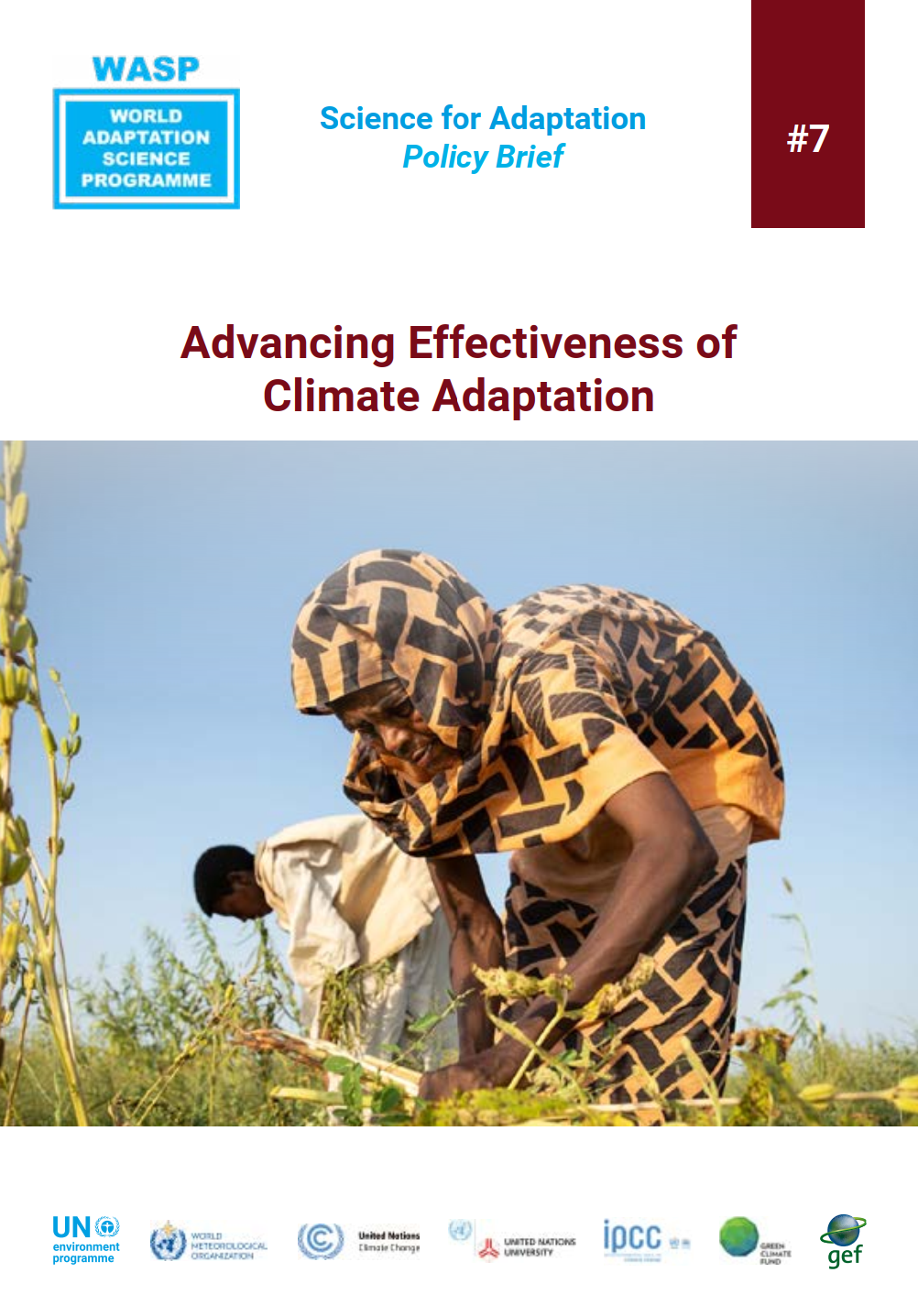
Evaluating the effectiveness of adaptation policies and actions is key to understanding whether they have reduced climate risks and achieved other intended outcomes. The goals are to ensure that adaptation is adequate to address climate risks, do not foster negative unintended consequences over space and time, and inform adaptation financing. The...
Presentation
Session #464 Effective adaptation: What is it and how can we measure and manage it?
Evaluating the effectiveness of adaptation policies and actions is key to understanding whether they have reduced climate risks and achieved other intended outcomes. The goals are to ensure that adaptation is adequate to address climate risks, do not foster negative unintended consequences over space and time, and inform adaptation financing...
Results 1 to 4 of 4 (Sorted by date)
Project

Updated: March 2025
Environment Research and Technology Development Fund 1CN-2206 (FY2022-2024) - Research on the national long-term roadmap to synergise mitigation and adaptation towards a net zero and resilient ASEAN
Towards the establishment of a net-zero and resilient ASEAN Community as indicated by the ASEAN Climate Vision 2050, IGES is conducting a study on the formulation of a long-term roadmap to promote integrated transition of mitigation and adaptation in...
Project
Updated: July 2026
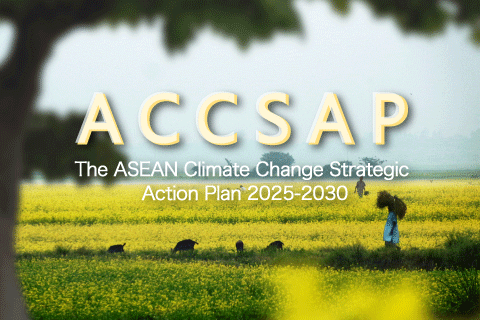
The ASEAN Climate Change Strategic Action Plan 2025-2030 Project
The ASEAN Climate Change Strategic Action Plan (ACCSAP) 2025-2030 serves as the roadmap for addressing climate change in ASEAN up to 2030. IGES contributed to the development of the “ASEAN State of Climate Change Report (ASCCR)” in 2021, the first...
Project
Updated: August 2026
Ensuring Security in Japan and the Indo-Pacific under Climate Change: A Focus on the Linkages with Economic Security
The climate security featured page will share research findings and related information on climate security. We are exploring various topics, including international trends analysis, energy security, food security, climate-induced human mobility, cl
Project
Updated: August 2023
IGES Inputs to Asia-Pacific Forum on Sustainable Development (APFSD)
APFSD is an annual meeting convened by the United Nations Economic and Social Commission for Asia and the Pacific (UNESCAP) aimed at strengthening the region’s readiness for the United Nations High-level Political Forum on Sustainable Development.