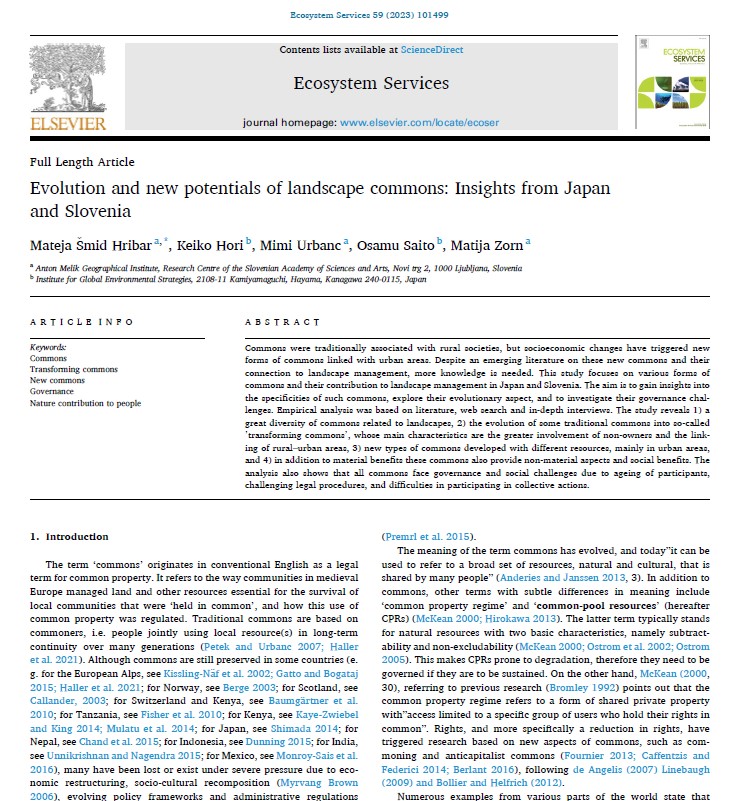
Commons were traditionally associated with rural societies, but socioeconomic changes have triggered new forms of commons linked with urban areas. Despite an emerging literature on these new commons and their connection to landscape management, more knowledge is needed. This study focuses on various forms of commons and their contribution to...
This presentation was a part of MOEJ-IIASA collaboration project B (Bhutan case study), which focused on the alternative scenario analysis (SSP1 and SSP2) for the transition of energy-food-water and health nexus solutions in Bhutan.
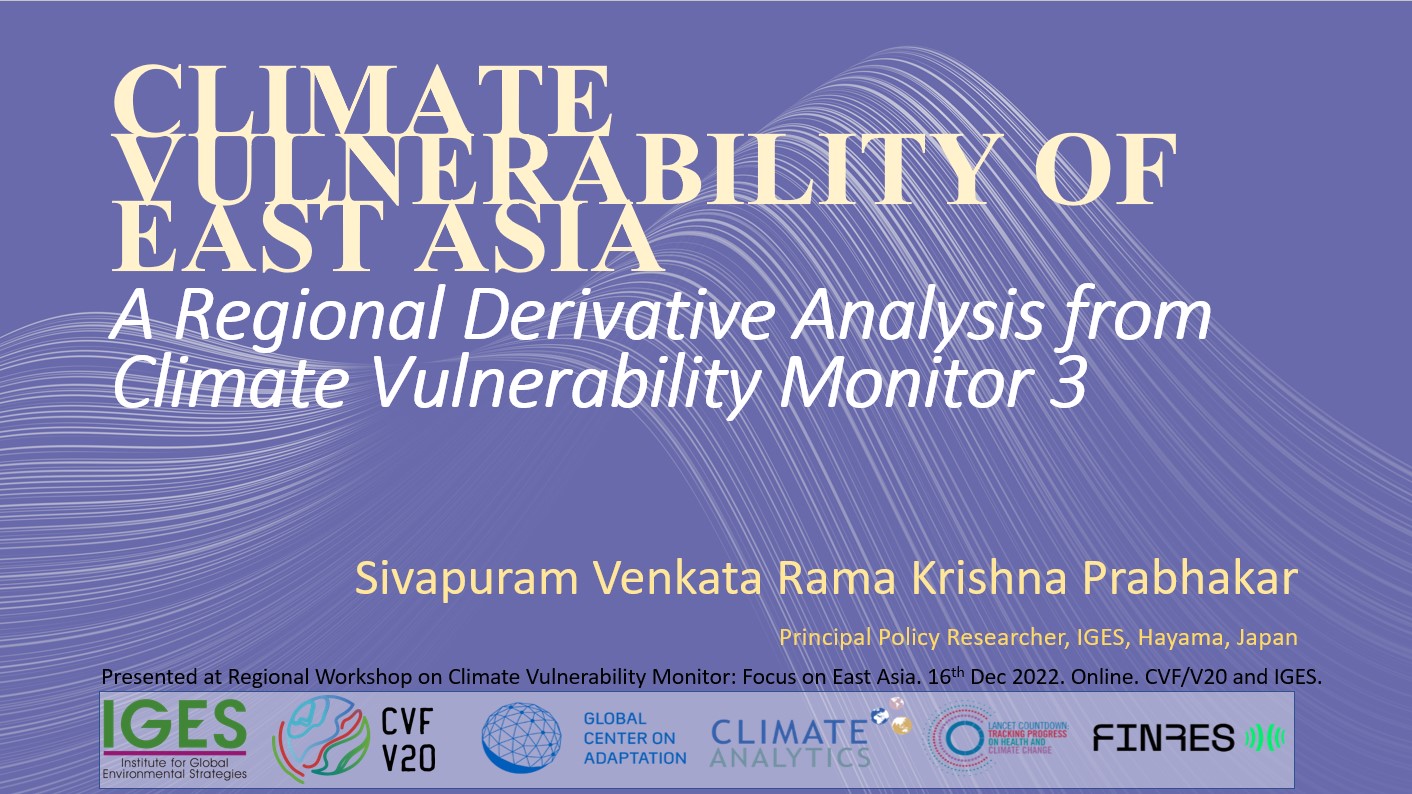
East Asia has unique regional demographic and socioeconomic characteristics that put the adaptation in the region with more public good benefits. The findings of the Climate Vulnerability Monitor 3 should be read from the perspective of the region's unique characteristics. The findings affect the region by bringing trends that the region has not...
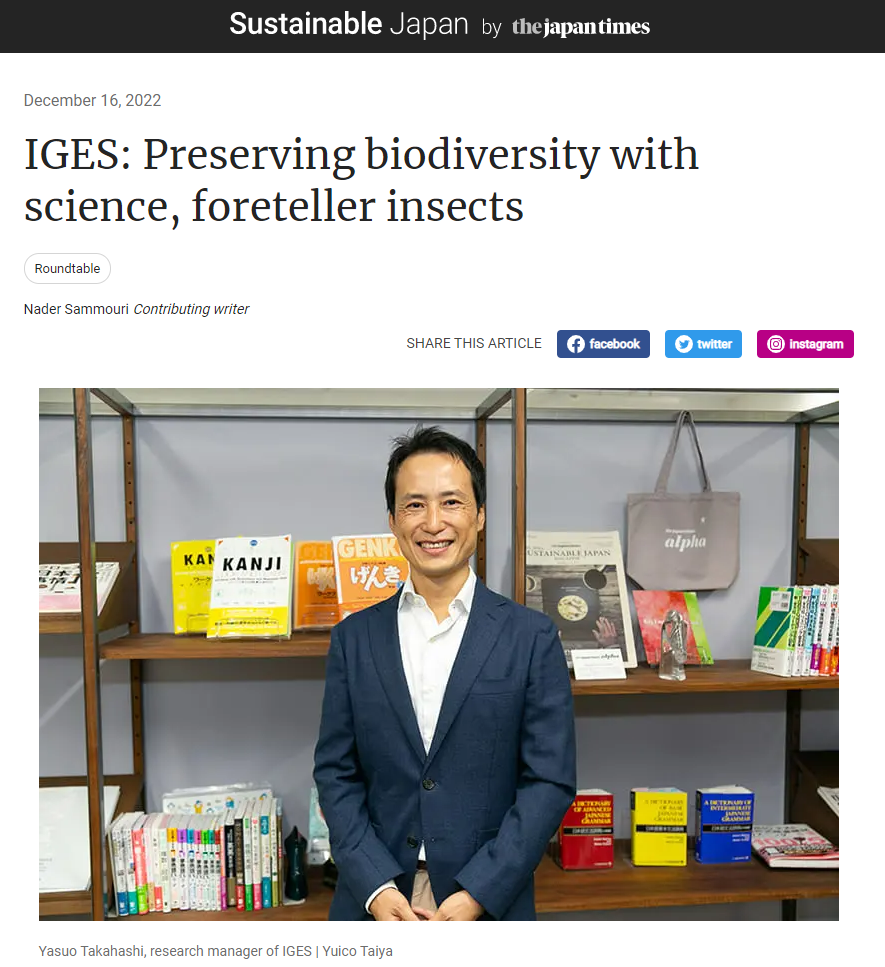
How blind are we to things too big to see directly? Take the environment — why should people care? Our muddled perceptions can make it grueling to find the right balance between individual well-being and conservation of nature. Falling biodiversity — the variety in the life around us, from microbes on up — has severe repercussions for human well...
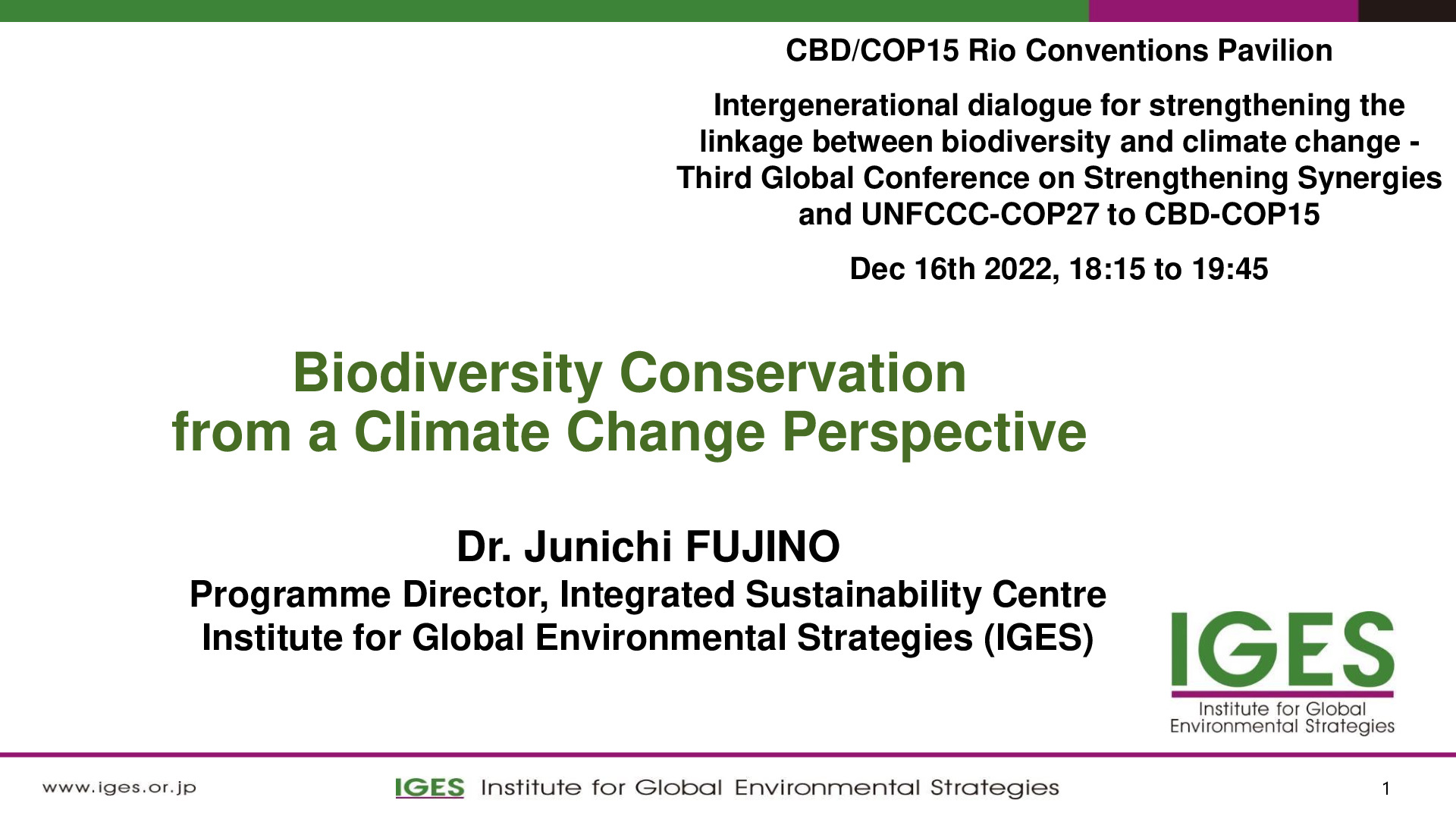
Side Event "Intergenerational dialogue for strengthening the linkage between biodiversity and climate change Third Global Conference on Strengthening Synergies and UNFCCC COP27 to CBD COP15" CBD/COP15 Rio Conventions Pavilion
This invited presentation was delivered at side event "Intergenerational dialogue for strengthening the linkage between biodiversity and climate change: Third Global Conference on Strengthening Synergies and UNFCCC COP27 to CBD COP15" CBD/COP15 Rio Conventions Pavilion organized by COND and CYJ during CBD/COP15. Programme: http://www.cbd.int/rcp...