This pamphlet introduces the latest activities of Kitakyushu Urban Centre.
- クリア
- 言語: (-) 英語
- 言語: (-) モンゴル語
- SDGs: (-) 12. つくる責任 つかう責任
456件中 1~10件 (日付順)
National Workshop on Integrated Waste Management in Lesotho
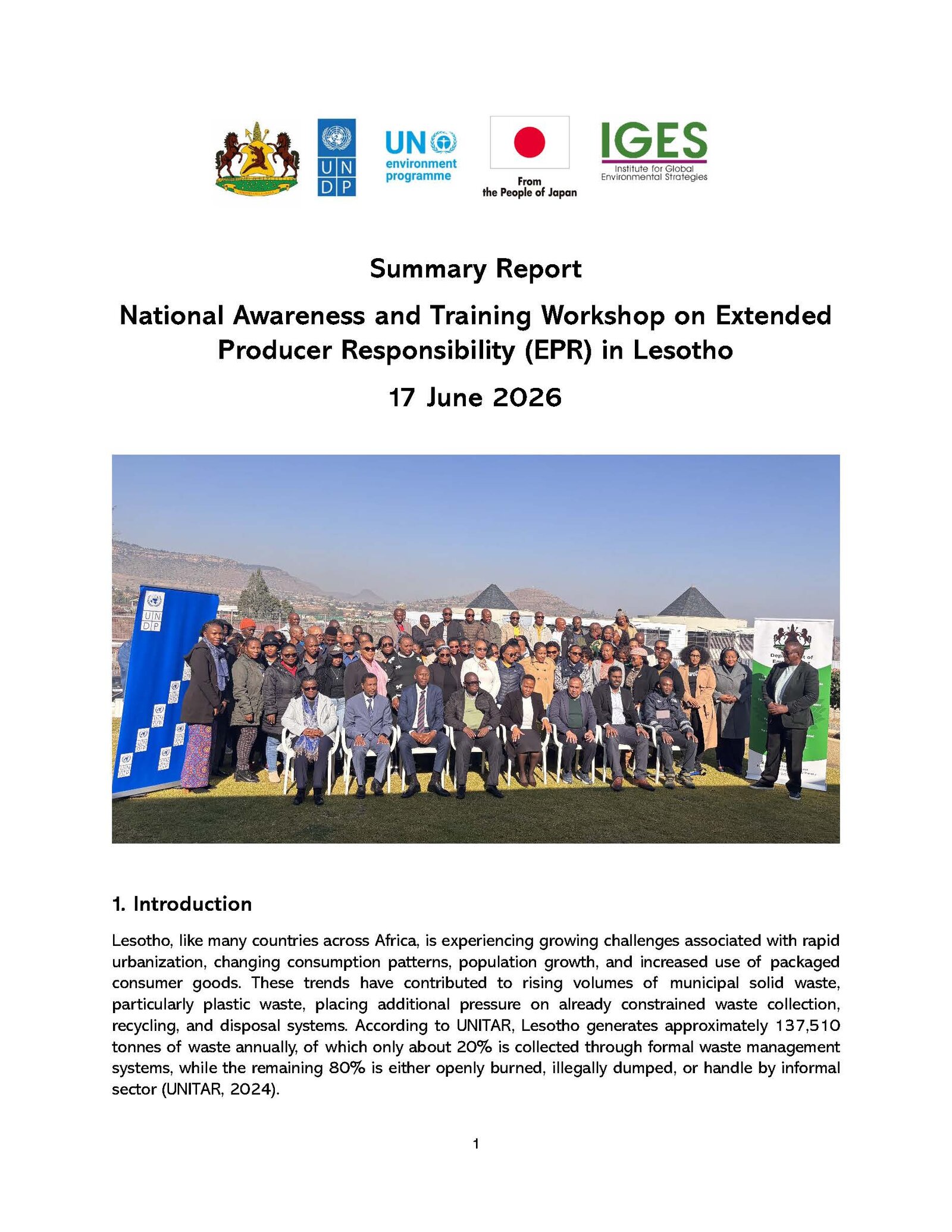
The National Awareness and Training Workshop on Extended Producer Responsibility (EPR), held in Maseru, Lesotho on 17 June 2026, brought together government agencies, municipalities, producers, academia, civil society, development partners, and informal-sector representatives to explore pathways for developing an inclusive and nationally...
National Workshop on Integrated Waste Management in Lesotho
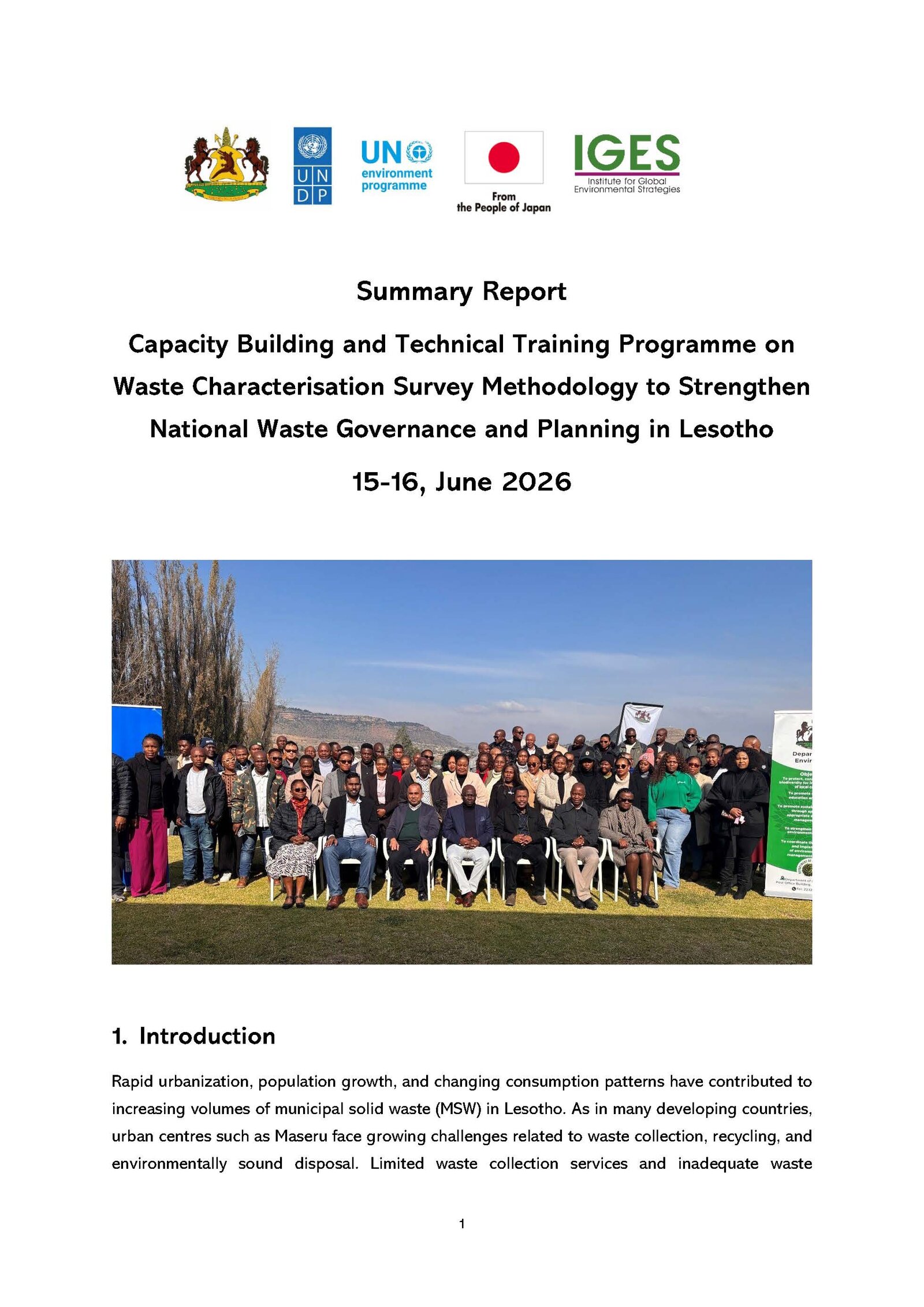
The Capacity Building and Technical Training Programme on Waste Characterisation Survey Methodology, held in Lesotho on 15–16 June 2026, aimed to strengthen national capacity for evidence-based waste governance and planning. Organized by UNEP-IETC, IGES-CCET, UNDP, the Ministry of Environment and Forestry, and the National University of Lesotho...
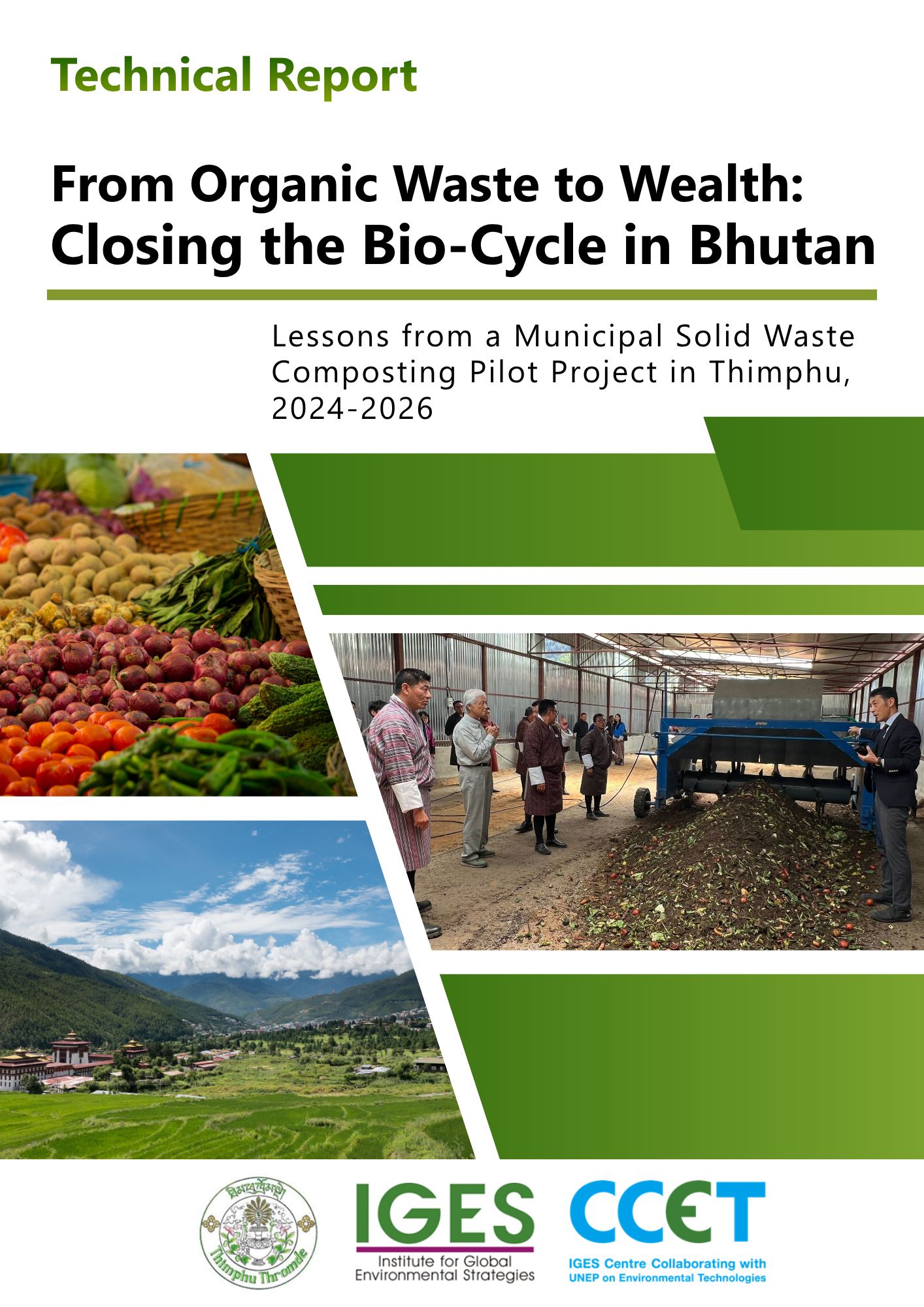
Bhutan faces mounting pressure on its municipal solid waste (MSW) management systems. Its capital city, Thimphu, generates approximately 50 tonnes of MSW per day, of which roughly 30 tonnes per day is organic (wet) waste that is currently deposited at the Memelakha landfill — an ageing open-dumpsite already well beyond its intended lifespan. At the...
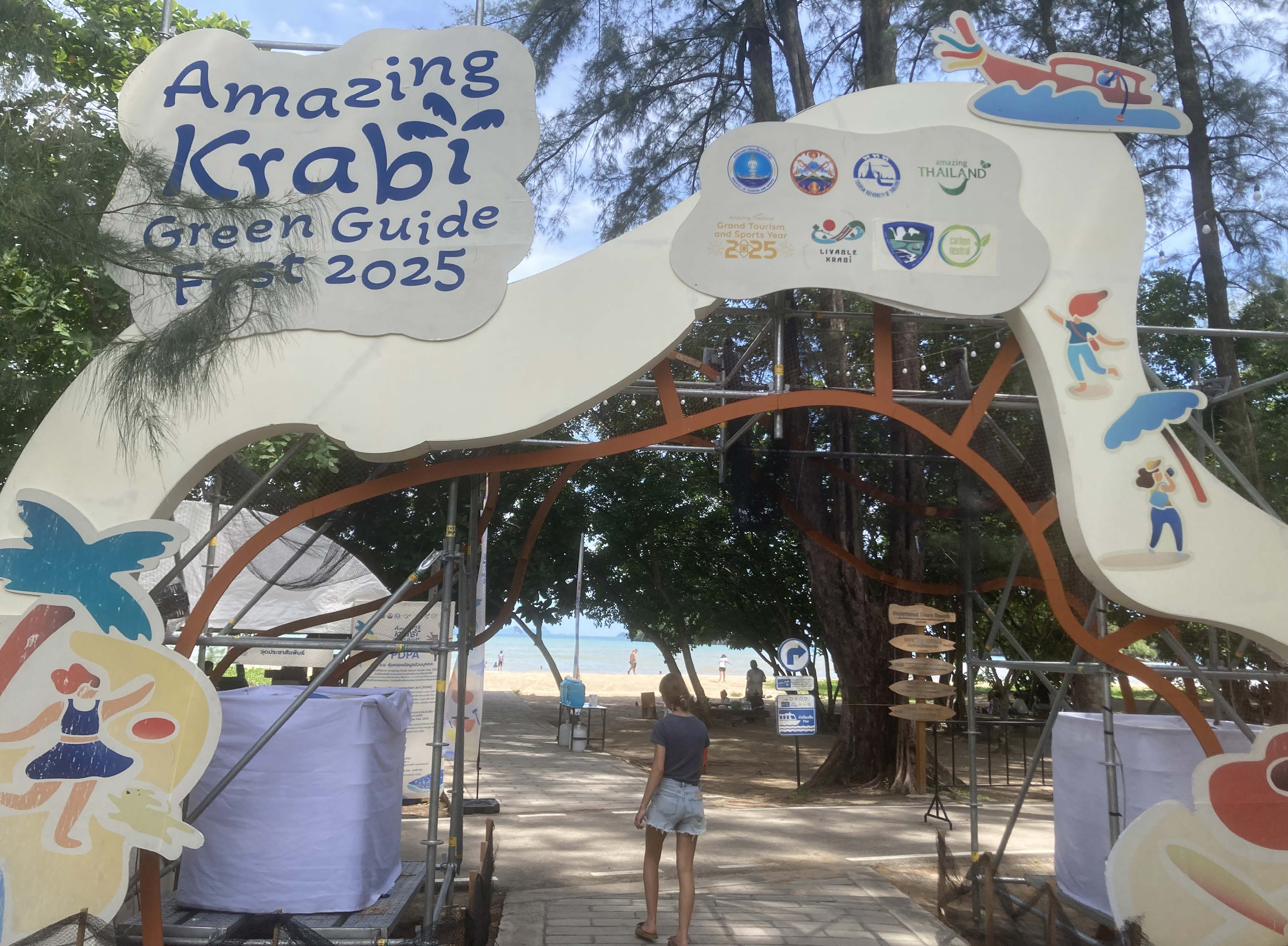
Tourism is a key driver of economic growth in Thailand, but it also generates significant environmental and socio-economic pressures, particularly in coastal destinations such as Krabi. Increasing plastic pollution, resource stress, and socio-economic inequalities highlight the limitations of conventional tourism models and the need for more...
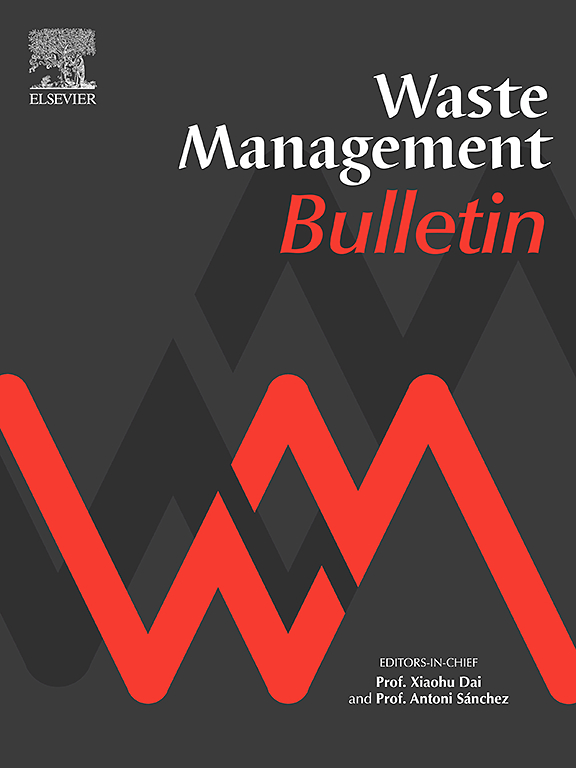
Waste Management Bulletin所収
This study provides an indicative comparative assessment of the factors underlying these challenges by examining policy content, regulatory enforcement, and institutional capacity related to OWB across ten selected Asian countries: Cambodia, China, India, Iraq, Jordan, Laos, the Maldives, Nepal, Pakistan, and Thailand. The researchers employed a...
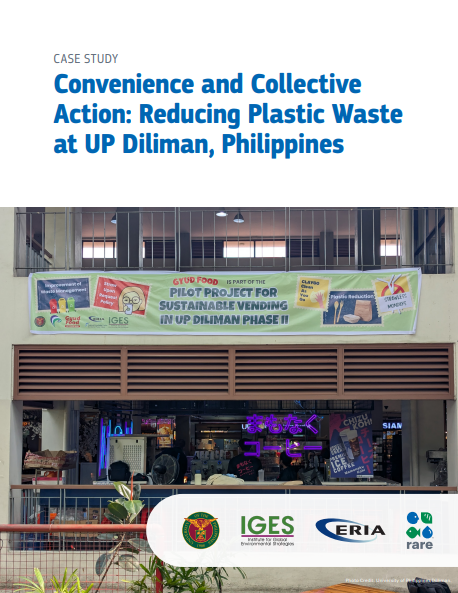
Using behavioral science to reduce plastic waste on the UP Diliman campus The University of Philippines Diliman (UP Diliman) initiative, led by UP Diliman with support from the Economic Research Institute for ASEAN and East Asia (ERIA), Institute for Global Environmental Strategies (IGES), and Rare, tackled plastic waste generated by a dense campus...
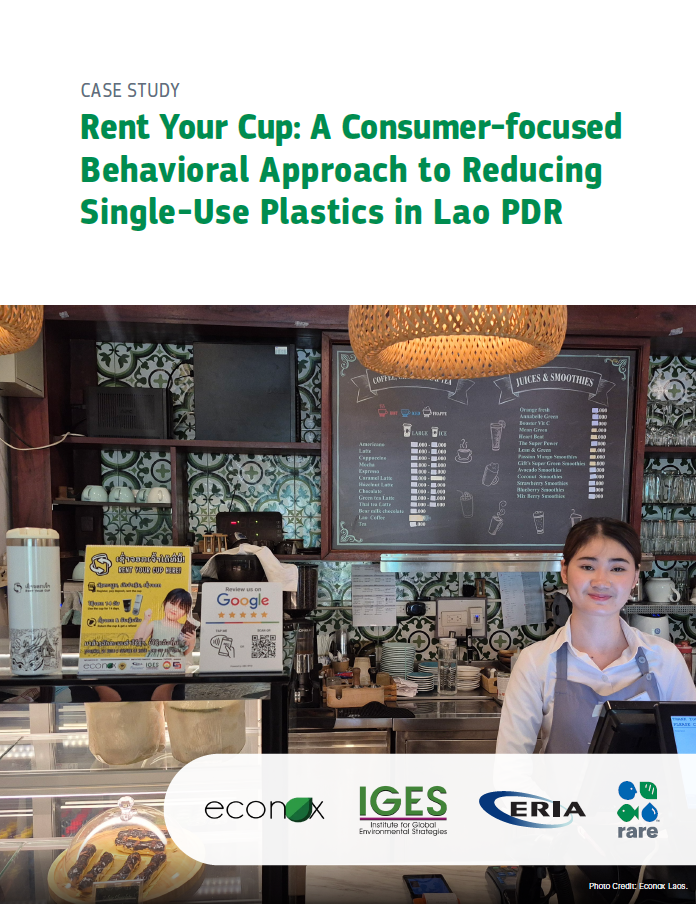
Changing the local reuse economy with behavioral science The Rent Your Cup initiative in Lao PDR, led by Econox with support from Economic Research Institute for ASEAN and East Asia (ERIA), Institute for Global Environmental Strategies (IGES), and Rare, addressed the growing problem of single-use plastic waste driven by expanding café culture and...
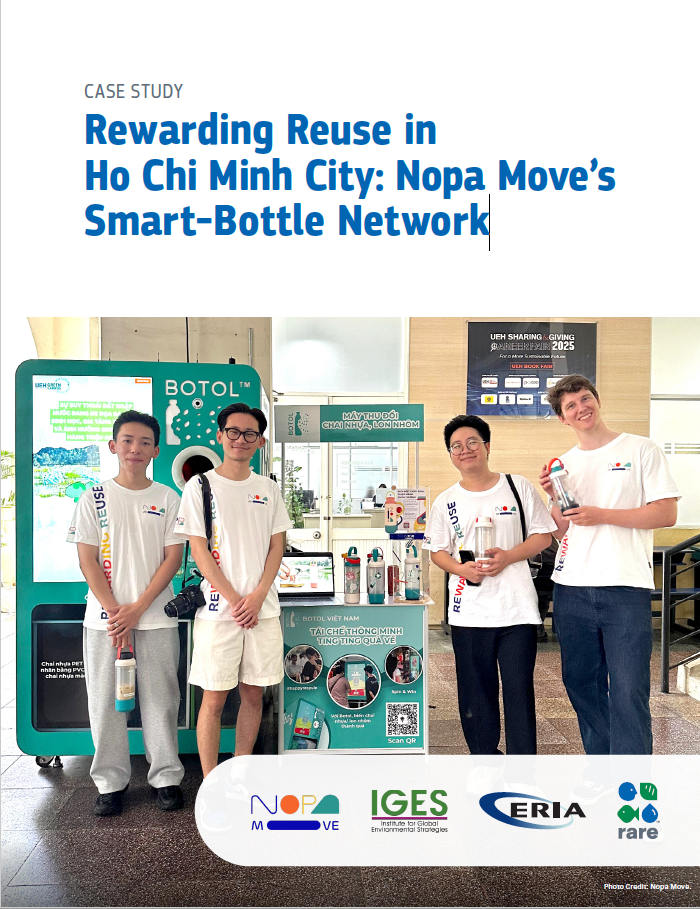
Using behavioral insights to increase reusable water bottle use Nopa Move’s Smart Bottle Network, with support from the Economic Research Institute for ASEAN and East Asia (ERIA), Institute for Global Environmental Strategies (IGES), and Rare, addressed single-use plastic waste in Ho Chi Minh City’s commuter coffee culture, where disposables...
Plastic pollution is a growing challenge in Southeast Asia, where rapid urbanisation and rising consumption are driving sharp increases in plastic waste. While traditional regulations such as plastic bans and information campaigns are important, they often fail to shift deeply ingrained consumption and waste management habits on their own. This new...