- English


Changing the local reuse economy with behavioral science
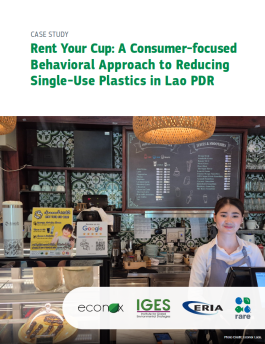
The Rent Your Cup initiative in Lao PDR, led by Econox with support from Economic Research Institute for ASEAN and East Asia (ERIA), Institute for Global Environmental Strategies (IGES), and Rare, addressed the growing problem of single-use plastic waste driven by expanding café culture and default reliance on disposable packaging. While awareness of environmental issues existed, the core challenge was behavioral: shifting consumers away from ingrained habits toward reuse in a way that feels convenient and socially accepted. The program targeted consumers directly by introducing a rental system for reusable cups embedded into everyday café experiences, aiming to make reuse an easy and attractive alternative rather than a burden.
The intervention was strongly grounded in behavioral science principles. It combined:
- Choice architecture (QR-based systems to reduce friction),
- Material incentives (deposit-refund and small discounts),
- Emotional appeals (culturally meaningful Lao cup designs), and
- Social influence (staff engagement and visible promotion of reuse as desirable).
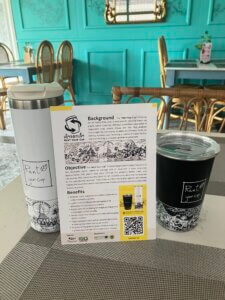
Photo Credit: Econox.
Together, these elements were designed to shift norms and reframe reuse as modern, convenient, and identity-aligned. Early results showed some adoption, such as repeat users and increasing return rates. However, those results also highlighted a gap between intention and action, a well-known behavioral phenomenon where stated motivations (e.g., reducing plastic waste) do not always translate into consistent behavior.
From a behavioral science perspective, the most important insight is that incentives alone did not drive behavior as expected. Instead, users often kept the cups, suggesting that emotional value, identity, and cultural meaning outweighed financial incentives. The cups functioned not just as utility items but as symbols of pride or personal values, illustrating how identity-based motivations and perceived value can override economic logic. This reinforces that behavior is shaped by a combination of convenience, social signaling, and meaning — not just cost-benefit calculations. Future improvements therefore emphasize strengthening social norms, increasing convenience of returns, and leveraging identity-based messaging, aligning with the broader behavioral science insight that interventions are most effective when they reinforce, rather than compete with, intrinsic motivations.
- English