

15件中 1~10件目を表示中 (日付順)
プロシーディングス
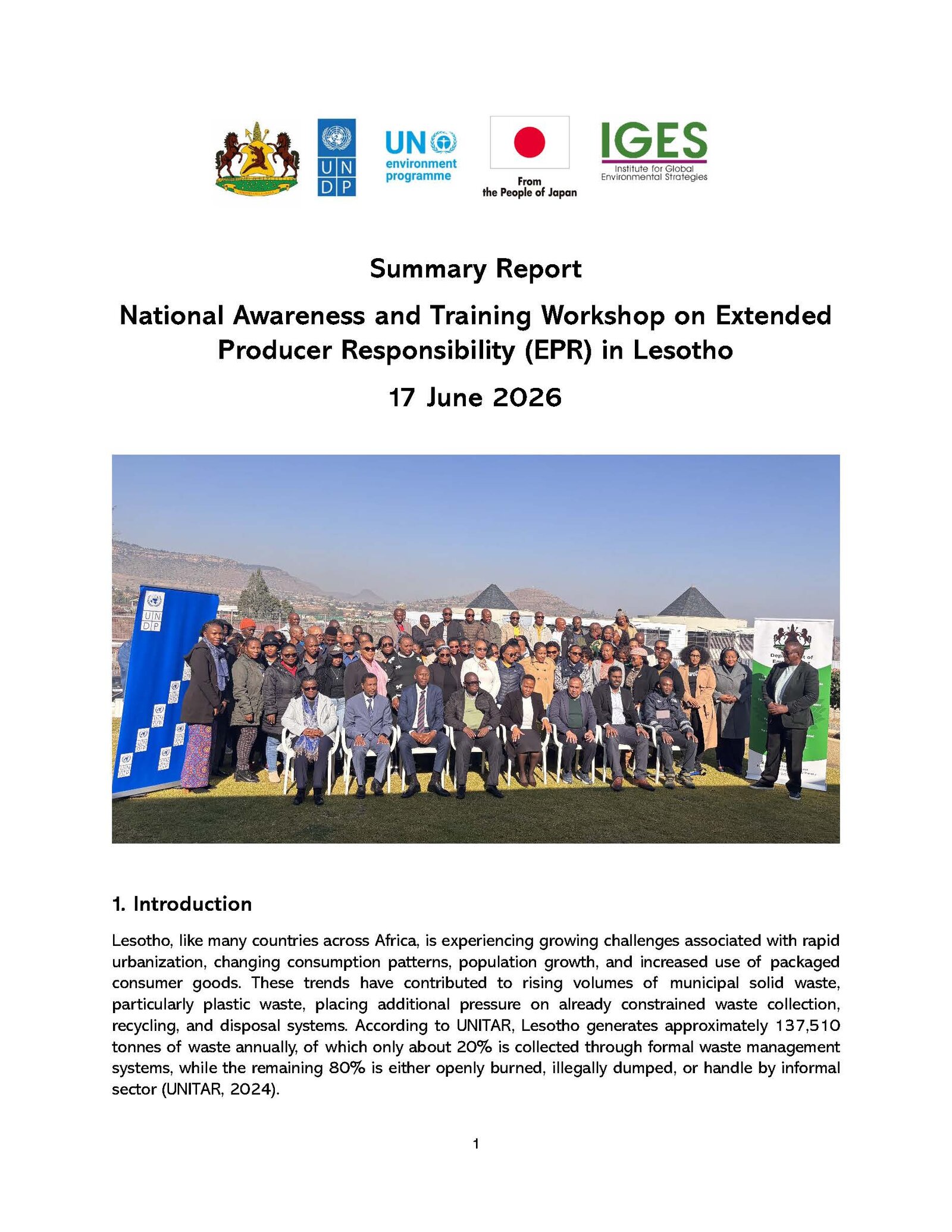
National Workshop on Integrated Waste Management in Lesotho
The National Awareness and Training Workshop on Extended Producer Responsibility (EPR), held in Maseru, Lesotho on 17 June 2026, brought together government agencies, municipalities, producers, academia, civil society, development partners, and informal-sector representatives to explore pathways for developing an inclusive and nationally...
プロシーディングス
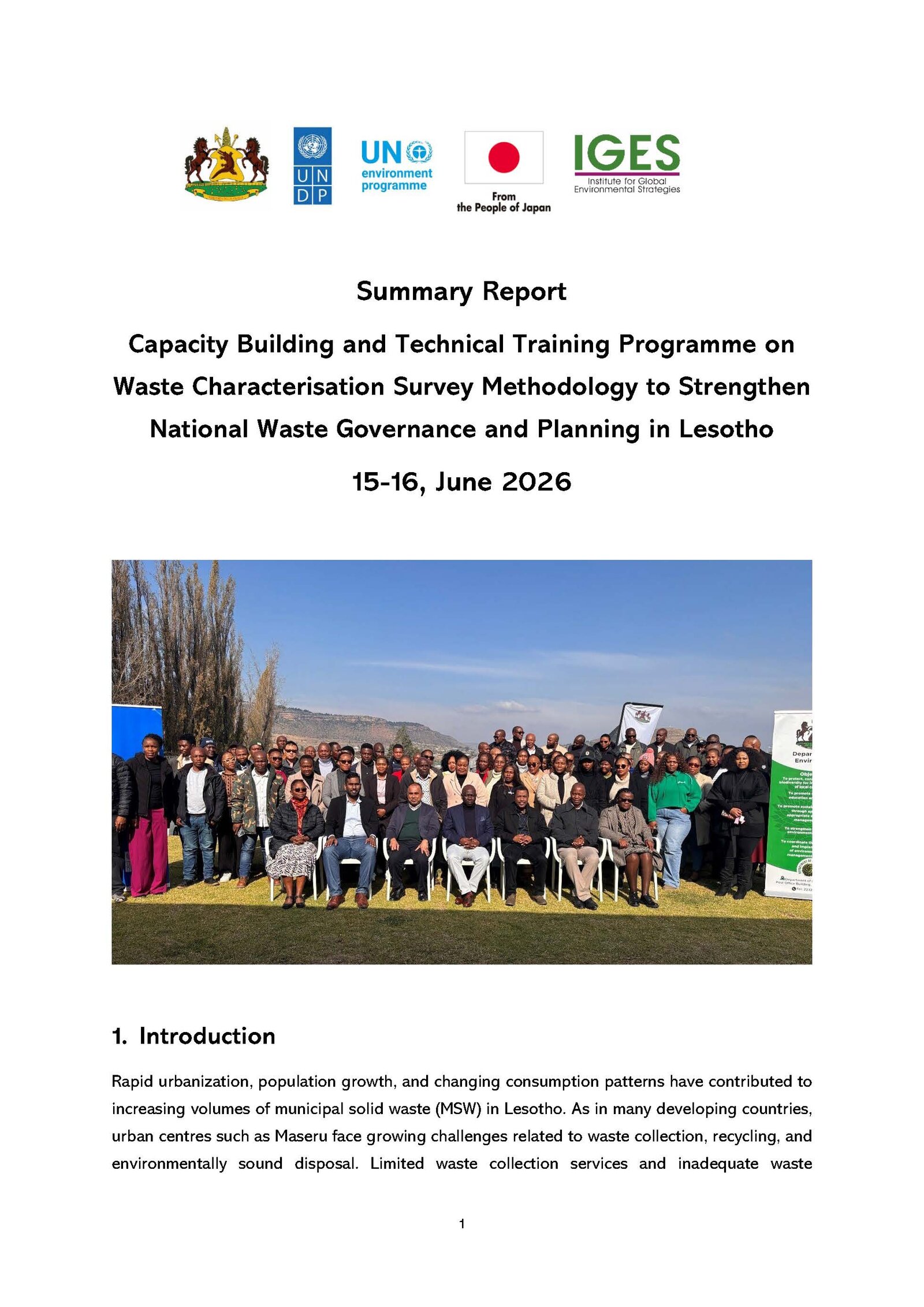
National Workshop on Integrated Waste Management in Lesotho
The Capacity Building and Technical Training Programme on Waste Characterisation Survey Methodology, held in Lesotho on 15–16 June 2026, aimed to strengthen national capacity for evidence-based waste governance and planning. Organized by UNEP-IETC, IGES-CCET, UNDP, the Ministry of Environment and Forestry, and the National University of Lesotho...
ディスカッションペーパー
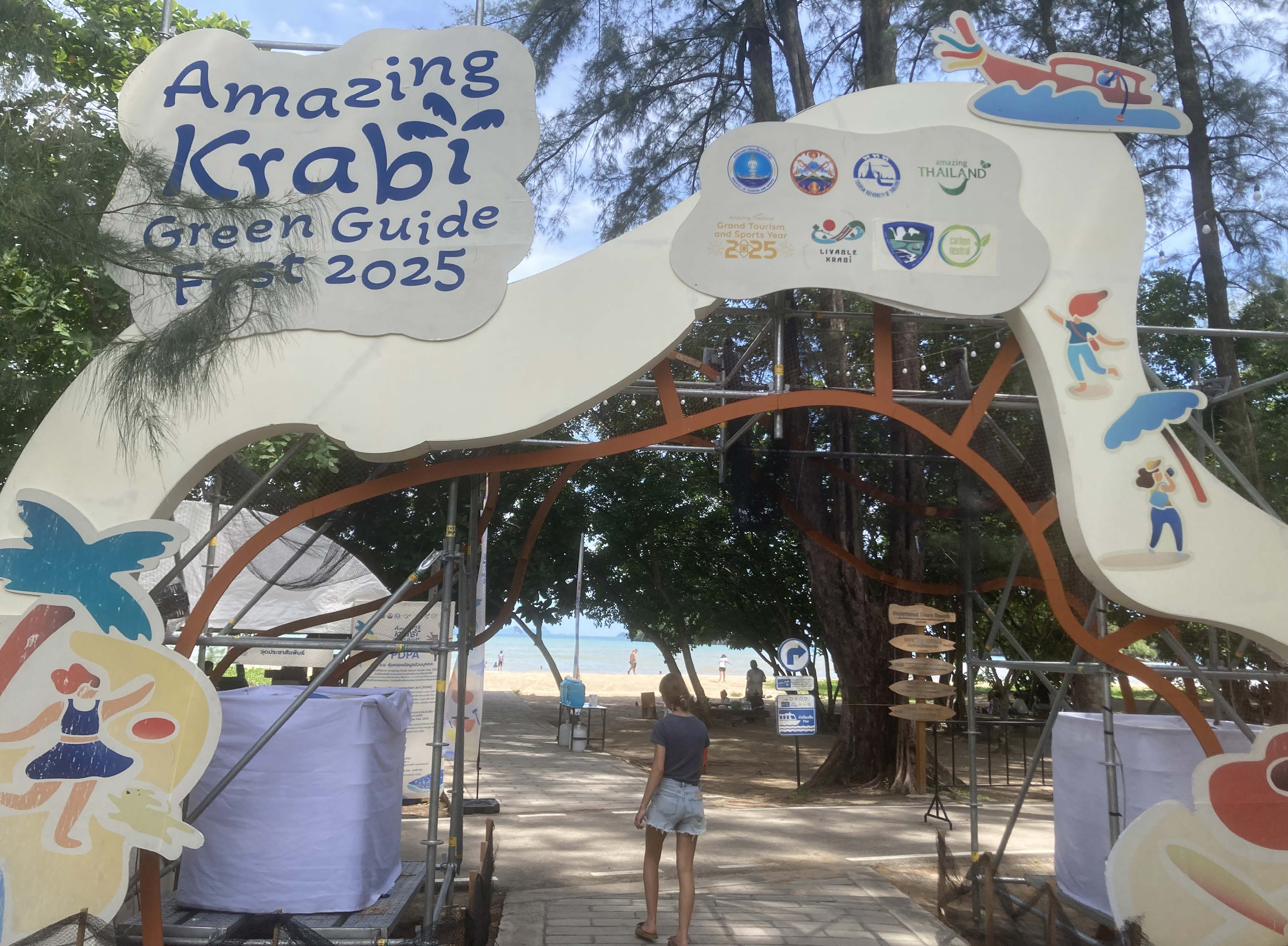
Tourism is a key driver of economic growth in Thailand, but it also generates significant environmental and socio-economic pressures, particularly in coastal destinations such as Krabi. Increasing plastic pollution, resource stress, and socio-economic inequalities highlight the limitations of conventional tourism models and the need for more...
査読付論文
Waste Management Bulletin所収
This study provides an indicative comparative assessment of the factors underlying these challenges by examining policy content, regulatory enforcement, and institutional capacity related to OWB across ten selected Asian countries: Cambodia, China, India, Iraq, Jordan, Laos, the Maldives, Nepal, Pakistan, and Thailand. The researchers employed a...
政策プロセスへの提言
This paper outlines a comprehensive strategy for Lao PDR to eliminate open waste burning (OWB), a prevalent disposal method caused by limited waste collection services. It emphasizes that OWB is a major source of toxic air pollutants like PM2.5 and black carbon, which severely threaten public health and exacerbate climate change. Rather than...
政策プロセスへの提言
This Regional Roadmap to End Open Burning of Waste in Asia provides a structured, holistic, and evidence-based guide for policymakers, practitioners, academics, and development partners to eliminate OWB in a manner that is feasible, equitable, and aligned with global and national development priorities. The Roadmap draws on literature review...
キーワード:
査読付論文
Atmospheric Environment所収
The open burning of municipal solid waste (MSW) remains a prevalent yet underreported source of greenhouse gas (GHG) and air pollutant emissions, particularly in developing and transition economies. This study updates the 2006 IPCC activity inventory methods and subsequent refinements to quantify emissions from open waste burning (OWB) in Asian...
ワーキングペーパー
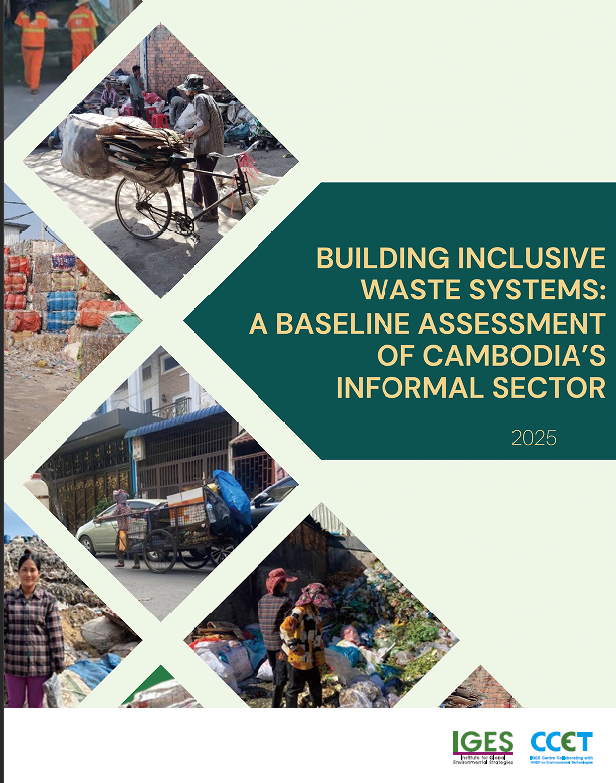
This report provides a baseline assessment of Cambodia’s informal waste sector, with a focus on Phnom Penh and Battambang. Informal waste workers, including street pickers, door-to-door collectors, pickers at landfills and junkshop operators, play a critical yet undervalued role in the country’s waste management system. They are responsible for a...
プロシーディングス
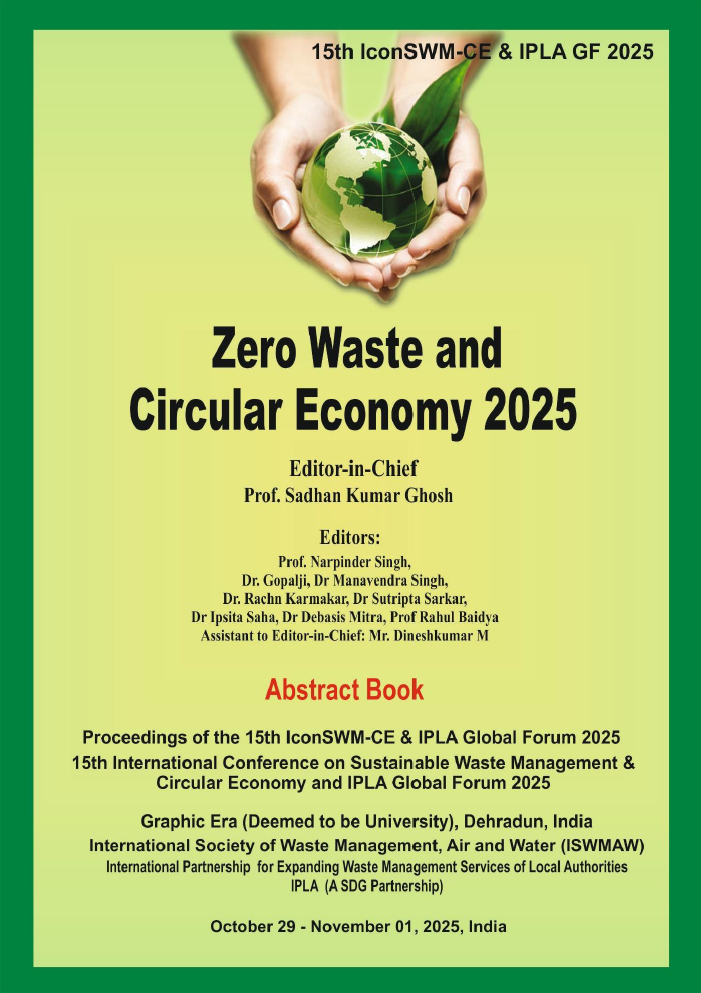
15th International Conference on Sustainable Waste Management - Circular Economy (IconSWM-CE) and IPLA Global Forum 2025
In South Asia, a region facing rapid economic growth, immense population pressure, and high climate vulnerability, the circular economy (CE) has become a critical imperative for sustainable development. This study provides a comparative overview of the CE landscape across eight South Asian countries: Afghanistan, Bangladesh, Bhutan, India, Maldives...
プレゼンテーション
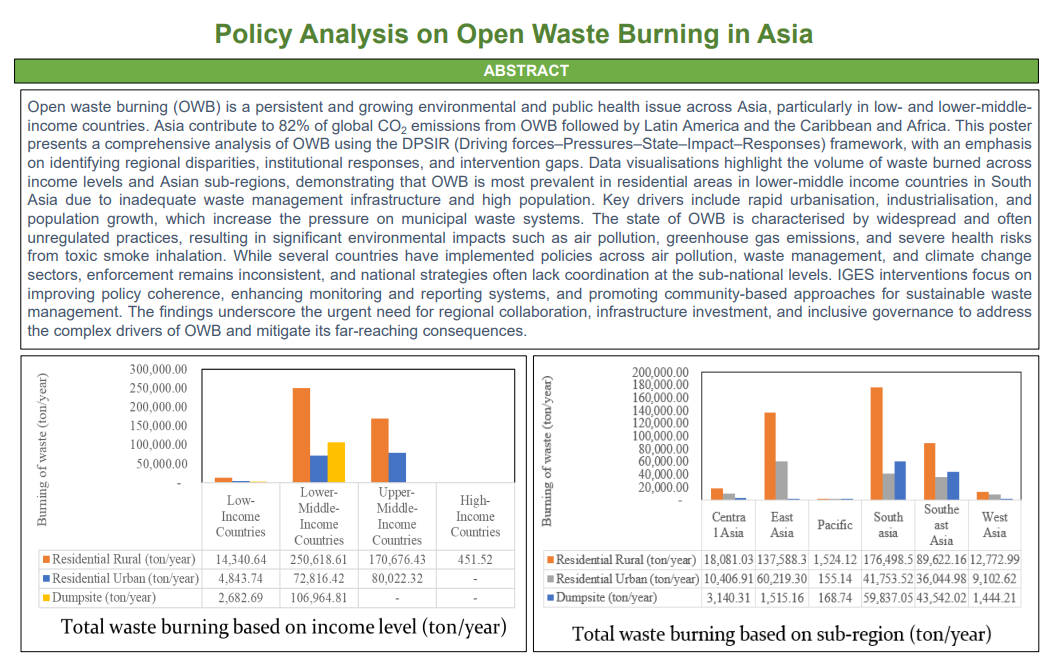
ISAP 2025
Open waste burning ( is a persistent and growing environmental and public health issue across Asia, particularly in low and lower-middle-income countries in Asia contribute to 82% of global CO 2 emissions from OWB, followed by Latin America and the Caribbean and Africa. This poster presents a comprehensive analysis of OWB using the DPSIR (Driving...
お探しのプロジェクトは見つかりませんでした。