- English
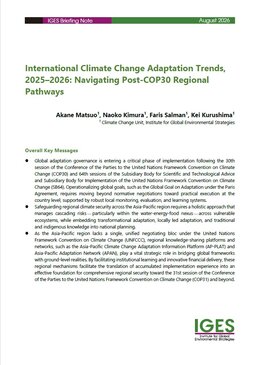


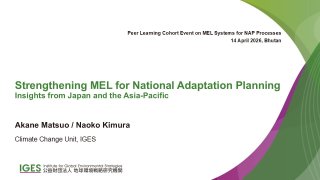
This briefing reviews key international developments in climate change adaptation in 2025–2026 and considers their implications for the Asia-Pacific region ahead of COP31. It examines the shift from global framework-setting toward implementation across major areas, including the global goal on adaptation (GGA), transformational adaptation, locally led adaptation (LLA), integrated planning, monitoring, evaluation and learning (MEL), traditional and indigenous knowledge (TIK), and adaptation finance. Particular attention is given to the role of regional cooperation in bridging global frameworks with national and local implementation.
Overall Key Messages
- Global adaptation governance is entering a critical phase of implementation following the 30th session of the Conference of the Parties to the United Nations Framework Convention on Climate Change (COP30) and 64th sessions of the Subsidiary Body for Scientific and Technological Advice and Subsidiary Body for Implementation of the United Nations Framework Convention on Climate Change (SB64). Operationalizing global goals, such as the Global Goal on Adaptation under the Paris Agreement, requires moving beyond normative negotiations toward practical execution at the country level, supported by robust local monitoring, evaluation, and learning systems.
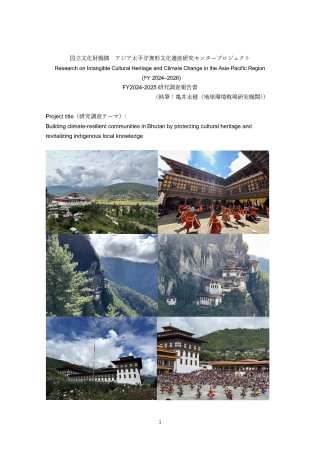
- Safeguarding regional climate security across the Asia-Pacific region requires a holistic approach that manages cascading risks―particularly within the water-energy-food nexus―across vulnerable ecosystems, while embedding transformational adaptation, locally led adaptation, and traditional and indigenous knowledge into national planning.
- As the Asia-Pacific region lacks a single, unified negotiating bloc under the United Nations Framework Convention on Climate Change (UNFCCC), regional knowledge-sharing platforms and networks, such as the Asia-Pacific Climate Change Adaptation Information Platform (AP-PLAT) and Asia-Pacific Adaptation Network (APAN), play a vital strategic role in bridging global frameworks with ground-level realities. By facilitating institutional learning and innovative financial delivery, these regional mechanisms facilitate the translation of accumulated implementation experience into an effective foundation for comprehensive regional security toward the 31st session of the Conference of the Parties to the United Nations Framework Convention on Climate Change (COP31) and beyond.
著者:
日付:
著作権:
地球環境戦略研究機関
トピック:
Languages:
- English