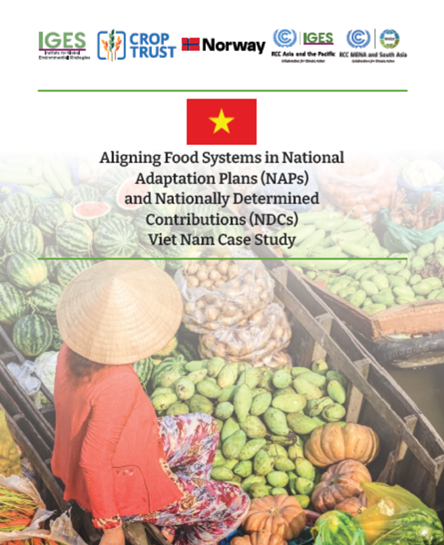
Viet Nam stands at a critical juncture. Its status as a global agricultural powerhouse faces an escalating threat from climate change. This case study outlines the strategic integration of food systems into Viet Nam’s National Adaptation Plans (NAP) and Nationally Determined Contributions (NDC), emphasizing the pivotal role of genebanks and seed...
Results 101 - 110 of 9178 (Sorted by date)
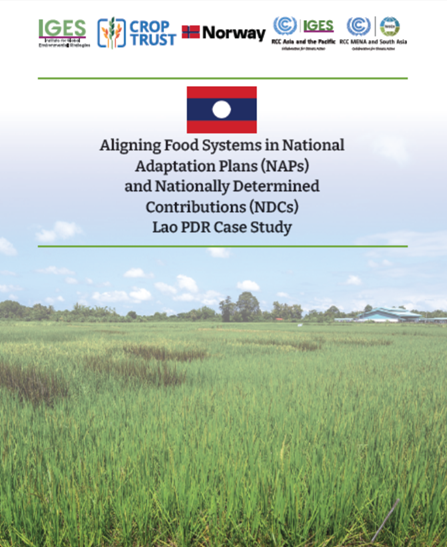
Lao PDR is at a pivotal moment in its development trajectory. As a least developed country (LDC) on track to graduate by 2026, its food systems face increasing pressure from climate change, structural transformation, and resource constraints. Agriculture remains central to livelihoods, food security, and poverty reduction, employing nearly three...
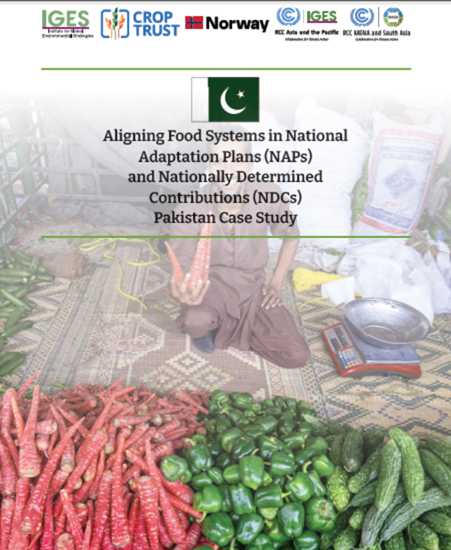
As one of the world’s most climate-vulnerable nations and a country in which agriculture underpins the livelihoods of tens of millions, making food systems climate resilient is a key priority for Pakistan. This case study examines the strategic integration of food systems into Pakistan’s National Adaptation Plan (NAP) and Nationally Determined...
In Sustainability Science
Achieving sustainable food systems that align with planetary and human health goals requires assessments of dietary patterns, supply structures, and environmental impacts. This study presents the first comprehensive evaluation of Japan’s food system, using the EAT-Lancet Healthy Reference Diet (EHRD) as a benchmark. First, this study developed an...
In Environment: Science and Policy for Sustainable Development
The term “transformative change” has evolved into a one-stop-shop concept in sustainability circles. In peer-reviewed journals in the fields of environmental science, agricultural and biological sciences, and earth and planetary sciences, it appeared only 75 times prior to 2010, but 1,012 times from 2010 to 2019, and 3,534 times in just the first...
Commentary (Op. Ed)
In INSIDE CHINA 現地滞在レポート 第95回/April 2026 Global Net Series
地球・人間環境フォーラムの月刊環境情報誌、「グローバルネット」に地球環境戦略研究機関(IGES)北京事務所所長の小柳秀明が、中国の最新環境事情を偶数月で連載しています。
Peer Learning Cohort Event on Monitoring, Evaluation, and Learning (MEL) Systems for NAP Processes
Monitoring, Evaluation, and Learning (MEL) systems are essential for effective National Adaptation Plans (NAPs), a need intensified by the adoption of the Belém Adaptation Indicators at COP30. Japan addresses this through a statutory framework under the Climate Change Adaptation Act, managing progress via a systematic five-year PDCA cycle. This...
In Water
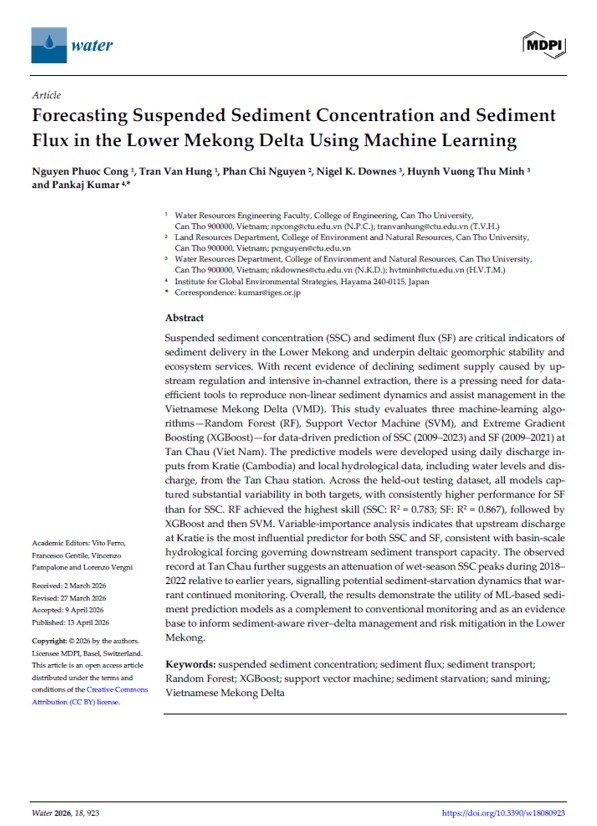
Suspended sediment concentration (SSC) and sediment flux (SF) are critical indicators of sediment delivery in the Lower Mekong and underpin deltaic geomorphic stability and ecosystem services. With recent evidence of declining sediment supply caused by upstream regulation and intensive in-channel extraction, there is a pressing need for...
タラオセアンジャパン・上智大学アイランド・サステナビリティ研究所共催「海洋プラスチック問題と国際条約の行方」
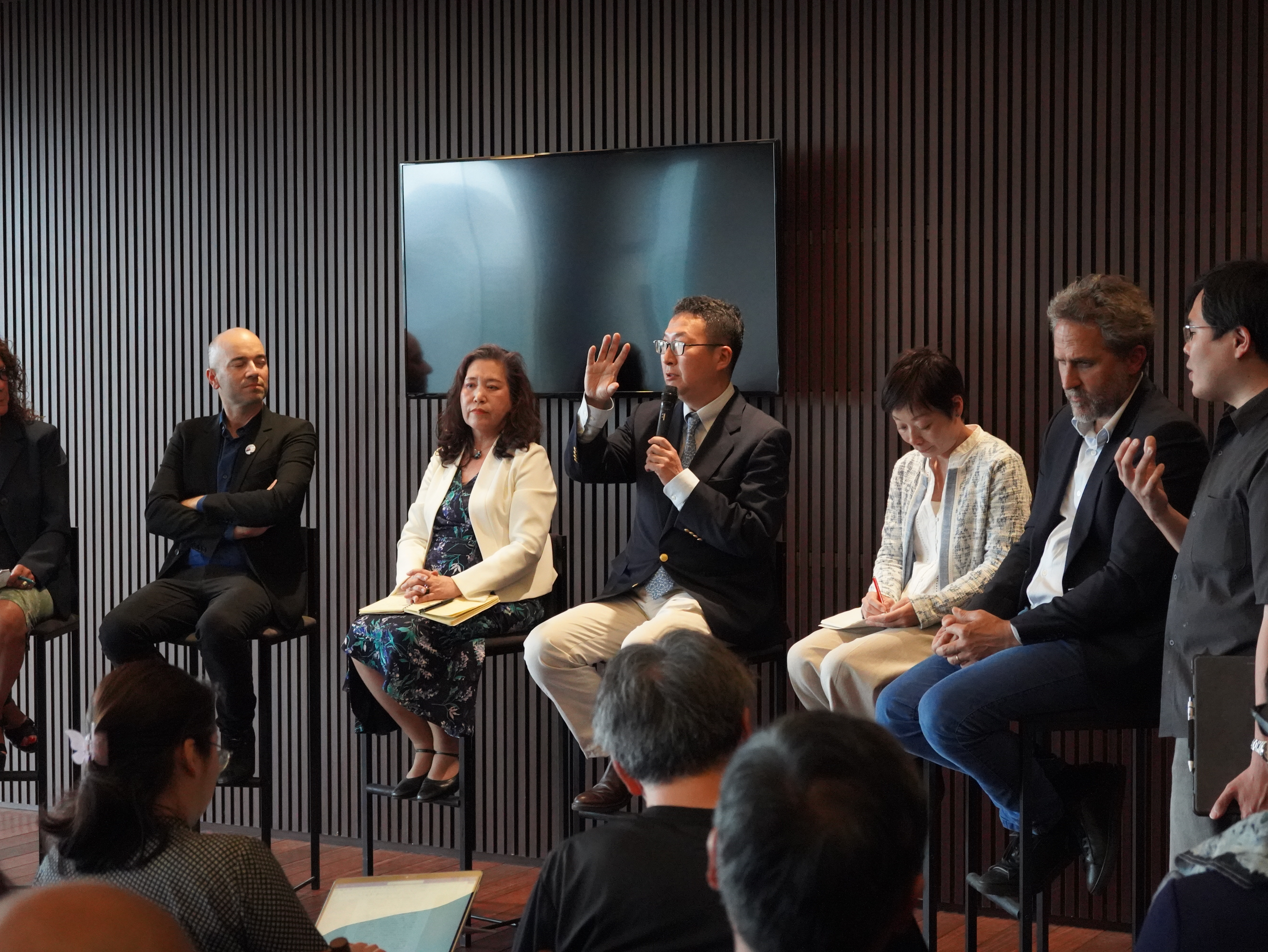
タラオセアンジャパンと上智大学アイランド・サステナビリティ研究所が共催したセミナーに、IGES堀田が登壇し、途上国の抱えるプラスチック廃棄物問題について講演を行った。本セミナーには、環境省の海洋プラスチック汚染対策室 中山室長および長谷室長補佐、タラオセアン財団 ロマン・トゥルブレ エグゼクティブディレクター、タラオセアンジャパン シルバン・アゴスティーニ 理事、上智大学 織朱美教授、あん・まくどなるど教授が登壇し、海洋プラスチック条約交渉の今後の方向性などについて意見交換を行った。
Keywords: