

8927件中 4001~4010件 (日付順)
コンファレンスペーパー
The 4th 3R International Scientific Conference on Material Cycles and Waste Management (3RINCs)
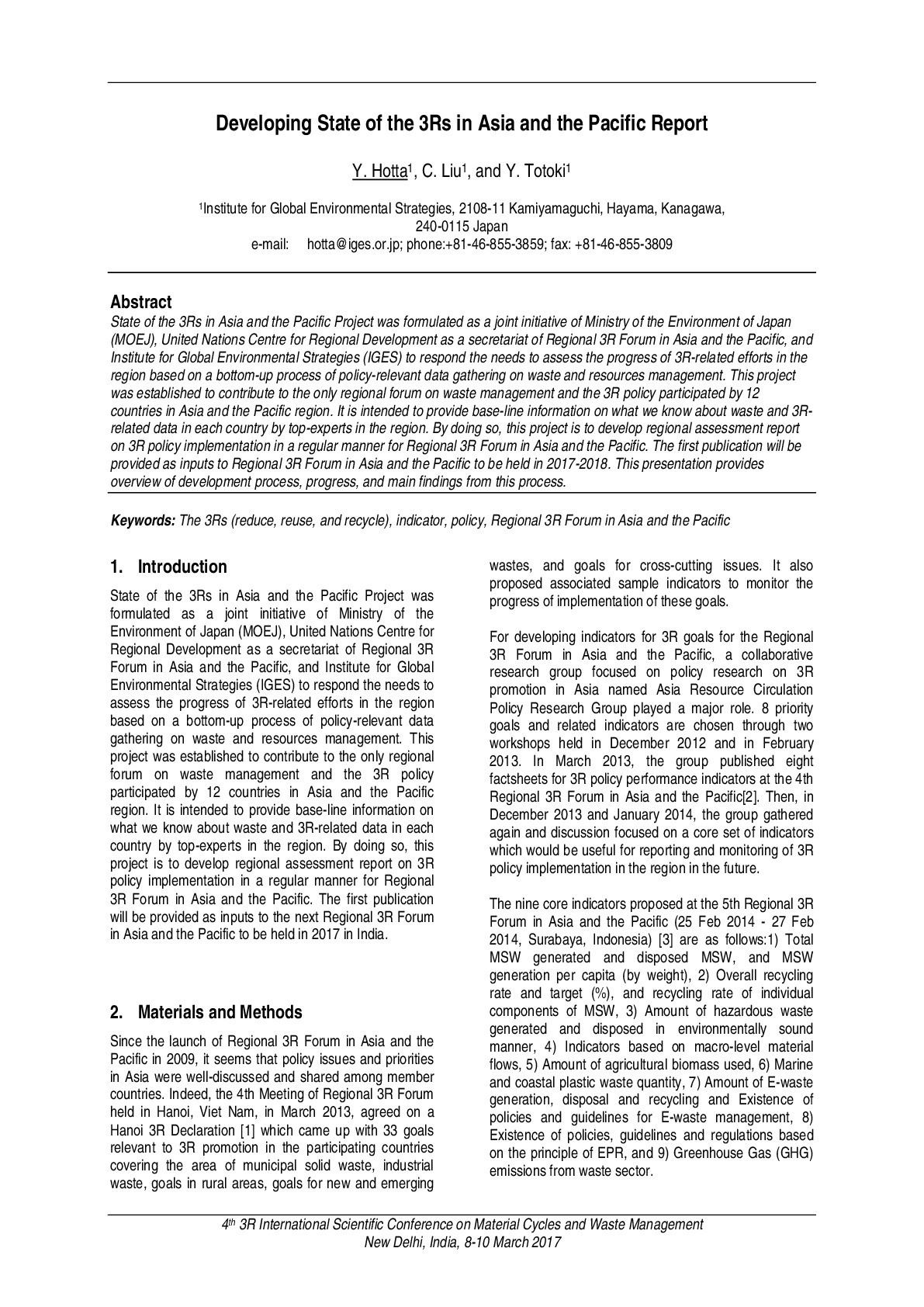
State of the 3Rs in Asia and the Pacific Project was formulated as a joint initiative of Ministry of the Environment of Japan (MOEJ), United Nations Centre for Regional Development as a secretariat of Regional 3R Forum in Asia and the Pacific, and Institute for Global Environmental Strategies (IGES) to respond the needs to assess the progress of 3R...
委託報告書

This is the summary of the country drought risk reduction assessment done as a part of the JICA-ASEAN project on integrating climate change adaptation and disaster risk reduction into institutional and policy processes (CN 20). Drought risk reduction planning in Vietnam is centralized and even inter-provincial planning is not done locally; one of...
委託報告書
国立環境研究所が開発した、インドネシア国ボゴール市のAIMモデルに資する、エネルギー消費実態等に係るデータや情報を、文献調査や中央政府並びに自治体政府職員へのヒアリングを通して、収集した。 次に、ボゴール市の気候変動対策として優先順位が高い、「公共交通の整備」および「環境配慮型建物制度」の詳細を、ボゴール農科大学とIGESの共催で、フォーカス・グループ・ディスカッション(FGD)を開催し、情報を収集した。政府職員、学識者、事業者代表、コミュニティ・リーダーのグループ・ディスカッションから、課題と政策オプションが明らかになった。最後に、国立環境研究所が主催する国内有識者会合(平成28年9月6日及び平成29年2月28日の二回)、国際セミナー(平成29年1月26日~28日、開催地:インドネシア...
プロシーディングス
the First High-Level Follow-up Dialogue on Financing for Development in Asia and the Pacific
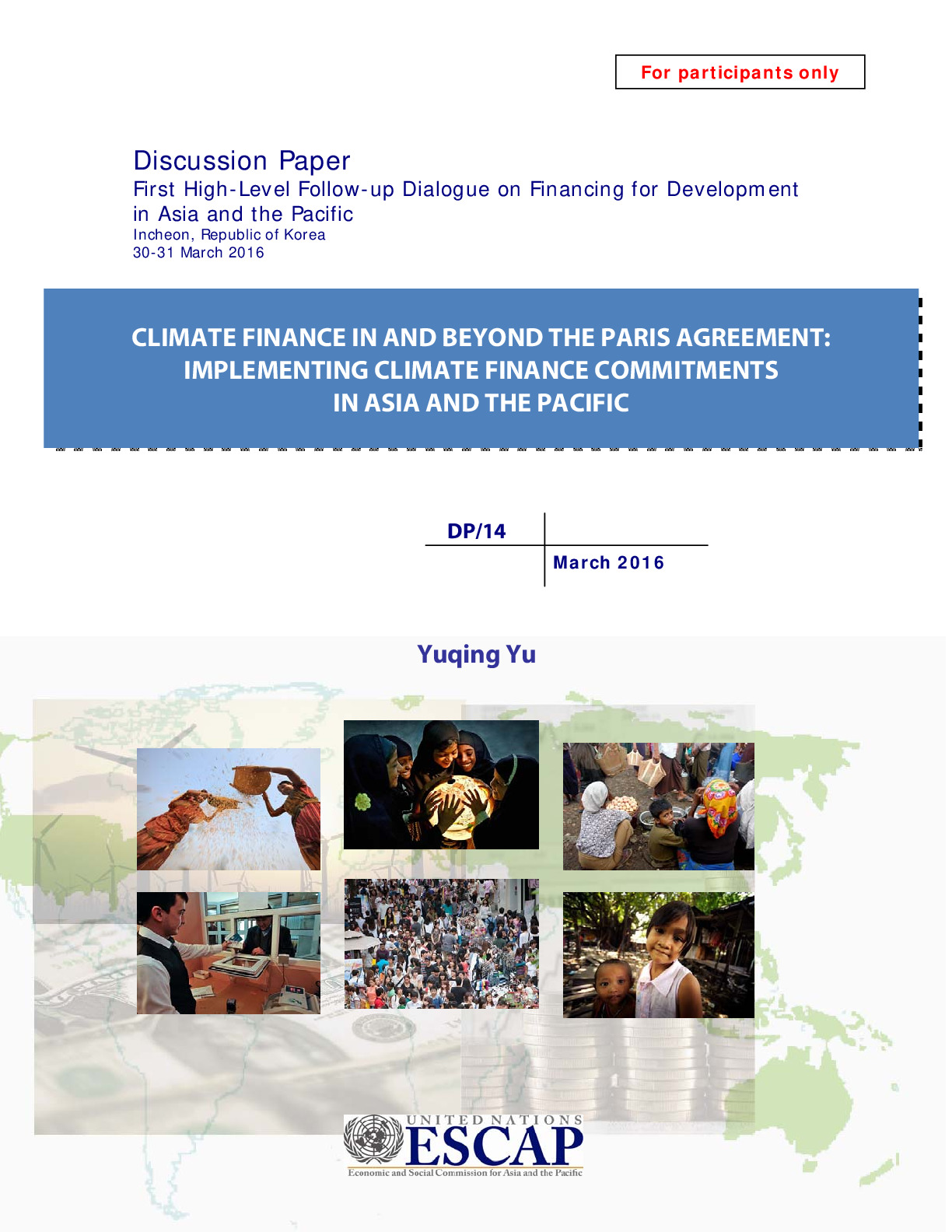
This discussion paper serves as a background paper to facilitate the discussions at the First High-Level Follow-up Dialogue on Financing for Development in Asia and the Pacific, to be held on 30-31 March, 2016 in Incheon, Korea and aims to address the following question: In what way will the Paris Agreement bring out opportunities and challenges of...
データ/ツール
本データベースは、国連気候変動枠組条約(UNFCCC)事務局等を通じて公表されているCDMプロジェクトの情報を基に、調査分析のため基礎資料となるように、プロジェクト開発プロセス及びクレジット発行やその手続きに関する重要な項目を抽出しデータベース化したものです。UNFCCC事務局とIGESは2008年5月にCDMデータ交換に関する覚書を締結し、本データベースについて、UNFCCC事務局とデータ分析に関する協力を実施しています。 2017年8月以降、日本語版データベースは更新されません。データベースの最新版にアクセスするには、下記の英語版を参照ください。 https://pub.iges.or.jp/pub/iges-cdm-project-database...
データ/ツール
本データは、国連気候変動枠組条約(UNFCCC)事務局に報告されている附属書I国の温室効果ガスの排出量や割当量等の公開情報を分かりやすく整理することを目的とし、それらの情報をとりまとめたものです。 2017年8月以降、日本語版データベースは更新されません。データベースの最新版にアクセスするには、下記の英語版を参照ください。 https://pub.iges.or.jp/pub/iges-ghg-emissions-database データベースで使用される用語に関するガイダンスについては、用語の日本語一覧を参照してください。 https://pub.iges.or.jp/pub/List-of-Japanese-Terms-Databases
データ/ツール
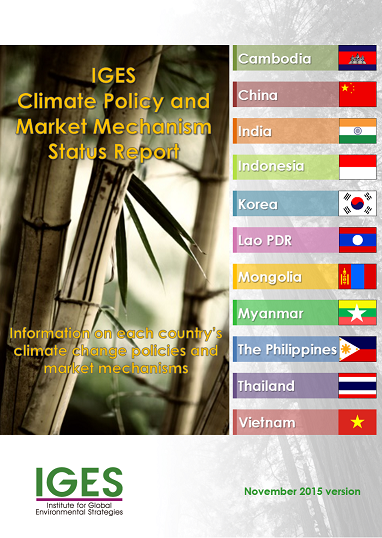
The Climate Policy and Market Mechanism Status Report aims at providing updated information on the status of national climate policy and market mechanisms in the selected countries. A particular focus is set on mechanisms such as the CDM, national ETS and the JCM. Countries covered: Cambodia, China, India, Indonesia, Korea, Lao PDR, Mongolia...
データ/ツール
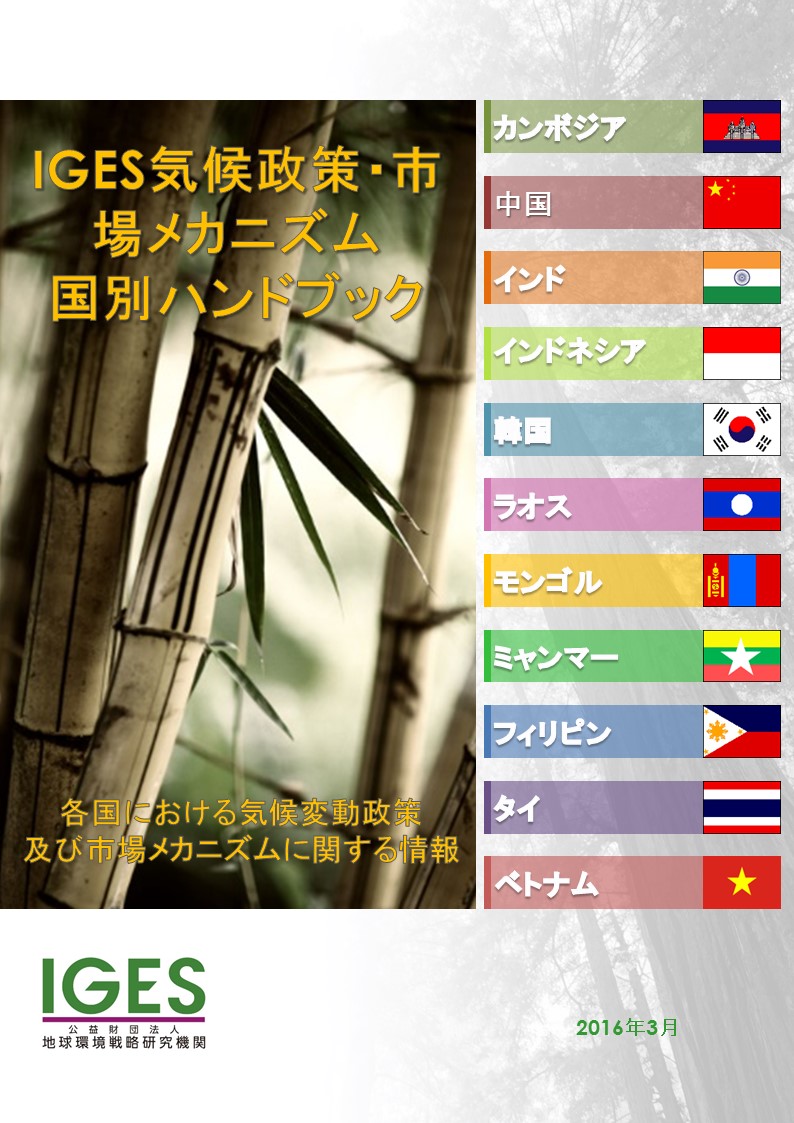
The fact sheets aim at providing updated information on the status of national climate policy and market mechanisms including the CDM, GHG emissions and NAMAs for Cambodia, China, India, Indonesia, Korea, Laos PDR, Mongolia, Myanmar, the Philippines, Thailand and Viet Nam. In Japanese. 各国の気候変動政策及び市場メカニズム(CDM、温室効果ガス排出量及び国内における適切な緩和行動(NAMAs)...
データ/ツール

IGES CDM Review and Rejected Project Database aims to provide organised information on project activities and the issuance of certified emission reductions (CERs) that have been reviewed and, as a result of review process, rejected by the CDM Executive Board (the Board). The listed information helps users to organise the current status and the...
データ/ツール

本データは、国連の気候変動枠組条約(UNFCCC)下のCDM理事会におけるプロジェクト登録申請中に登録再審査(レビュー)要請を受けて再審査が実施されたプロジェクト(「登録再審査実施プロジェクト」)、再審査の結果登録申請が却下されたプロジェクト(「登録却下プロジェクト」)、またCER発行手続き中に再審査要請を受けたプロジェクト(「CER発行再審査実施・発行却下プロジェクト」)について整理をしています。 Remarks: English version: http://pub.iges.or.jp/modules/envirolib/view.php?docid=986 IGES再審査・却下CDMプロジェクトデータ分析: http://pub.iges.or.jp/modules...