5件中 1~5件 (日付順)
レポートチャプター
Sixth ASEAN State of the Environment Report所収
▪ Environmental education (EE) and education for sustainable development (ESD) are needed to develop individuals’ and communities’ capacities through transformative education to build sustainable environments, economies, and societies through reconfiguring the relationship between people, the environment, the economy, and society. ▪ AMS face...
ポリシーブリーフ
T7/G7 Task Force 2 Wellbeing, Environmental Sustainability, and Just Transition Policy Brief
著者:
Dirksen
Jakob
Ojha
Nabaghan
Javed
Sumbal
Moumné
Rolla
Rigoni
Gabriela
Yano
Satoko
Lima de Miranda
Katharina
Stracquadaini
José
Ikram
Aamer
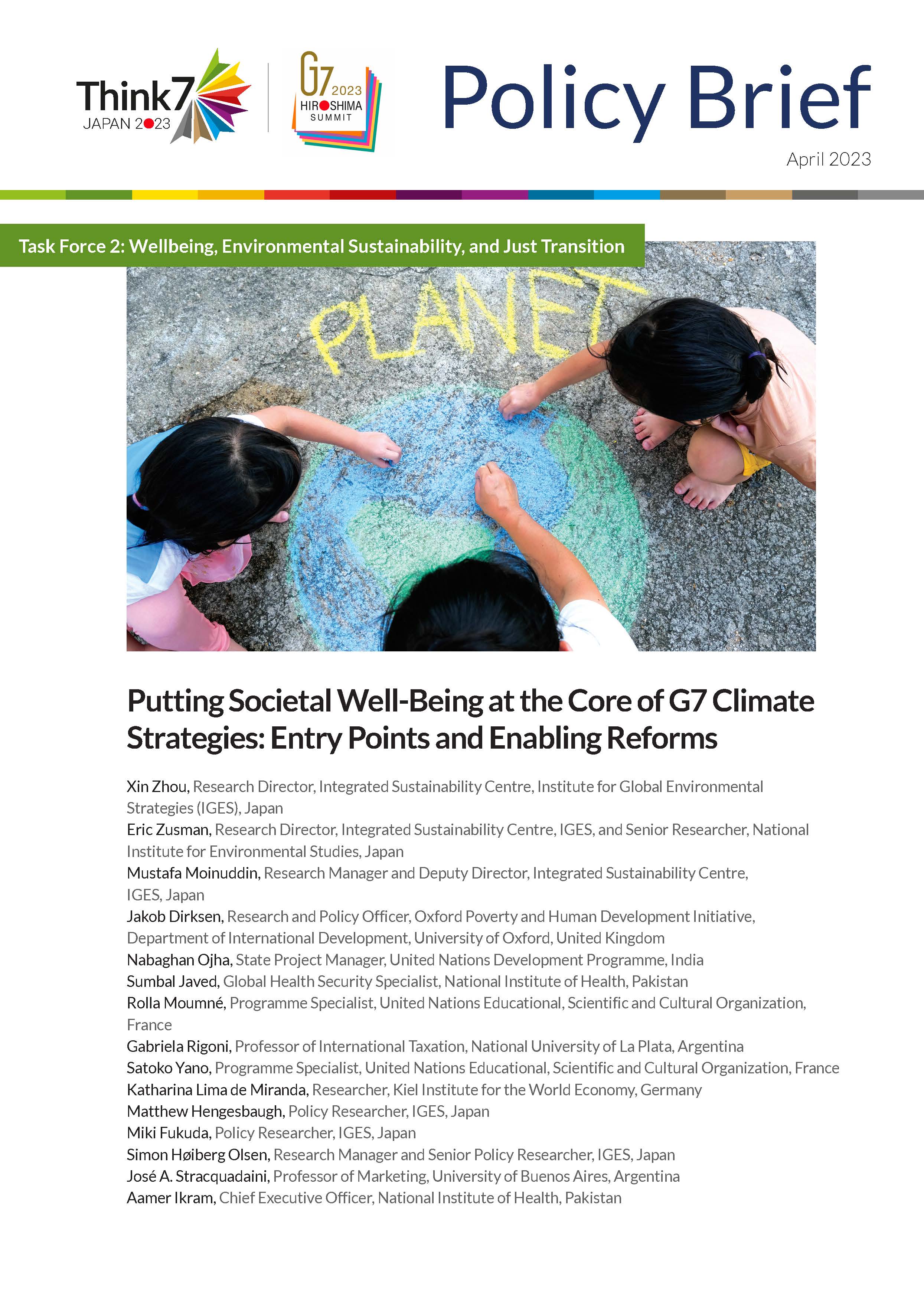
Integrating the Sustainable Development Goals (SDGs) into climate actions is essential for a healthy planet and people. Yet, national climate policies and international climate support programs often fail to explicitly recognize the interconnections between climate concerns and other priorities covered under the SDGs. This failure can leave key...
ブリーフィングノート
著者:
Chathura Welivitiya
Nadeeka Amarasinghe
Dilshani Dinushika
Lahiru Maduranga
Krishantha Buddhika Somaratne
Thakshila Kumari
Hansi Sadu Tharaka
Chamoth Teran
Plastic pollution represents one of the most pressing environmental issues facing the planet today. This is largely due to the increasing mass production of single-use plastics (SUPs) including packaging materials and other items that are quickly outpacing the world’s ability to respond. Social, cultural and economic shift in addition to the...
コンファレンスペーパー
LoCARNet 11th Annual Meeting
The IPCC Sixth Assessment Report highlighted the critical connections between climate actions and sustainable development, including both synergies and trade-offs. Managing the trade-offs through policy design is strongly recommended and the Sustainable Development Goals (SDGs) are proposed as a basis for evaluating climate actions in the context...
査読付論文
Sustainability所収
There is a growing recognition of the urgent need to change citizens’ lifestyles to realise decarbonised societies. Consumption-based accounting (carbon footprinting) is a helpful indicator for measuring the impacts of peoples’ consumption on climate change by capturing both direct and embedded carbon emissions. However, while carbon footprinting...