

99件中 41~50件目を表示中 (日付順)
その他アーティクル

気候変動問題を戦略的に考えよう(8)キャップアンドトレード排出権取引制度(ETS)とは その2 制度設計の目指すもの
その他アーティクル
その他アーティクル
その他アーティクル
その他アーティクル
その他アーティクル
ポリシーレポート
The ACP White Paper 2020 offers policymakers pragmatic recommendations on how they can mobilise finance, strengthen policies, and build capacities to implement at scale many of the 25 solutions in UNEP’s Air Pollution in Asia and the Pacific: Science-based Solutions.
政策プロセスへの提言
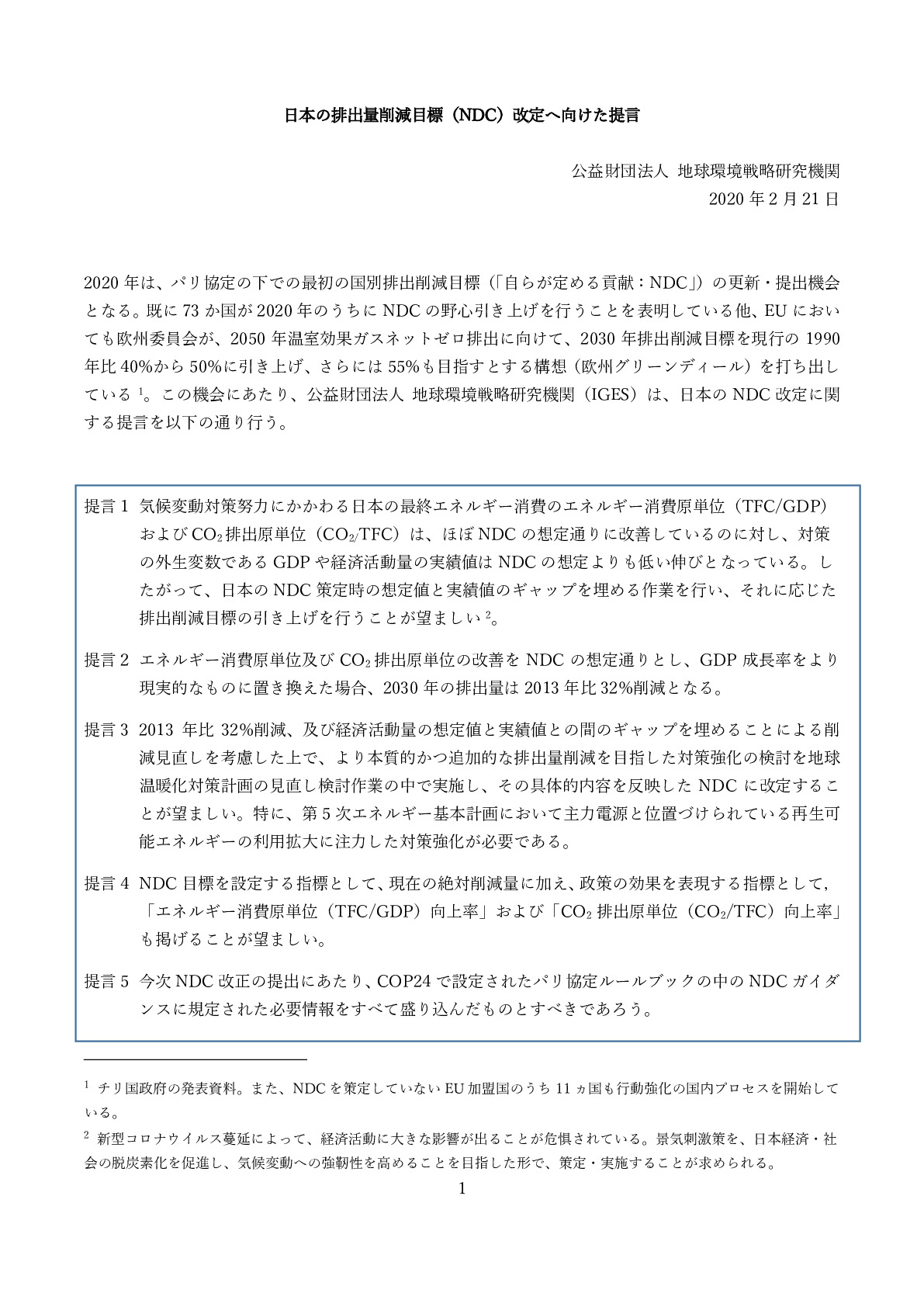
現在の日本のNDCでは、2030年に2013年度比で温室効果ガス排出量26%削減を目標としていますが、NDC策定時の経済成長想定を実績値にあわせてより現実的な数値とすることで、目標には引き上げの余地があることが明らかになっています。IGESはその研究成果に基づき、経済成長想定をより現実的な数値にした場合の2030年削減量を示すと同時に、それをベースとして、さらなる引き上げを議論すべきであることを提言します。
政策プロセスへの提言
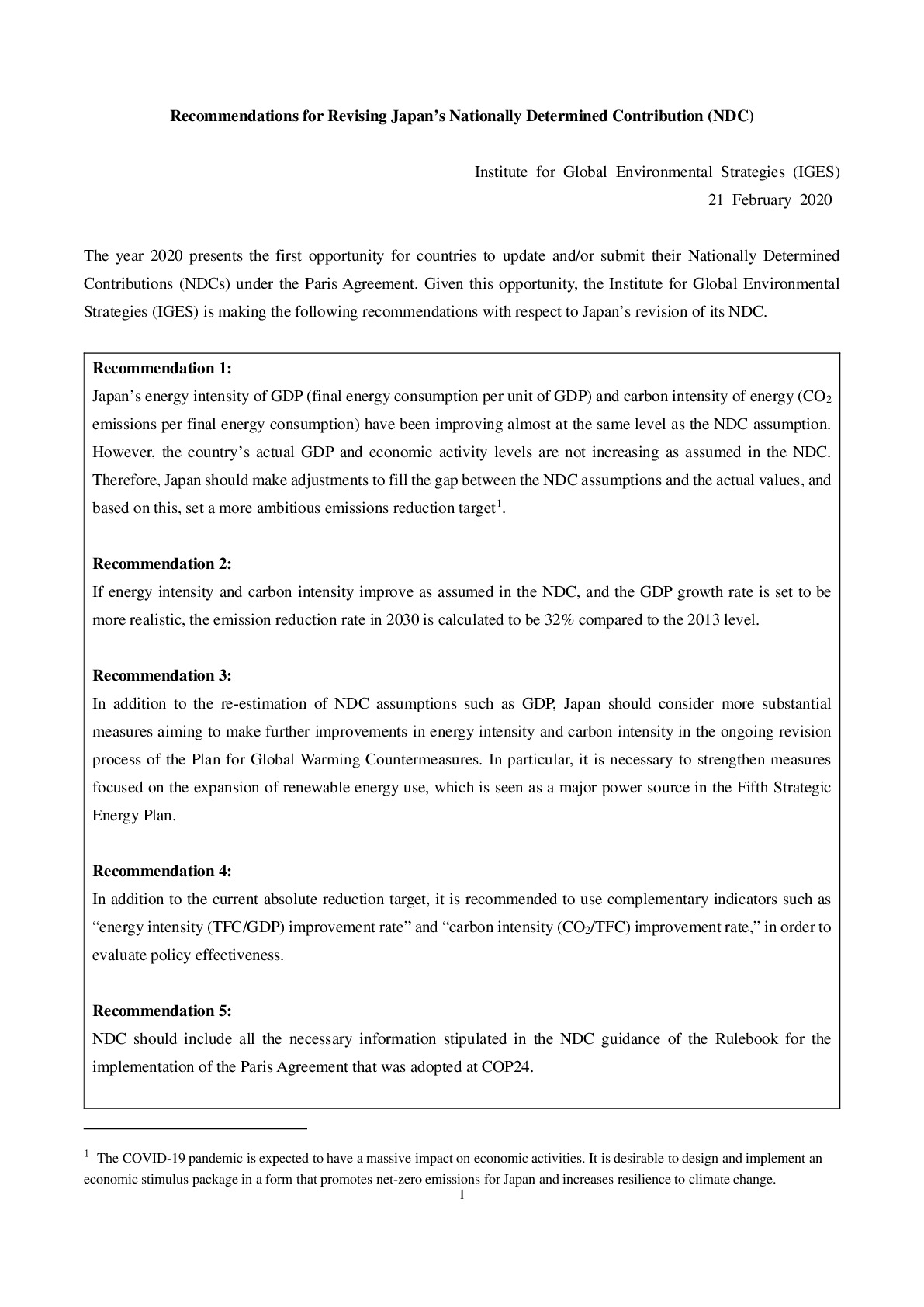
Japan's current NDC targets a 26% reduction in greenhouse gas emissions by 2030 compared to the 2013 level. However, it has become clear that there is room to raise this target by matching the economic growth assumptions made when the NDC was formulated with actual figures, and making them more realistic. Drawing on the study’s results, IGES...
その他アーティクル
お探しのプロジェクトは見つかりませんでした。