
8930件中 7071~7080件 (日付順)
その他アーティクル

ディスカッションペーパー
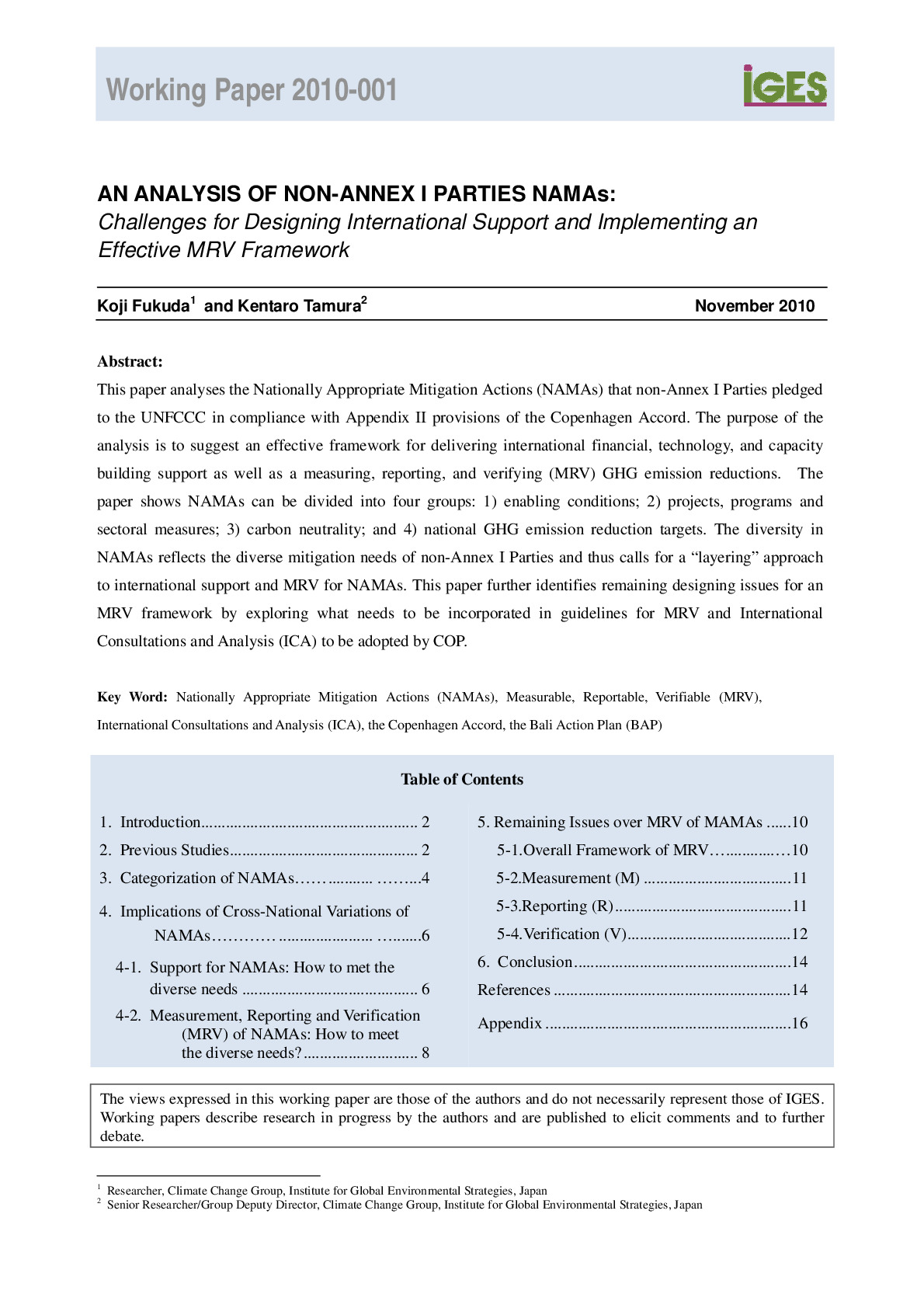
This paper analyses the Nationally Appropriate Mitigation Actions (NAMAs) that non-Annex I Parties pledged to the UNFCCC in compliance with Appendix II provisions of the Copenhagen Accord. The purpose of the analysis is to suggest an effective framework for delivering international financial, technology, and capacity building support as well as a...
プレゼンテーション


プレゼンテーション
ディスカッションペーパー

On 22 September 2009, Chinese President Hu Jintao spoke at the UN Climate Change Summit that “(China is) to significantly reduce CO2 emissions per GDP (CO2 intensity) from 2005 level by 2020”. Around the same time, a government-related think tank in China published scenario analysis report that provided actual numbers to support such CO2 intensity...
リサーチレポート

The fast growth of economy in developing Asian countries has caused various problems on the environment. Corporate environmental management (CEM) is still obviously poor and thus needs to be greatly improved. With aims to fill up the gap of policies encouraging better CEM, Kansai Research Centre, Institute for Global Environmental Strategies (KRC...