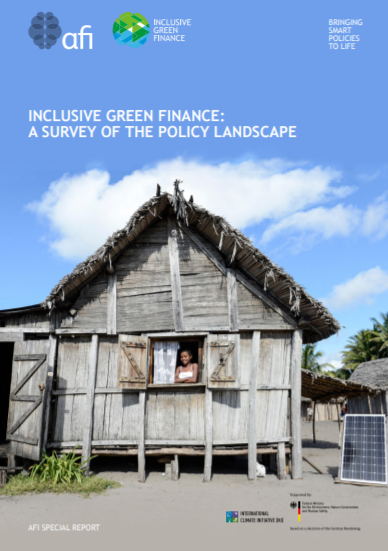
Climate change deepens poverty; whereas, researches have shown financial inclusion is one of the best ways to build resilience to the climate change effects. Inclusive green finance is an evolving policy area in which member institutions of the Alliance for Financial Inclusion (AFI) are beginning to implement policies, regulations and national...
- クリア
- 発行年: (-) 2019
- 研究ユニット: (-) バンコク地域センター
12件中 1~10件 (日付順)
1. The GEO Series The Global Environment Outlook (GEO) series is the key process by which the United Nations Environment Programme (UNEP) fulfils its mandate of “keeping the environment under review”. The series comprises global and regional assessments, thematic assessments, and other derivative reports. As a key collaborating centre of UNEP, the...
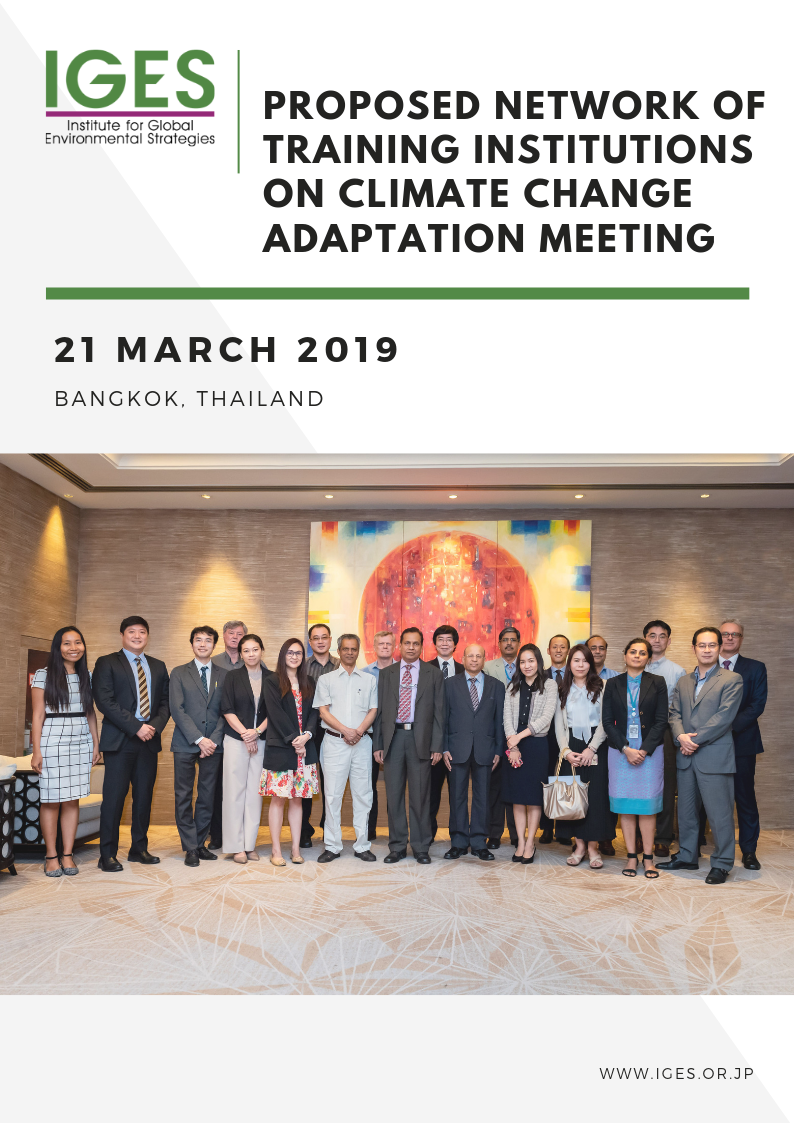
Despite the region’s vulnerability to climate change, there is a serious lack of capacity in Asia for developing quality project proposals for climate change adaptation that can attract financing, which largely hinders implementation of Paris Agreement and the 2030 Development Agenda. Capacity building programmes are needed so that local...
Global Environment Outlook - GEO-6: Healthy Planet, Healthy People所収
This chapter introduces Part B of GEO-6: Policies, Goals, Objectives and Environmental Governance: An Assessment of Their Effectiveness.
Global Environment Outlook - GEO-6: Healthy Planet, Healthy People所収
The importance of good policy design cannot be overstressed. Some common elements are: i. setting a long-term vision and avoiding crisis-mode policy decisions, through inclusive, participatory design processes; ii. establishing a baseline, quantified targets and milestones; iii. conducting ex ante and ex post cost–benefit or costeffectiveness...
Global Environment Outlook - GEO-6: Healthy Planet, Healthy People所収
The composition of Earth’s atmosphere is one of the major determinants of a healthy planet, influencing the climate, ecosystems and human health. This is highlighted by the existence of a direct or indirect link between the challenges of air pollution, climate change, stratospheric ozone depletion, persistent bioaccumulative and toxic (PBT)...
Global Environment Outlook - GEO-6: Healthy Planet, Healthy People所収
Various policy approaches show that water quantity and quality have serious implications for human and ecosystem health, and that these interactions are driven by changes in multiple sectors. Governance is increasingly opened up to non-State actors, such as the private sector and civil society. Decision-making thus needs to consider the full range...
Global Environment Outlook - GEO-6: Healthy Planet, Healthy People所収
This chapter presents a set of conclusions for Part B of the sixth Global Environment Outlook (GEO-6), reached through the findings of the previous chapters about policy effectiveness (Chapters 10-17). It summarizes for policymakers what is known to work best and why, including a synthesized discussion of the limitations of the evidence available...
Global Environment Outlook - GEO-6: Healthy Planet, Healthy People所収
This chapter evaluates the capacity of environmental policies to achieve transformational change in addressing cross-cutting global sustainable development challenges. To this end, the chapter addresses the major challenges of adapting socioeconomic systems to climate change, creating a sustainable agricultural and food production system...
Global Environment Outlook - GEO-6: Healthy Planet, Healthy People所収
The 2030 Agenda for Sustainable Development, together with a range of Multilateral Environmental Agreements (MEAs), set an ambitious long-term vision for the universal pursuit of sustainable development through economic, social, environmental and institutional transformation (Chapter 20). Although progress has been made in managing some...