Results 1261 - 1270 of 9180 (Sorted by date)
Conference Paper
AIP Conference Proceedings
Author:
Tengku
Kemala Intan
Fritz
Akhmad Nuzir
Darmawan
Sriyanto
A waste bank is a unique community-based waste management system that promotes source separation of waste and recycling. This study conducted a total population sampling targeting all identified waste bank units in Medan City (N = 100) between September 2017 and February 2018. Descriptive statistics were applied to address 16 research questions and...
Presentation
Making Cities Resilient 2030 Webinar
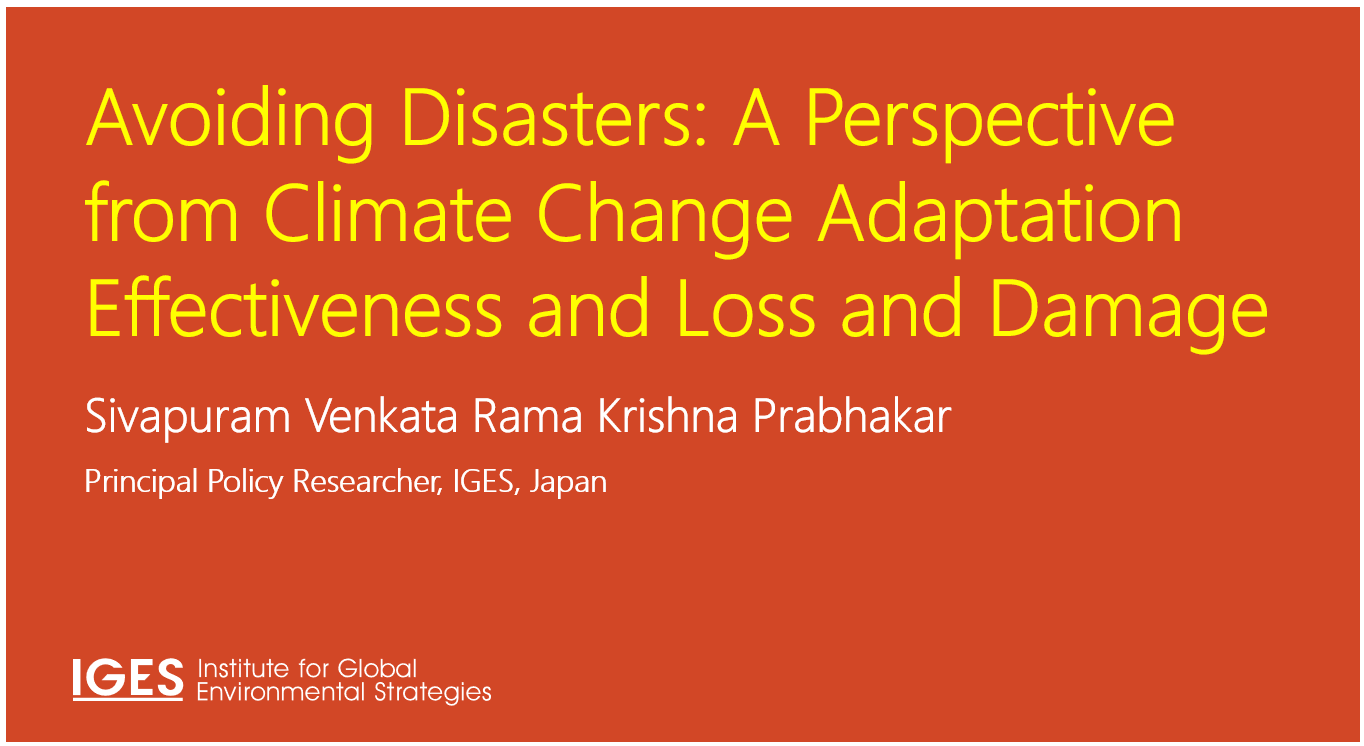
Avoiding disasters is an interesting and helpful idea to understand where we have made progress in risk reduction and where we can make further inroads. This presentation looks at the idea of avoiding disasters deeply and discusses the needed approaches to quantify and bring evidence to the front. It proposes that while evidence on avoiding...
Peer-reviewed Article
In Sustainability
Author:
Chang
Liu
Jie
Shang
Shuya
Wang
Food waste has become a pressing global issue in recent years. In China, the issue of food waste has become increasingly severe. As a provincial capital city, Harbin is also a major agricultural city in China with distinct urban and rural features. This paper uses Harbin as a case study to evaluate different strategies for preventing and reducing...
Non Peer-reviewed Article
In 隔月刊 地球温暖化
Author:
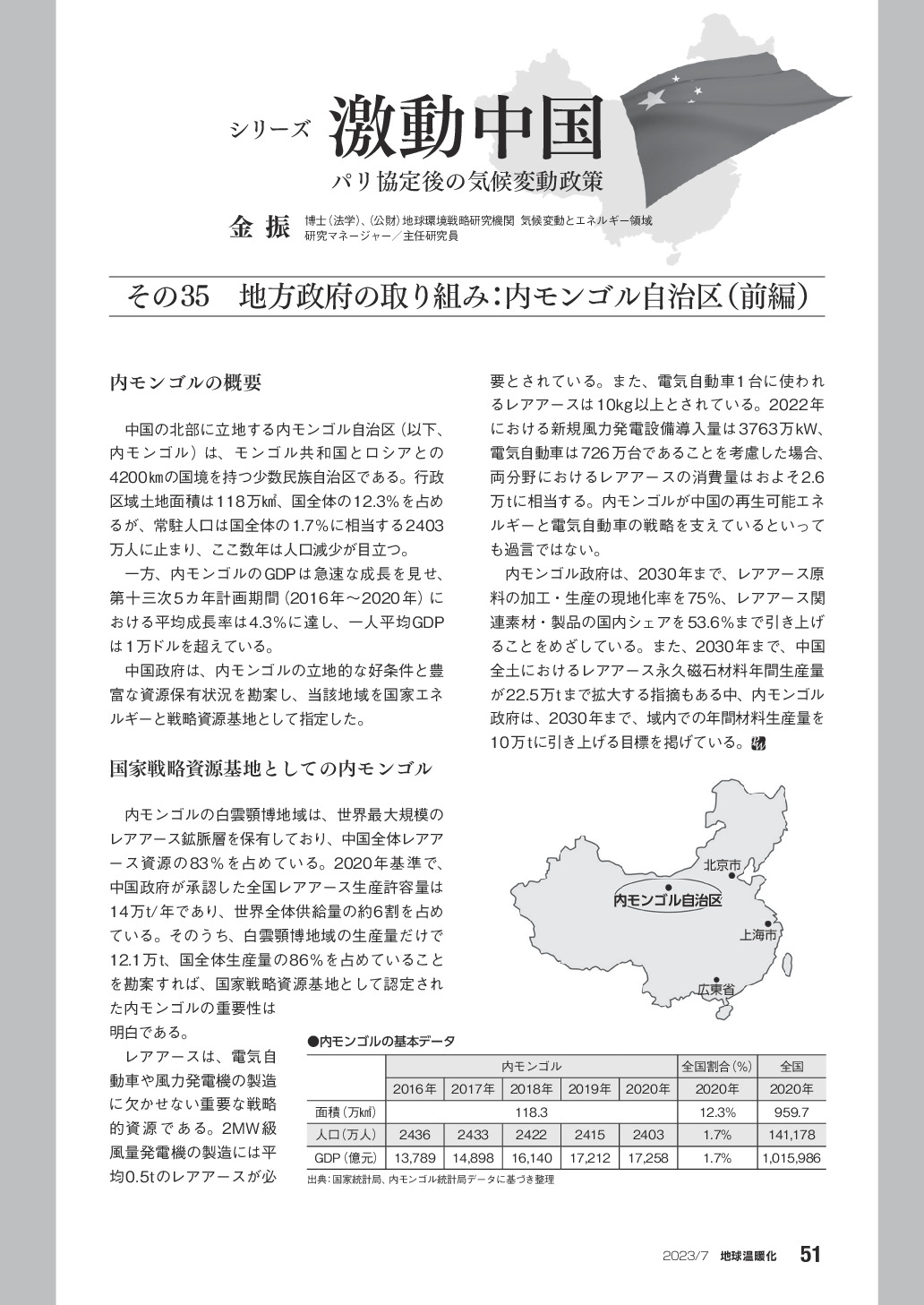
中国の最北端に立地する内モンゴル自治区(以下、内モンゴル)は、モンゴル共和国とロシアとの4200㎞の国境を持つ少数民族自治区である。行政区域土地面積は118万 ㎢、国全体の12.3%を占めるが、常駐人口は国全体の1.7%に相当する2403万人に止まり、ここ数年は人口減少が目立つ。  一方、内モンゴルのGDPは急速な成長を見せ、第十三次五カ年計画期間(2016年~2020年)における平均成長率は4.3%に達し、一人平均GDPは1万ドルを超えている。  中国政府は、内モンゴルの立地的な好条件と豊富な資源保有状況を勘案し、当該地域を国家エネルギーと戦略資源基地として指定した。
Data or Tool
本ペーパーでは、日本の自治体による気候変動・生物多様性・SDGsに相乗効果(シナジー)をもたらす取り組みを3つ紹介しています。これらの事例は2023年のハイレベル政治フォーラム(HLPF2023)にて、環境省によって世界に共有されました。
Peer-reviewed Article
In Climate
Author:
Pham Van
Toan
Lavane
Kim
Nguyen Truong
Thanh
Huynh Long
Toan
Le Anh
Tuan
Huynh Vuong Thu
Minh
Charcoal is a fuelwood commonly used for domestic purposes on the household scale in Africa and Southeast Asia. Earnings from charcoal production contribute to the income of local inhabitants in rural areas. Unfortunately, airborne emissions from the traditional charcoal-making process affect both human health and the ambient environment. A series...