Nature Positive is a global societal goal defined as ‘halt and reverse nature loss by 2030 on a 2020 baseline, and achieve full recovery by 2050’, in line with the mission of the Kunming-Montreal Global Biodiversity Framework (Nature Positive...
Open waste burning (OWB) is a source of short-lived climate pollutants (SLCPs) such as CH4, BC, and CO 2, as well as other primary air pollutants such as total suspended particulates (TSP), carbon monoxide (CO), nitrous oxide (NO x), and sulfur dioxide (SO 2). This study aims to estimate the total OWB emissions from OWB activity. This study used...
Anaerobic digestion (AD), or biogas technology, is an optimal method for municipal organic waste (MOW) treatment, recovering both material and energy. This study takes a life cycle assessment perspective and examines the economic and environmental impacts of a BIO facility in Minamisanriku Town, Japan, which has utilized MOW (kitchen/food waste and...
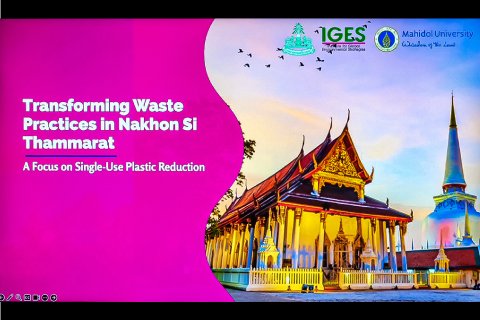
Nakhon Si Thammarat Province (Thailand) is facing a significant plastic waste challenge, generating over 9,000 tonnes of plastic waste annually, much of which is either ended up in landfills or leaked into the environment. In response, the city...