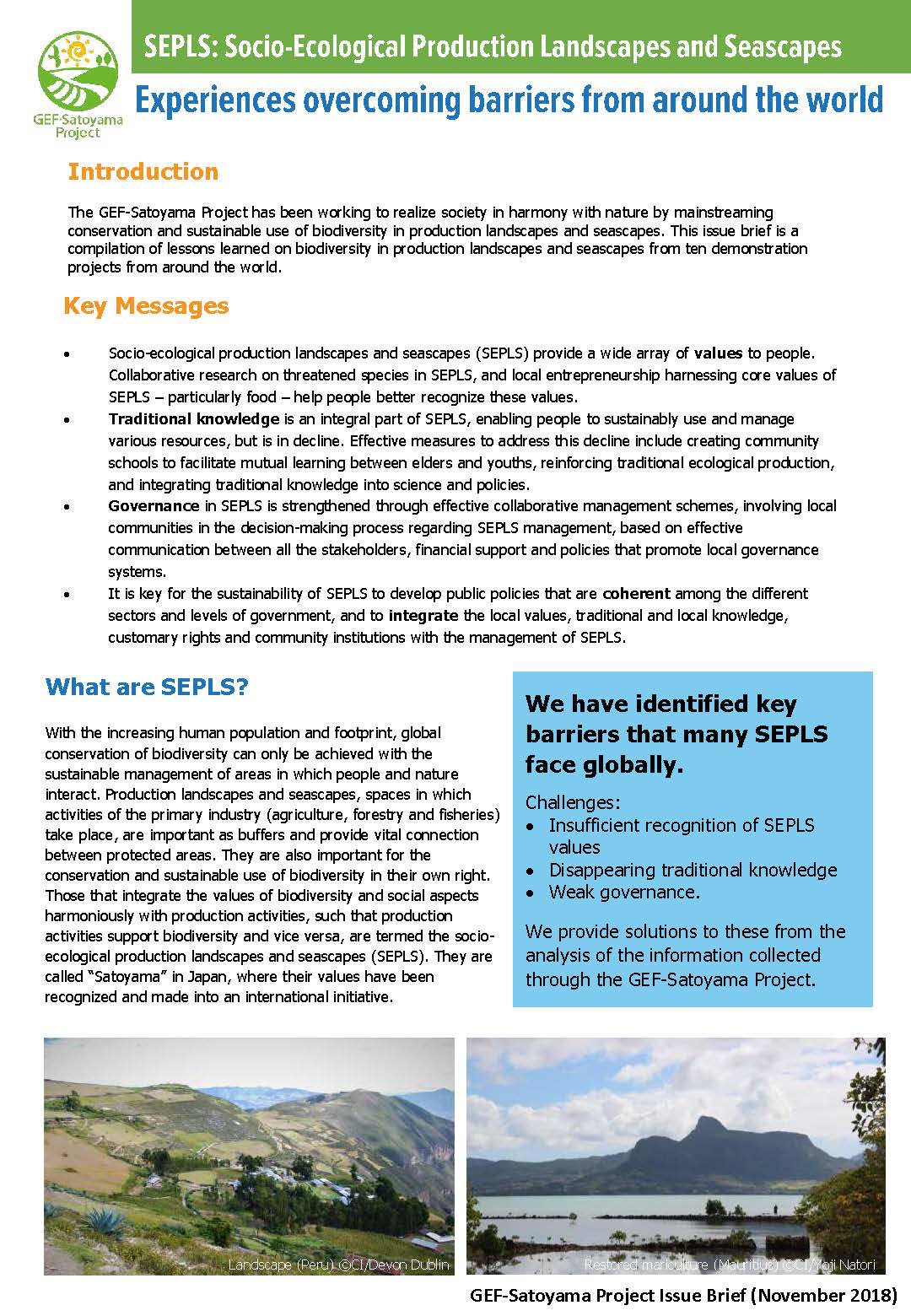
The GEF-Satoyama Project has been working to realize society in harmony with nature by mainstreaming conservation and sustainable use of biodiversity in production landscapes and seascapes. This issue brief is a compilation of lessons learned on biodiversity in production landscapes and seascapes from ten demonstration projects from around the...
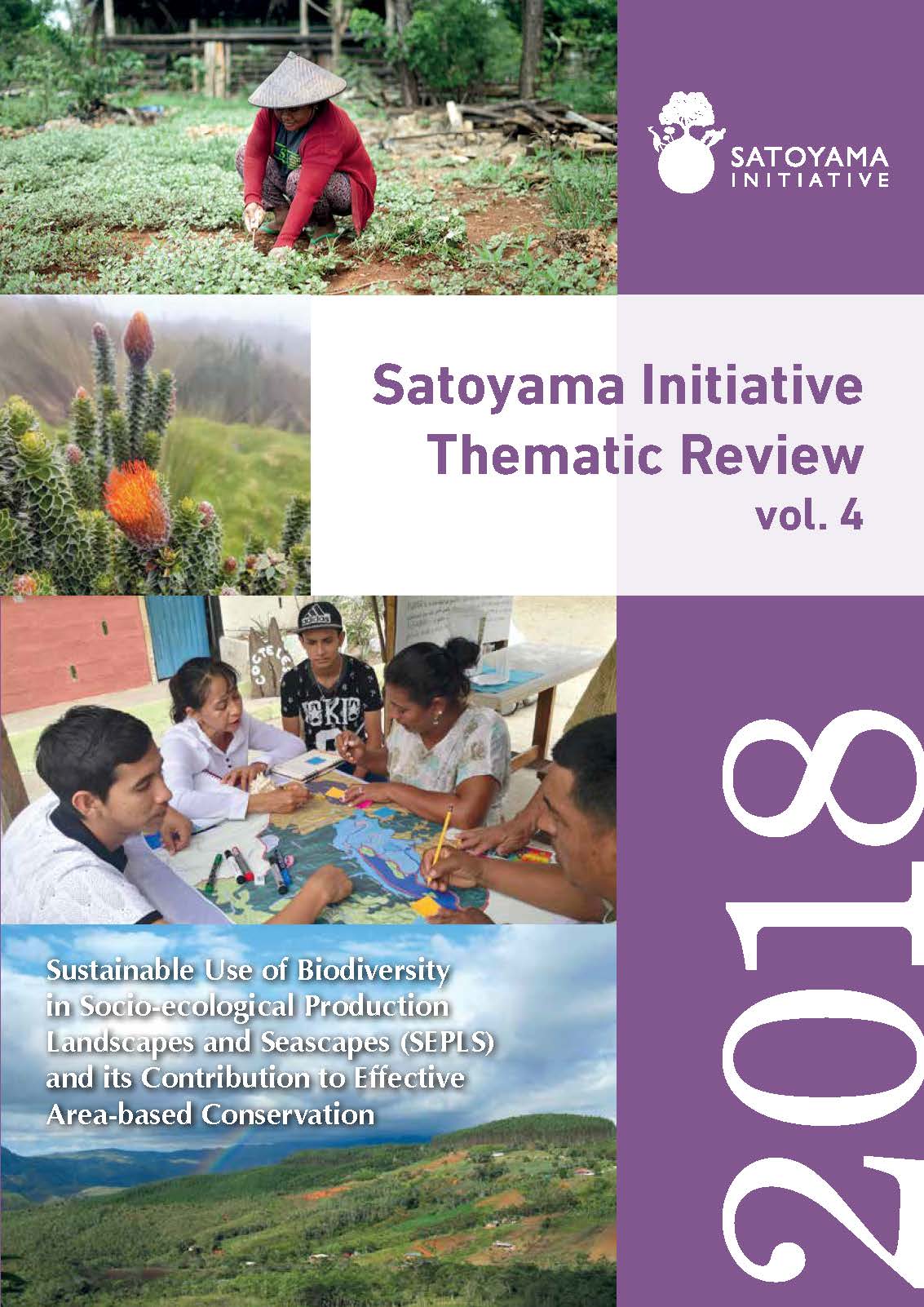
In this volume, we seek to highlight how the sustainable use of biodiversity as practiced in well-managed SEPLS can contribute to effective area-based conservation of biodiversity. The concept of SEPLS includes the idea that integrated and holistic management approaches can have mutual benefits for biodiversity and livelihoods, sustainably...
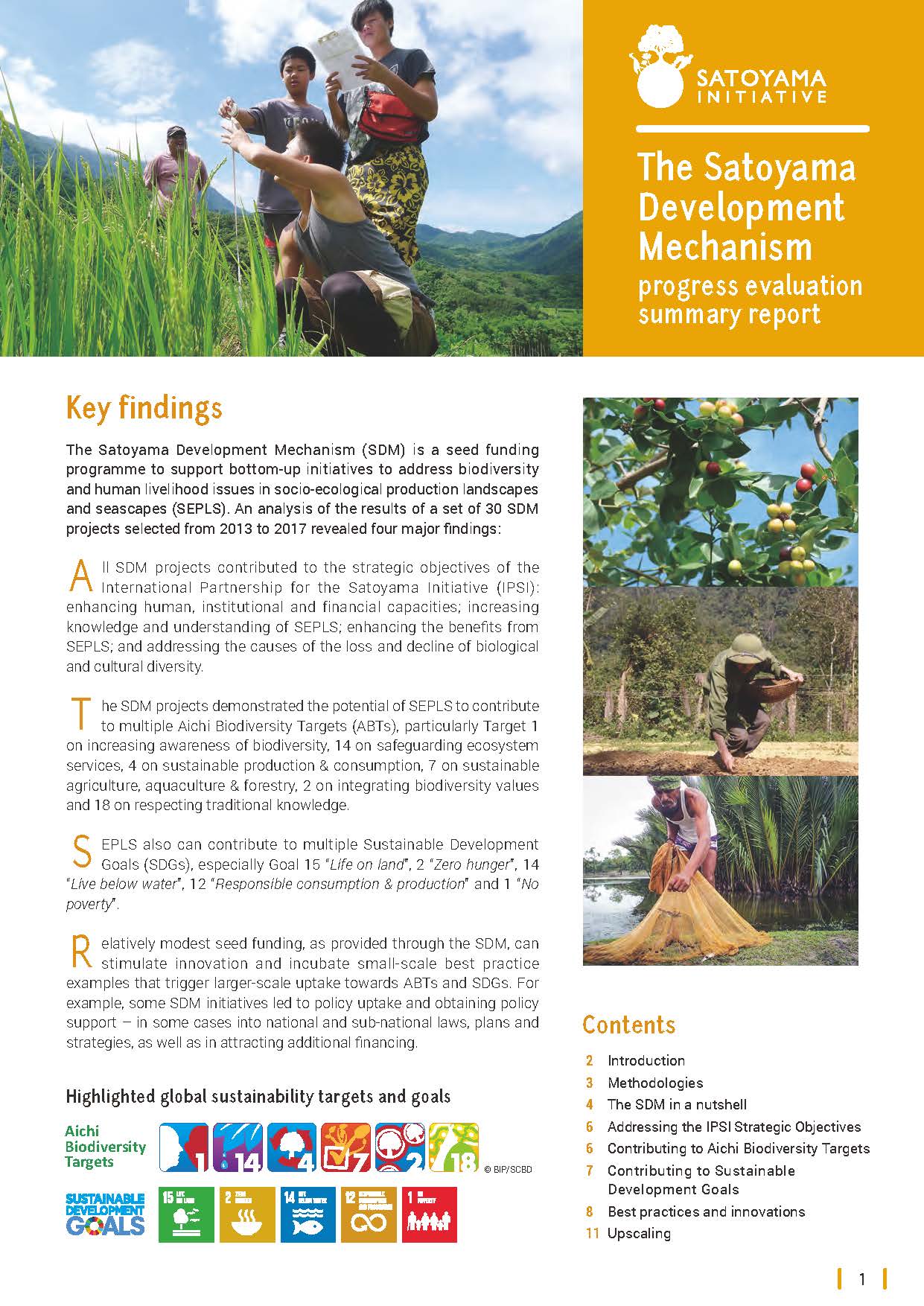
The Satoyama Development Mechanism (SDM) is a seed funding mechanism to encourage IPSI members to develop and accelerate sustainability actions in SEPLS. This report aims to present the SDM projects and their contributions to global goals, for the consideration of policymakers, businesses, researcher institutions, organizations and civil society...
This presentation was made as one of the three key note presentations in a side event at the Convention on Biological Diversity (CBD) fourteenth meeting of the conference of parties (COP14), entitled "Consolidation and replication of effective landscape approaches for biodiversity conservation and human livelihoods". It demonstrated key facts and...
Logging has been operated throughout Bornean tropical forests that harbor diverse fauna species. We examined the responses of ground-dwelling wildlife to logging intensity in two certified forest management units under the same climate and vegetation in East Kalimantan, Indonesia, in 2012–2016. A total of ten and 13 circular plots with a diameter...
This paper presents a systematic review of biodiversity/ecosystem services scenario exercises from the Asia–Pacific region. From the limited scholarly literature available, 61 scenario exercises were examined to explore their typology and multiple scenario attributes, including geographic distribution, consideration for influential drivers, choices...
The chapter focuses on future scenarios of Biodiversity and Ecosystem nServices (BES) and implications to human well-being in the Asia-Pacific region and account for the unique regional characteristics and national policy making practices related to conservation of BES.