Plastic pollution is a growing challenge in Southeast Asia, where rapid urbanisation and rising consumption are driving sharp increases in plastic waste. While traditional regulations such as plastic bans and information campaigns are important, they often fail to shift deeply ingrained consumption and waste management habits on their own. This new...
- クリア
- 言語: (-) 英語
- プロジェクト: (-) プラスチック汚染と国際動向:汚染ゼロへの挑戦と循環型社会への道筋
- プロジェクト: (-) 持続可能な開発に関するアジア太平洋フォーラム(APFSD)特集
5件中 1~5件 (日付順)
Behavioural insight interventions, alongside traditional policy measures, offer promising solutions to nudge consumers away from single-use plastic consumption. This comprehensive Guidance Note shares practical lessons on the application of behavioural insights in four ASEAN countries: Indonesia, the Philippines, Thailand and Viet Nam. The...
This report demonstrates that changes in consumption patterns and dominant lifestyles are a critical and integral part of the solutions package to addressing climate change. The report fills a gap in the existing research by establishing global targets for lifestyle carbon footprints, examining current consumption patterns and their impacts on...
Global Policy所収
This article argues that the environment was extensively incorporated into the Sustainable Development Goals (SDGs), with broad and ambitious targets, reflecting environmental concerns throughout the SDGs. Many environment‐related targets – including some of the most important ones – were placed under ‘non‐environmental’ goals. The SDGs also...
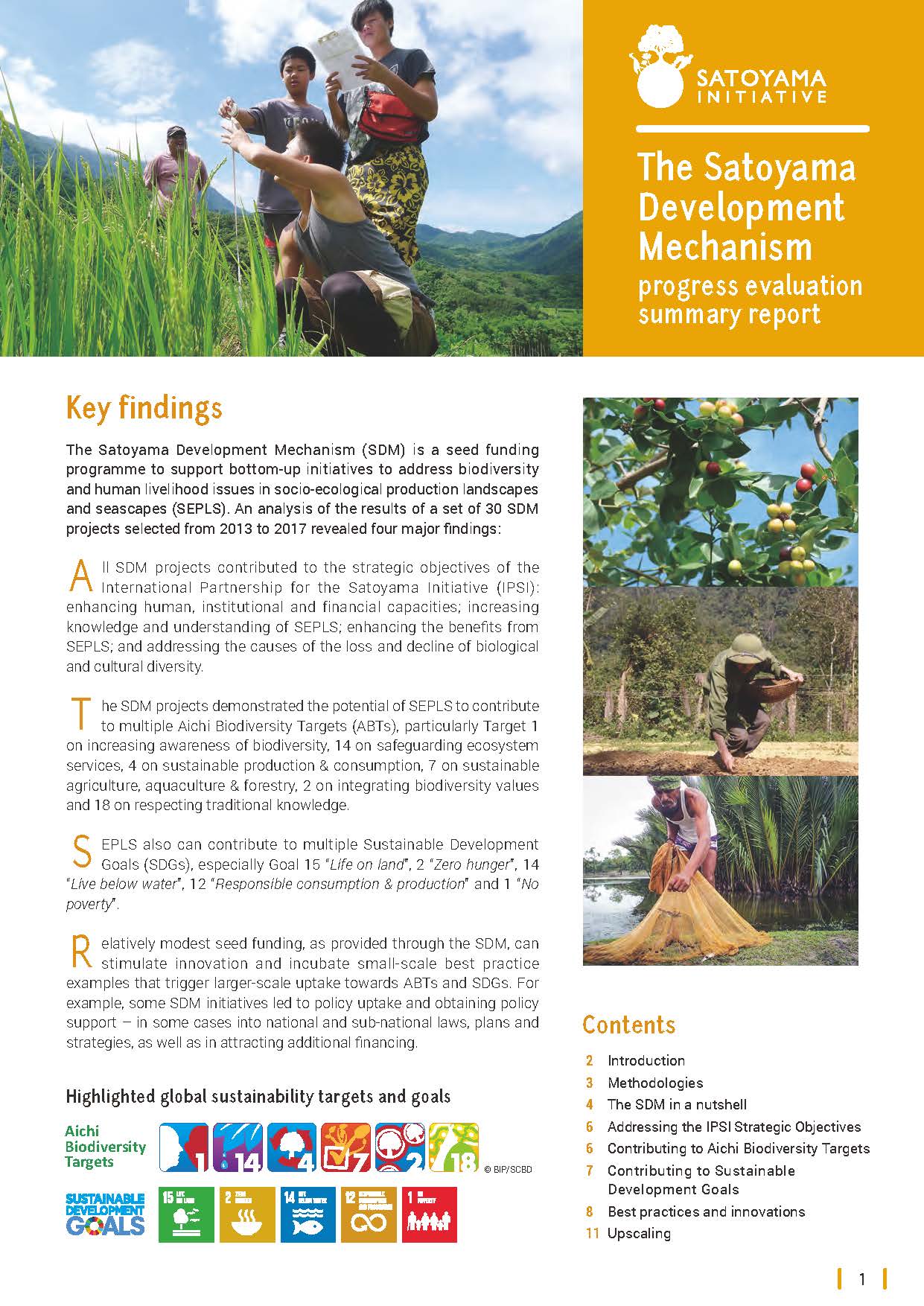
The Satoyama Development Mechanism (SDM) is a seed funding mechanism to encourage IPSI members to develop and accelerate sustainability actions in SEPLS. This report aims to present the SDM projects and their contributions to global goals, for the consideration of policymakers, businesses, researcher institutions, organizations and civil society...