In this volume, we seek to highlight how the sustainable use of biodiversity as practiced in well-managed SEPLS can contribute to effective area-based conservation of biodiversity. The concept of SEPLS includes the idea that integrated and holistic management approaches can have mutual benefits for biodiversity and livelihoods, sustainably...
- クリア
- SDGs: (-) 2. 飢餓をゼロに
116件中 91~100件 (日付順)
The Satoyama Development Mechanism (SDM) is a seed funding mechanism to encourage IPSI members to develop and accelerate sustainability actions in SEPLS. This report aims to present the SDM projects and their contributions to global goals, for the consideration of policymakers, businesses, researcher institutions, organizations and civil society...
Consolidation and replication of effective landscape approaches for biodiversity conservation and human livelihoods: CBD-COP14 Side Event 2812
This presentation was made as one of the three key note presentations in a side event at the Convention on Biological Diversity (CBD) fourteenth meeting of the conference of parties (COP14), entitled "Consolidation and replication of effective landscape approaches for biodiversity conservation and human livelihoods". It demonstrated key facts and...
GEF-Satoyama Project Consolidation Workshop
The presentation briefed the results of a synthesis of case studies on the ten GEF-Satoyama Projects, focusing on the values, traditional knowledge and governance of socio-ecological production landscapes and seascapes (SEPLS)
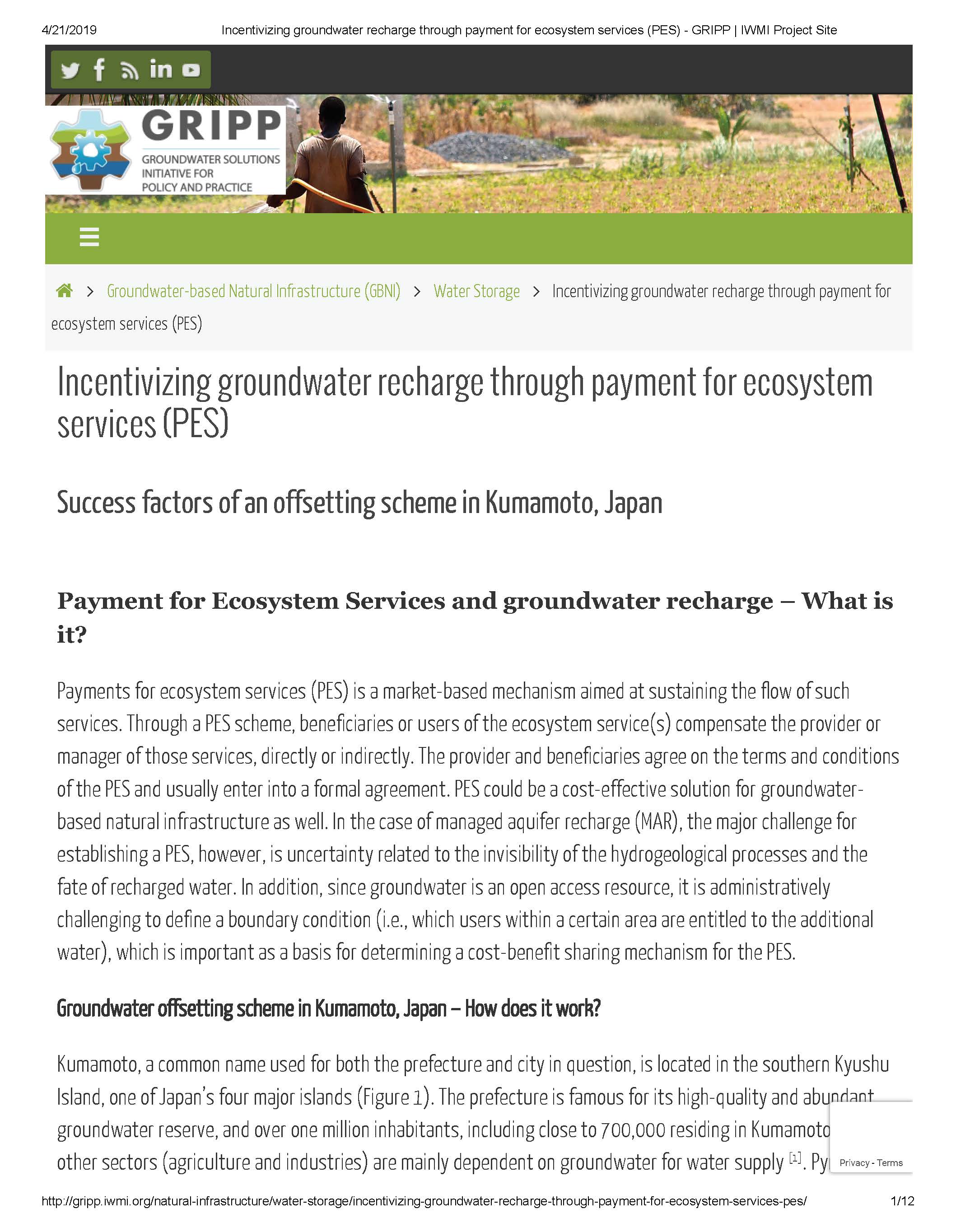
Payments for ecosystem services (PES) is a market-based mechanism aimed at sustaining the flow of such services. Through a PES scheme, beneficiaries or users of the ecosystem service(s) compensate the provider or manager of those services, directly or indirectly. The provider and beneficiaries agree on the terms and conditions of the PES and...
Stockholm World Water Week 2018 Session on "Groundwater-based natural infrastructure solutions: The missing link to resilience?"
Kumamoto is a rare case of fully functional PES for over 13 years; Willingness between buyers and sellers is one of the basic conditions for establishing PES. However, willingness are always not sufficient condition for groundwater recharge, which are difficult to quantify and verify; Role of intermediary institutions such as local agriculture...
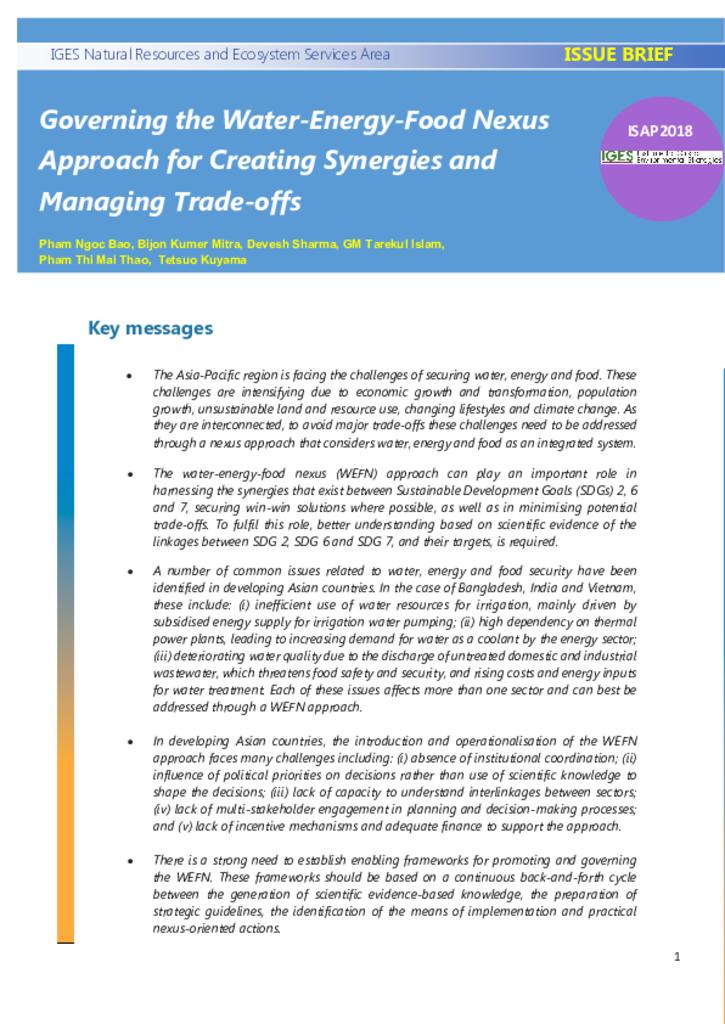
The Asia-Pacific region is facing the challenges of securing water, energy and food. These challenges are intensifying due to economic growth and transformation, population growth, unsustainable land and resource use, changing lifestyles and climate change. As they are interconnected, to avoid major trade-offs these challenges need to be addressed...
This booklet has been prepared for IPSI member organisations, as well as for others who are engaged in SEPLS, to introduce the SDM and to provide snapshots of the projects implemented by our sub-grant recipients. The booklet starts with an introduction to the SDM, followed by a list and a global map of the sub-grant projects. The third section...
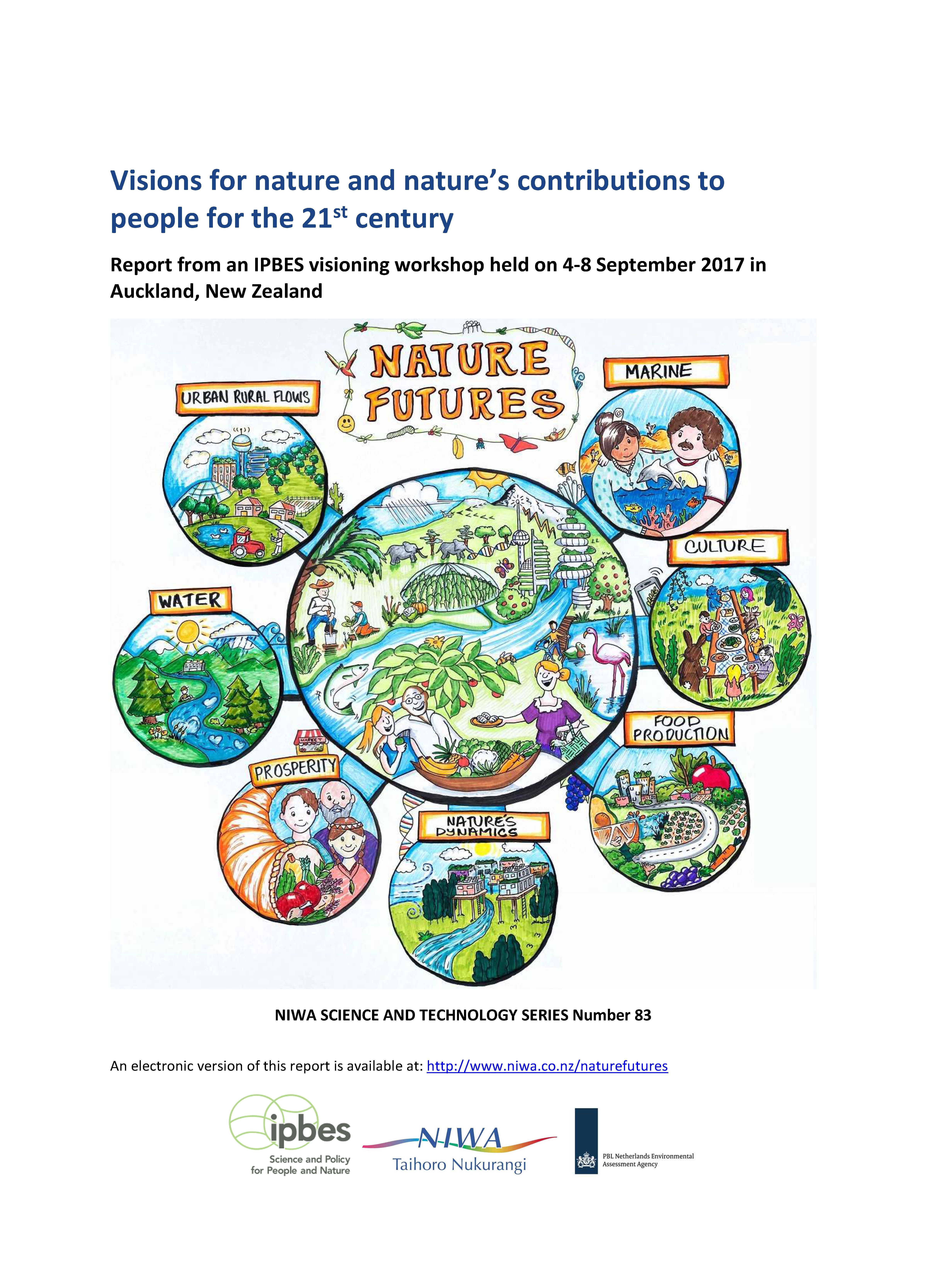
IPBES visioning workshop
The report presents the process in, and outputs from an IPBES visioning workshop, entitled "Visions for nature and nature's contributions to people for the 21st century" held in September 2017, which well captures the contributions from participants in the breakout groups and plenaries.
Scientific Data所収
The paper provides details on a global reference data set on cropland locations, collected through a crowdsourcing campaign using the Geo-Wiki crowdsourcing tool.