- English


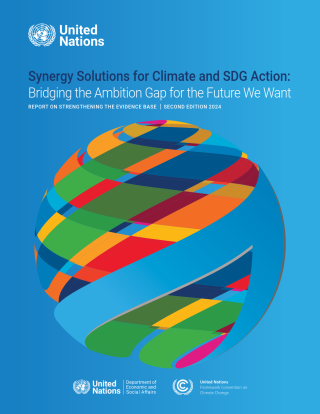
This Assessment provides the most complete picture to date of the benefits and costs of integrated climate and clean air action, complemented by an empirically grounded analysis of how these benefits can be delivered quickly enough to avoid premature deaths and disease and improve the lives of many of the world’s most vulnerable people.
The world has entered a new phase of planetary and economic challenges. Exceeding 1.5 ºC of warming is now widely assessed as unavoidable, and governments face mounting economic costs from climate change and air pollution simultaneously, at a time when fiscal space is sharply constrained and returns on public investment are under intense scrutiny.
The policy debate is also shifting: the question is no longer only what needs to be done to reduce missions, but how to implement proven solutions quickly enough to avert planetary and economic crises, and how to generate returns that justify private investment. This Assessment demonstrates how the response to these challenges can be transformed into an economic opportunity.
The assessment evaluates 25 proven solutions across energy, industry, transport, agriculture, cooking and waste, and finds that integrated action delivers more than acting on either alone. Every dollar invested returns around 15 dollars, an internal rate of return of 60 per cent, with market returns exceeding costs within ten years.
By 2050 these solutions could avoid 144 million premature deaths and hundreds of millions of cases of chronic disease. The chief obstacles are often neither technical nor economic but institutional. Investment in enabling conditions can bring full implementation forward by up to a decade, worth up to US$10 trillion in savings by 2040.
- English
This Assessment provides the most complete picture to date of the benefits and costs of integrated climate and clean air action, complemented by an empirically grounded analysis of how these benefits can be delivered quickly enough to avoid premature deaths and disease and improve the lives of many of the world’s most vulnerable people.
The world has entered a new phase of planetary and economic challenges. Exceeding 1.5 ºC of warming is now widely assessed as unavoidable, and governments face mounting economic costs from climate change and air pollution simultaneously, at a time when fiscal space is sharply constrained and returns on public investment are under intense scrutiny.
The policy debate is also shifting: the question is no longer only what needs to be done to reduce missions, but how to implement proven solutions quickly enough to avert planetary and economic crises, and how to generate returns that justify private investment. This Assessment demonstrates how the response to these challenges can be transformed into an economic opportunity.
The assessment evaluates 25 proven solutions across energy, industry, transport, agriculture, cooking and waste, and finds that integrated action delivers more than acting on either alone. Every dollar invested returns around 15 dollars, an internal rate of return of 60 per cent, with market returns exceeding costs within ten years.
By 2050 these solutions could avoid 144 million premature deaths and hundreds of millions of cases of chronic disease. The chief obstacles are often neither technical nor economic but institutional. Investment in enabling conditions can bring full implementation forward by up to a decade, worth up to US$10 trillion in savings by 2040.