Summary
The discussions underscored that effective methane mitigation in the waste sector depends on strong implementation, reliable data, and adequate financing. Participants highlighted the importance of waste prevention, segregation, and collection, alongside improved MRV systems and regional collaboration to accelerate emissions reductions and attract investment.
Key Highlights
- • Incentives are more effective than mandates: Mandates require extensive infrastructure and enforcement, whereas incentives encourage voluntary consumer compliance, particularly for at-source segregation.
- • The design-operation gap: Technologies that work well on paper often fail due to operational issues, underscoring the need for policy designs that account for local contexts and implementation barriers.
- • Data and monitoring deficits: A widespread reliance on default estimation methods limits the ability to attract climate and blended finance.
A framework for addressing these challenges was presented, emphasising that upstream waste prevention, segregation, and collection are the paramount strategies to reduce waste methane. To facilitate regional cooperation, six pathways for action were outlined: awareness building; implementation capacity; standardised regulations; knowledge sharing; localised planning; and rigorous Measurement, Reporting, and Verification (MRV) systems.
Panel Discussion: Scalable Enablers and Regional
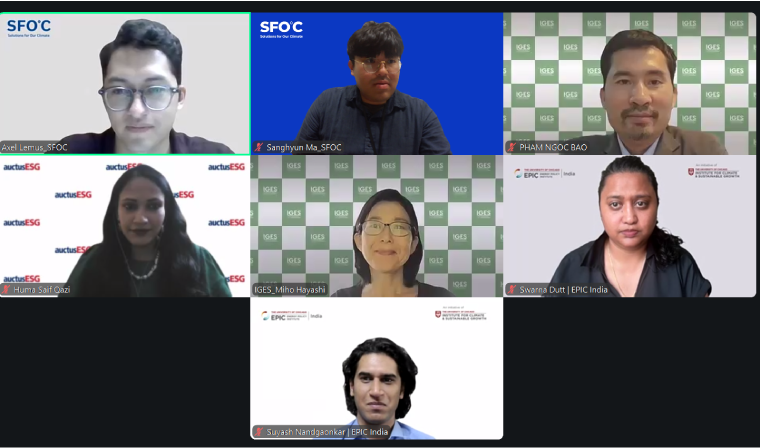
The panel discussion “Scalable Enablers and Regional Collaboration” explored actionable steps, regional contexts, and financing strategies for scaling methane mitigation. It was noted that South Asia faces severe infrastructure deficits and heavily relies on open dumping and burning. To address this, it was proposed the establishment of a South Asia regional coordination platform to harmonise methane accounting methodologies and facilitate technology transfer to improve MRV methods. In this context, the case of India was emphasised: methane reduction in India has largely been an incidental co-benefit rather than a targeted goal. Thus, formaliding these methane reductions by adding explicit targets to existing infrastructure policies could unlock significant carbon financing.
Furthermore, presenters highlighted a severe imbalance in climate finance, with only less than 1% of global climate finance reaching the waste sector. To redirect capital to high-impact projects, developers could focus on "revenue stacking"—combining tipping fees, biogas off-take contracts, and carbon credits—and generating investor-grade MRV data is a non-negotiable prerequisite to do so.
イベントの詳細
Zoom Webinar
Sanghyun Ma, Solutions for Our Climate (SFOC), Methane Team sanghyun.
[email protected]
発表資料
Programme
| Time | Content | Presenter | |
|---|---|---|---|
| 16:00 - 16:10 | Opening Remarks | Solutions for Our Climate | |
| 16:10 - 16:20 | Rationale and Key Takeaways of the Asia Waste Methane Comparative Analysis | Suyash Nandgaonkar, EPIC India | |
| 16:20 - 16:30 | Pathways for Collaborative Action | Sang Hyun Ma, SFOC | |
| 16:30 - 17:20 | Panel Discussion (What Makes Waste Methane Reduction Scalable? Enablers and Regional Collaboration):
|
| |
| 17:20 - 17:30 | Closing | Solutions for Our Climate |
Related Publications
Photos