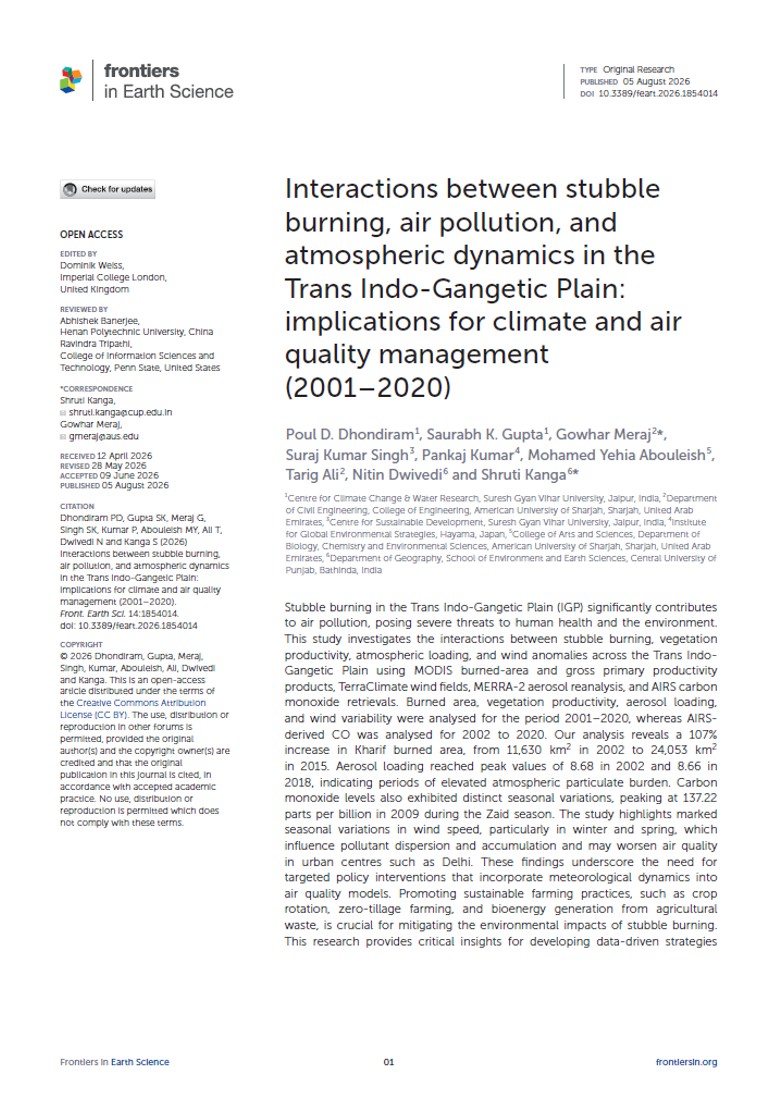
Stubble burning in the Trans Indo-Gangetic Plain (IGP) significantly contributes to air pollution, posing severe threats to human health and the environment. This study investigates the interactions between stubble burning, vegetation productivity, atmospheric loading, and wind anomalies across the Trans Indo- Gangetic Plain using MODIS burned-area...
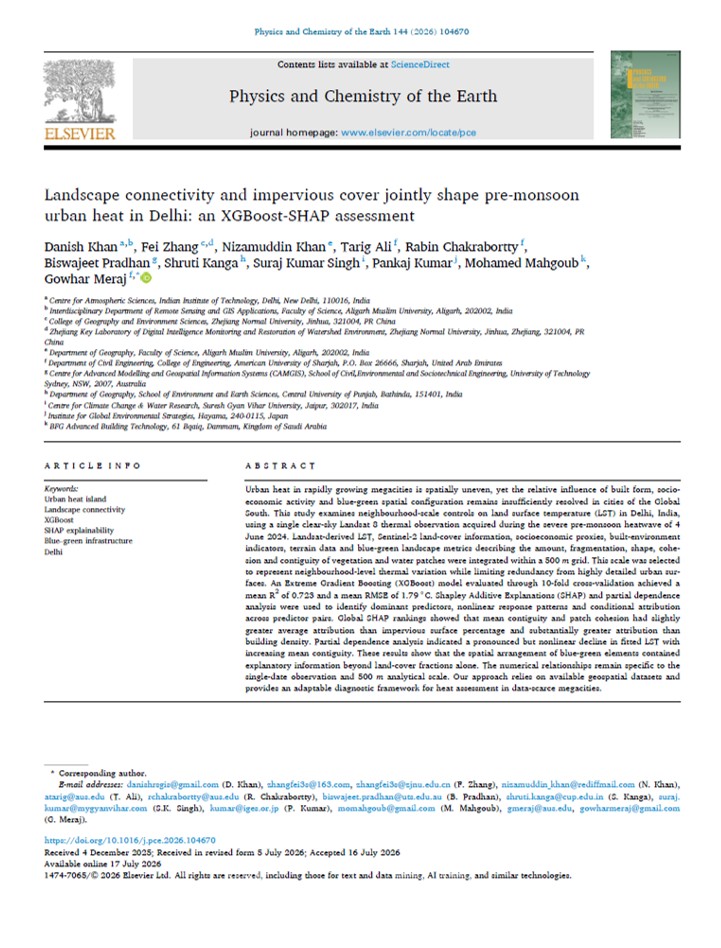
Urban heat in rapidly growing megacities is spatially uneven, yet the relative influence of built form, socioeconomic activity and blue-green spatial configuration remains insufficiently resolved in cities of the Global South. This study examines neighbourhood-scale controls on land surface temperature (LST) in Delhi, India, using a single clear...
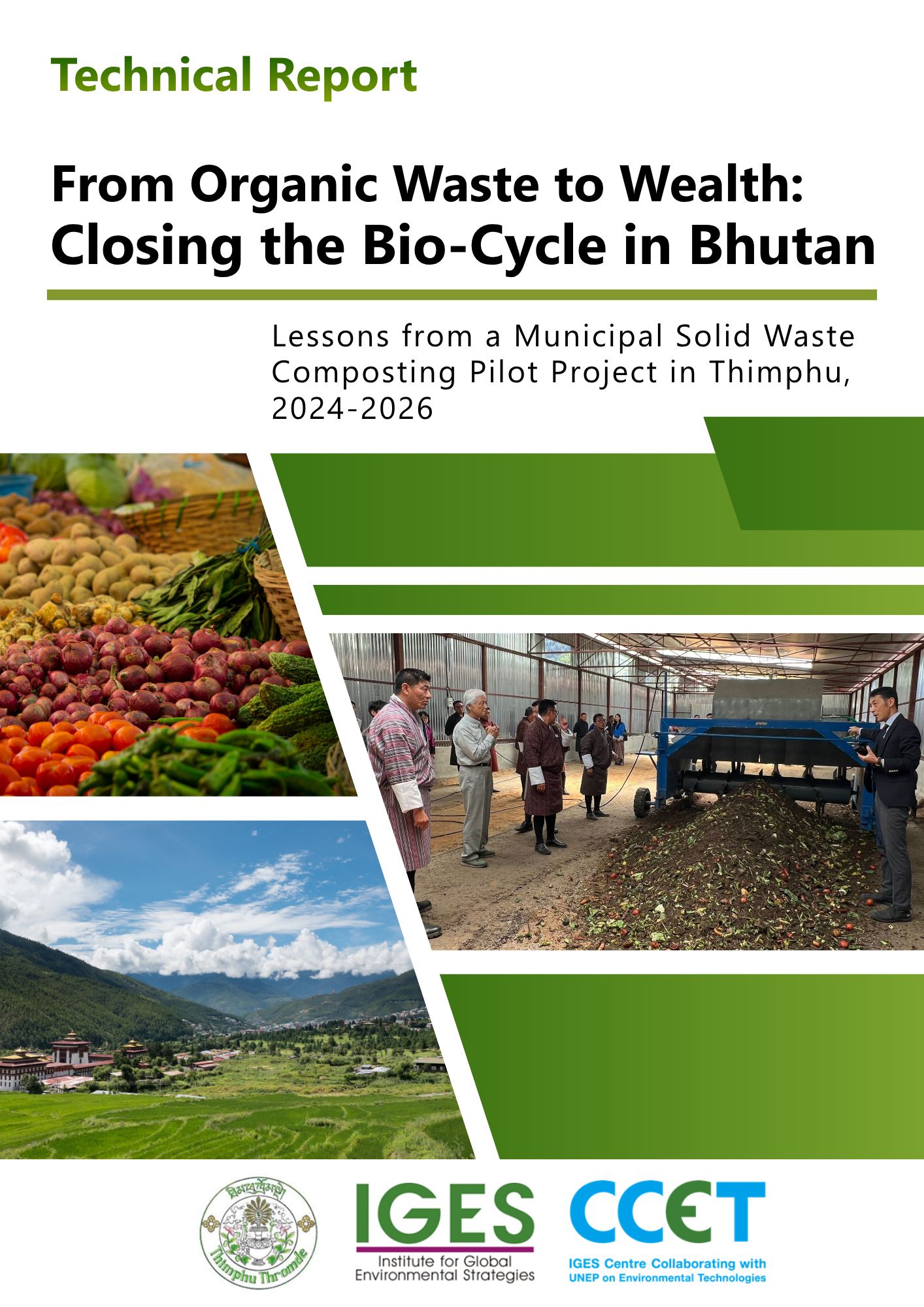
Bhutan faces mounting pressure on its municipal solid waste (MSW) management systems. Its capital city, Thimphu, generates approximately 50 tonnes of MSW per day, of which roughly 30 tonnes per day is organic (wet) waste that is currently deposited at the Memelakha landfill — an ageing open-dumpsite already well beyond its intended lifespan. At the...
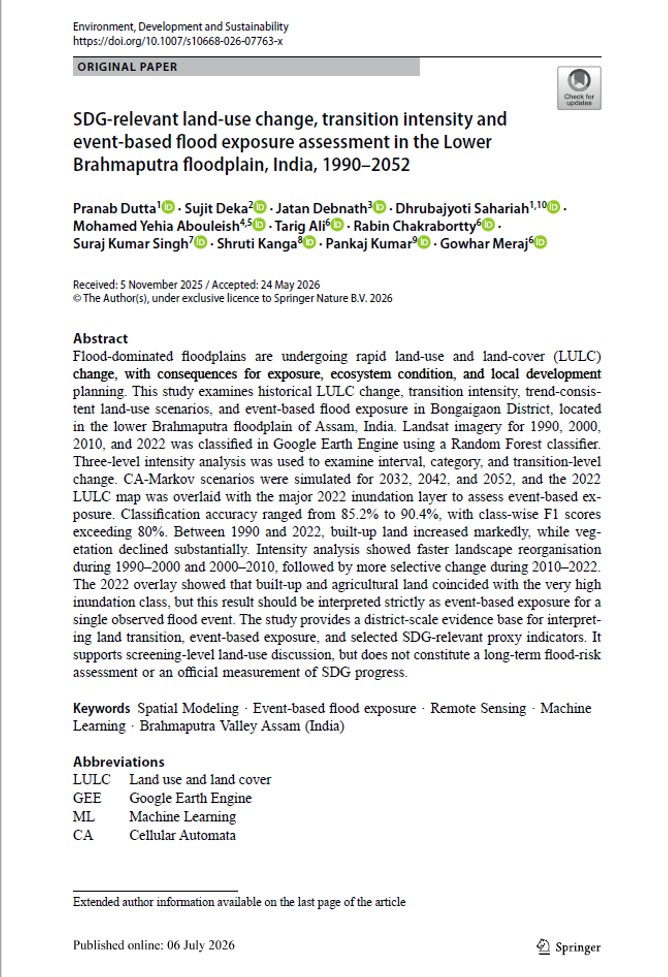
Flood-dominated floodplains are undergoing rapid land-use and land-cover (LULC) change, with consequences for exposure, ecosystem condition, and local development planning. This study examines historical LULC change, transition intensity, trend-consistent land-use scenarios, and event-based flood exposure in Bongaigaon District, located in the...