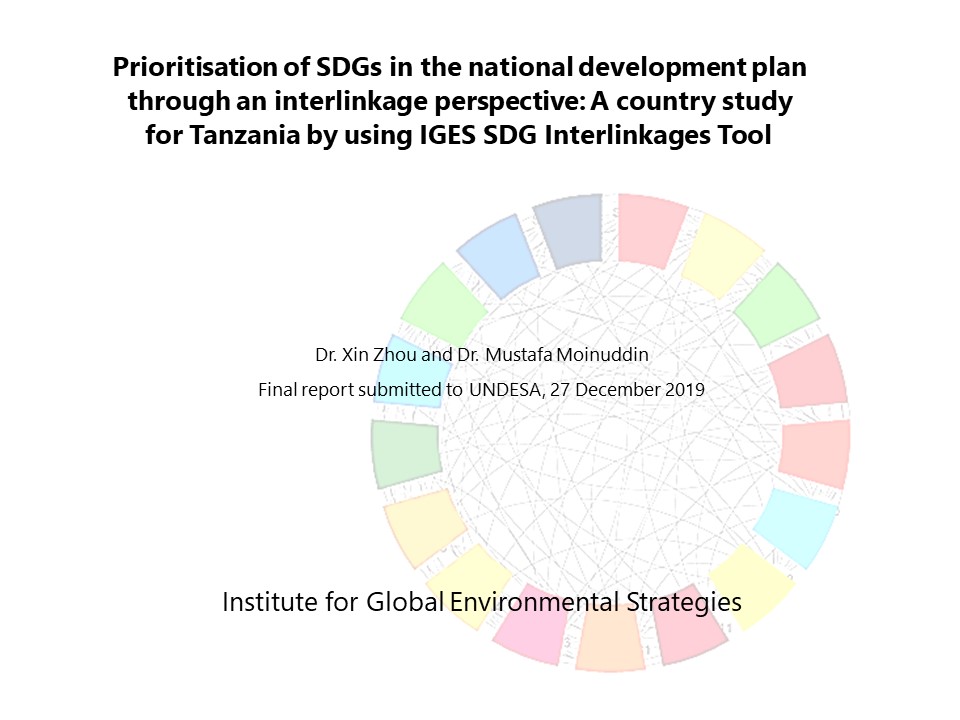
Implementing the 2030 Agenda and the Sustainable Development Goals (SDGs) receives the highest political support in Tanzania. The country’s Second Five-Year Development Plans (FYDP II) for the period of 2016/17-2020/21 is the main policy instrument in Tanzania for implementing the SDGs. Being a least developed country with limited capacities and...
- クリア
- 発行年: (-) 2019
- 地域 / 国: (-) Americas
- 地域 / 国: (-) United Republic of Tanzania
7件中 1~7件 (日付順)
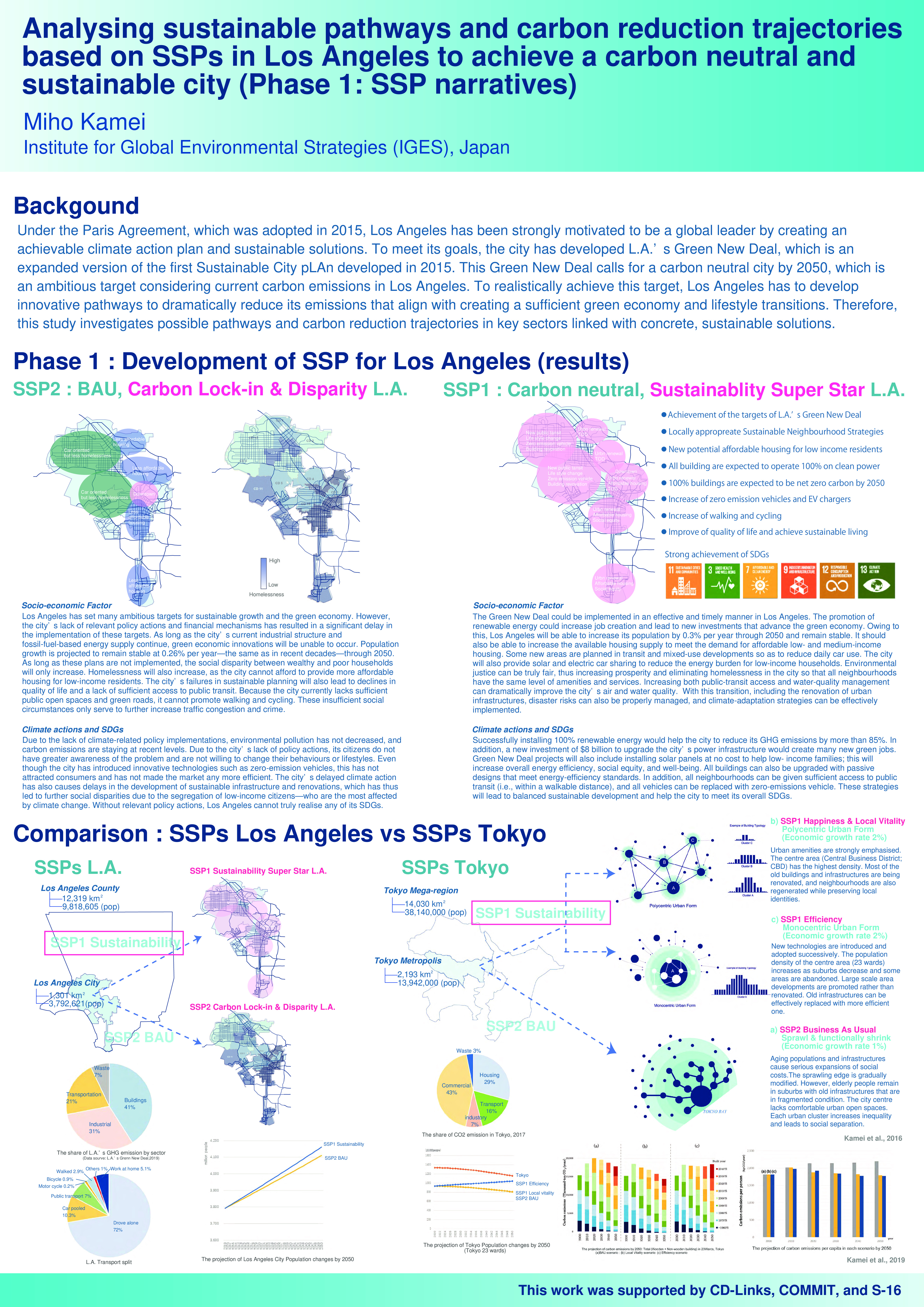
Under the Paris Agreement, which was adopted in 2015, Los Angeles has been strongly motivated to be a global leader by creating an achievable climate action plan and sustainable solutions. To meet its goals, the city has developed L.A.’ s Green New Deal, which is an expanded version of the first Sustainable City pLAn developed in 2015. This Green...
編者:
Using “the sharing paradigm” as a guiding concept, this book demonstrates that “sharing” has much greater potential to make rural society resilient, sustainable and inclusive through enriching all four sharing dimensions: informal, mediated, communal and commercial sharing. The chapters are divided into two parts, one that focuses on case studies...
Remote Sensing所収
With the advent of high-spatial resolution (HSR) satellite imagery, urban land use/land cover (LULC) mapping has become one of the most popular applications in remote sensing. Due to the importance of context information (e.g., size/shape/texture) for classifying urban LULC features, Geographic Object-Based Image Analysis (GEOBIA) techniques are...
10th International Conference on Industrial Ecology
In this presentation, the characteristics of different consumer segments and their carbon footprints will be examined based on the analysis of consumer expenditure and time-use survey data. It utilises anonymised survey microdata and carbon intensity from existing EEIOA databases and focuses on in-depth analysis of the relationships between...
Climate Change Symposium: Changing By Degrees Multidisciplinary Approaches to Climate Change
Household consumption in the United States has significant impacts on climate change through the consumption of food, mobility, housing, consumer goods, leisure, and others. Consumer lifestyles and their climate change impacts vary significantly across consumer segments due to their household characteristics, and how they spend money and time. In...
This report demonstrates that changes in consumption patterns and dominant lifestyles are a critical and integral part of the solutions package to addressing climate change. The report fills a gap in the existing research by establishing global targets for lifestyle carbon footprints, examining current consumption patterns and their impacts on...