Documentation of Biological Resources for Preparation and Piloting of Local Bio-diversity Strategy and Action Plan (LBSAP) in Three Ecological Production Landscapes of Nepal
KAFCOL, Nepal
Project period: December 2013 to August 2014
Project overview
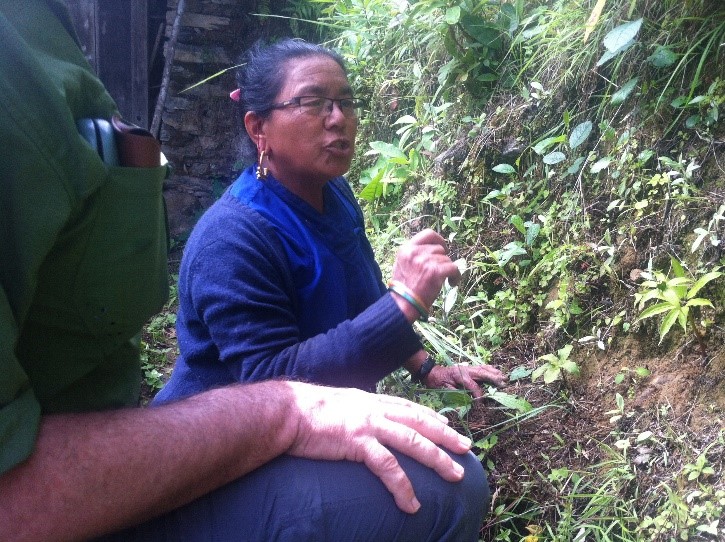
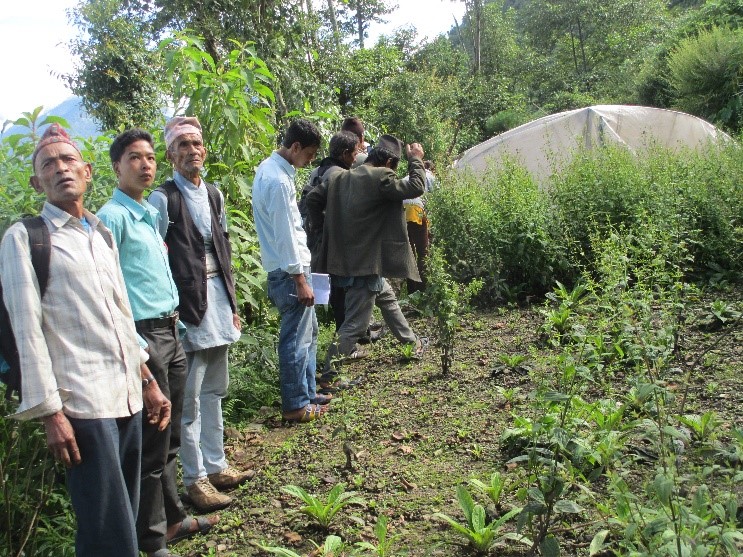
The Katmandu Forestry College (KAFCOL) was requested by the Nepali Government to review the national Biodiversity Strategy (2002) and Implementation Plan (2006-2010) to provide a foundation for the revision of the National Biodiversity Strategy and Action Plan (NBSAP). In this context, and with an aspiration for realistic biodiversity planning, KAFCOL focused on a bottom-up development of local biodiversity strategy and action plans (LBSAPs) with Village Development Committees (VDCs), the smallest administrative unit in Nepal.
Highlights of project results
- Comprehensive biodiversity inventories and biodiversity threat analyses were conducted in a participatory manner in three VDCs, proposing a model framework for a participatory appraisal of LBSAPs.
- A generic framework for LBSAPs was developed and incorporated in NBSAP. In accordance with the framework, three LBSAPs were developed with a bottom-up approach and in collaboration with VDCs.
- Community biodiversity committees were established in three VDCs for implementing LBSAPs, involving several stakeholders such as National Park office staff, District Forest Office staff, school teachers and women groups.
Key lessons
- The project demonstrated the effectiveness of a participatory approach and methods that are comprised of learning from hands-on experiences of practitioners, concept development, trainings and field practices. This approach can be adopted for the development of LBSAPs by 30 other VDCs that are currently planned by the government.
- Multi-stakeholder coordination is challenging, being hindered by the distrust of government agencies against VDCs, as well as the limited capacity of VDCs. Measures need to be sought to overcome these barriers.
- Biodiversity plans need to consider economic opportunities that are linked to biodiversity, unless otherwise local people cannot be motivated to work on its implementation.
広報物
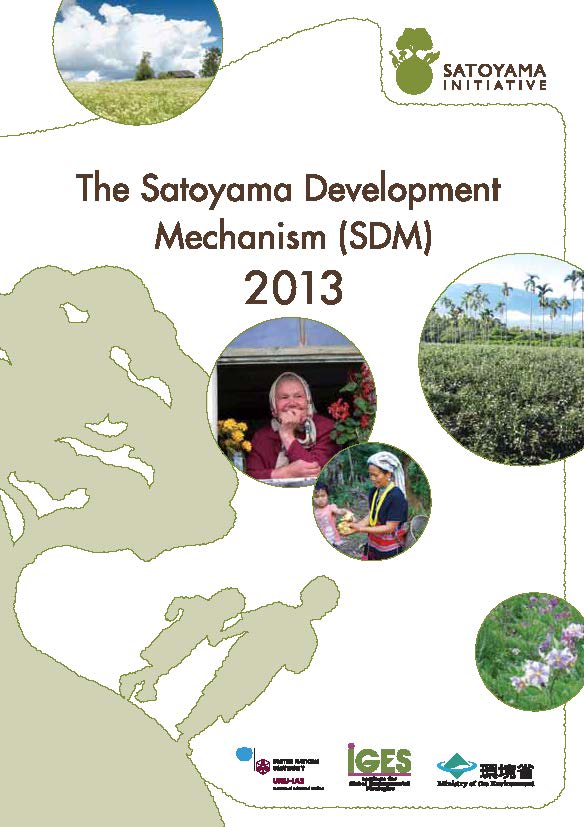
The booklet provides the results of the first year of the Satoyama Development Mechanism operations and a brief introduction of the six projects selected for the year 2013.
Related Sustainable Development Goals


Project location map
Implementing organisation