Supporting and Promoting the Karen Indigenous Socio-ecological Production System in Northern Thailand
© Nutdanai Trakansuphakon
Project overview
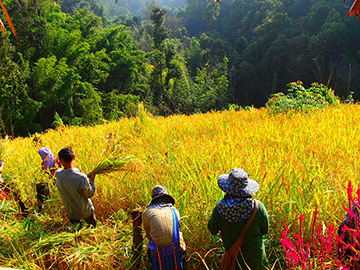
In Thailand, Karen people’s traditional livelihood system is recognised by the Ministry of Culture as an important heritage of the country based on a Thai Cabinet Resolution in 2010. Further, the revision of the Resolution in 2013 recognised the Karen people’s rotational farming system as a cultural herigage. Regardless of these national policies, the Karen’s socio-ecological production system in Mae Umphai village was placed under the threat of replacement due to commercial corn production. As this would seriously affect the livelihood of the villagers, IKAP proposed a project to strengthen Karen people’s traditional production system that centred on traditional rotational farming.
Highlights of project results
- Traditional sustainable socio- ecological production system was reinforced through training on institutional management, policies and customary practices.
- Participatory GIS mapping visualised traditional land tenure and use system, including land use classifications and cycles, and enhanced the recognition of the traditional system for policymakers.
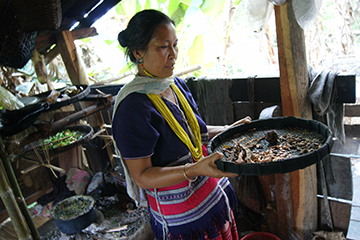
- Surveys on indigenous seed varieties, customary planting and soil enrichment practices enhanced the recognition of women as knowledge-holders and managers of seed and plants resources. In addition, involvement of the youth reinvigorated indigenous knowledge and practices on rotational farming and promoted their transmission across generations.
- The project established a new executive board to implement the Cabinet Resolution under the Prime Minister’s Office.
- These project results inspired IKAP and the Mae Umpai community to take further steps forward, including advocacy to the state forest department and district governments with a view to promote the recognition of Karen’s land use systems in the state forest policy and district development plans.
Key lessons
- Going deeper into Karen’s traditional rotational farming system demonstrated how sophisticated the system is and how their ancestors have developed the system, while identified difficulties to balance exploitation and conservation.
- Integration of traditional knowledge and modern technology is effective to validate and visualise the sustainability of customary land uses.
- Recognition in formal policies is critical for the long-term viability of traditional sustainable production systems
“if we take care, preserve and replant forests as much as the wealth that forests have given to us, the forests will sustain themselves or even become richer, and sustain our community forever” - A Traditional saying of Karen elders
Related Sustainable Development Goals


Related Aichi Biodiversity Targets


Project location map
Implementing organisation