Enhancing Cocoa Agroforestry in Ghana through an integrated Geographic Information System (GIS) based monitoring system
Conservation Alliance International, Ghana
Project period: January 2016 to December 2016
Project overview
The project area has rich biodiversity resources, which support cocoa cultivation. However, the majority of cocoa producers within the landscape have low household incomes due to low farm productivity. The project aimed to improve the productivity of target cocoa farmers by introducing good agricultural practices, and to mainstream biodiversity conservation into cocoa production landscapes around Kakum National Park (KNP) in the Central Region of Ghana.
Highlights of project results
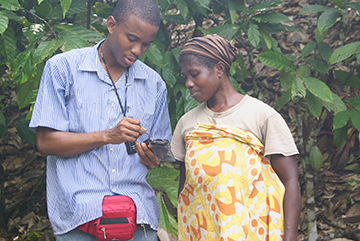
- The project trained 40 lead farmers on good agricultural practices and other technical assistance, including integrated pest management, fertilizer application and record keeping. The lead farmers then trained 246 farmers, especially women and youth farmers, helping them to increase productivity of their farms. The average yield increased from an average 3 bags of cocoa per acre at the start of the project, to between 5-7 bags per acre by its end.
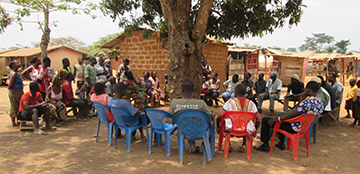
- Over 200 farmers became aware of biodiversity conservation through the establishment of tree nurseries in 20 beneficiary communities, which helped to increase tree cover on farms and degraded areas fringing the KNP.
- More than 80% of target farms are ready to undergo auditing for Rainforest Alliance Certification. Securing certification connotes improvement in the ecological health of the farms and qualifies the farmers to sell their cocoa beans as ‘certified cocoa’. Twenty farms were mapped with the use of GIS technology.
Key lessons
- The activities under this project should be up-scaled to increase the number of beneficiaries in order to intensify productivity, reduce farm expansion and promote biodiversity conservation in the landscape.
- Initiatives within protected areas should incorporate traditional systems of biodiversity management into agricultural production landscapes.
- Traditional sites such as sacred groves located within agricultural landscapes should receive protected area status.
広報物
編者:
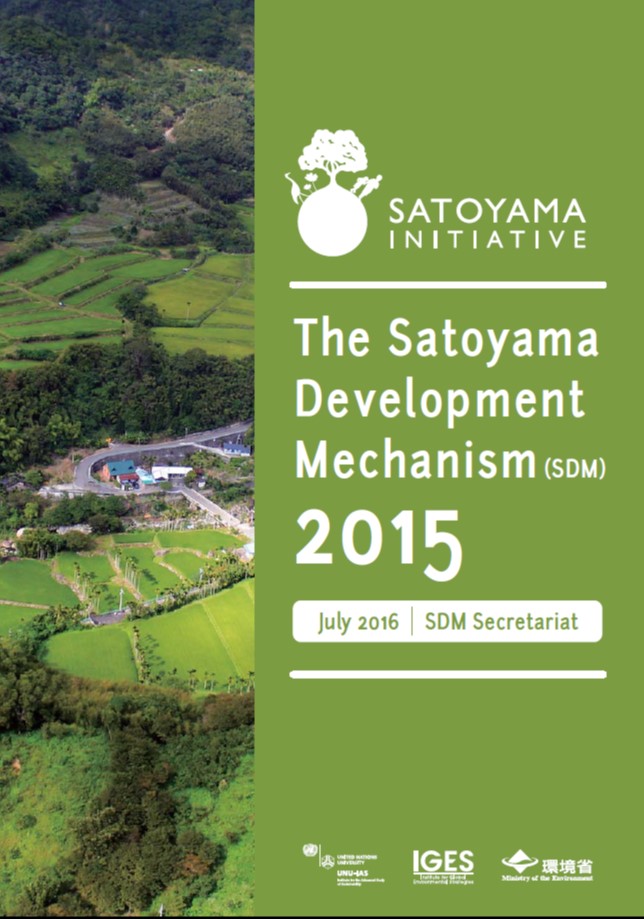
This booklet has been prepared for IPSI member organisations, as well as for others who are engaged in socio-ecological production landscapes and seascapes (SEPLS), to introduce SDM and to provide snapshots of the projects implemented by our sub-grant recipients. The booklet starts with an introduction to SDM, followed by a list and a global map of...
Related Sustainable Development Goals


Related Aichi Biodiversity Targets


Project location map
Implementing organisation