Towards a Strategy for Mitigation of Climate Change Effects in the Coastal Region of Peru, in the Context of the El Niño Event
APAIC, Peru
Project period: January 2016 to September 2016
Project overview
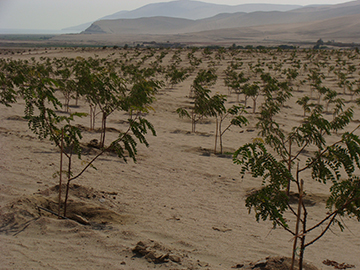
Three million hectares of the coastal region of Peru region are under an arid climate, frequently influenced by the “El Niño” phenomenon and considered as barren or severely degraded land. The project aimed to test and build the resilience of this arid landscape by promoting potential forestry and agro-forestry activities and to formulate a national plan and strategy for arid area restoration, and establishing a collaborative institutional setting for their implementation in a participatory and inter-sectoral way.
Highlights of project results
- Diverse cata collection and research activities were conducted together with the ITTO´s financed project (PD 724/13 Rev. 1 ( F) for the elaboration of the guidelines for the restoration of degraded land using afforestation practices with tara
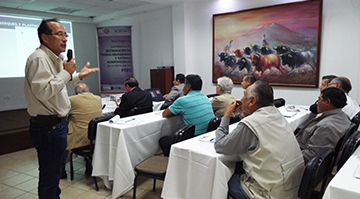
- Three workshops were successfully organised to build and promote awareness on the concept and expected impacts of climate change and to develop a strategy for mitigating these impacts.
- The project established a technical committee, which developed a roadmap for the recovery and restoration of 100,000 hectares of degraded land.
- More than 40 small farmers initiated small plantations of tara (Caesalpinea spinosa), and other forest species taking part in an experimental trial for testing the potential capacity of production of these species in extremely bad soil conditions (salinity and water irrigation scarcity).
Key lessons
- Barren or degraded lands are generally considered wastelands in Peru and other countries. However, this concept is a distortion of the reality, considering the real capacity or potential use of these areas. Sometimes it needs only a little push to start their restoration, as there is potential to build their resilience.
- Climate change is a permanent and possibly accelerating process, which needs to be taken into account in land use planning and for human activities, particularly in the coastal region, where the impacts are more severe.
- The introduction of forest and agroforestry practices among traditional farmers dealing with customary agricultural monocultures is very challenging and difficult. However, when these activities do not directly compete or conflict with the traditional ones, people are much more ready to participate.
広報物
編者:
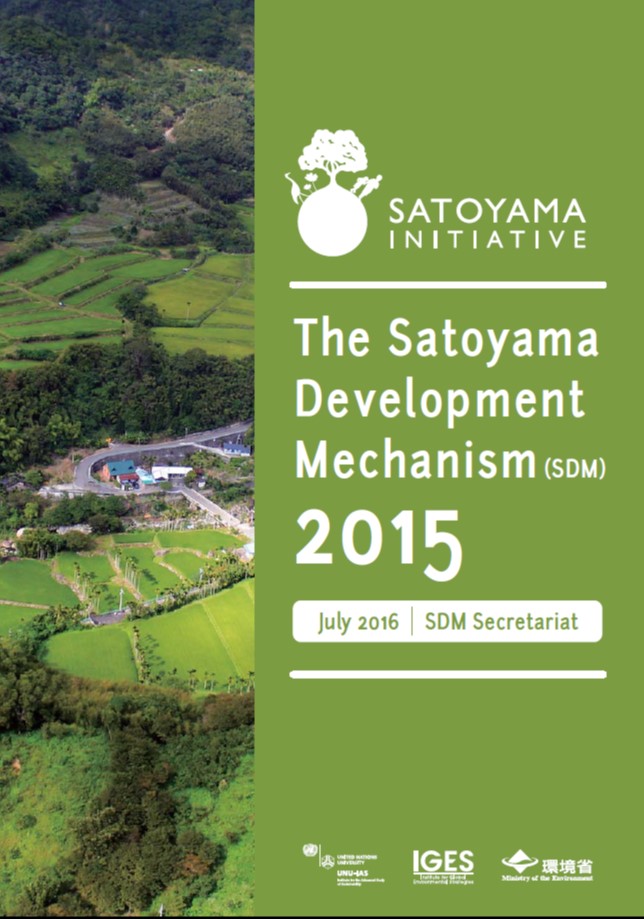
This booklet has been prepared for IPSI member organisations, as well as for others who are engaged in socio-ecological production landscapes and seascapes (SEPLS), to introduce SDM and to provide snapshots of the projects implemented by our sub-grant recipients. The booklet starts with an introduction to SDM, followed by a list and a global map of...
Related Sustainable Development Goals


Project location map
Implementing organisation
Asociacion Pro Desarrollo Agroindustrial de Camana (APAIC)
Sector
Countries
Peru
Website