Establishment of Vetiver Grass Nursery and Hedge Rows for control of Eutrophication in Lake Victoria
Project outline
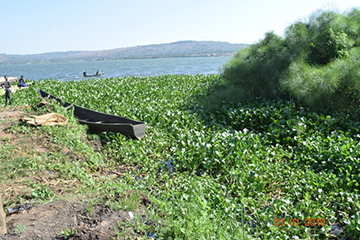
weed has sealed off most landing
sites on Lake Victoria
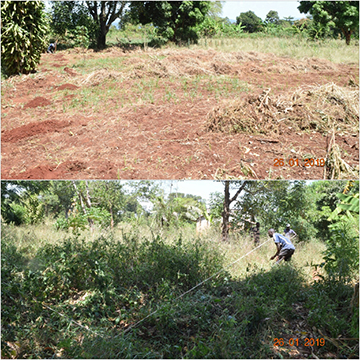
The decline in native fishing on Lake Victoria compels lakeside communities to engage in farming on fragile landscapes and on soils prone to erosion. Excess soil nutrients, especially phosphorous attached to soil particles, are washed down to the lake by runoff causing eutrophication, a process that triggers the growth and spread of Water Hyacinth Weed (Eichhornia crassipes) on the lake’s surface. The weed forms a dense mat, blocking sunlight for organisms below, depleting the low concentrations of oxygen in the lake, and traps fishing boats and nets of all sizes. The project will apply the Farmer Field School (FFS) approach to address the cause of eutrophication through training farmers in soil erosion control measures, and provision of Vetiver grass planting material to target farmers. The project seeks to establish a 2-ha Vetiver grass nursery in Kikondo fishing village to serve as a source of planting material for the community. Hands-on training in a field setup for farmers and Village Based Trainers will be conducted to equip them with skills for pegging out contour lines in their fields, planting and maintaining Vetiver hedges. A 0.5-ha crop field treated with Vetiver grass hedgerows, the first of its kind in the region, will be setup by the project at Bugungu Uganda Prison farm on the shore of Lake Victoria to exhibit the novel technology in the project area and beyond.
Project location map
Implementing organisation