Integrating Food Systems into NAPs and NDCs
Project Overview
This project, implemented by IGES and Crop Trust—with funding from NORAD through the Biodiversity for Opportunities, Livelihoods and Development project (BOLD) project and technical support from the UNFCCC Regional Collaboration Centre for Asia and the Pacific (RCC Asia-Pacific) and Regional Collaboration Center for MENA and South Asia (RCC MENA & SA)—focuses on strengthening the link between agriculture and climate action through closer institutional collaboration in three countries: Lao PDR, Pakistan and Viet Nam.
At its core, the initiative fosters multi-stakeholder engagement between agriculture and climate ministries, while elevating the role of genebanks and crop diversity as critical resources for national climate adaptation.
The mission of this project is to enhance coordination between these sectors by strengthening the integration of crop diversity into climate adaptation and mitigation efforts.
Aligning Food Systems with National Climate Commitments
The project strengthened climate action by integrating genebanks and food systems into National Adaptation Plans (NAPs) and Nationally Determined Contributions (NDCs). This shift reframed plant genetic resources from a narrow focus on conservation to a central element of climate governance, while fostering a regional community of practice across Lao PDR, Pakistan, and Viet Nam.
To translate this vision into action, the project delivered three key outcomes:
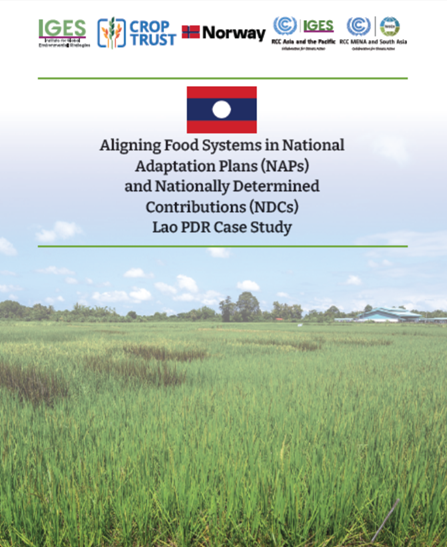
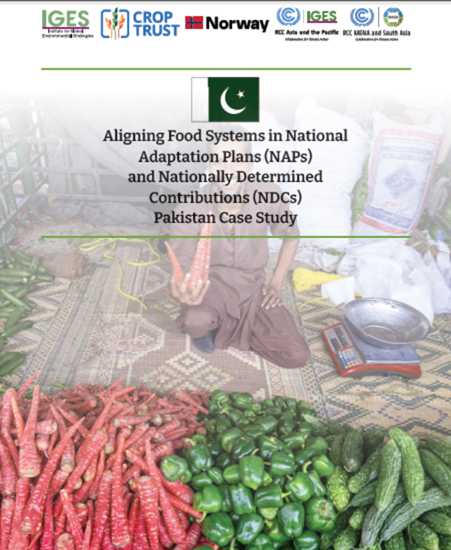
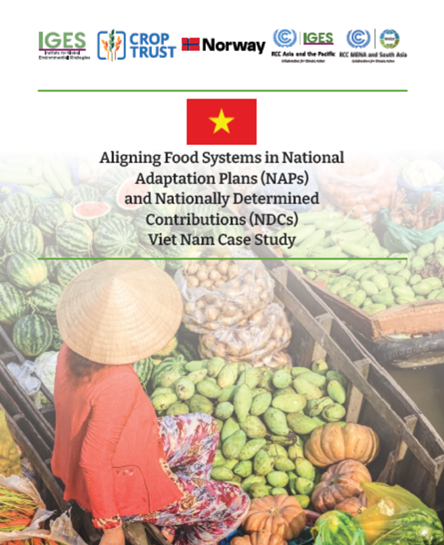
- • Three In-Depth Case Studies: We developed analytical foundations for Lao PDR, Pakistan, and Viet Nam, assessing the integration of food systems into NAPs and NDCs, and identifying institutional bottlenecks and actionable entry points for embedding genebanks in climate governance.
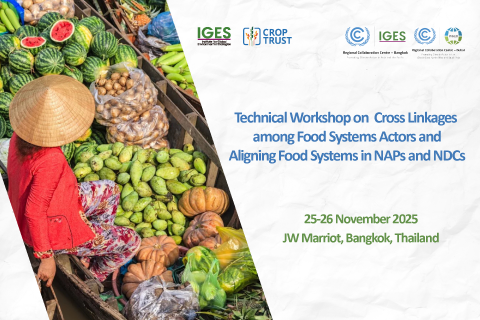
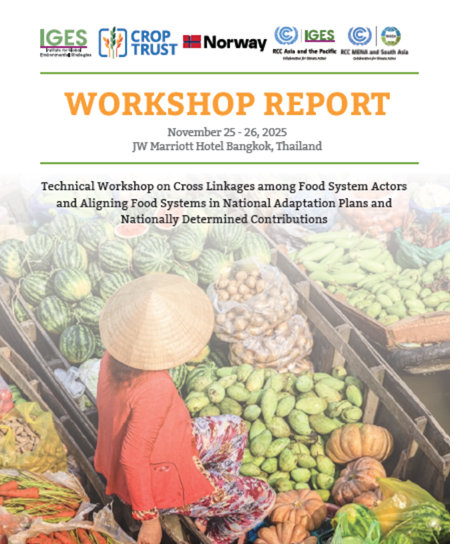
- • One Technical Workshop: In November 2025, we convened government delegations and researchers in Bangkok. Using Crop Trust’s Participatory Analysis Tool, participants mapped policy-to-practice interdependencies and co-created a phased 2035 roadmap for technology transfer and green finance.
- • One Interactive Webinar: Held on 27 February 2026, this webinar showcased regional findings and methodologies to UNFCCC focal points and development partners. The session successfully established a Community of Practice to sustain alignment between agrifood systems and climate policy.
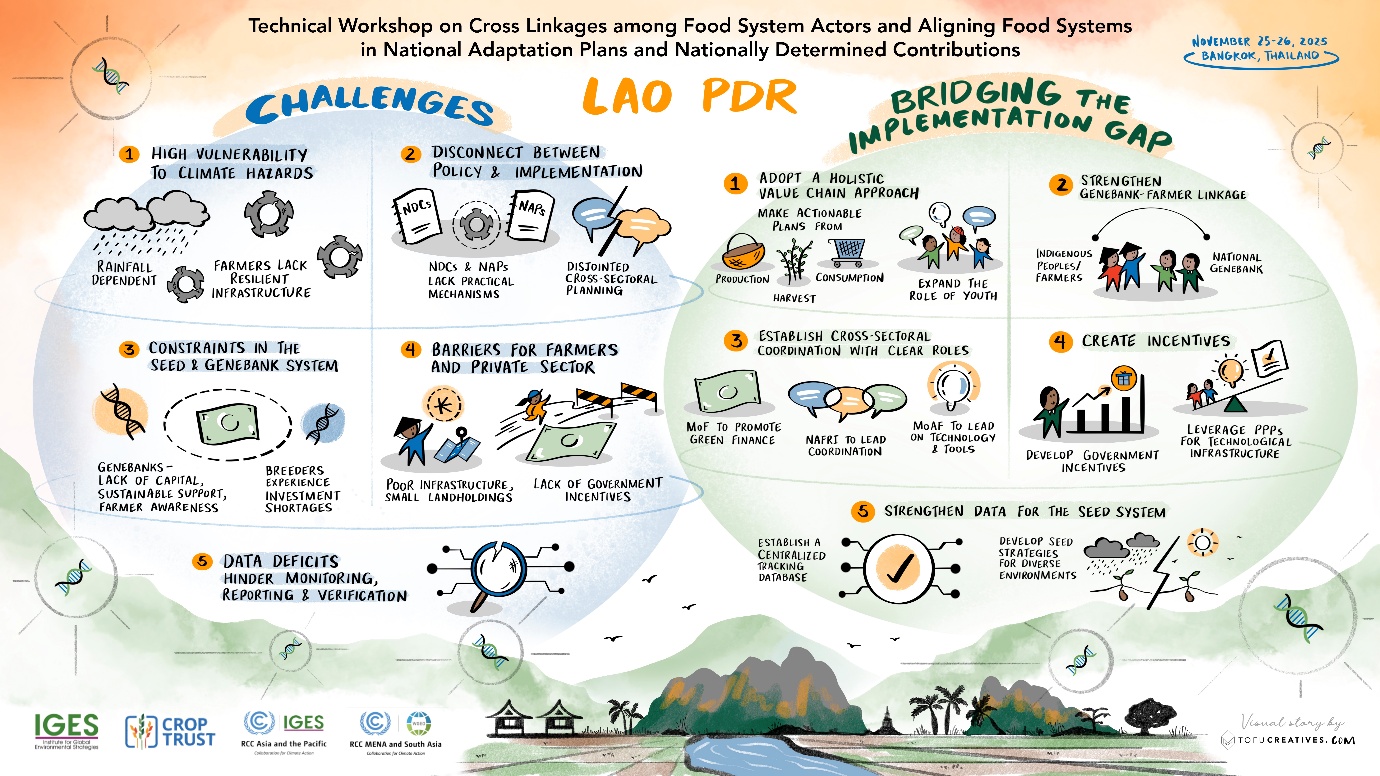
The case of Lao PDR highlights how climate risks intersect with deeper structural and institutional constraints, limiting the country’s ability to translate policy ambition into effective action. Key challenges include:
- • High vulnerability to climate hazards: Vulnerable smallholder farmers lack the resilient infrastructure needed to cope with these environmental pressures.
- • Gap between policy and implementation: The NAP and NDC2.0 lack the practical mechanisms to effectively connect different sectors during implementation.
- • Constraints in the seed and genebank system: Indigenous communities lack a strong link to the national genebank for backup conservation.
- • Barriers for farmers and private sector: Farmers are limited by poor infrastructure, small landholdings, and significant financial constraints.
- • Data deficits: The country struggles with data deficits, hindering the ability to track progress through robust Monitoring, Reporting, and Verification (MRV) systems.
To overcome these constraints, a set of targeted and system-level interventions is needed to strengthen coordination, enhance resilience, and unlock investment. Key recommendations include:
- • Adopting a holistic value chain approach: to connect every stage from production to harvest and consumption and expands the role of youth.
- • Strengthening the genebank-farmer linkage: to ensure local varieties and indigenous knowledge are backed up and accessible.
- • Establish cross-sectoral coordination with clear roles: MOF, MAE, and NAFRI lead on green finance, technology and tools, and overall coordination.
- • Creating incentives: to develop government-led incentives and leverage Public-Private Partnerships (PPPs) for technological infrastructure.
- • Strengthening seed system data: to create a centralised database, improving MRV systems, and tailor seed strategies to diverse environments.
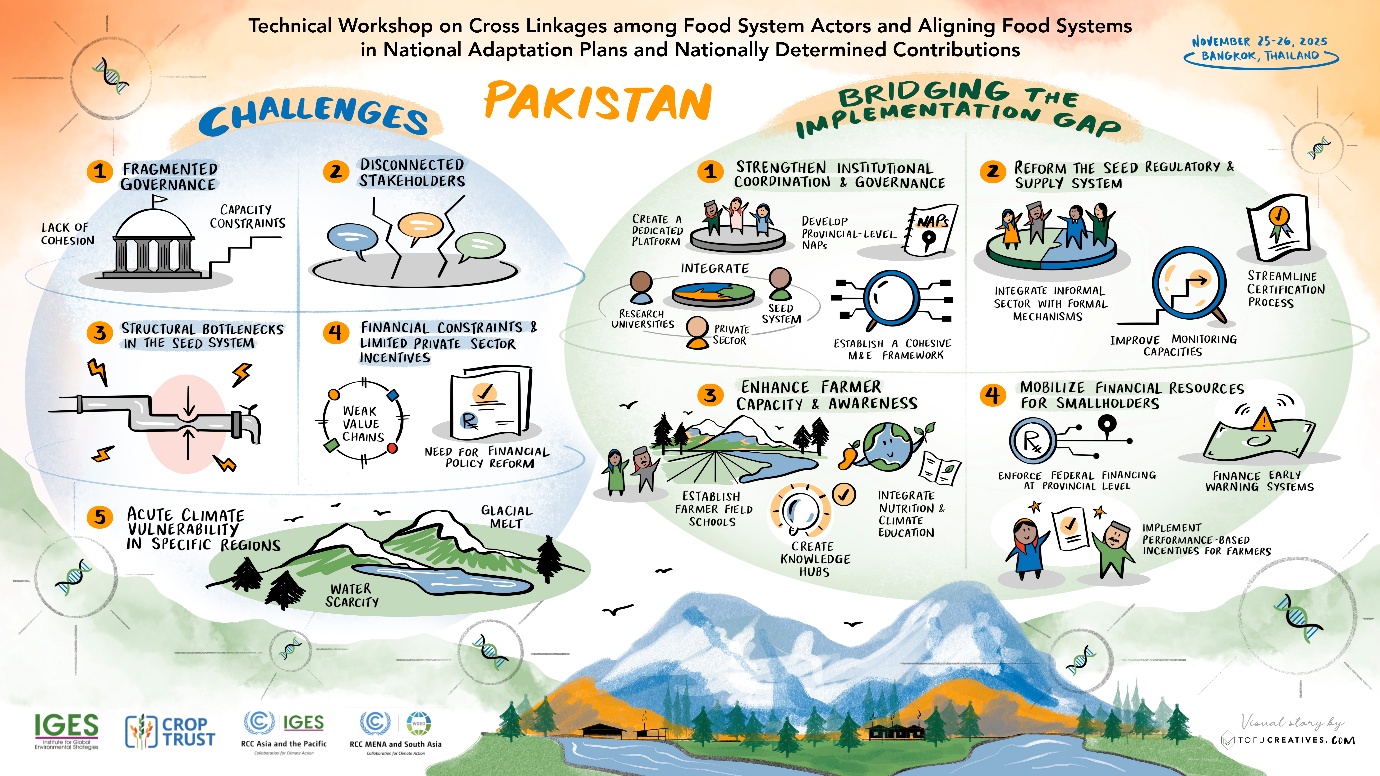
The case of Pakistan highlights how fragmented governance structures and structural bottlenecks, compounded by financial constraints and regional climate vulnerabilities, continue to impede food system transformation. Key challenges include:
- • Fragmented governance: A lack of cohesion between government bodies and a significant disconnect among farmers, researchers, and the private sector hinder the effective implementation of food system transformations.
- • Structural bottlenecks: Heavy reliance on centralized bodies and limited monitoring allow sub-standard seeds to enter the market, forcing farmers to rely on informal networks as certified supply only covers 37–40% of requirements.
- • Financial and incentive gaps: Smallholder transformation is hindered by limited access to capital for modern technology, weak value chains, and a lack of federal policy enforcement at the provincial level.
- • Regional climate vulnerability: Acute threats like glacial lake floods and water scarcity in specific regions require urgent, specialized disaster mitigation strategies to protect long-term food security.
In Pakistan, building a more resilient food system will require addressing institutional fragmentation, regulatory weaknesses, capacity gaps, and financial constraints in a coordinated manner. The following recommendations outline key priorities:
- • Strengthening institutional coordination and governance: to create a dedicated platform for food system transformation, develop provincial NAP and NDC3.0 and specific climate plans and, establish a cohesive Monitoring and Evaluation (M&E) framework.
- • Reforming the seed regulatory and supply system: to integrate the informal seed sector, streamline certification processes, and strengthen monitoring systems to prevent misbranded and substandard seeds from reaching the market.
- • Enhancing farmer capacity and awareness: to establish "Farmer Colleges" and "Farmer Field Schools" that equip farmers with modern agricultural practices and climate adaptation techniques, and integrate nutrition and climate education into standard school curricula.
- • Mobilising financial resources for smallholders: to enforce federal financing at provincial level, implementing performance-based incentives for farmers, and provide government financing for critical infrastructure like Early Warning Systems (EWS) in vulnerable regions.
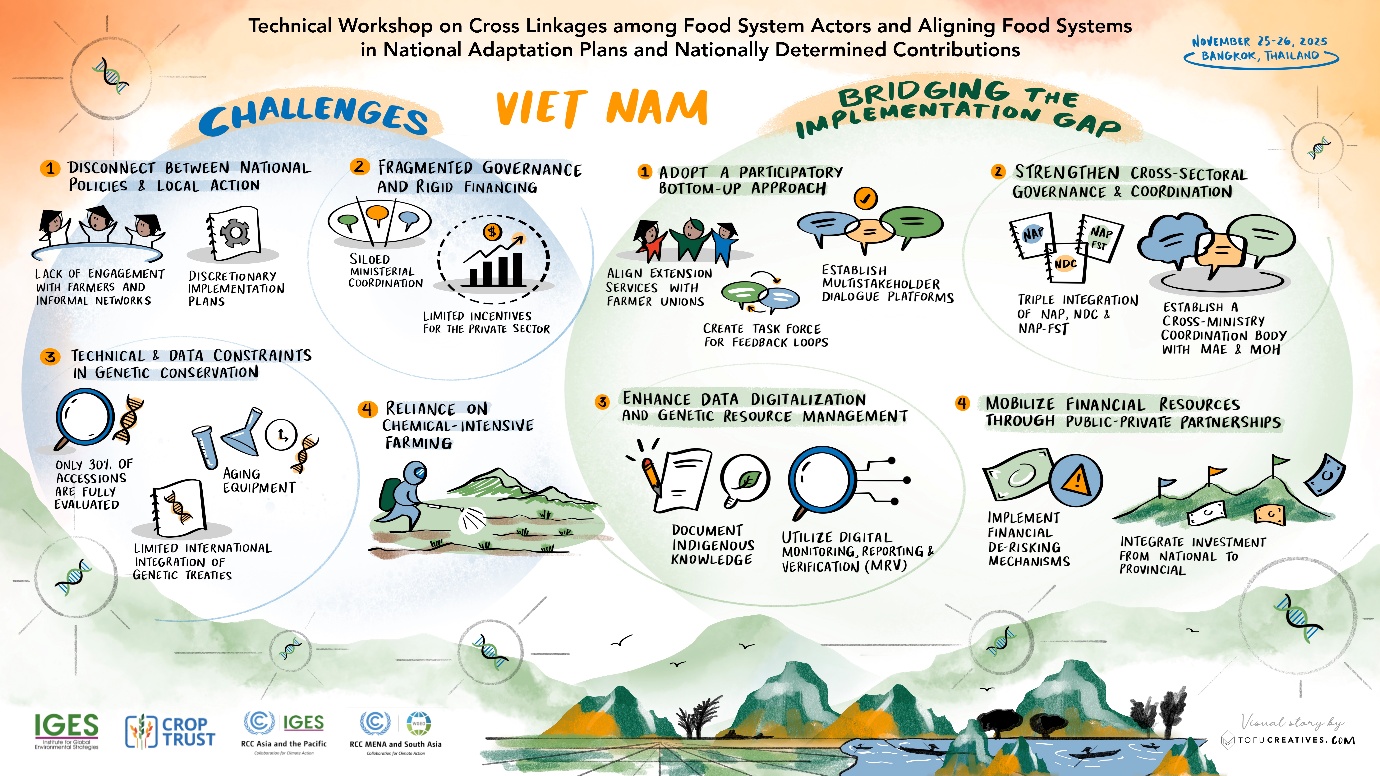
In Viet Nam, progress toward more sustainable and climate-resilient agriculture is shaped by structural and systemic constraints that affect how policies are implemented, how institutions coordinate, and how production systems evolve. Key challenges include:
- • Policy-to-action gap: National policies are often weakly translated into local implementation, resulting in persistent gaps due to limited farmer engagement and non-binding sub-national planning frameworks.
- • Fragmented governance and financing: Hindered by siloed ministerial coordination, rigid budget allocations that prevent dynamic funding, and a lack of private sector incentives for sustainable practices.
- • Conservation technical gaps: Only 30% of plant resources are evaluated for climate-resilient traits, further complicated by aging equipment and limited international treaty integration.
- • Chemical-intensive farming: The agricultural sector faces an urgent need to transition from long-standing chemical-intensive methods toward sustainable management and agroecology.
To support a more effective and inclusive transition in Vietnam, there is a need to strengthen bottom-up participation, improve cross-sectoral coordination, enhance data and genetic resource systems, and unlock financing through innovative partnerships. The following recommendations outline key priorities:
- • Aligning extension services with farmer unions:, to strengthen inclusivity establish multi-stakeholder dialogue platforms, and facilitate two-way communication between local actors and high-level policymakers.
- • Strengthening cross-sectoral governance and coordination: to integrate NAP, NDC2.0, and National Action Plan on Food Systems Transformation and establish a cross-ministry coordination body.
- • Enhancing data digitalisation and genetic resource management: to prioritize genetic resource surveys and the documentation of indigenous knowledge to support breeding programs and utilize MRV and early warning systems to enable agricultural transitions.
- • Mobilizing financial resources through public-private partnerships: to implement financial de-risking mechanisms and mobilize resources through partnerships to support actors like agro-dealers and private seed companies.
Related Publications
Relevant Events
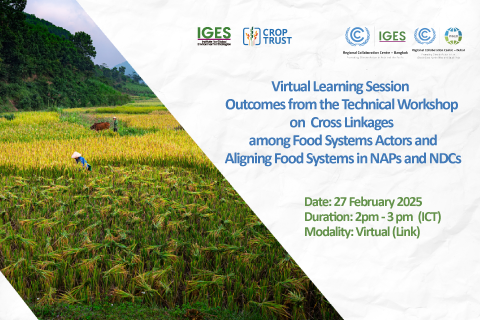
Outcomes from the Technical Workshop “Aligning Food Systems in NAPs and NDCs”