

Principal Policy Researcher
Professional Experience:
> Obtained funding from/managed/participated in research projects funded by: Suishinhi, Kakehnhi, ADB, APN, APAN and IFAD
>Worked in the following positions: Senior Policy Researcher, IGES, Japan (2010 onwards), Policy Researcher, IGES, Japan (2007-2010), JSPS Postdoctoral Fellow, Kyoto University, Japan (2005-2007), Visiting scholar, National Drought Mitigation Center (NDMC) at University of Nebraska–Lincoln (March 2007), Drought Specialist and Program Associate-DRM, United Nations Development Program-GoI DRM Program, New Delhi, India (2004-2005), Research Fellow, Rice-Wheat Consortium for the Indo-Gangetic Plains of International Maize and Wheat Improvement Center (CIMMYT), New Delhi, India (2001-2003), Research Fellow, Indian Agricultural Research Institute, IARI, New Delhi, India (2001), Research Fellow, International Crops Research Institute for Semi-Arid Tropics (ICRISAT), Hyderabad, India (1996).
Research Topics & Areas of Expertise
Currently engaged in the following research areas:
Measuring effectiveness of adaptation actions, Adaptation decision making frameworks, Scaling up risk insurance, Loss and damage associated with climate change, Equity and fairness in community based adaptation, Adaptive policies, Training needs assessment for climate change adaptation and Displacement and migration.
Education
Education:
1. PhD from Indian Agricultural Research Institute (IARI), New Delhi, India, 2001
2. PGD in Planning and Management, University of Hyderabad, India, 2004
3. MS (Ag) from Andhra Pradesh Agricultural University, India, 1996
4. BSc (Ag) from Andhra Pradesh Agricultural University, India, 1994
Results 111 to 120 of 346 (Sorted by date)
Book Series
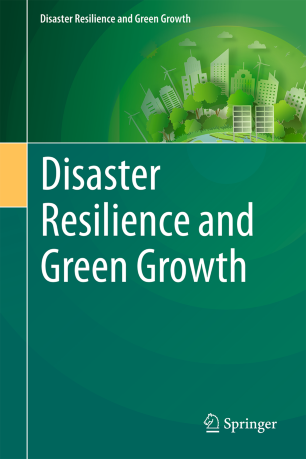
Editor:
Over the years, the relationship between the environment and disasters has received significant attention. This is largely due to the emerging recognition that environmental changes - climate change, land use and natural resource degradation make communities more vulnerable to disaster impacts. There is a need to break this nexus through...
Submission to Policy Process
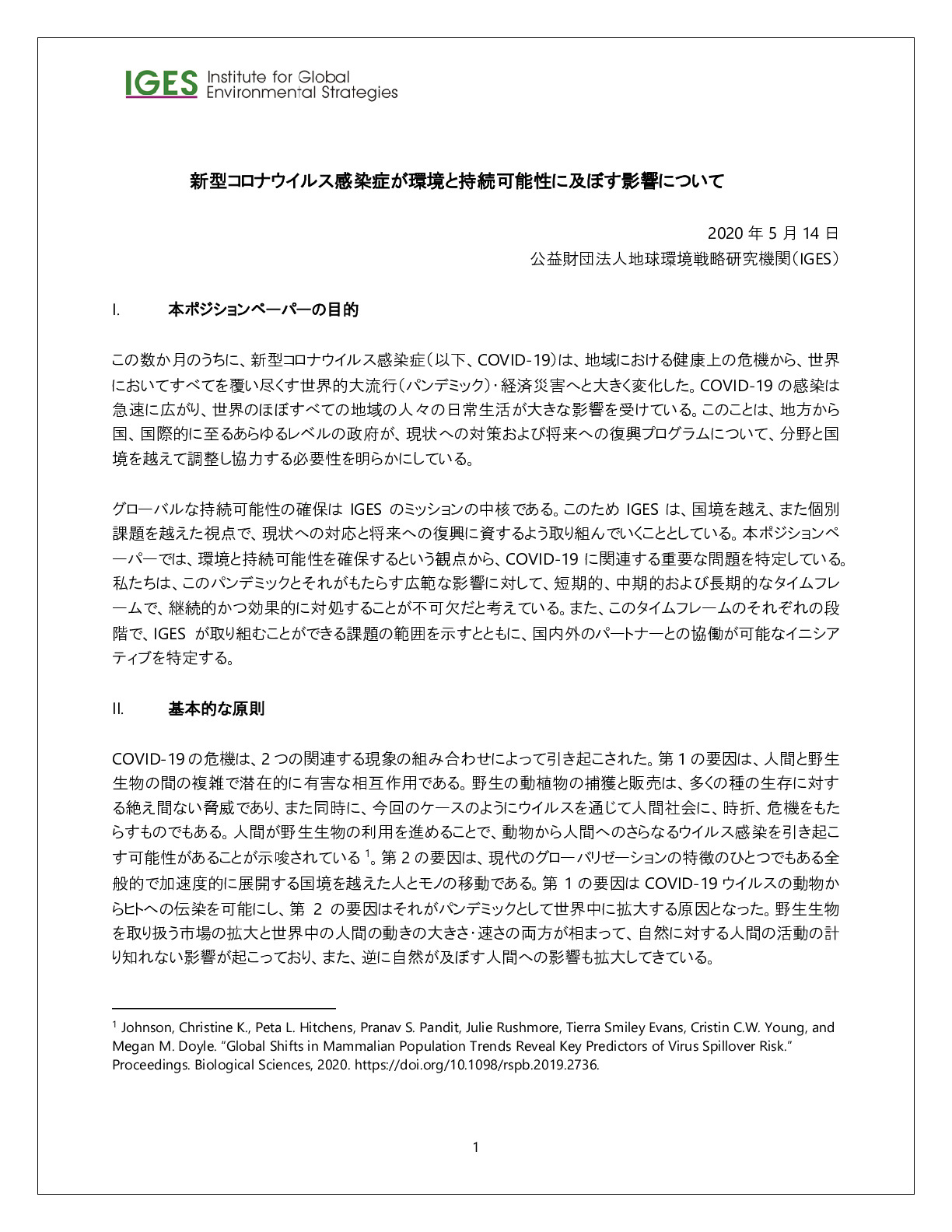
この数か月のうちに、新型コロナウイルス感染症(以下、COVID-19)は、地域における健康上の危機から、世界においてすべてを覆い尽くす世界的大流行(パンデミック)・経済災害へと大きく変化した。COVID-19の感染は急速に広がり、世界のほぼすべての地域の人々の日常生活が大きな影響を受けている。このことは、地方から国、国際的に至るあらゆるレベルの政府が、現状への対策および将来への復興プログラムについて、分野と国境を越えて調整し協力する必要性を明らかにしている。 グローバルな持続可能性の確保はIGESのミッションの中核である。このためIGESは、国境を越え、また個別課題を越えた視点で、現状への対応と将来への復興に資するよう取り組んでいくこととしている。本ポジションペーパーでは...
Submission to Policy Process
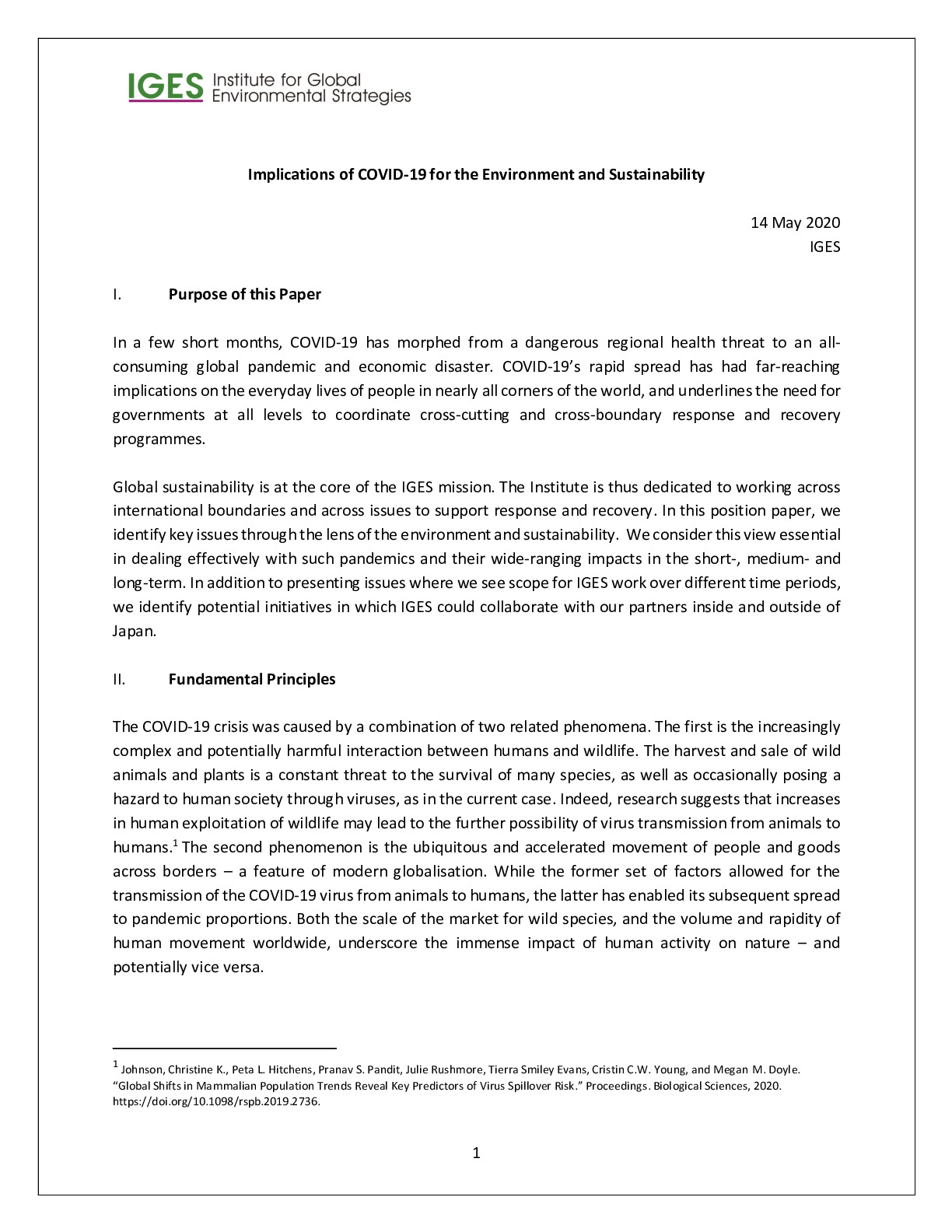
In a few short months, COVID-19 has morphed from a dangerous regional health threat to an all-consuming global pandemic and economic disaster. COVID-19’s rapid spread has had far-reaching implications on the everyday lives of people in nearly all corners of the world, and underlines the need for governments at all levels to coordinate cross-cutting...
Peer-reviewed Article

In APN Science Bulletin
NON-ECONOMIC LOSS AND DAMAGE (NELD) could constitute a major proportion of the total loss and damage caused by any climate-related disasters. Despite this, most NELD has not been well measured and reported in most post-disaster reports and databases and has often not been given the attention it deserves in most disaster risk assessments and risk...
Peer-reviewed Article
In UNISDR Global Assessment Report 19
This paper evaluates the current institutional and policy environment in the ASEAN region, which is known as one of the most vulnerable regions to climate change impacts in the world. The future projections indicate that the region is prone to severe weather events including floods, typhoons, and droughts. Considering the importance of...
Research Report
Climate change impacts on natural and human systems are increasing. Often affecting fragile economic, social and political systems, climate change is considered to be a serious ‘threat multiplier’. In this document, the risks on these existing systems are understood as climate fragility risks (CFRs). Considering CFRs in the development sector is...
Book
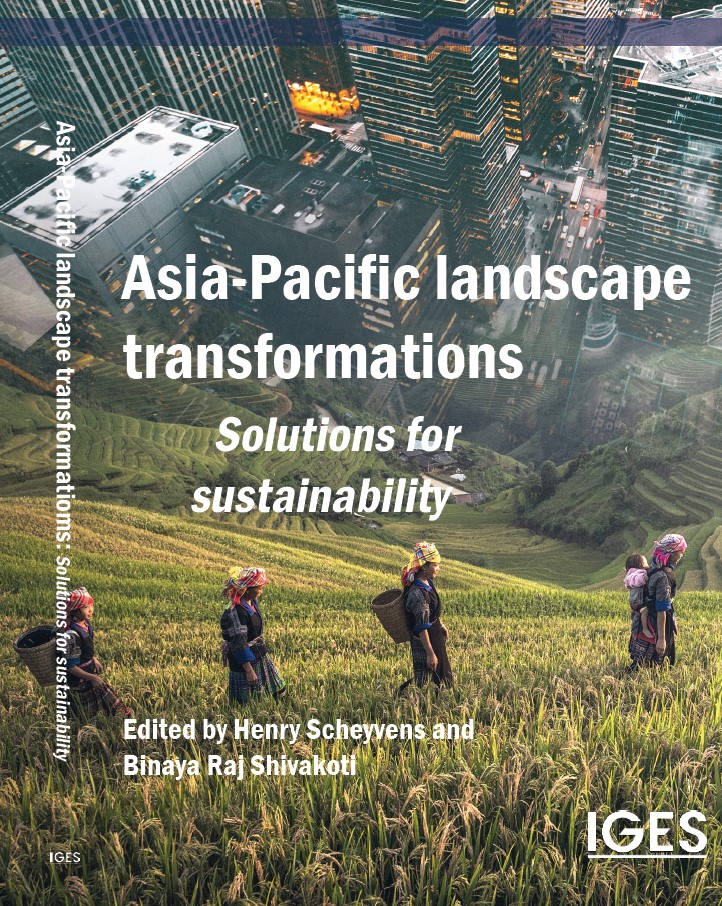
The Asia-Pacific region faces a fundamental dilemma. Over recent decades the region has achieved tremendous economic growth that has lifted millions of its people out of poverty and raised living standards, but in many places the way land is being used to generate this growth is unsustainable. Land has been exploited – growing economies regardless...
Peer-reviewed Article
In UNISDR Global Assessment Report 19
This paper presents results from a regional survey conducted on the globalization of local risks through investments in the vulnerable regions of Asia. Some countries that have been successful in attracting global investments in manufacturing and service industries are also highly vulnerable to natural hazard risks raising an important issue of...
Discussion Paper

Ecosystem-based (EB) approaches have been strongly promoted in various international environmental and development processes. As a result, they are gaining increasing attention among development practitioners, policymakers and researchers. A review of G20 national adaptation plans and related strategies revealed that member countries have...
Book Chapter
In Asia-Pacific Landscape Transformations: Solutions for Sustainability
Food production and productivity improvements have contributed to lifting millions of people out of poverty and reduced hunger and malnutrition, but are associated with patterns of land intensification that have degraded agricultural land and caused great environmental harm. Underlying drivers affecting land conversion to and from agriculture...
Results 1 to 4 of 4 (Sorted by date)
Project

Updated: March 2025
Environment Research and Technology Development Fund 1CN-2206 (FY2022-2024) - Research on the national long-term roadmap to synergise mitigation and adaptation towards a net zero and resilient ASEAN
Towards the establishment of a net-zero and resilient ASEAN Community as indicated by the ASEAN Climate Vision 2050, IGES is conducting a study on the formulation of a long-term roadmap to promote integrated transition of mitigation and adaptation in...
Project
Updated: July 2026
The ASEAN Climate Change Strategic Action Plan 2025-2030 Project
The ASEAN Climate Change Strategic Action Plan (ACCSAP) 2025-2030 serves as the roadmap for addressing climate change in ASEAN up to 2030. IGES contributed to the development of the “ASEAN State of Climate Change Report (ASCCR)” in 2021, the first...
Project
Updated: August 2026
Ensuring Security in Japan and the Indo-Pacific under Climate Change: A Focus on the Linkages with Economic Security
The climate security featured page will share research findings and related information on climate security. We are exploring various topics, including international trends analysis, energy security, food security, climate-induced human mobility, cl
Project
Updated: August 2023
IGES Inputs to Asia-Pacific Forum on Sustainable Development (APFSD)
APFSD is an annual meeting convened by the United Nations Economic and Social Commission for Asia and the Pacific (UNESCAP) aimed at strengthening the region’s readiness for the United Nations High-level Political Forum on Sustainable Development.