

Principal Policy Researcher
Professional Experience:
> Obtained funding from/managed/participated in research projects funded by: Suishinhi, Kakehnhi, ADB, APN, APAN and IFAD
>Worked in the following positions: Senior Policy Researcher, IGES, Japan (2010 onwards), Policy Researcher, IGES, Japan (2007-2010), JSPS Postdoctoral Fellow, Kyoto University, Japan (2005-2007), Visiting scholar, National Drought Mitigation Center (NDMC) at University of Nebraska–Lincoln (March 2007), Drought Specialist and Program Associate-DRM, United Nations Development Program-GoI DRM Program, New Delhi, India (2004-2005), Research Fellow, Rice-Wheat Consortium for the Indo-Gangetic Plains of International Maize and Wheat Improvement Center (CIMMYT), New Delhi, India (2001-2003), Research Fellow, Indian Agricultural Research Institute, IARI, New Delhi, India (2001), Research Fellow, International Crops Research Institute for Semi-Arid Tropics (ICRISAT), Hyderabad, India (1996).
Research Topics & Areas of Expertise
Currently engaged in the following research areas:
Measuring effectiveness of adaptation actions, Adaptation decision making frameworks, Scaling up risk insurance, Loss and damage associated with climate change, Equity and fairness in community based adaptation, Adaptive policies, Training needs assessment for climate change adaptation and Displacement and migration.
Education
Education:
1. PhD from Indian Agricultural Research Institute (IARI), New Delhi, India, 2001
2. PGD in Planning and Management, University of Hyderabad, India, 2004
3. MS (Ag) from Andhra Pradesh Agricultural University, India, 1996
4. BSc (Ag) from Andhra Pradesh Agricultural University, India, 1994
Results 121 to 130 of 346 (Sorted by date)
Discussion Paper

Ecosystem-based (EB) approaches have been strongly promoted in various international environmental and development processes. As a result, they are gaining increasing attention among development practitioners, policymakers and researchers. A review of G20 national adaptation plans and related strategies revealed that member countries have...
Briefing Note

Integrative approaches to land management, such as ecosystems-based approaches and landscape approaches, together with sustainable infrastructure and the sustainable use and conservation of biodiversity, provide multiple benefits. By providing stakeholders with a means to work through competing interests over land and natural resources, while at...
Presentation

Regional collaboration for climate and SDG actions in the HKH
The objectives of the session are to emphasize the following points: Climate Change in the Hindu Kush Himalayas will seriously comprise food, nutritional and energy security in the region and downstream, severely challenging abilities of nations – particularly the poorer nations– to achieve the SDGs. There is an urgent need for collective climate...
Briefing Note

生態系を基盤とするアプローチやランドスケープアプローチといった土地管理の統合的アプローチは、持続可能なインフラおよび生物多様性の持続可能な利用と保全と併用することで、複数の利点をもたらす。自然資本を維持することの重要性を強調すると同時に、土地と天然資源の利害相反に取り組むための手段を利害関係者に提供することによって、開発、気候変動適応、および防災に対する国際目標に貢献できる大きな可能性が統合的アプローチにはある。統合的アプローチ、持続可能なインフラ、ならびに生物多様性の持続可能な利用および保全は、アジア太平洋諸国がSDGを達成するための重要な戦略である。統合は、さまざまな地理的スケールおよびタイムスケールにおいて必要となる。国レベルでの適応戦略の開発に焦点が当てられてきたが...
Presentation

Stakeholder consultation on Maximizing the Climate Security in Asia through a Coordinated Emergency Assistance Framework
Japan is one of the prominent contributors towards overseas development assistance (ODA) and emergency relief assistance (external emergency assistance, EEA) in the aftermath of major natural disasters. These assistances have costs and benefits to both the recipients and to the donor countries. In order to improve the efficacy of various forms of...
Presentation
Third Forum of Ministers and Environment Authorities of Asia Pacific
This session will explore the transboundary risks that result from both the impacts of climate change and the effects of adaptation (positive and negative). It will draw on case studies from within and across the Asia Pacific region, to provide an impetus for increased regional – and subsequently global – action and cooperation. The session will...
Book Chapter
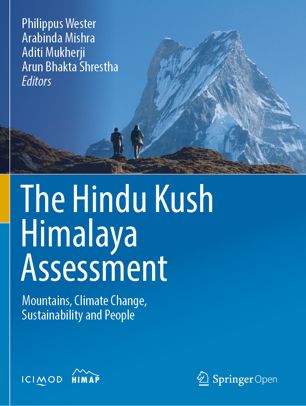
In The Hindu Kush Himalaya Assessment Mountains, Climate Change, Sustainability and People
This is a precarious moment for the Hindu Kush Himalaya (HKH). Environmentally, socially, and economically, there is no single likely future for the HKH. Between now and 2080, the HKH may run downhill, or the region may continue doing business as usual and muddling through, or it may advance toward prosperity. Evidence-based actions to reduce...
Peer-reviewed Article
In INTERNATIONAL JOURNAL OF DISASTER RESILIENCE IN THE BUILT ENVIRONMENT
This paper aims to identify and prioritize key non-economic loss and damages (NELDs) caused by the 2009 Cyclone Aila in Khulna District of Bangladesh and to identify appropriate practices to address the NELDs. The analytic hierarchy process was applied to prioritize key criteria, NELD indicators and practices that should be integrated into disaster...
Discussion Paper

Global support for promoting adaptation, both in terms of technical and financial assistance is growing, though only a few countries have reached the stage of submitting their NAPs. Developing effective NAPs is a complicated process requiring a great deal of financial and technical resources, much akin to the implementation of environmental...
PR, Newsletter or Other

STS Forum 2018
Enhanced trade and investments have been one of the significant developments of regional integration in Asia during the recent decades. Countries that are successful in attracting global investments are also highly vulnerable to natural hazards and related losses. This has opened up doors to an important, inescapable and hidden phenomenon of...
Results 1 to 4 of 4 (Sorted by date)
Project

Updated: March 2025
Environment Research and Technology Development Fund 1CN-2206 (FY2022-2024) - Research on the national long-term roadmap to synergise mitigation and adaptation towards a net zero and resilient ASEAN
Towards the establishment of a net-zero and resilient ASEAN Community as indicated by the ASEAN Climate Vision 2050, IGES is conducting a study on the formulation of a long-term roadmap to promote integrated transition of mitigation and adaptation in...
Project
Updated: July 2026
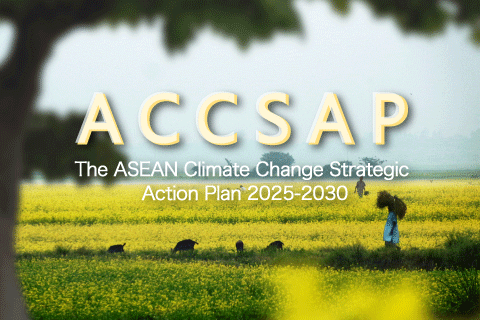
The ASEAN Climate Change Strategic Action Plan 2025-2030 Project
The ASEAN Climate Change Strategic Action Plan (ACCSAP) 2025-2030 serves as the roadmap for addressing climate change in ASEAN up to 2030. IGES contributed to the development of the “ASEAN State of Climate Change Report (ASCCR)” in 2021, the first...
Project
Updated: August 2026
Ensuring Security in Japan and the Indo-Pacific under Climate Change: A Focus on the Linkages with Economic Security
The climate security featured page will share research findings and related information on climate security. We are exploring various topics, including international trends analysis, energy security, food security, climate-induced human mobility, cl
Project
Updated: August 2023
IGES Inputs to Asia-Pacific Forum on Sustainable Development (APFSD)
APFSD is an annual meeting convened by the United Nations Economic and Social Commission for Asia and the Pacific (UNESCAP) aimed at strengthening the region’s readiness for the United Nations High-level Political Forum on Sustainable Development.