

Principal Policy Researcher
Professional Experience:
> Obtained funding from/managed/participated in research projects funded by: Suishinhi, Kakehnhi, ADB, APN, APAN and IFAD
>Worked in the following positions: Senior Policy Researcher, IGES, Japan (2010 onwards), Policy Researcher, IGES, Japan (2007-2010), JSPS Postdoctoral Fellow, Kyoto University, Japan (2005-2007), Visiting scholar, National Drought Mitigation Center (NDMC) at University of Nebraska–Lincoln (March 2007), Drought Specialist and Program Associate-DRM, United Nations Development Program-GoI DRM Program, New Delhi, India (2004-2005), Research Fellow, Rice-Wheat Consortium for the Indo-Gangetic Plains of International Maize and Wheat Improvement Center (CIMMYT), New Delhi, India (2001-2003), Research Fellow, Indian Agricultural Research Institute, IARI, New Delhi, India (2001), Research Fellow, International Crops Research Institute for Semi-Arid Tropics (ICRISAT), Hyderabad, India (1996).
Research Topics & Areas of Expertise
Currently engaged in the following research areas:
Measuring effectiveness of adaptation actions, Adaptation decision making frameworks, Scaling up risk insurance, Loss and damage associated with climate change, Equity and fairness in community based adaptation, Adaptive policies, Training needs assessment for climate change adaptation and Displacement and migration.
Education
Education:
1. PhD from Indian Agricultural Research Institute (IARI), New Delhi, India, 2001
2. PGD in Planning and Management, University of Hyderabad, India, 2004
3. MS (Ag) from Andhra Pradesh Agricultural University, India, 1996
4. BSc (Ag) from Andhra Pradesh Agricultural University, India, 1994
Results 101 to 110 of 346 (Sorted by date)
Presentation

APAN Forum Special Session
The presentation summarizes key climate risks and sectoral adaptation options for Asia from the synthesis of multiple global and regional assessments, including recent assessment reports of IPCC and IPBES. The talk was delivered on a special session on Adaptation Gaps in APAN Forum hosted by IGES and the Ministry of Environment.
Presentation
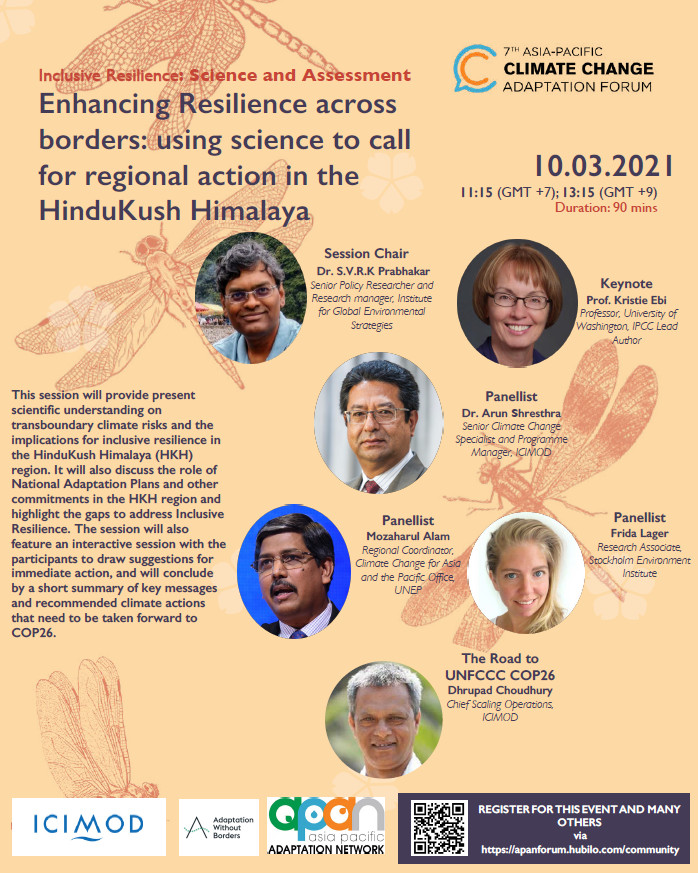
7th Asia Pacific Climate Change Adaptation Forum
The Hindu Kush Himalayan (HKH) region comprises the mountainous region spanning eight countries in South Asia, including Afghanistan, Bangladesh, Bhutan, China, India, Myanmar, Nepal, and Pakistan. The HKH region is endowed with significant transboundary freshwater resources and biodiversity reserves. Nearly ten glacier, rainfall, and snow-fed...
Peer-reviewed Article
In Land Use Policy
Highlights • The analysis indicated a positive correlation between socioeconomic factors and agricultural land change in Asia. • A negative correlation between agricultural land and urban population signified an agricultural land decline in Asia. • Higher agricultural productivity gains contributed to the farmland decline in some countries in Asia...
Presentation
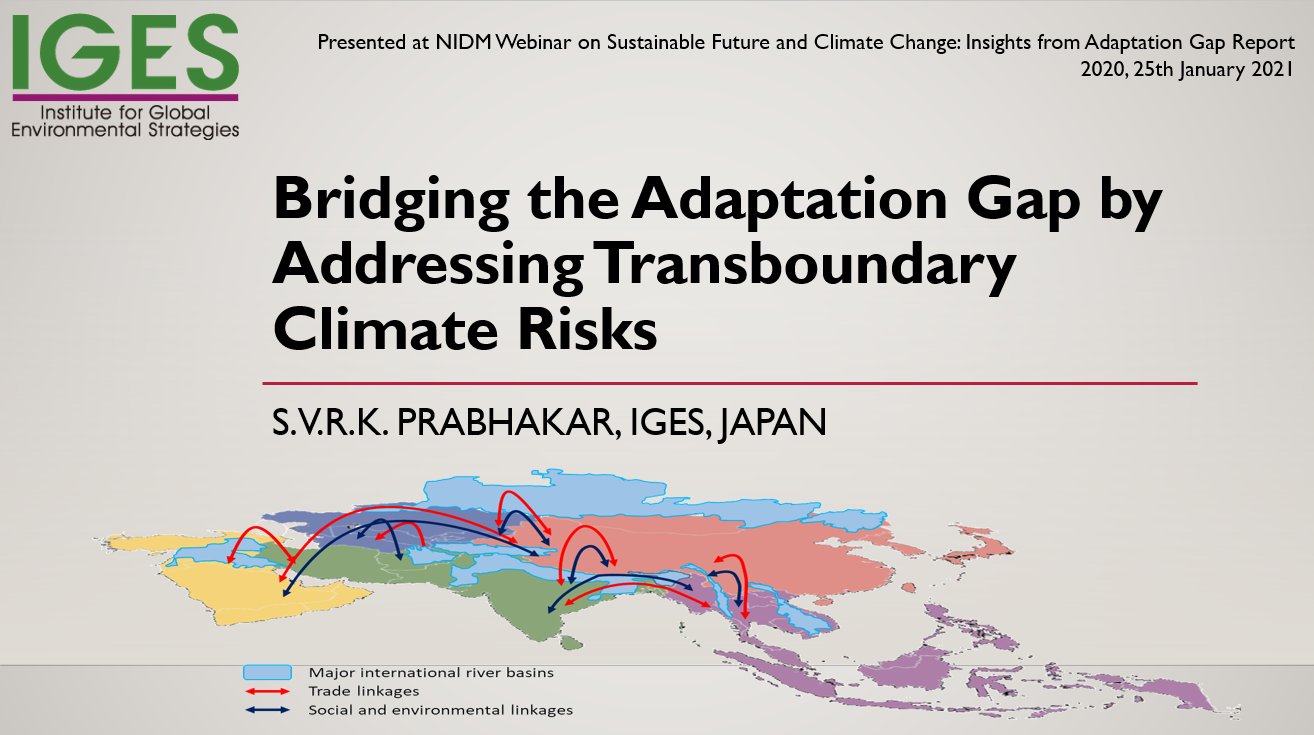
Sustainable Future and Climate Change: Insights from Adaptation Gap Report 2020
The presentation talks about the important opportunities identified by the global adaptation gap report and further elaborates on the transboundary climate risks South Asia and other regions are increasingly facing. The presentation stresses the need for regional cooperation for addressing transboundary climate risks and pitches the idea of...
Presentation
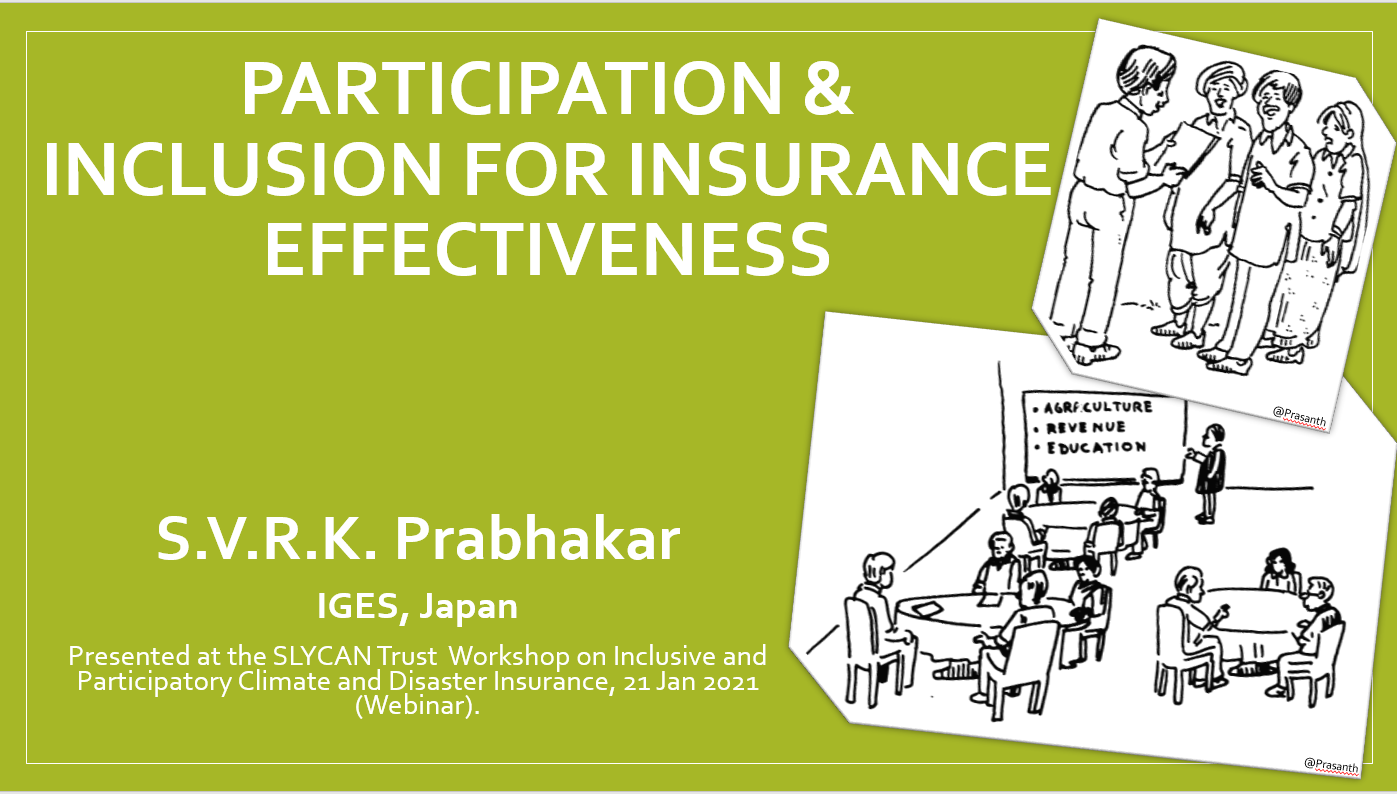
Inclusive and Participatory Climate and Disaster Insurance
As a key mechanism for risk transfer, climate insurance schemes can and have been implemented in different sectors and different forms around the world, including indemnity- and index-based schemes, agricultural insurance, livestock insurance, and disaster insurance. While insurance holds great potential to increase resilience, they need to be...
Presentation
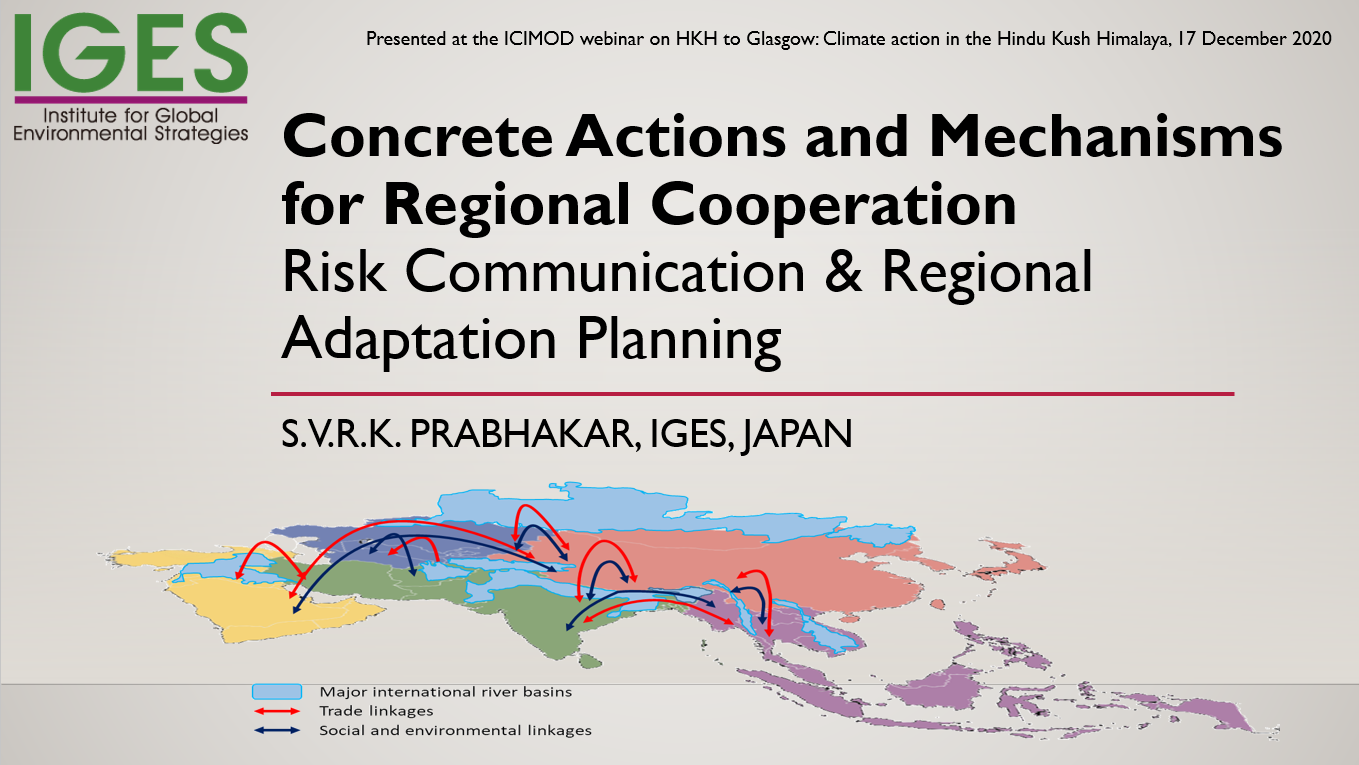
HKH to Glasgow: Climate action in the Hindu Kush Himalaya
This presentation is about concrete actions and mechanisms for regional collaboration to address regional systemic issues in the HKH region. The presentation identifies the barriers to the recognition of important regional adaptation issues, discusses some recent case studies of transboundary catastrophic events that highlighted the need for...
Peer-reviewed Article
In Progress in Disaster Science
The phenomenon of regional and global integration has resulted in natural hazards and climate change impacts in one country affecting people and countries far away. This phenomenon of globalization of local risks has long been known but has not received much attention. With greater regional integration and greater impacts of climate change, these...
Peer-reviewed Article
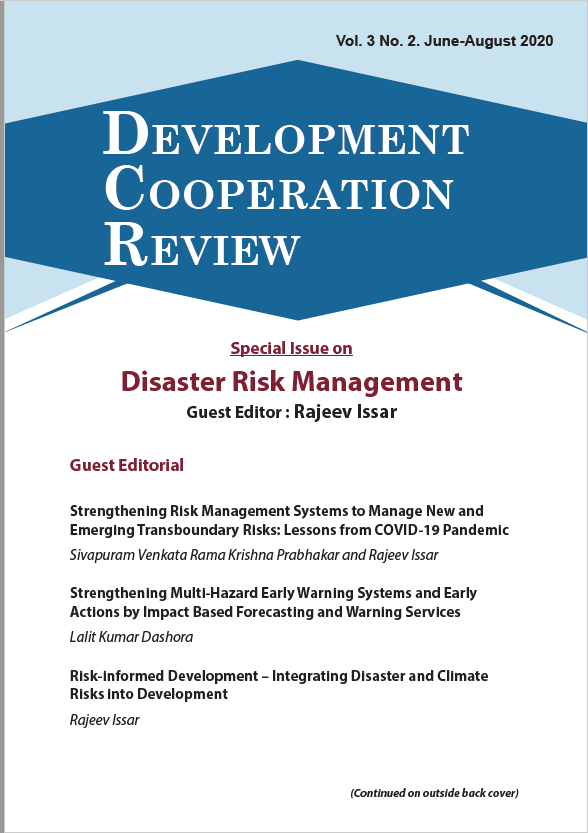
In Development Cooperation Review
The coronavirus disease 2019 (COVID-19) has emerged as one of the severe and important health disasters during recent times. The impacts of the COVID-19 have spanned across the globe and rightly qualify to be a transboundary disaster. When looked through the lens of transboundary risks, COVID-19 is not the first of its kind. Health and non-health...
Non Peer-reviewed Article
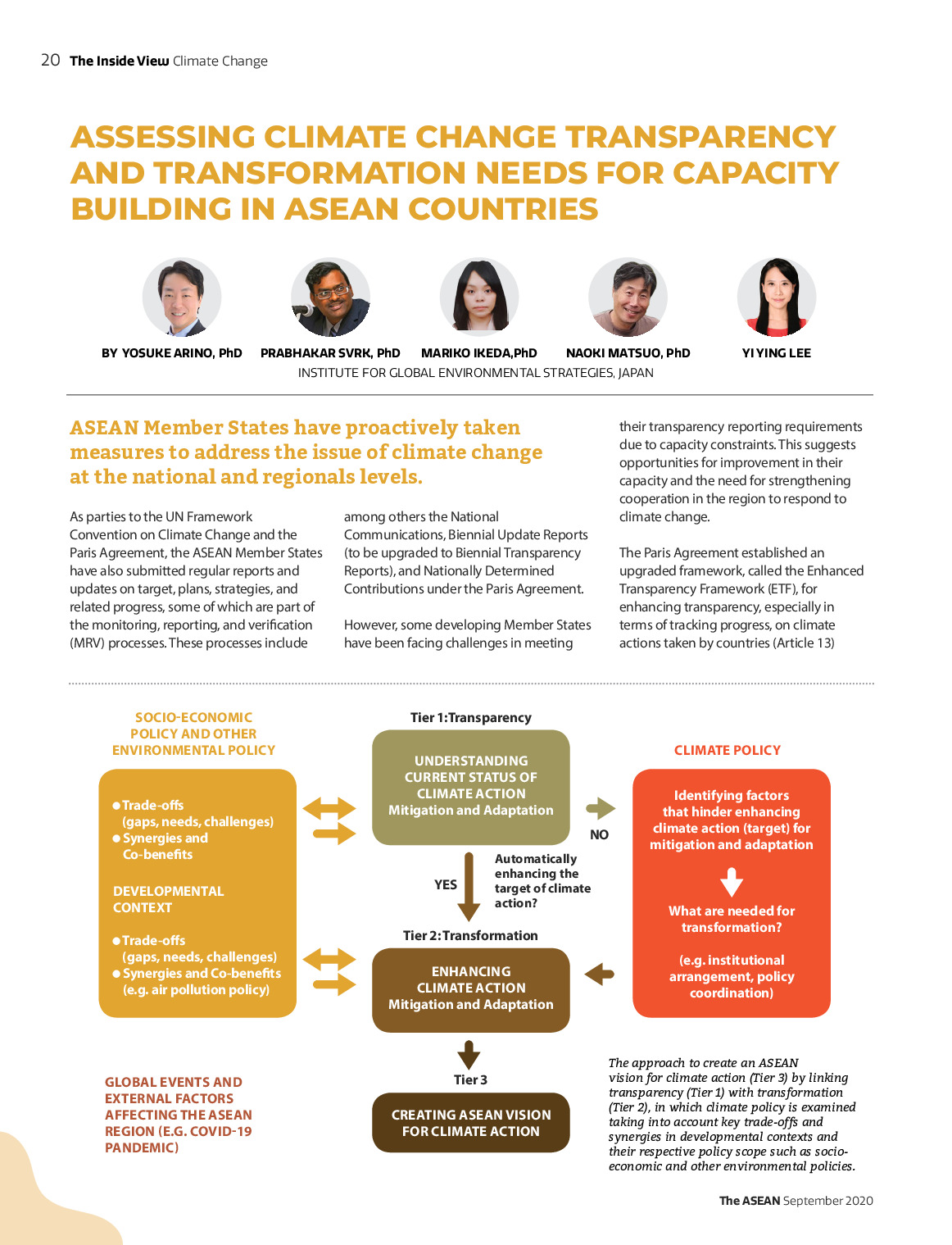
In The ASEAN
ASEAN Member States have proactively taken measures to address the issue of climate change at the national and regional levels. However, some developing Member States have been facing challenges in meeting their transparency reporting requirements due to capacity constraints. Recognising these capacity gaps and the urgent needs for transformation...
Commissioned Report

The increasing frequency of heavy rainfalls and severe typhoons is said to be caused by the adverse effects of climate change. Among various climate change risks, physical damages by natural disasters in Japan are increasingly being acknowledged by the public and have been investigated in many studies. However, studies from overseas have pointed...
Results 1 to 4 of 4 (Sorted by date)
Project

Updated: March 2025
Environment Research and Technology Development Fund 1CN-2206 (FY2022-2024) - Research on the national long-term roadmap to synergise mitigation and adaptation towards a net zero and resilient ASEAN
Towards the establishment of a net-zero and resilient ASEAN Community as indicated by the ASEAN Climate Vision 2050, IGES is conducting a study on the formulation of a long-term roadmap to promote integrated transition of mitigation and adaptation in...
Project
Updated: July 2026
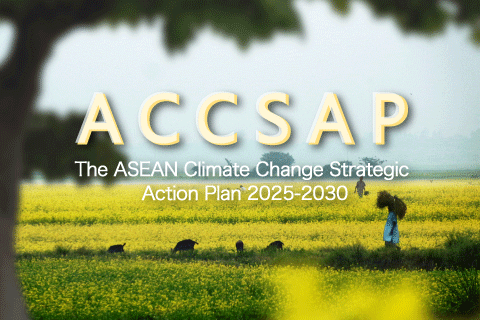
The ASEAN Climate Change Strategic Action Plan 2025-2030 Project
The ASEAN Climate Change Strategic Action Plan (ACCSAP) 2025-2030 serves as the roadmap for addressing climate change in ASEAN up to 2030. IGES contributed to the development of the “ASEAN State of Climate Change Report (ASCCR)” in 2021, the first...
Project
Updated: August 2026
Ensuring Security in Japan and the Indo-Pacific under Climate Change: A Focus on the Linkages with Economic Security
The climate security featured page will share research findings and related information on climate security. We are exploring various topics, including international trends analysis, energy security, food security, climate-induced human mobility, cl
Project

Updated: August 2023
IGES Inputs to Asia-Pacific Forum on Sustainable Development (APFSD)
APFSD is an annual meeting convened by the United Nations Economic and Social Commission for Asia and the Pacific (UNESCAP) aimed at strengthening the region’s readiness for the United Nations High-level Political Forum on Sustainable Development.