- English
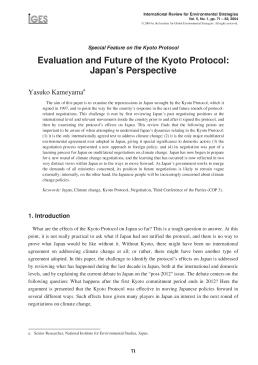


The aim of this paper is to examine the repercussions in Japan wrought by the Kyoto Protocol, which it signed in 1997, and to point the way for the country’s response in the next and future rounds of protocol-related negotiations. This challenge is met by first reviewing Japan’s past negotiating positions at the international level and relevant movements inside the country prior to and after it signed the protocol, and then by examining the protocol’s effects on Japan. This review finds that the following points are important to be aware of when attempting to understand Japan’s dynamics relating to the Kyoto Protocol: (1) it is the only internationally agreed text to address climate change; (2) it is the only major multilateral environmental agreement ever adopted in Japan, giving it special significance to domestic actors; (3) the negotiation process represented a new approach to foreign policy; and (4) its negotiation was part of a learning process for Japan on multilateral negotiations on climate change. Japan has now begun to prepare for a new round of climate change negotiations, and the learning that has occurred is now reflected in two very distinct views within Japan as to the ways to move forward. As Japan’s government works to merge the demands of all ministries concerned, its position in future negotiations is likely to remain vague externally; internally, on the other hand, the Japanese people will be increasingly concerned about climate change policies
Remarks:
http://pub.iges.or.jp/modules/envirolib/view.php?docid=433
Full text is available on EBSCOhost database: http://www.ebscohost.com/
- English