


Briefing Note
The 2021 United Nations Environment Assembly (UNEA 5.1) took place on February 22-23 2021. As the United Nations Environment Programme's (UNEP) universal-membership governing body, UNEA plays an important role in international environmental governance. Held biennially, UNEA brings together the UN’s 193 member states and other stakeholders to...
Fact Sheet
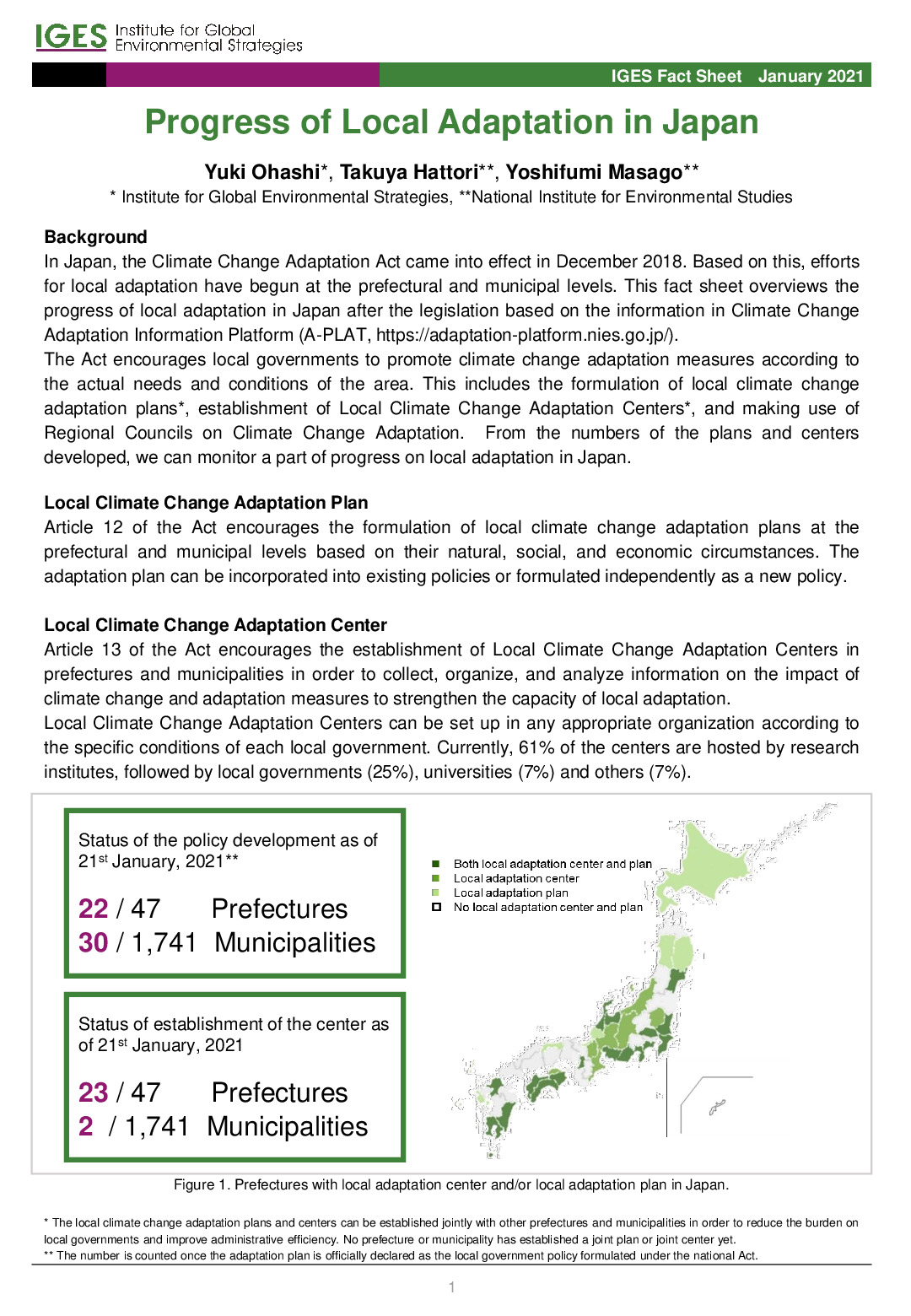
This publication illustrates the recent development of local adaptation policies in Japan. Based on the Climate Change Adaptation Act in 2018, local governments are encouraged to develop measures for climate change at prefectural and/or municipality levels such as local adaptation policies and local adaptation centers. This factsheet overviews such...
Working Paper
Effective Plastic Waste Management in Sri Lanka
This case study report examines the establishment and evolution of plastic waste recycling under two different operational modalities in urban areas of Sri Lanka; 1) single municipal operation, and 2) PPP (Public Private Partnership) based operation. This report provides an analysis of each modality in terms of effectiveness, technical feasibility...
Discussion Paper
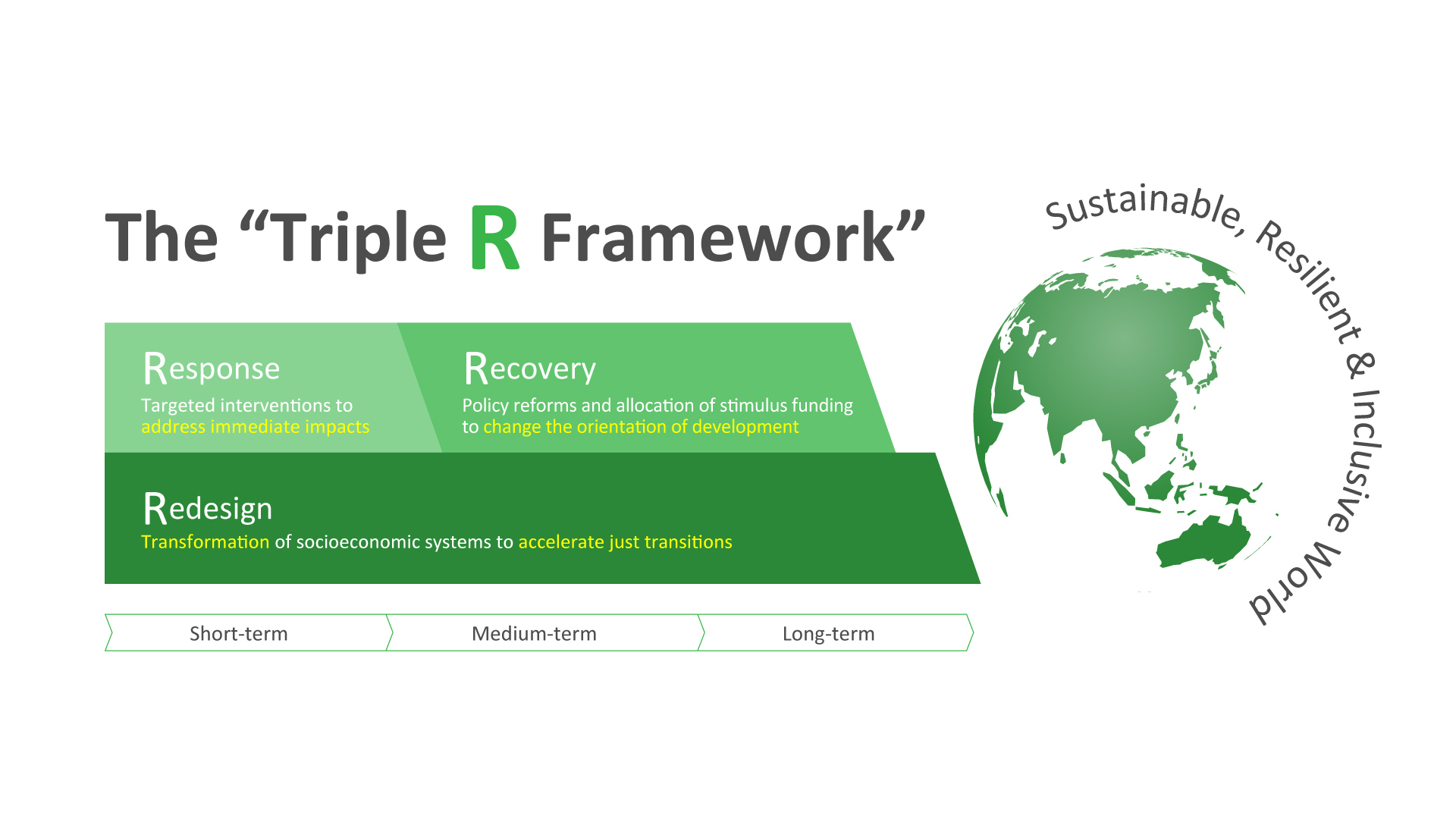
Many decision makers are contemplating whether policies and investments made in the wake of COVID-19 are inclusive, resilient and sustainable enough to bring about a course change in development . T his paper outlines the design features of framework that helps policymakers steer a more inclusive, resilient and sustainable course. What the...
Submission to Policy Process
COVID-19 has morphed from a dangerous regional health threat to an all-consuming global pandemic and economic disaster. COVID-19’s rapid spread has had far-reaching implications on the everyday lives of people in nearly all corners of the world. In fact, as of October 2020, at least 50 million people globally have tested positive for the virus, and...
Book Chapter

In Implementing the Satoyama Initiative for the Benefit of Biodiversity and Human Well-being
The Satoyama Initiative is endorsed by the decision of the Tenth Conference of the Parties to the Convention on Biological Diversity (CBD COP 10) in 2010. It is a global effort with the vision to “realize societies in harmony with nature” through promotion and conservation of “socio-ecological production landscapes and seascapes” (SEPLS). The...
Book Chapter
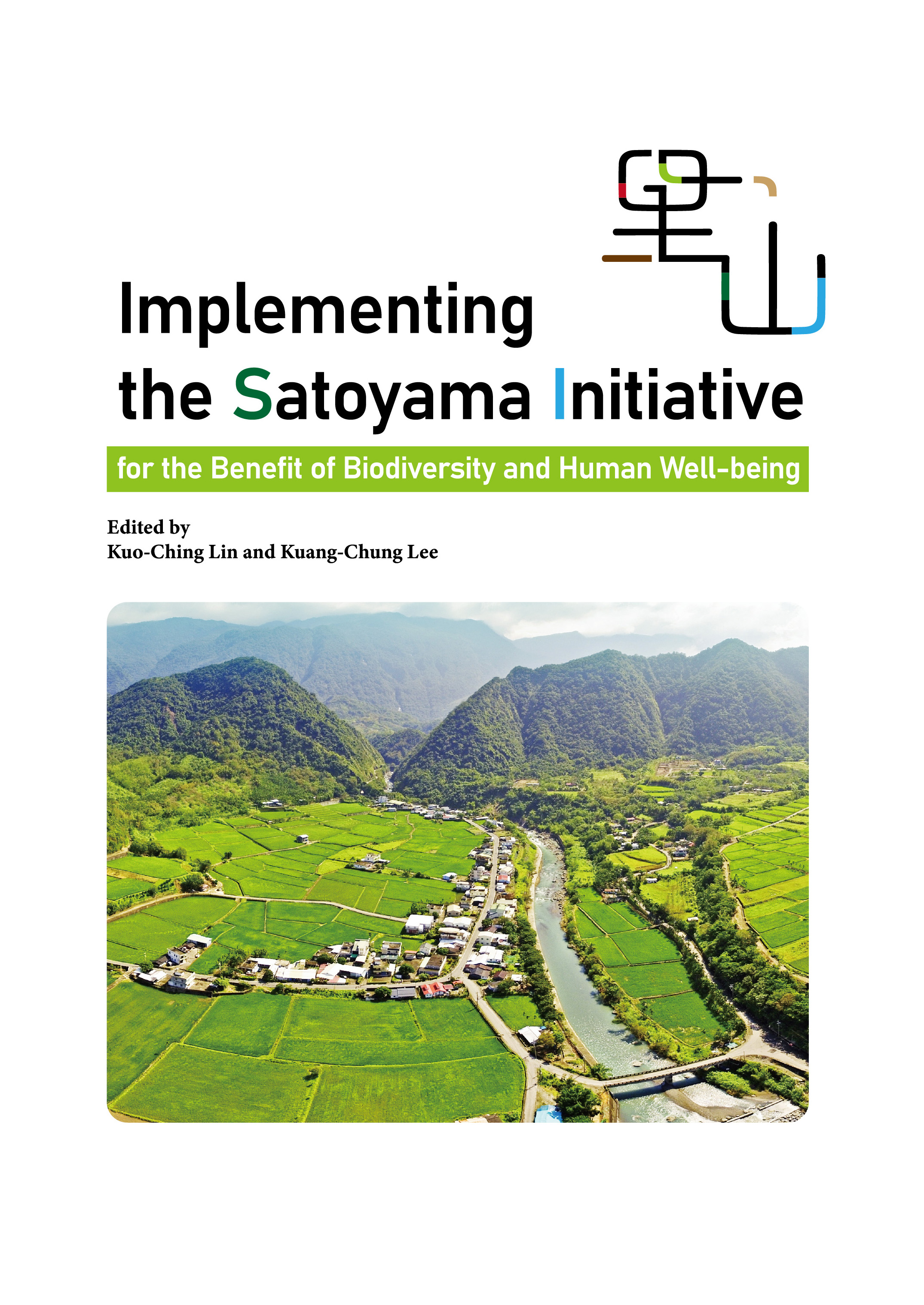
In Implementing the Satoyama Initiative for the benefit of biodiversity and human well-being
Primary production, including agriculture, aquaculture, forestry and fisheries is the strongest driver of biodiversity loss globally. It can, however, contribute to biodiversity conservation if wisely managed such as in ‘Satoyama’ and ‘Satoumi’, or socio-ecological production landscapes and seascapes (SEPLS), where production activities support...
Conference Proceeding
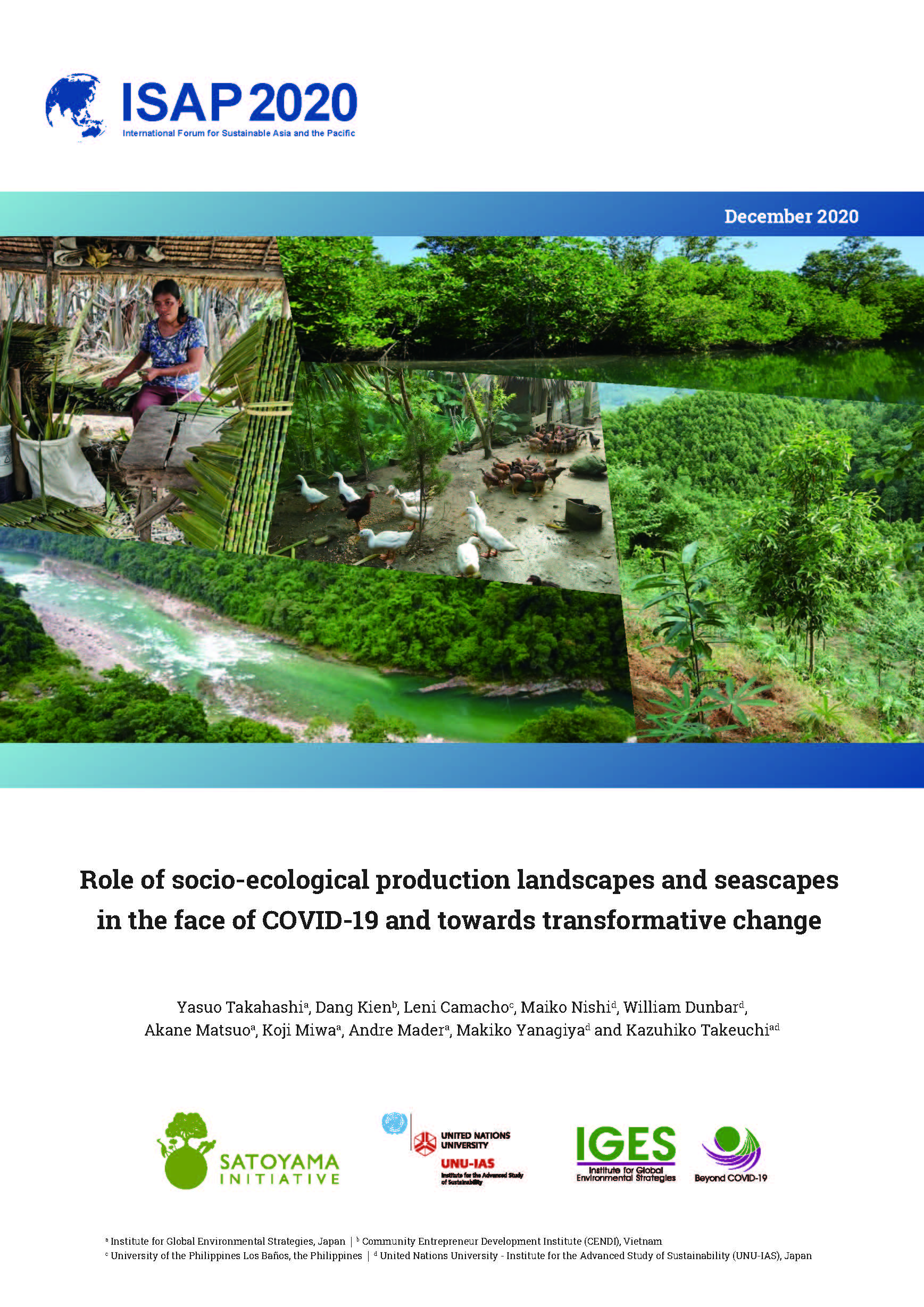
On Thursday 12 November 2020, United Nations University Institute for the Advanced Study of Sustainability (UNU-IAS) and Institute for Global Environmental Strategies (IGES) convened a session entitled “The Satoyama Initiative, transformative change, and societies in harmony with nature” at the 12th International Forum for Sustainable Asia and the...
Peer-reviewed Article
In Proceedings of the National Academy of Sciences of the United States of America
Recent assessment reports by the Intergovernmental Panel on Climate Change (IPCC) and the Intergovernmental Science-Policy Platform on Biodiversity and Ecosystem Services (IPBES) have highlighted the risks to humanity arising from the unsustainable use of natural resources. Thus far, land, freshwater, and ocean exploitation have been the chief...
Submission to Policy Process
This submission, which includes a paper maintaining that indigenous knowledge and philosophical richness can help Asia transition to a more sustainable development paths, argues for a greater focus on looking back as countries move toward a post-pandemic future. More concretely, the paper outlines why and how countries in Asia should collaborate in...
Discussion Paper
Learning from cultural traditions and philosophies could help place countries in Asia on more sustainable development paths. This paper argues why and outlines how countries in Asia should collaborate in pooling and promoting good practices grounded in indigenous knowledge and philosophies to mainstream sustainability at the local, national...
Briefing Note
This briefing note overviews key international biodiversity processes, products and events in 2020 and 2021. Geared especially for those who are less familiar with the topic, it covers ongoing developments with respect to the post-2020 global biodiversity framework (GBF); key meetings of the Convention on Biological Diversity (CBD); the UN...
Presentation
Earth League Annual Workshop
This presentation, delivered by Eric Zusman on behalf of IGES President Kazuhiko Takeuchi at the Earth League Annual Workshop on 20 October 2020, is entitled "Greening the COVID-19 Response, Recovery, and Redesign" and outlines the IGES Triple R Framework, the case for integrated approaches to respond to COVID-19, and potential applications of the...
Peer-reviewed Article
In Inland Waters
This review of trends in inland saline lakes of Europe and Central Asia is based on the relevant section of the Intergovernmental Science-Policy Platform on Biodiversity and Ecosystem Services (IPBES) Regional Assessment Report for Europe and Central Asia (ECA). We assessed the present status of ECA saline lakes and the effects of direct drivers...
Conference Proceeding
Science-Policy Dialogue in Oceania on the IPBES Asia-Pacific Regional Assessment
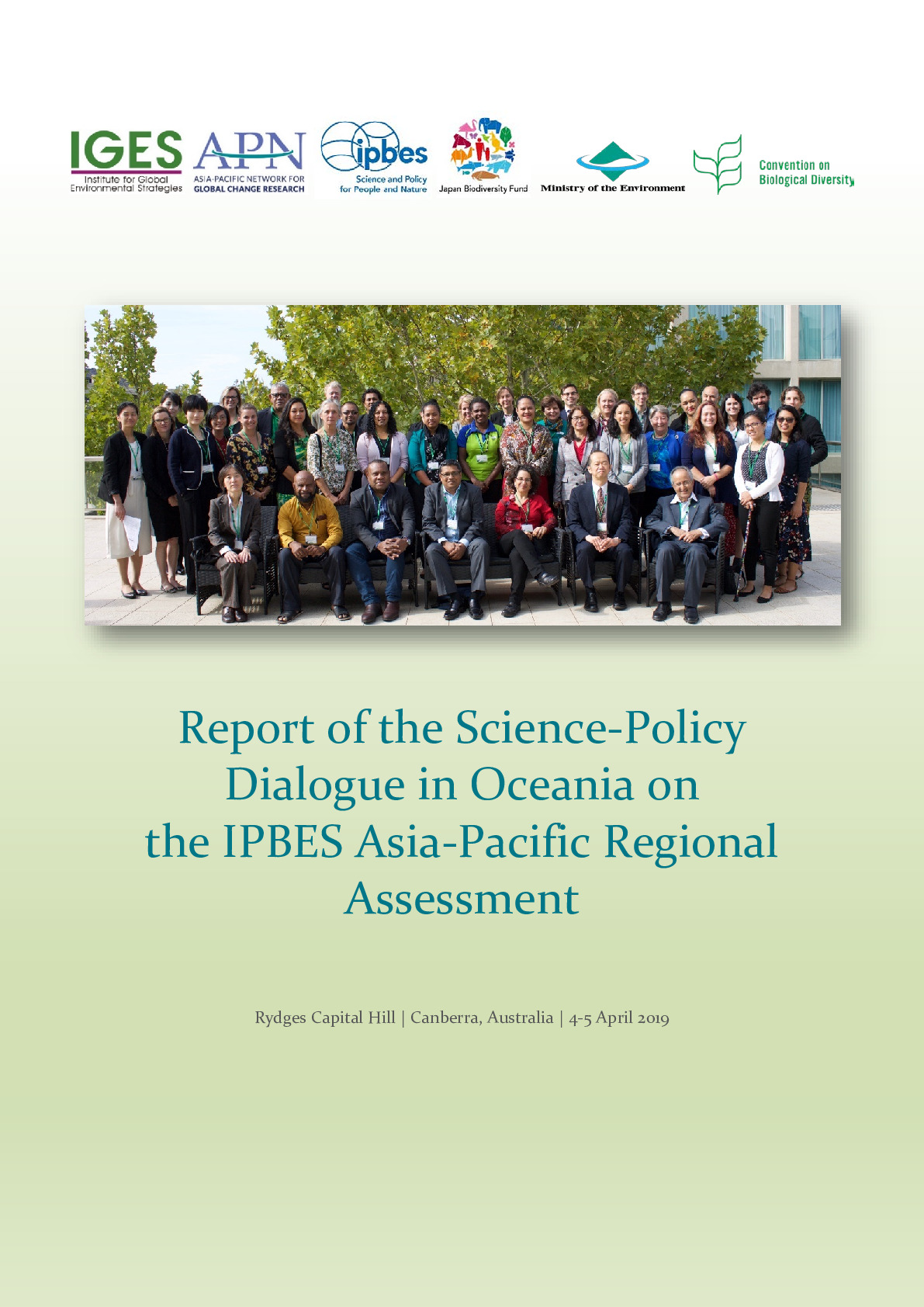
The purpose of the Oceania Sub-regional dialogue was to facilitate understanding of the findings of the Assessment, including policy options to mitigate the deterioration of biodiversity and ecosystems in the region. The feedback from delegates relating to the effectiveness and uptake of the IPBES Assessment include: low visibility of the...
Policy Brief
This policy brief outlines some of the discussions at a series of science-policy dialogues for countries of the Asia-Pacific region, held between February and October 2019. The purpose of the dialogues was to introduce biodiversity policymakers, and other stakeholders from these countries, to the IPBES Regional Assessment for Asia and the Pacific...
Policy Brief
This policy brief outlines some of the discussions at a series of science-policy dialogues for countries of the Asia-Pacific region, held between February and October 2019. The purpose of the dialogues was to introduce biodiversity policymakers, and other stakeholders from these countries, to the IPBES Regional Assessment Report for Asia and the...
Conference Proceeding
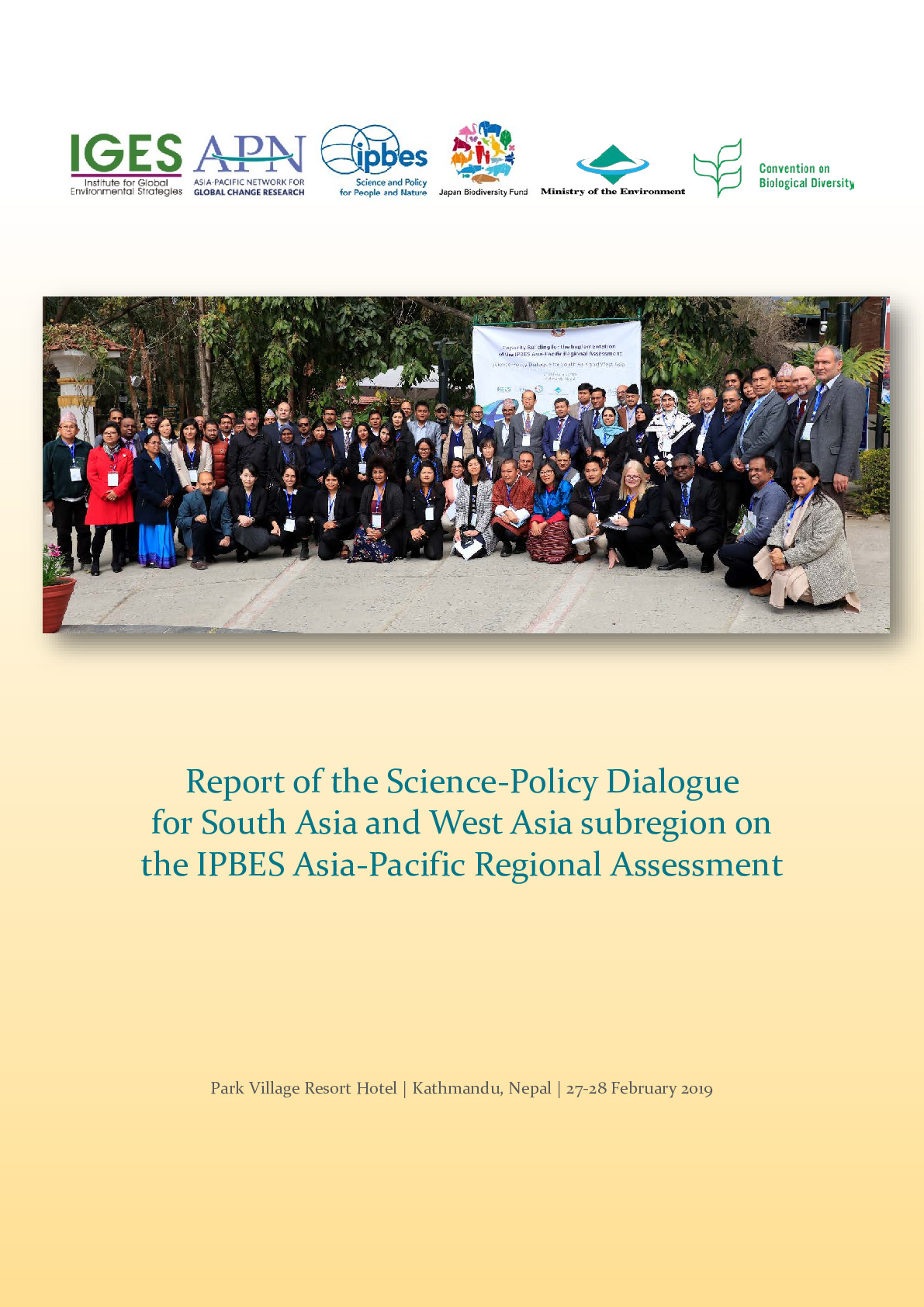
Science-Policy Dialogue for South Asia and West Asia subregion on the IPBES Asia-Pacific Regional Assessment
From 27-28 February 2019, in Kathmandu, Nepal, a subregional science-policy dialogue for South Asia and West Asia on the IPBES Asia-Pacific Regional Assessment was held in Park Village Hotel, Kathmandu, Nepal, as a part of the “Capacity Building Project for the Implementation of IPBES Asia-Pacific Regional Assessment” funded by the Japan...
Conference Proceeding
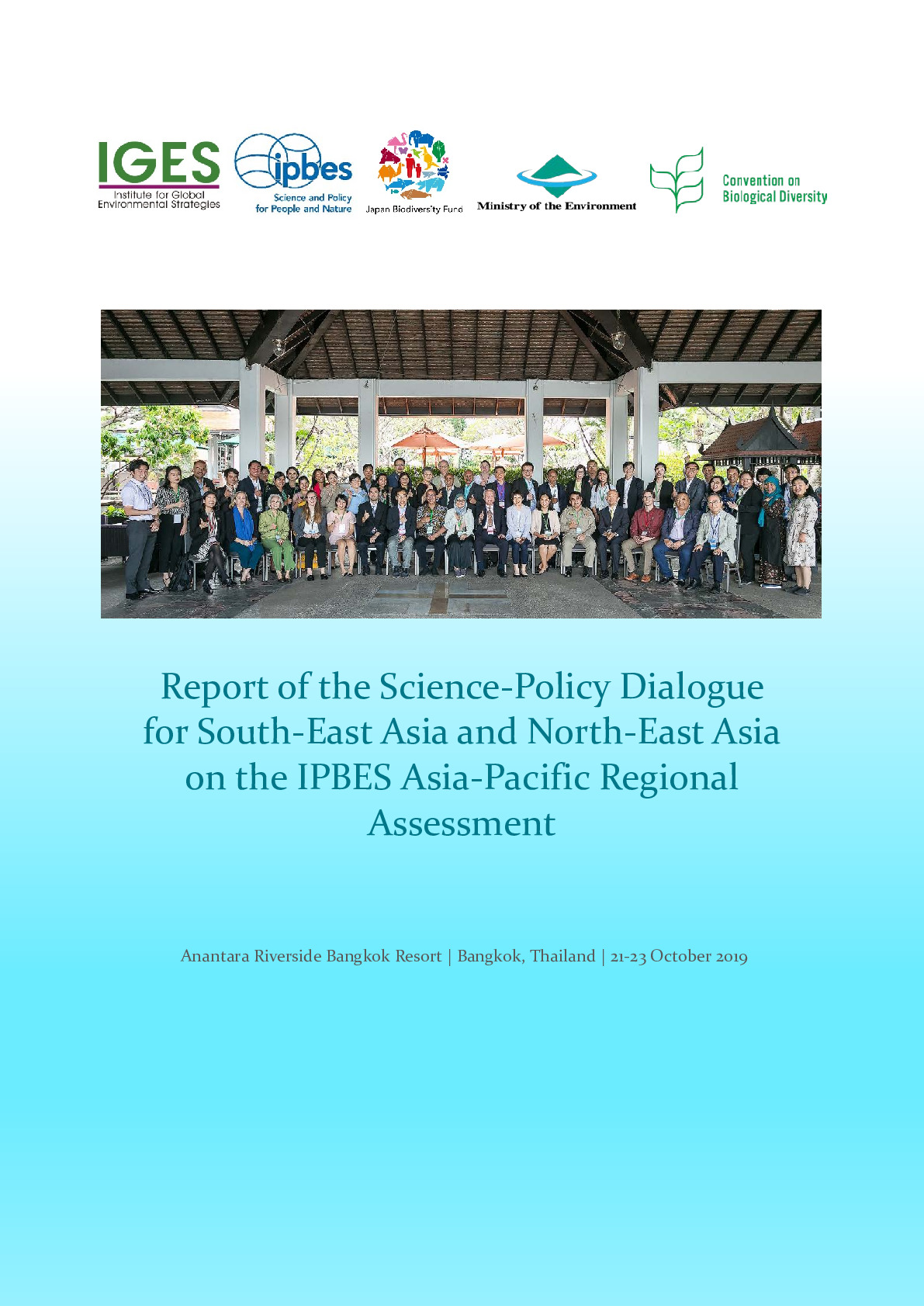
Science-Policy Dialogue for South-East Asia and North-East Asia on the IPBES Asia-Pacific Regional Assessment
A subregional biodiversity science-policy dialogue workshop for South-East Asia and North-East Asia was held at the Anantara Riverside Bangkok Resort, Bangkok, Thailand from 21-23 October 2019. The workshop formed part of the “Capacity Building Project for the Implementation of IPBES Asia-Pacific Regional Assessment”, funded by the Japan...
Keywords: