

Director of AI and New Frontier Group
Research Topics & Areas of Expertise
- Artificial intelligence (AI) for sustainability decision support
- Machine learning for disaster forecasting, risk assessment, and resilience planning
- Geographic information system (GIS) spatial analysis
- Remote-sensing data analytics for environmental monitoring and disaster-impact assessment
- Natural language processing (NLP) for causal mapping, knowledge extraction, and systems analysis
- Network analysis, systems thinking, and integrated systems modelling
- AI-enabled knowledge systems, interactive analytics, and decision-support tools
- Sustainable Development Goal (SDG) indicators, interlinkages, and integrated assessment
- Climate-policy assessment, green-economy transitions, and environmental governance
- Energy-system scenario modelling and low-carbon transition pathways
- Water–food–energy nexus analysis and integrated resource planning
- Climate change, disaster risk reduction, and urban resilience
- Data integration, environmental information systems, and policy-relevant sustainability science
Education
i) Ph.D in Environmental Studies, Graduate School of Environmental Studies, Nagoya University, Japan;
ii) Master Degree in Environmental Science, College of Environmental Sciences, Peking University, Beijing, China;
iii) Bachelor Degree in Applied Mathematics, Department of Applied Mathematics and Physics, Beijing University of Chemical Technology, Beijing, China
Results 1 to 10 of 199 (Sorted by date)
Report Chapter
In Asia-Pacific Synergies Report: Advancing Synergistic Solutions to the Triple Planetary Crisis and the SDGs
Achieving the Sustainable Development Goals (SDGs) in the Asia-Pacific region requires understanding the deeply interconnected nature of the triple planetary crisis: climate change, biodiversity loss and pollution, while advancing socioeconomic development. Progress depends not only on sectoral achievements, but on the ability of policymakers and...
Policy Report
The Asia-Pacific Synergies Report synthesizes experiences from the Asia-Pacific region on translating synergies into practical, policy-relevant lessons for national and subnational policymakers and other stakeholders. The report argues that synergies should be positioned as a core organizing principle in policies and actions toward 2030 and beyond...
Policy Report
As the Asia-Pacific region navigates the complex intersections of climate change, biodiversity loss, and systemic pollution, the need for integrated, cross-sectoral action has never been more evident. While high-level reports frequently emphasize the theoretical value of synergistic approaches—strategies that align multiple policy goals to maximize...
Conference Paper
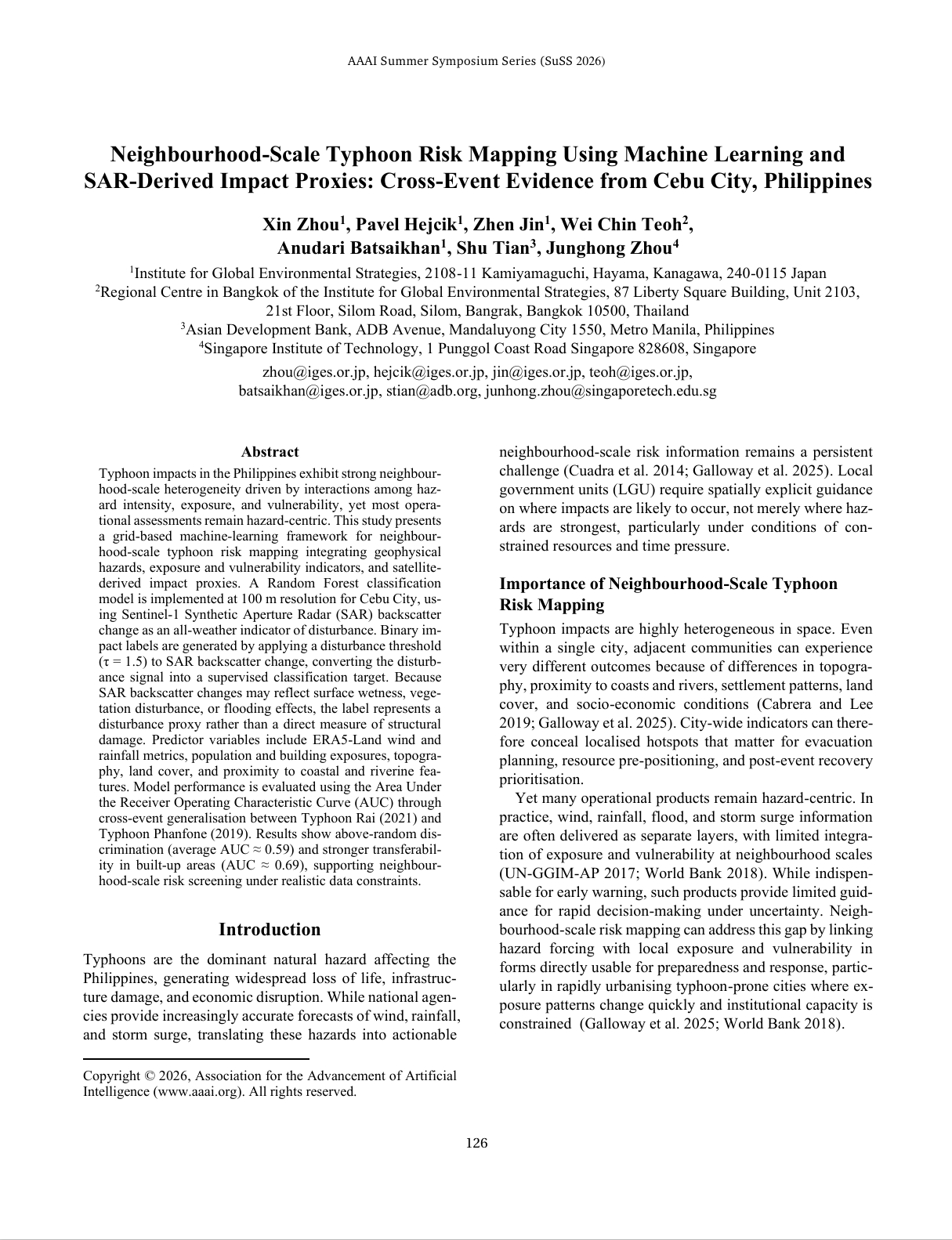
2026 Summer Symposium of the Association for the Advancement of Artificial Intelligence (AAAI)
Typhoon impacts in the Philippines exhibit strong neighbourhood-scale heterogeneity driven by interactions among hazard intensity, exposure, and vulnerability, yet most operational assessments remain hazard-centric. This study presents a grid-based machine-learning framework for neighbourhood-scale typhoon risk mapping integrating geophysical...
Presentation
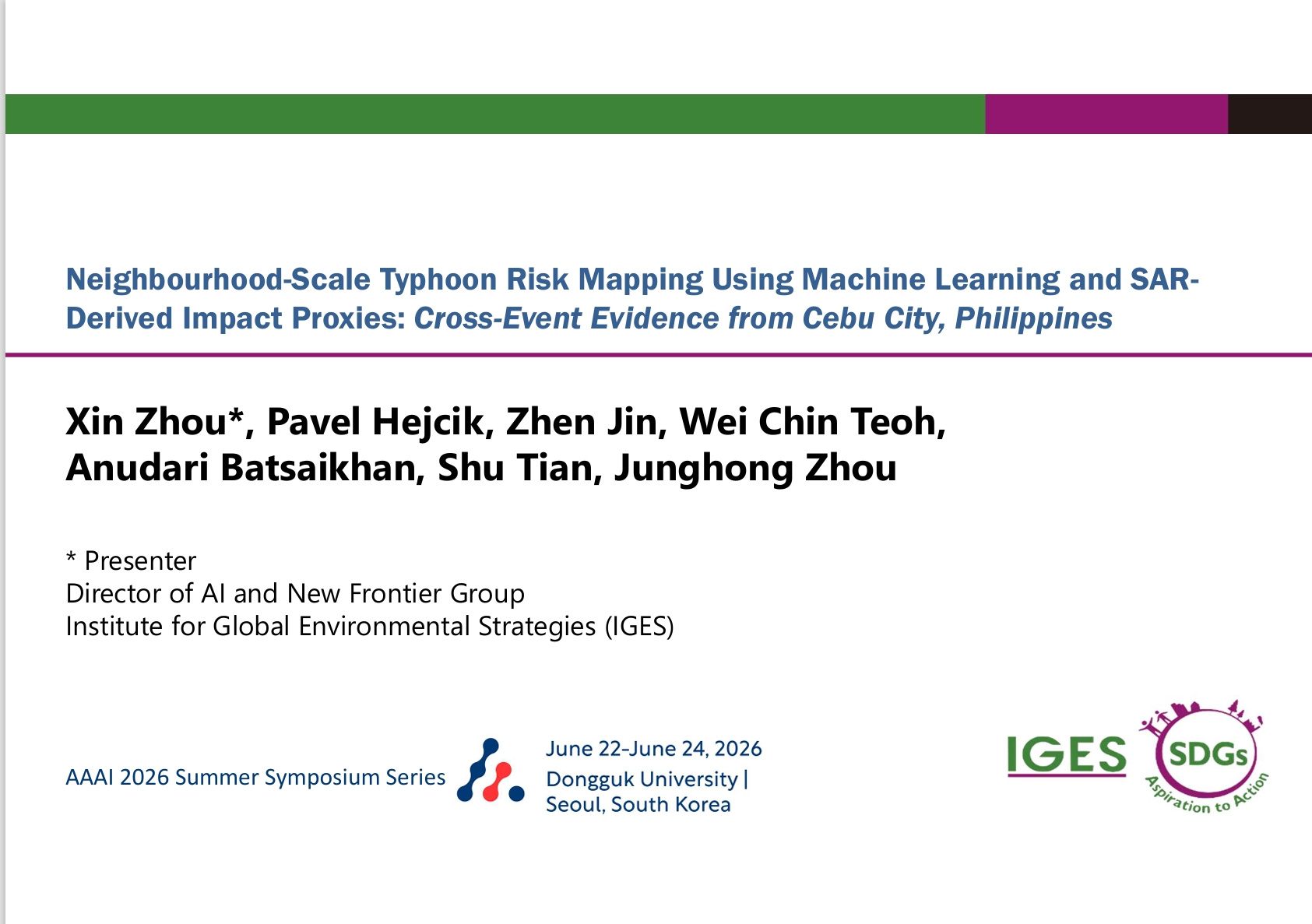
AAAI 2026 Summer Symposium Series
Typhoon impacts in the Philippines exhibit strong neighbour hood-scale heterogeneity driven by interactions among haz ard intensity, exposure, and vulnerability, yet most opera tional assessments remain hazard-centric. This study presents a grid-based machine-learning framework for neighbour hood-scale typhoon risk mapping integrating geophysical...
Commissioned Report
本業務は、アジア太平洋地域の国々の取組強化に資するとともに、同地域の動向や先駆的な取組を国際社会へ発信し、国連における2030年以降の持続可能な開発に関する国際枠組の議論へのインプットを目指すため、アジア太平洋地域特有の観点からシナジー推進の優良事例や展開方策を「アジア太平洋シナジーレポート」としてとりまとめることを目的としたものである。昨年度(令和6年度)業務において策定された企画書に基づき、ESCAP、UNEP、ADB等の関係機関と調整しつつ、生物多様性や都市等の個別テーマ(チャプター)の検討、地域特有の課題抽出、及びシナジーアプローチ実施に向けた提言の策定に向け、事務局として各種とりまとめ作業を進めた。
Policy Report
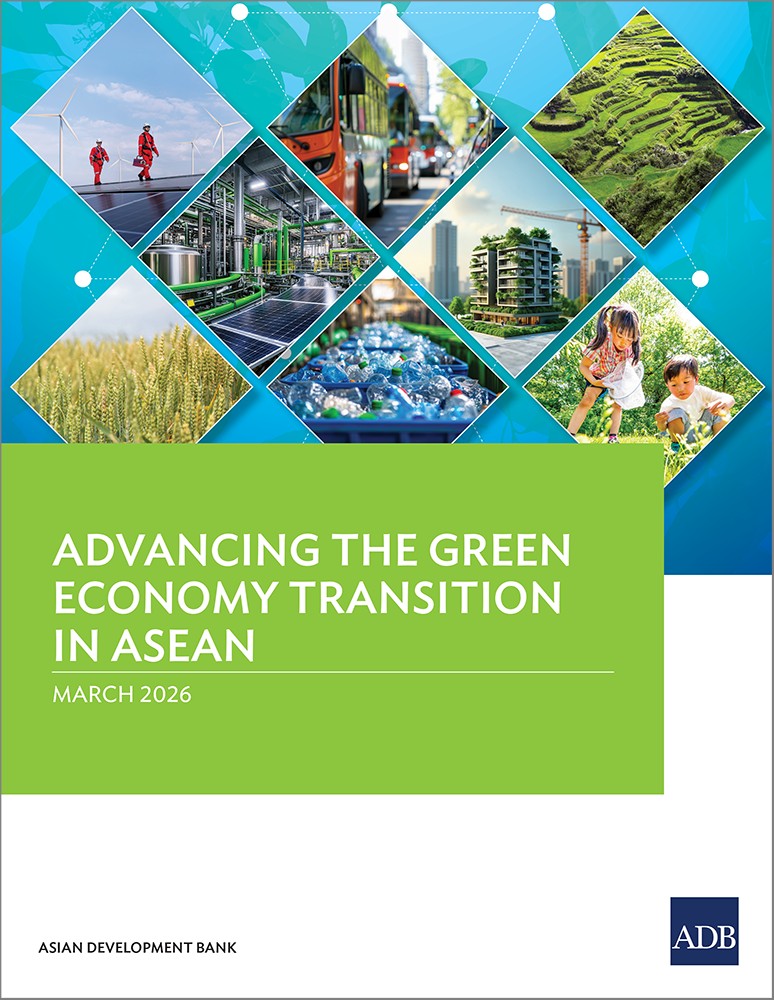
The report looks at the current state of the green economy transition in ASEAN, examining green economy metrics, job creation, policies and regulations, and investment opportunities. It identifies gaps and offers recommendations for policymakers. The report notes the need for country-specific strategies, while underscoring the power of regional...
Peer-reviewed Article

In Sustainability
Many cities have integrated health co-benefits into their climate plans to address cost concerns and build multi-stakeholder support for resilient, net-zero transitions. While some studies have demonstrated that cities vary in how much they link health and climate, few have examined why this is the case. This study fills this gap by using 16...
Book Chapter
In Handbook of the UN Sustainable Development Goals Research and Policy
This chapter explores the Water-Energy-Food (WEF) nexus as an integrated framework vital for advancing the Sustainable Development Goals (SDGs) amidst growing global challenges. It introduces the concept of the WEF nexus, which transcends traditional resource management by emphasizing the interconnections between water, energy, and food systems...
Policy Brief
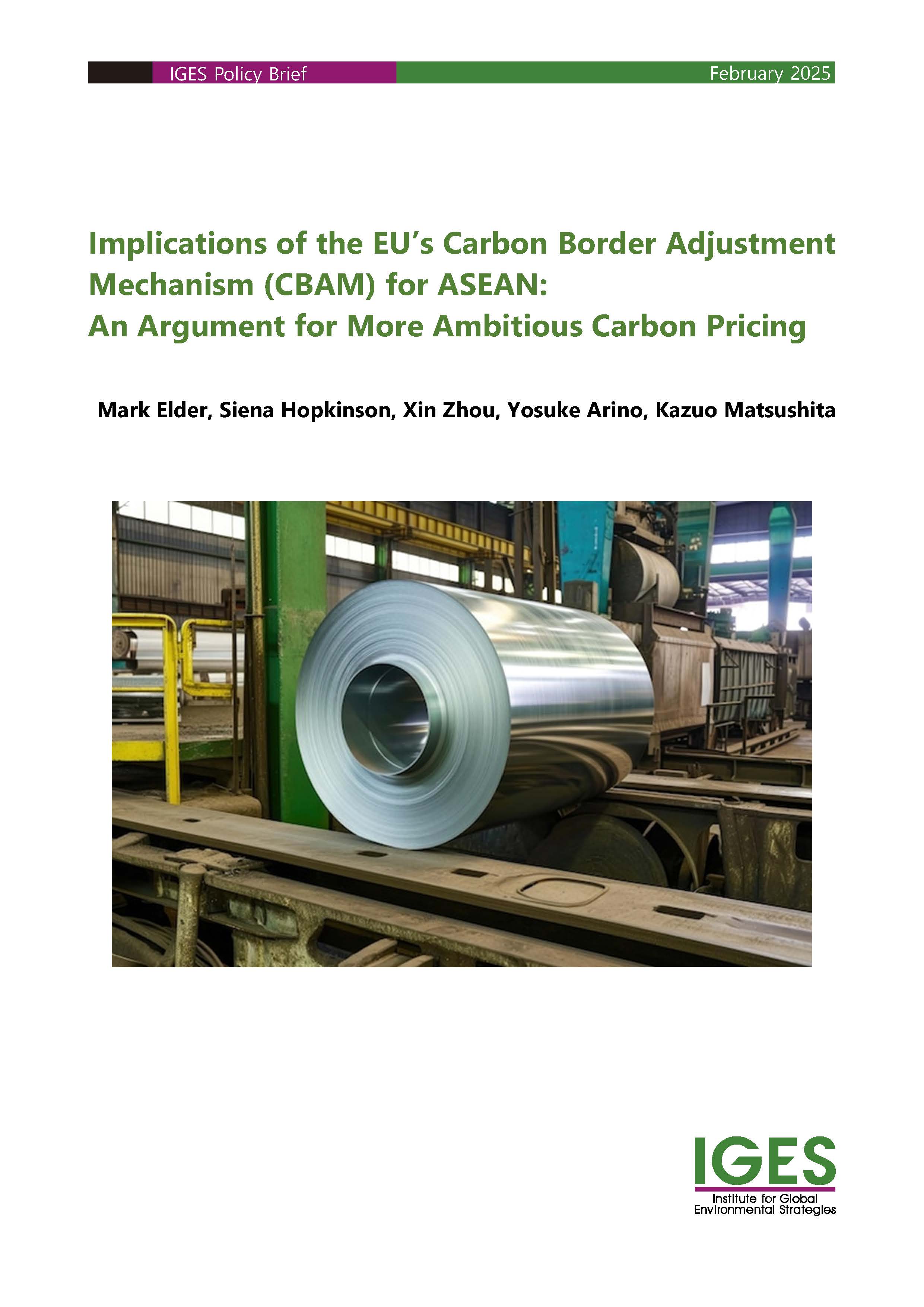
This policy brief examines the implications for ASEAN Member States (AMS) of the European Union’s Carbon Border Adjustment Mechanism (CBAM) and suggests an overall direction for responses. The EU’s CBAM aims to minimize carbon leakage and the loss of the EU’s trade competitiveness due to its more ambitious climate mitigation policies, particularly...
No Projects Found.