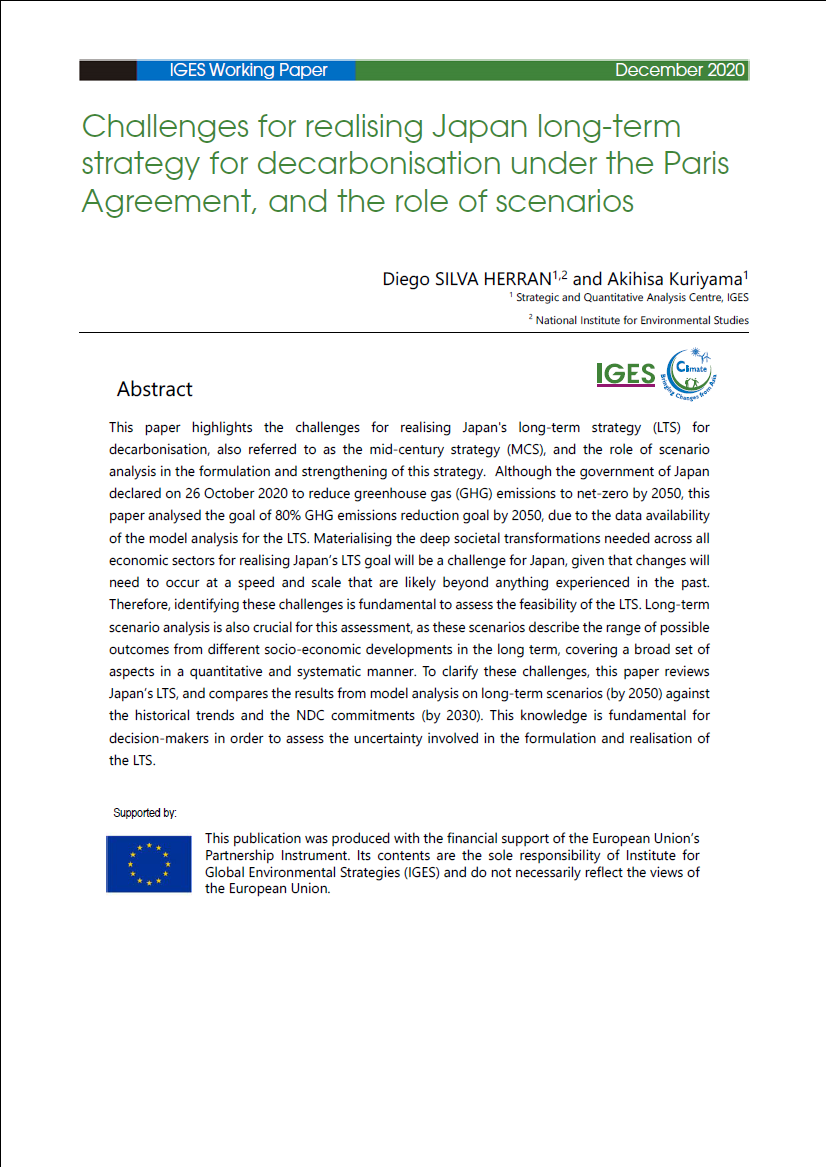
This paper highlights the challenges for realising Japan's long-term strategy (LTS) for decarbonisation, also referred to as the mid-century strategy (MCS), and the role of scenario analysis in the formulation and strengthening of this strategy. Although the government of Japan declared on 26 October 2020 to reduce greenhouse gas (GHG) emissions to...
Results 2481 - 2490 of 6465 (Sorted by date)
COVID-19 has morphed from a dangerous regional health threat to an all-consuming global pandemic and economic disaster. COVID-19’s rapid spread has had far-reaching implications on the everyday lives of people in nearly all corners of the world. In fact, as of October 2020, at least 50 million people globally have tested positive for the virus, and...
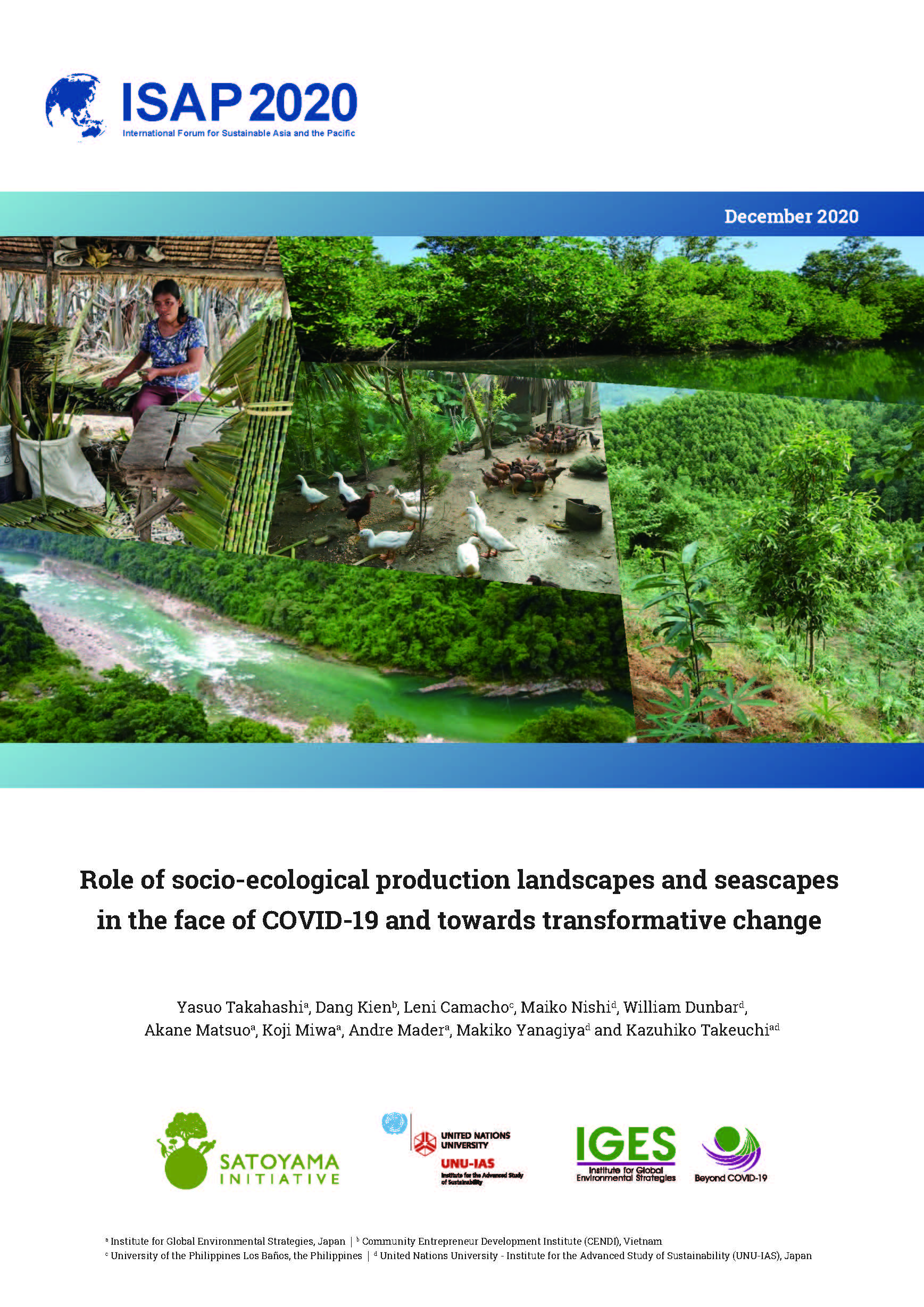
On Thursday 12 November 2020, United Nations University Institute for the Advanced Study of Sustainability (UNU-IAS) and Institute for Global Environmental Strategies (IGES) convened a session entitled “The Satoyama Initiative, transformative change, and societies in harmony with nature” at the 12th International Forum for Sustainable Asia and the...
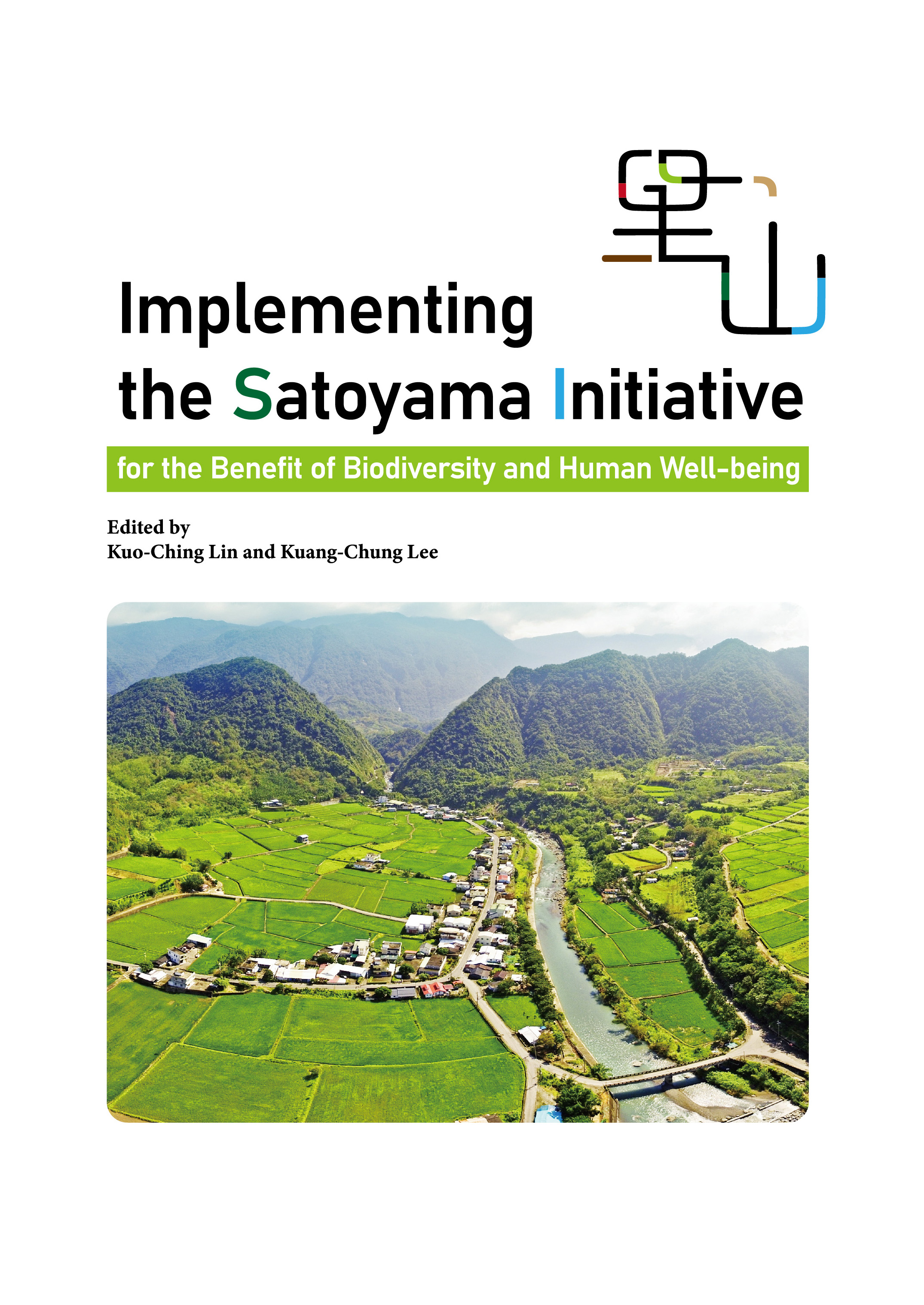
In Implementing the Satoyama Initiative for the benefit of biodiversity and human well-being
Primary production, including agriculture, aquaculture, forestry and fisheries is the strongest driver of biodiversity loss globally. It can, however, contribute to biodiversity conservation if wisely managed such as in ‘Satoyama’ and ‘Satoumi’, or socio-ecological production landscapes and seascapes (SEPLS), where production activities support...
In Implementing the Satoyama Initiative for the Benefit of Biodiversity and Human Well-being
The Satoyama Initiative is endorsed by the decision of the Tenth Conference of the Parties to the Convention on Biological Diversity (CBD COP 10) in 2010. It is a global effort with the vision to “realize societies in harmony with nature” through promotion and conservation of “socio-ecological production landscapes and seascapes” (SEPLS). The...
Asian Transparency Workshop: Roadmap for BTR1 and reporting under Article 6.2
The Asian Transparency Workshop organized by the MOEJ, the IGES, UNFCCC-RCC and GSP aims to promote knowledge sharing among countries in Asia for the effective implementation of the Paris Agreement’s Enhanced Transparency Framework (ETF). This presentation provides, as introduction to the workshop, the linkage of ETF and reporting under Article 6...
Asian Transparency Workshop: Roadmap for BTR1 and reporting under Article 6.2
This PPT is developed based on the author's understanding of the draft guidance of Article 6 paragraph 2 of the Paris Agreement (Article 6.2), based on the Mutual Learning Program for Enhanced Transparency using the Joint Crediting Mechanism (JCM) as an example. It does not represent the ideas of the Ministry of the Environment, Japan. It presents...
Asian Transparency Workshop: Roadmap for BTR1 and reporting under Article 6.2
This presentation provides, as introduction to the breakout group discussion in the Asian Transparency workshop, the common challenges when countries track progress of individual mitigation actions to prepare the 1st BTR. The possible solutions (long and short term) in each challenge were developed based on the mutual learning program for enhanced...
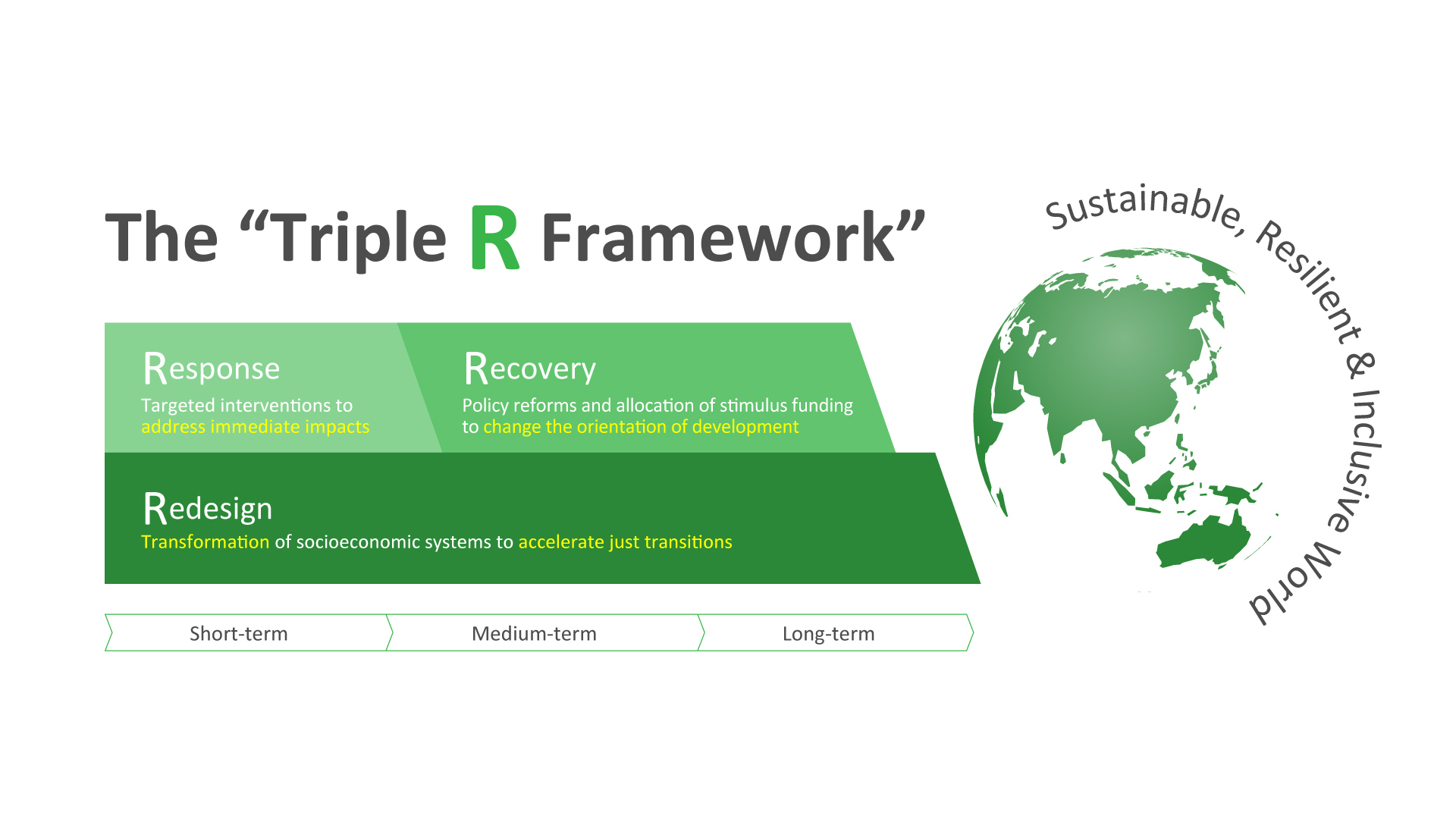
Many decision makers are contemplating whether policies and investments made in the wake of COVID-19 are inclusive, resilient and sustainable enough to bring about a course change in development . T his paper outlines the design features of framework that helps policymakers steer a more inclusive, resilient and sustainable course. What the...
In Renewable and Sustainable Energy Reviews
“Just Transition” is an important, brand new concept to implement policies towards decarbonisation of the power sector in Japan. However, a knowledge gap still remains between this concept and policy discussion at a practical level. Therefore, using the existing scenarios of decarbonisation of the power sector and employment factors for the power...