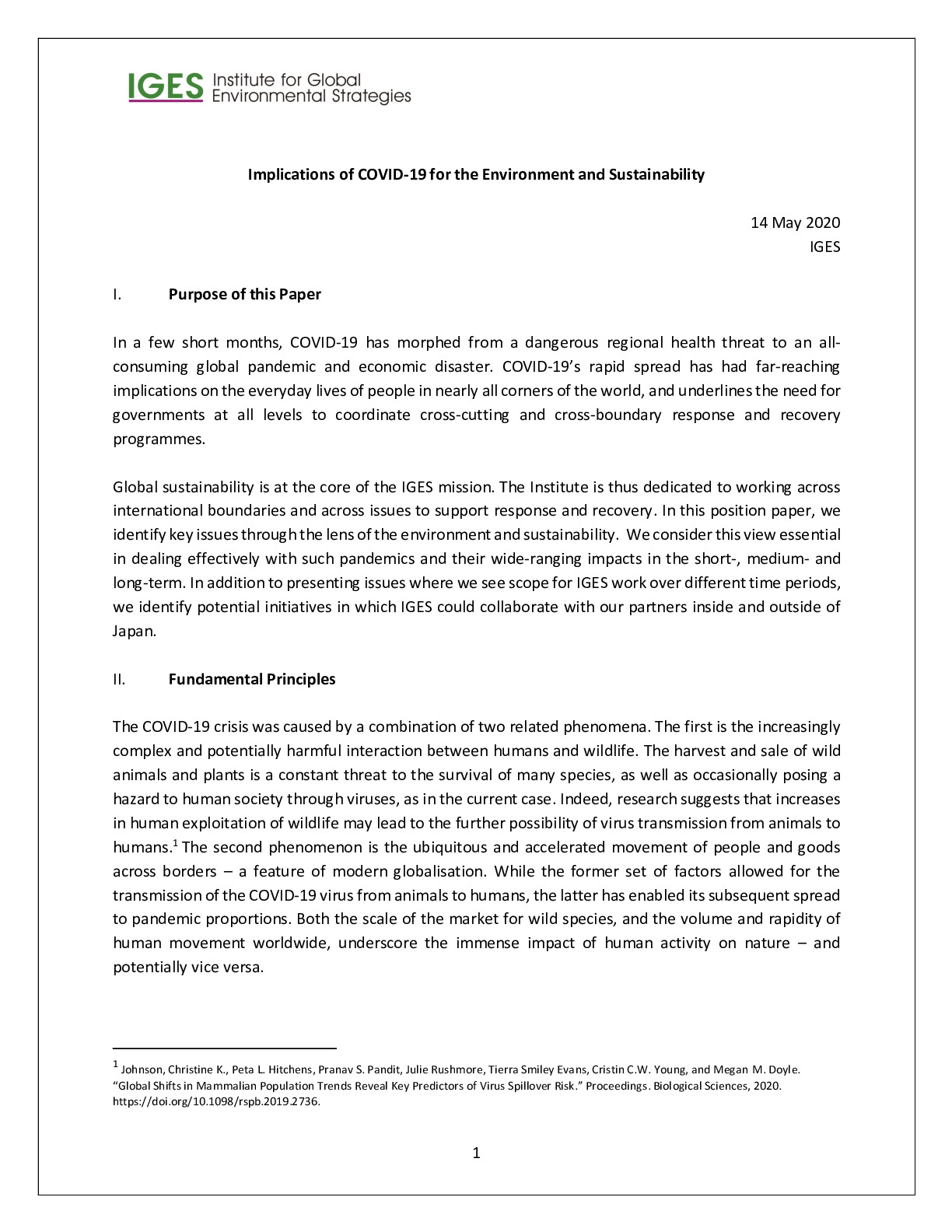
In a few short months, COVID-19 has morphed from a dangerous regional health threat to an all-consuming global pandemic and economic disaster. COVID-19’s rapid spread has had far-reaching implications on the everyday lives of people in nearly all corners of the world, and underlines the need for governments at all levels to coordinate cross-cutting...
Results 2381 - 2390 of 6465 (Sorted by date)
Myanmar has had to face tremendous challenges in waste management in the recent past, due to a number of factors – its growing population and economy, increasing complexity of waste streams, and lack of effective waste management systems, proper infrastructure, capital investment, financial and human resources, as well as effective policy and...
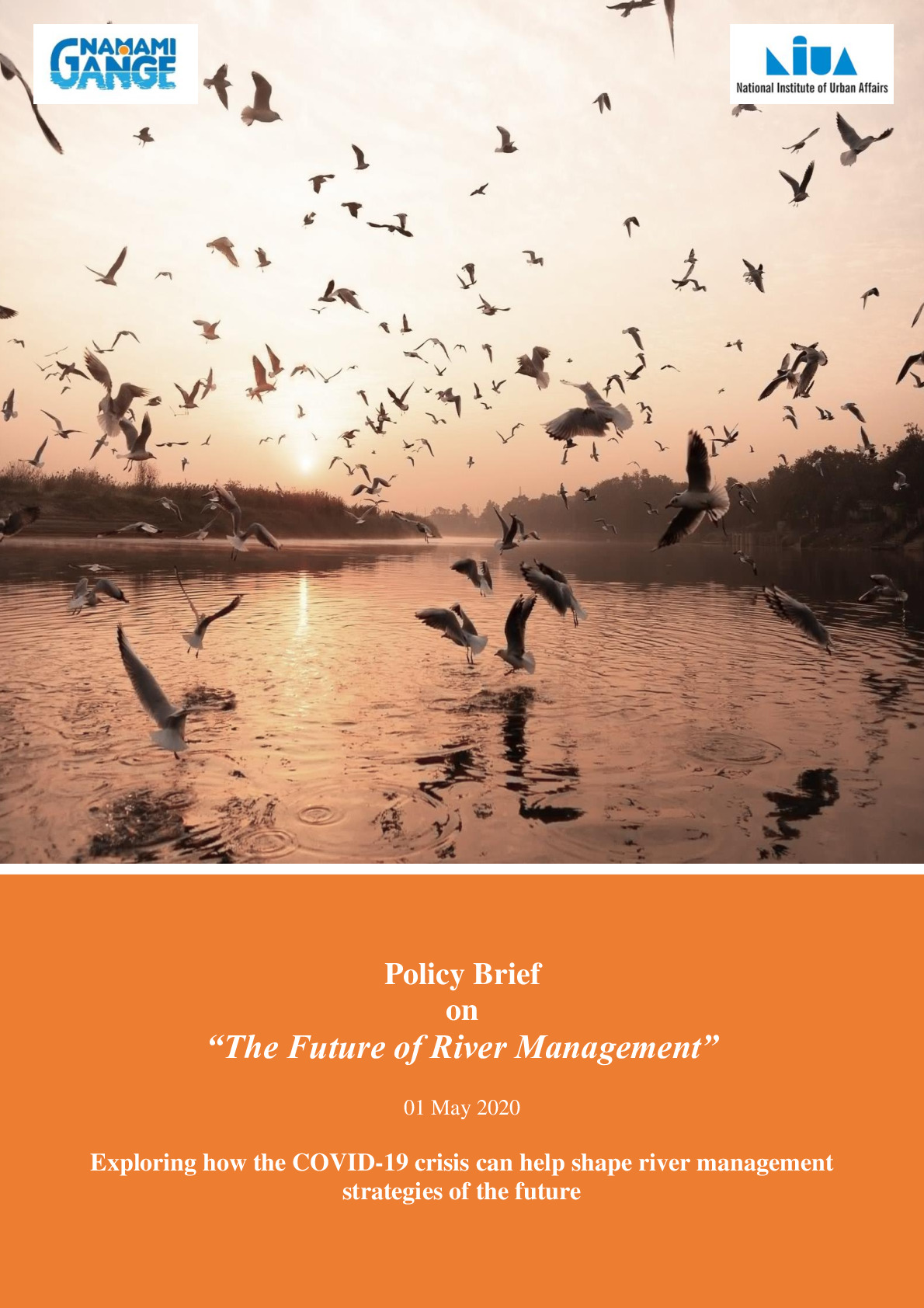
On 1 May 2020, the National Institute of Urban Affairs, NIUA, (autonomous body under India’s Ministry of Housing and Urban Affairs) and the National Mission for Clean Ganga, NMCG, (under India’s Ministry of Jal Shakti) organized an Ideathon on “The Future of River Management”. The purpose of this Ideathon was to use the current COVID-19 crisis as a...
While the initial pieces of evidence indicate that COVID-19 induced economic slowdown and lockdown present short-term benefits to air quality and the environment, these also pose a double-edged challenge in the long-term. On one side, the slowing down of the economy can have an adverse impact on countries’ ongoing efforts towards climate mitigation...
In International Studies
Energy transition has been gaining significant policy attention in India, especially in the backdrop of the concerns about growing emissions from fossil fuels and the need for cleaner energy services. However, this has been one of the strategic dilemmas for the country. On the one hand, the increasing demand for fossil fuels is prompting critical...
In Frontiers in Ecology and Evolution
The introduction of renewable energy (RE) is essential for building a sustainable society. However, RE can cause conflicts between energy production and biodiversity conservation. This study conducted a scenario analysis to evaluate potential conflicts in the nexuses between energy and biodiversity for the Bekambeushi River watershed located in...
In Remote Sensing
Land use/land cover (LULC) maps are now being used across disciplines for many different types of applications, e.g., to analyze urban heat islands or rainfall-runoff dynamics. Traditional map accuracy metrics are limited in this regard, as they only assess LULC map thematic accuracy. In reality, some types of misclassification lead to larger...
In Remote Sensing
Image segmentation and geographic object-based image analysis (GEOBIA) were proposed around the turn of the century as a means to analyze high-spatial-resolution remote sensing images. Since then, object-based approaches have been used to analyze a wide range of images for numerous applications. In this Editorial, we present some highlights of...
Southeast Asian Studies at the University of Freiburg (Germany), Occasional Paper Series
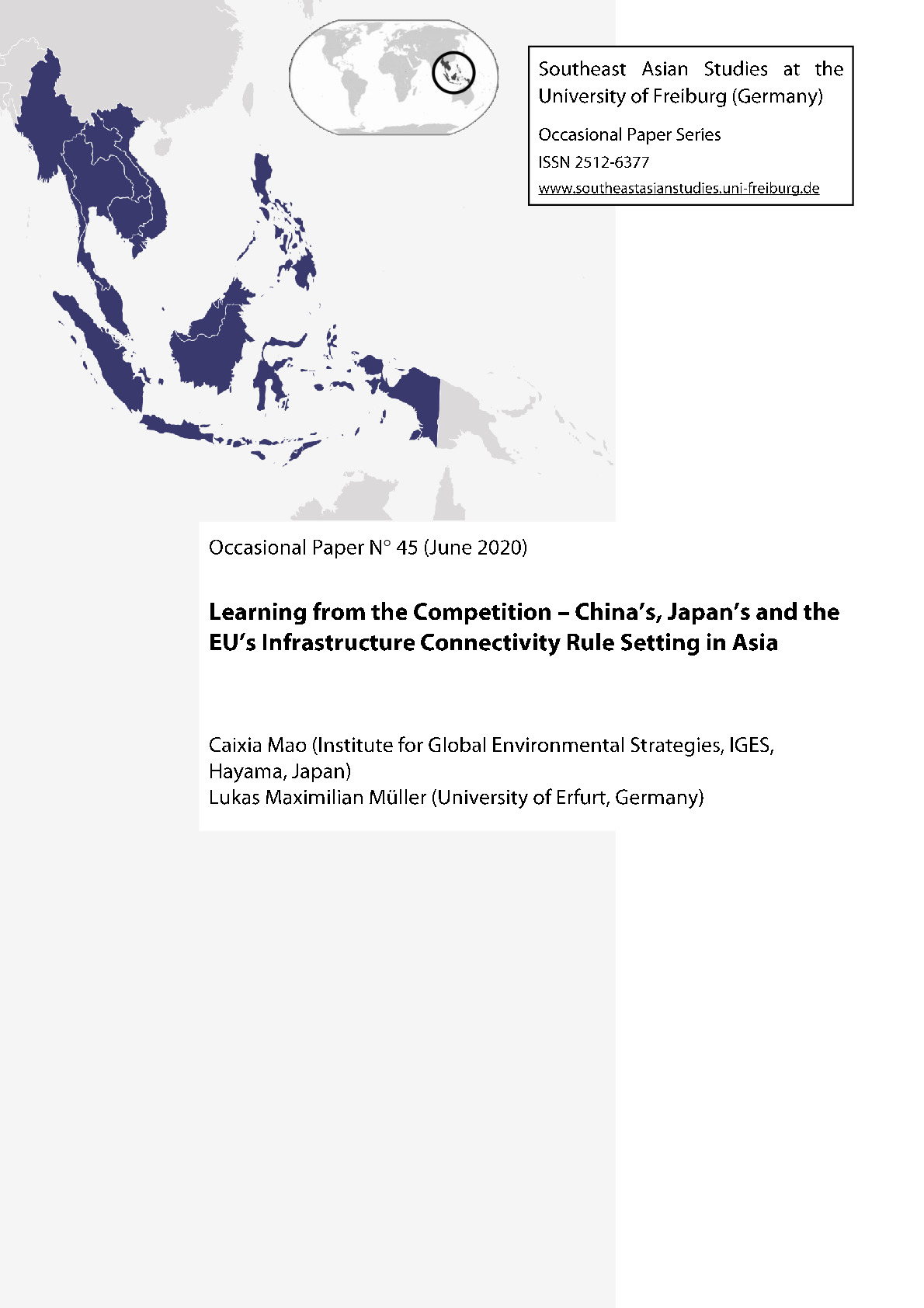
In the race for infrastructure connectivity across Asia, several states have established initiatives to provide funding for developing countries. Chief among these are the Chinese Belt and Road Initiative (BRI) and the Japanese Partnership for Quality Infrastructure (PQI). The most recent addition to these competing multilateral initiatives in...
In Water
A few studies have evaluated the impact of land use land cover (LULC) change on surface water quality in the Vietnamese Mekong Delta (VMD), one of the most productive agricultural deltas in the world. This study aims to evaluate water quality parameters inside full- and semi-dike systems and outside of the dike system during the wet and dry season...