The project brochure introduces the overviews of 17 projects implemented under the MOEJ's programme "FY2019 City-to-City Collaboration for Low-Carbon Society".
A diverse mix of environmental problems, such as traffic congestion, increasing amounts of waste, and air and water pollution, have surfaced around the world in line with rapidly growing populations and urban development. Climate change has also resulted in more frequent incidences of localised torrential rains, floods, droughts and landslides in...
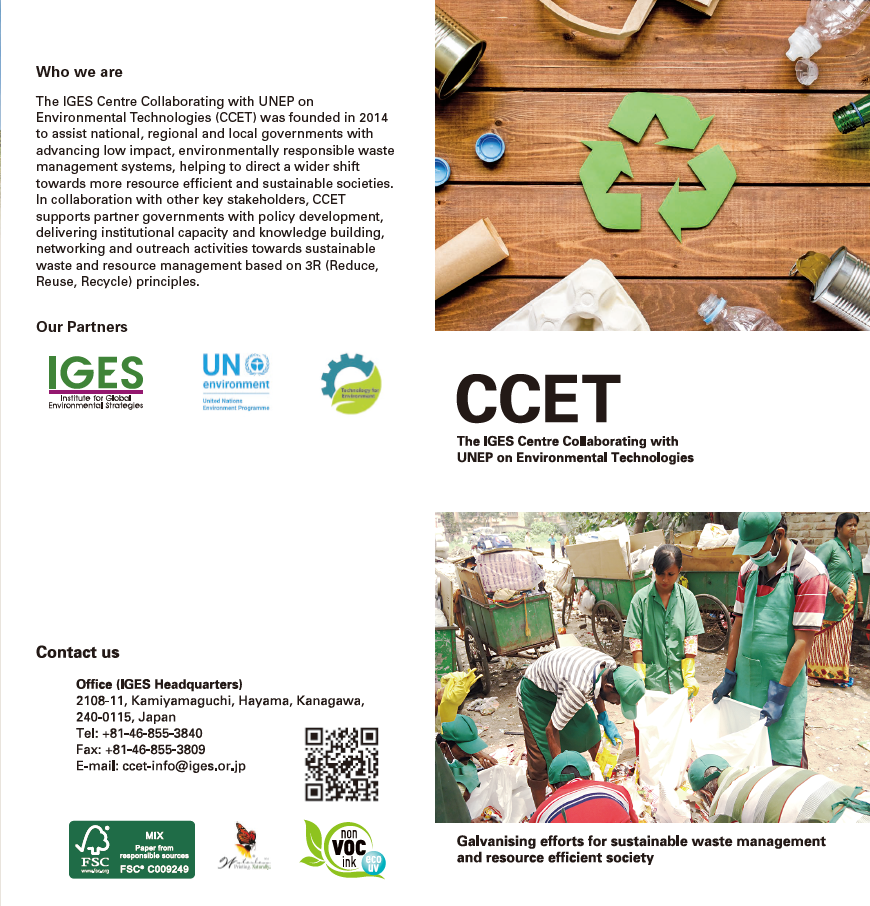
The IGES Centre Collaborating with UNEP on Environmental Technologies (CCET) was founded in 2014 to assist national, regional and local governments with advancing low impact, environmentally responsible waste management systems, helping to direct a wider shift towards more resource efficient and sustainable societies. In collaboration with other...
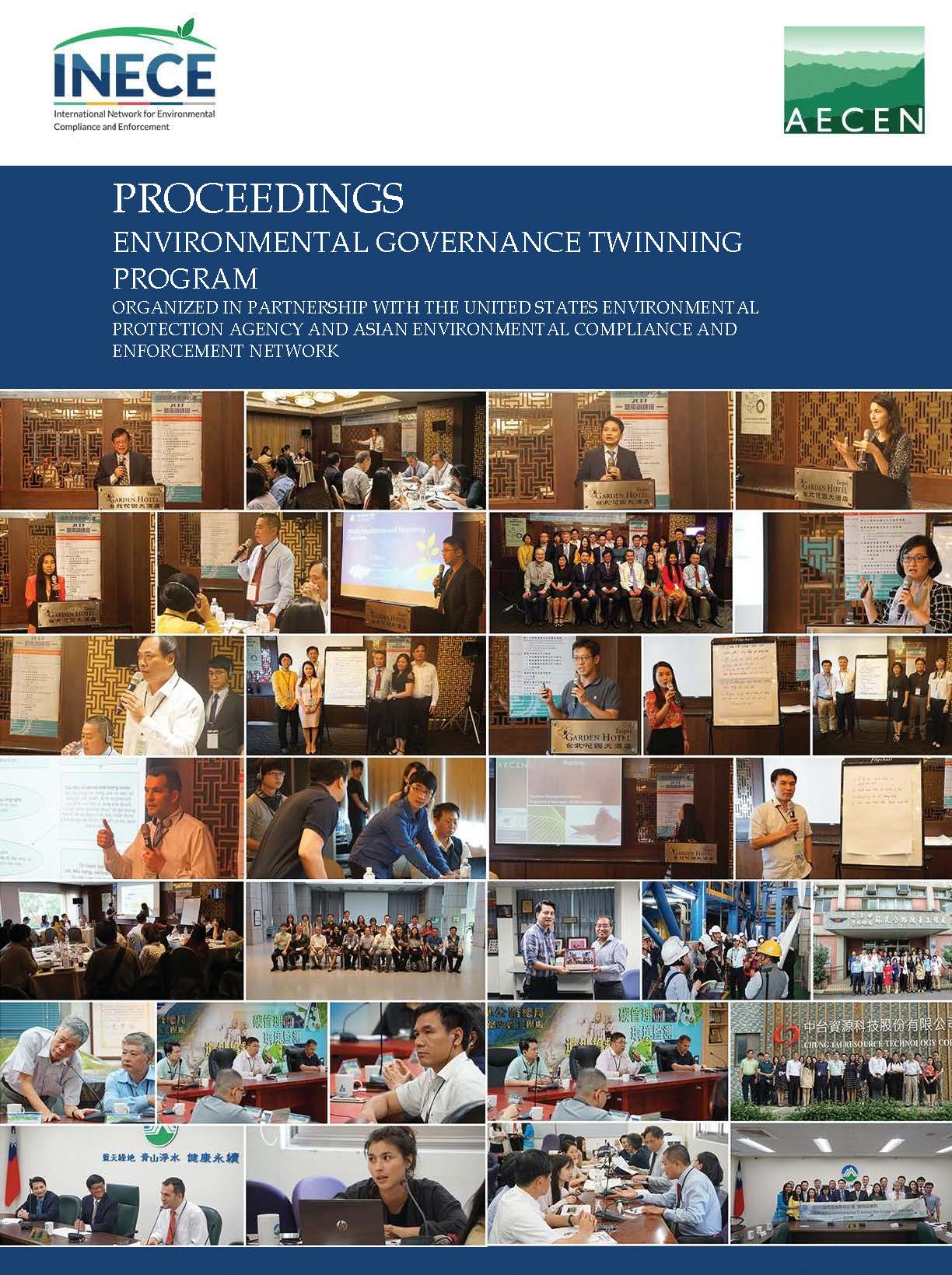
On May 20-24, 2019, the Taiwan Environmental Protection Administration (Taiwan EPA) and the Vietnam Ministry of Natural Resources and the Environment (MONRE) participated in a twinning technical exchange program in Taipei, Taiwan. The program, which was convened by the Environmental Law Institute in its capacity as the Secretariat for the...
Adoption of sustainable development goals (SDGs) offers a targeted and time‐bound approach for sustainable development. Water, along with its dedicated goal (SDG6), is at the core of SDGs due to its interdependency and synergistic relationship with all SDGs. Implementation of SDG6, as well as other SDGs, remains a challenge for many countries due...
The Himalaya and Hindu Kush Region (HKH) is one of the world's most fragile ecosystems in terms of climate change and its impacts, such as, slow- and fast-onset disasters. Traditionally, nature and human beings have co-existed in this area with indigenous and local knowledge (ILK) systems and practices being used in different ways, such as for...
Although it is widely acknowledged that forests provide critical ecosystem services for human survival and well-being, in the Asia-Pacific region forests are being converted to other land uses and degraded at alarming rates. One underlying factor for this destruction of forests is market failure. Forests are cleared for other land uses or degraded...
The Royal Government of Bhutan, through its National Environment Commission (NEC) has been exerting efforts to address its waste management challenges, including development of National Waste Management Strategy and Action Planwhich aimed at providing policy framework for waste management at national level, and to align behaviours of different...
With a population of 250 million, Indonesia is the fourth most populous country and second-largest plastic polluter in the world after China. The country produces 3.2 million tons of unmanaged plastic waste a year, of which about 1.29 million tons ends up in the sea (Jambeck, 2015). In addition, approximately 10 billion plastic carry bags, equal to...
Spatial urban growth and its impact on land surface temperature (LST) is a high priority environmental issue for urban policy. Although the impact of horizontal spatial growth of cities on LST is well studied, the impact of the vertical spatial distribution of buildings on LST is under-investigated. This is particularly true for cities in sub...