
Results 871 - 880 of 5563 (Sorted by date)
Peer-reviewed Article
In PLOS ONE
Despite Bangladesh being one of the leading countries in aquaculture food production worldwide, there is a considerable lack of updated scientific information about aquaculture activities in remote sites, making it difficult to manage sustainably. This study explored the use of geospatial and field data to monitor spatio-temporal changes in...
Research Report
This report presents findings from a project jointly implemented by the United Nations Environment Programme (UNEP) and the Institute for Global Environmental Strategies (IGES). The project reviewed 50 Voluntary National Reviews (VNRs) on the Sustainable Development Goals (SDGs) from 36 Asia and the Pacific countries from 2016 to 2021. In this...
Keywords:
Training or Learning Material
This lecture was given to the training programme on “Teaching Sustainability and Localising the Sustainable Development Goals in the Hindu Kush Himalaya”, 13 December 2022, online. The training programme was organized by the International Centre for Integrated Mountain Development (ICIMOD), Himalayan University Consortium (HUC), and Potsdam...
Presentation

Fifth Science-policy Forum For Biodiversity
This is presented at the Fifth Science-policy Forum For Biodiversity on 12 December, COP15 in Montréal. It aimed to apply the Tourism and Sustainable Transformation Framework, while integraing the recent findings from the IPBES assessments, to the case of coastal communities in Mauritius where the majority of the local communities are artisanal...
Issue Brief
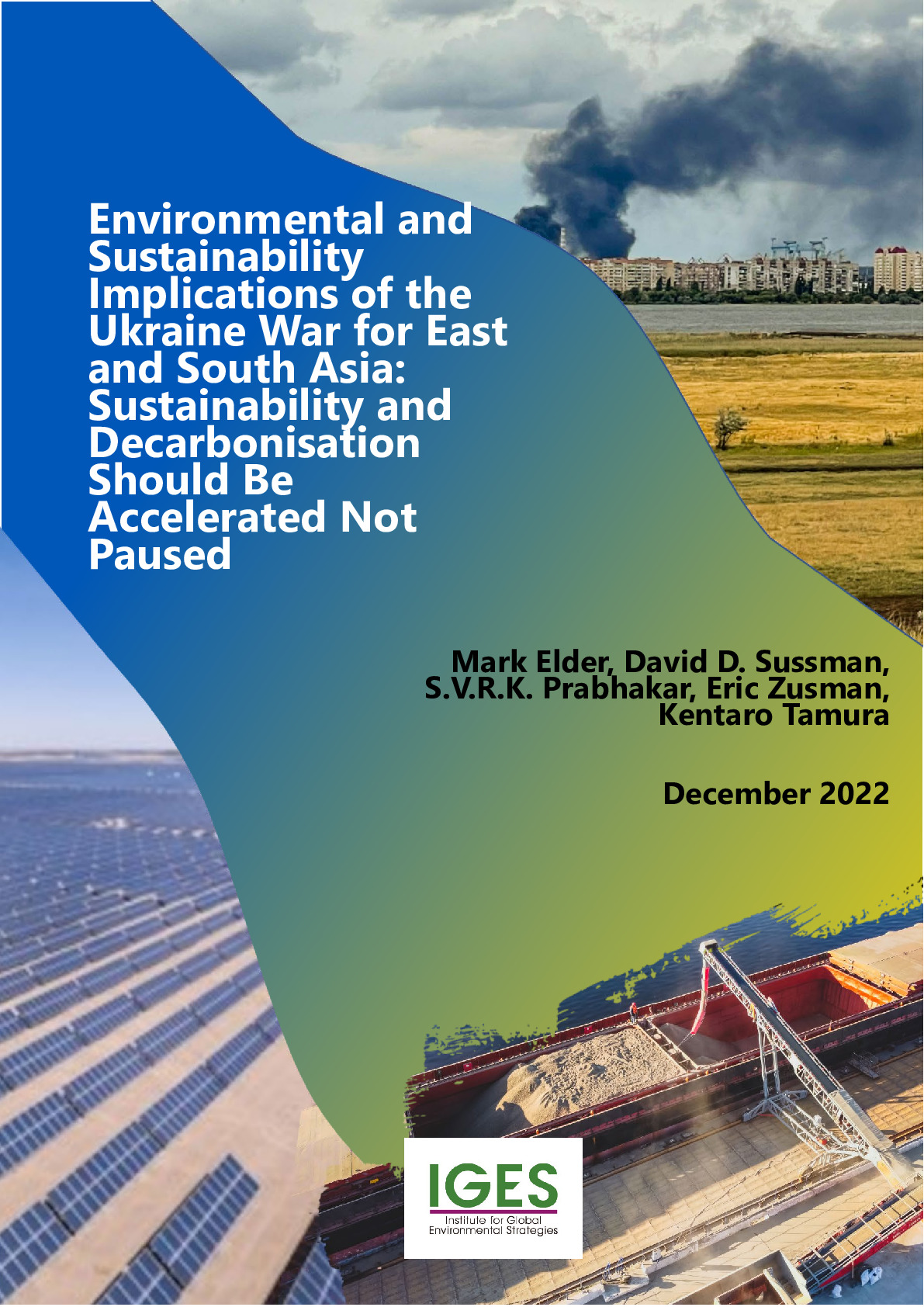
The economic disruptions from the Ukraine war have intensified short term concerns about energy and food security, as well as access to critical minerals. Climate security is also increasingly urgent. This paper urges governments to speed up, not slow down, transitions away from fossil fuels and toward more sustainable development patterns. The war...
Peer-reviewed Article
In Atmosphere
To monitor the spread of the novel coronavirus (COVID-19), India, during the last week of March 2020, imposed national restrictions on the movement of its citizens (lockdown). Although India’s economy was shut down due to restrictions, the nation observed a sharp decline in particulate matter (PM) concentrations. In recent years, Delhi has...
Peer-reviewed Article
In Resources
Rapid urbanization has led to the emergence of slums in many developing and industrialized nations. It degrades the quality of life and burdens the urban amenities resulting in uneven distribution of slums. The majority of people in the developing world live in squatter settlements and these random gatherings disrupt the economic and social...
Presentation
IPSI Evening Cocktail (at CBD-COP15)
Overview of the contributions made by the Satoyama Development Mechanism, a seed funding programme under the International Partnership for Satoyama Initiative, in the past and way forward to the post-2020 Global Biodiversity Framework.
Keywords:
Peer-reviewed Article
In Atmosphere
Manufacturing and mining sectors are serious pollution sources and risk factors that threaten air quality and human health. We analyzed pollutants at two study sites (Talcher and Brajrajnagar) in Odisha, an area exposed to industrial emissions, in the pre-COVID-19 year (2019) and consecutive pandemic years, including lockdowns (2020 and 2021). We...
Presentation
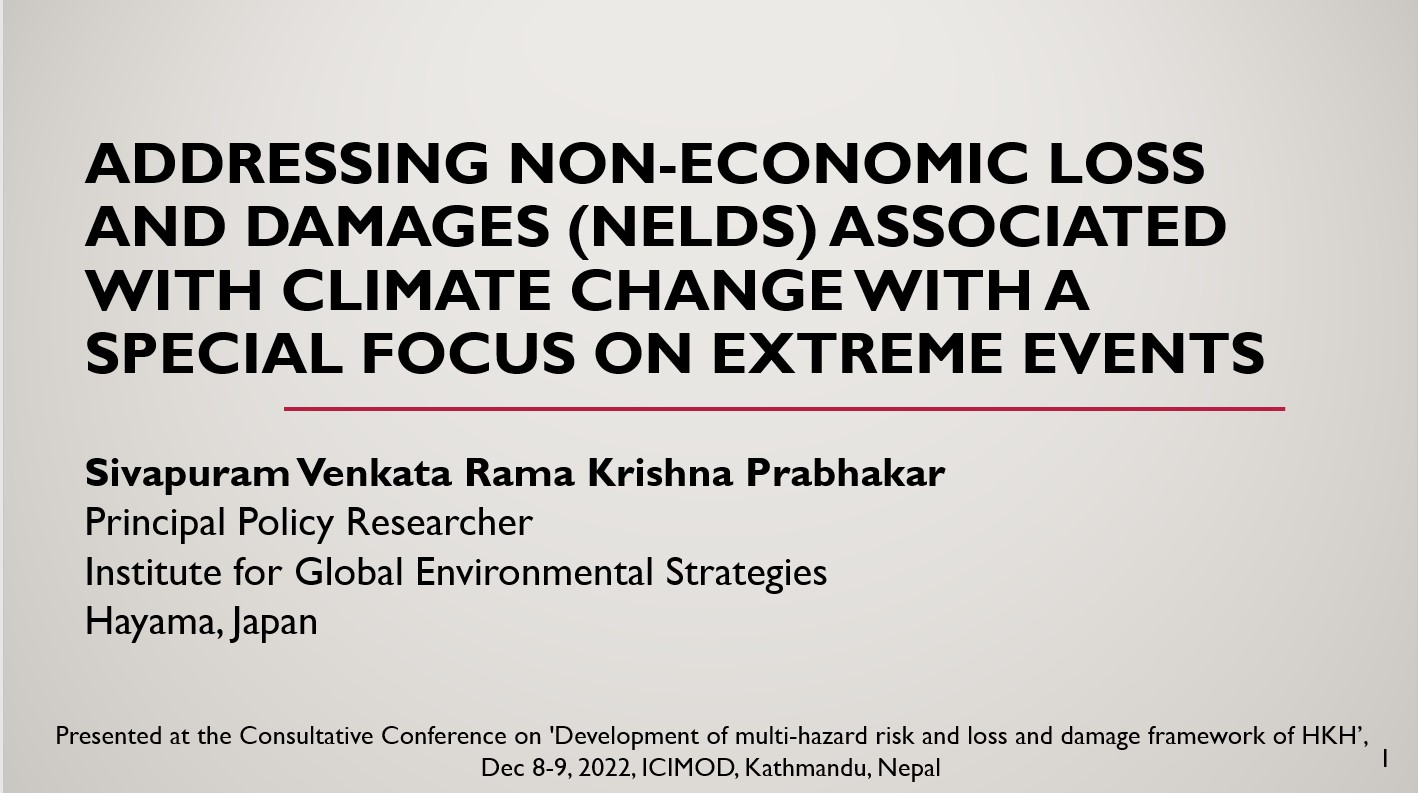
Consultative Conference on 'Development of multi-hazard risk and loss and damage framework of HKH’,
The Hindu Kush Himalayan region is one of the highly significant mountainous regions that play a crucial role beyond its boundaries in terms of people's well-being by providing a range of ecosystem services. The HKH region is facing severe climate change impacts and adaptation in the region needs to take an approach that considers the multi-hazard...
Keywords: