
Results 1781 - 1790 of 5565 (Sorted by date)
Presentation
Second Regional Seminar for the Asia-Pacific Region Parliaments on Achieving the SDGs
Inter-Parliamentary Union (IPU) hosted its second regional seminar to provide parliaments the opportunity to discuss their crucial role in achieving the SDGs and invited IGES as the speaker for the session on climate change. The presentation put particular emphasis on how parliaments and parliamentarians could increase awareness on climate change...
Peer-reviewed Article
In Environmental Monitoring and Assessment
Finite freshwater sources are facing huge threats both for quality and quantity from uncertain global changes, namely population growth, rapid urbanization, and climate change. These threats are even more prominent in developing countries where institutional capacity of decision-makers in the field of water resources is not sufficient. Attention of...
Presentation

Climate Change Symposium: Changing By Degrees Multidisciplinary Approaches to Climate Change
Household consumption in the United States has significant impacts on climate change through the consumption of food, mobility, housing, consumer goods, leisure, and others. Consumer lifestyles and their climate change impacts vary significantly across consumer segments due to their household characteristics, and how they spend money and time. In...
Peer-reviewed Article
In Sustainability
Over the last 25 years, the global area of certified forests has grown rapidly and voluntary forest certification has become recognized as an effective tool to engage international markets in improving sustainability within forest management units. However, the bulk of this growth has occurred in North America, Northern Europe, Australia, and New...
Book Chapter
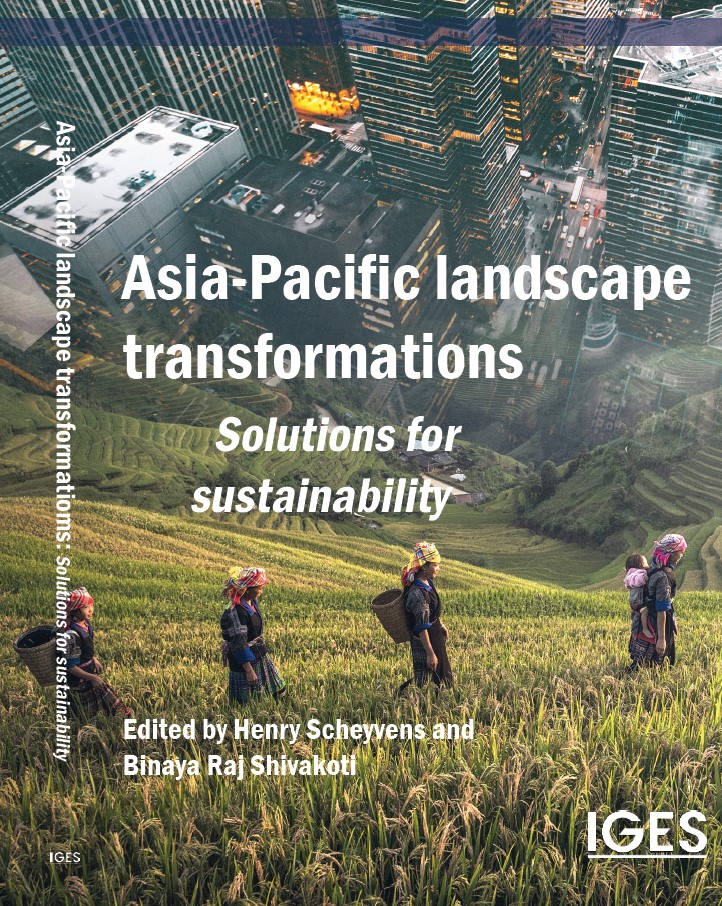
In Asia-Pacific Landscape Transformations: Solutions for Sustainability
Key messages - Inherent complexity in the Sustainable Development Goals (SDGs) is a barrier to their application to land management. A better conceptual understanding can guide governments and other actors in the Asia-Pacific region to develop a coherent view of how the SDGs apply to land. - Reorganisation of the SDGs and their targets related to...
Fact Sheet
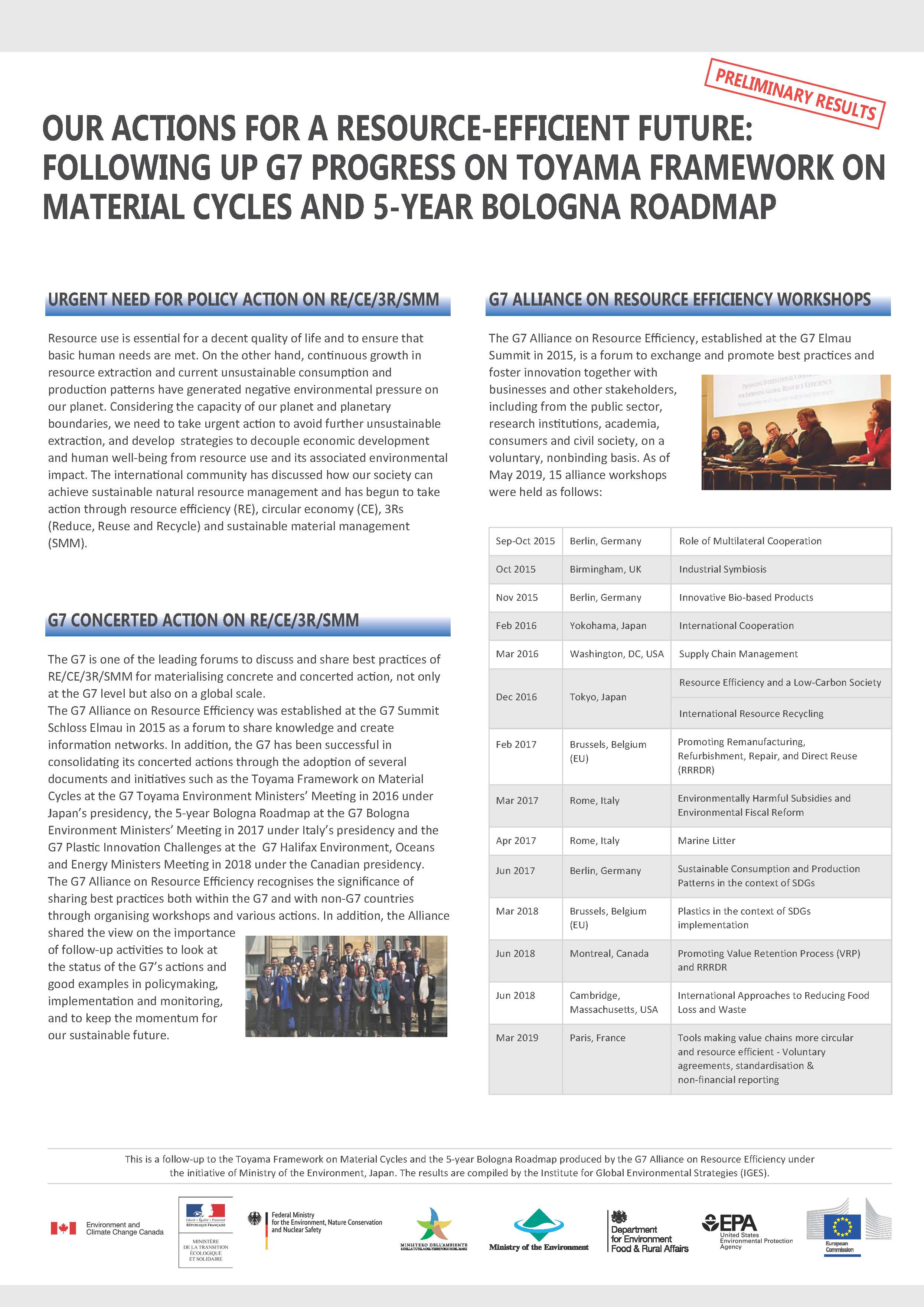
This factsheet was developed as a follow-up of the Toyama Framework on Material Cycles and the 5-year Bologna Roadmap produced by the G7 Alliance on Resource Efficiency under the initiative of Ministry of the Environment, Japan. The results were compiled by the Institute for Global Environmental Strategies (IGES). Full report on “Our Actions for a...
Book Chapter
In Global Environmental Outlook for Youth: Asia-Pacific
This Chapter highlights selected resilience and sustainability measures that can be implemented in cities and towns now to ensure that our communities, as well as future generations, will be able to deal with the difficult challenges our region faces. Sections 4.2 and 4.3 deal with building resilience of cities and towns to climate-related...
Book
The Asia-Pacific region faces a fundamental dilemma. Over recent decades the region has achieved tremendous economic growth that has lifted millions of its people out of poverty and raised living standards, but in many places the way land is being used to generate this growth is unsustainable. Land has been exploited – growing economies regardless...
Research Report
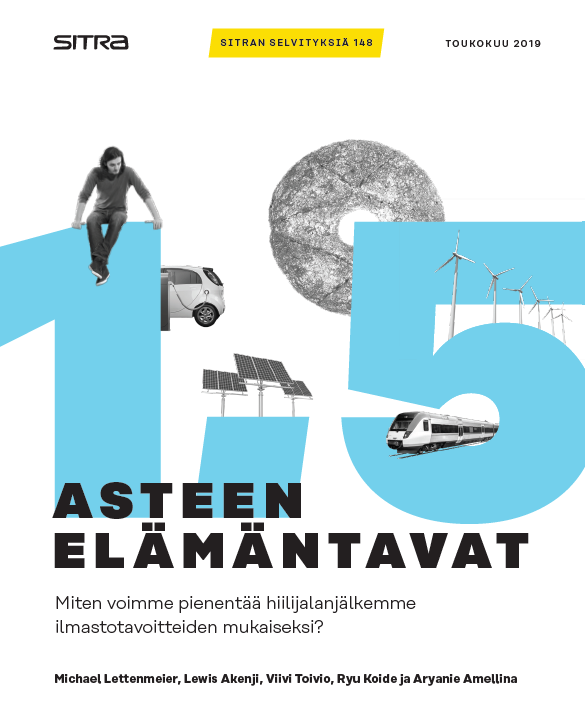
Tämä raportti ehdottaa hiilijalanjälkitavoitteita ja vaihtoehtoja sille, miten yhteiskunta voi elämäntapamuutosten kautta rajoittaa ilmaston lämpenemisen enintään 1,5 asteeseen Pariisin ilmastosopimuksen tavoitteiden mukaisesti. Sekä aihetta käsittelevä kirjallisuus että poliittinen päätöksenteko ja liike-elämä ovat toistaiseksi keskittyneet...
Policy Report
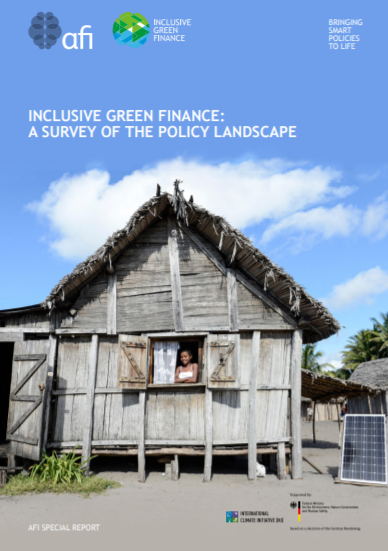
Climate change deepens poverty; whereas, researches have shown financial inclusion is one of the best ways to build resilience to the climate change effects. Inclusive green finance is an evolving policy area in which member institutions of the Alliance for Financial Inclusion (AFI) are beginning to implement policies, regulations and national...