

Results 1771 - 1780 of 5565 (Sorted by date)
Peer-reviewed Article
In Water Science
High fluoride (F−) groundwater causes fluorosis which might at severe stages lead to deformation of bones, bilateral lameness. The concentration of F− ranged from 0.4 to 4.8 mg/L. This study suggests that high HCO3 − and Na+ in alkaline medium along with water–rock interaction plays important role in enrichment of F− in groundwater. Na-HCO3 is the...
Peer-reviewed Article
In UNISDR Global Assessment Report 19
This paper presents results from a regional survey conducted on the globalization of local risks through investments in the vulnerable regions of Asia. Some countries that have been successful in attracting global investments in manufacturing and service industries are also highly vulnerable to natural hazard risks raising an important issue of...
Book Chapter
In Encyclopedia of the UN Sustainable Development Goals. Sustainable Cities and Communities
Urbanization plays a significant role in how the sustainable development goals (SDGs) can be achieved by countries and regions since they can deliver the benefits of SDGs to a relatively large number of people in a short period of time by concentrating efforts in relatively focused areas than the widely dispersed rural areas. With 55% of people...
Research Report
Climate change impacts on natural and human systems are increasing. Often affecting fragile economic, social and political systems, climate change is considered to be a serious ‘threat multiplier’. In this document, the risks on these existing systems are understood as climate fragility risks (CFRs). Considering CFRs in the development sector is...
Discussion Paper

Ecosystem-based (EB) approaches have been strongly promoted in various international environmental and development processes. As a result, they are gaining increasing attention among development practitioners, policymakers and researchers. A review of G20 national adaptation plans and related strategies revealed that member countries have...
Book Chapter
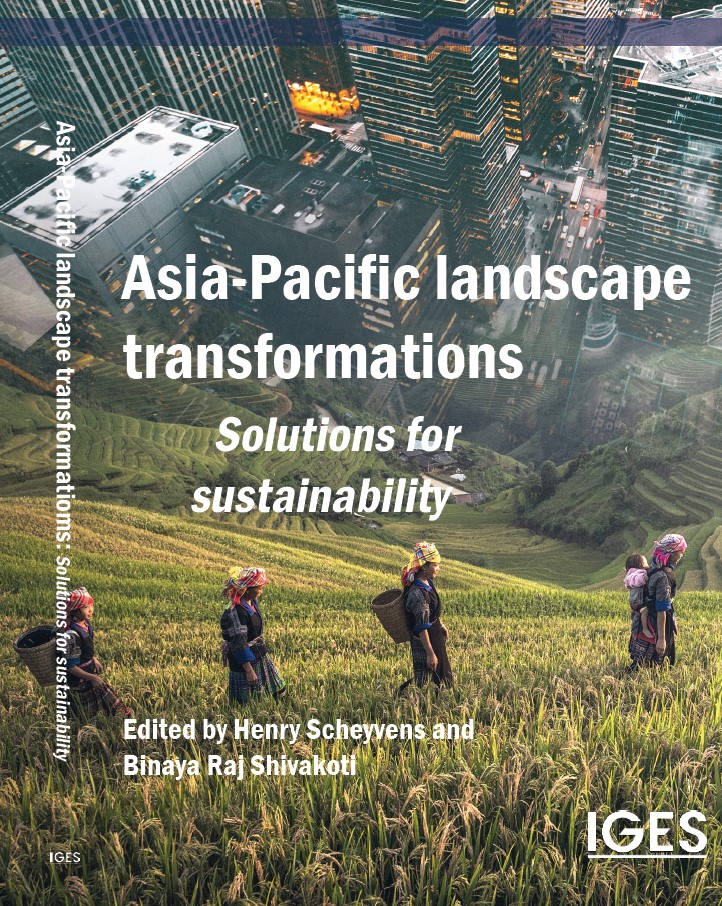
In Asia-Pacific Landscape Transformations: Solutions for Sustainability
Key messages - Inherent complexity in the Sustainable Development Goals (SDGs) is a barrier to their application to land management. A better conceptual understanding can guide governments and other actors in the Asia-Pacific region to develop a coherent view of how the SDGs apply to land. - Reorganisation of the SDGs and their targets related to...
Commentary (Op. Ed)

- The APFSD has grown into a useful multi-stakeholder platform for sharing experiences and networking around sustainable development. - It is important to examine whether stakeholder engagement provides meaningful space for the stakeholders and whether it is built on the “minimum requirement” of protecting and respecting human rights. - Subregional...
Book Chapter
In Asia-Pacific Landscape Transformations: Solutions for Sustainability
Key messages -If current processes impacting land continue, the region risks transgressing the boundaries of a “safe operating space”. -A vision of sustainable landscapes can guide policymaking and administration from regional to local levels towards more effective cross-boundary management of interdependent ecosystems. -Priorities for sustainable...
Fact Sheet
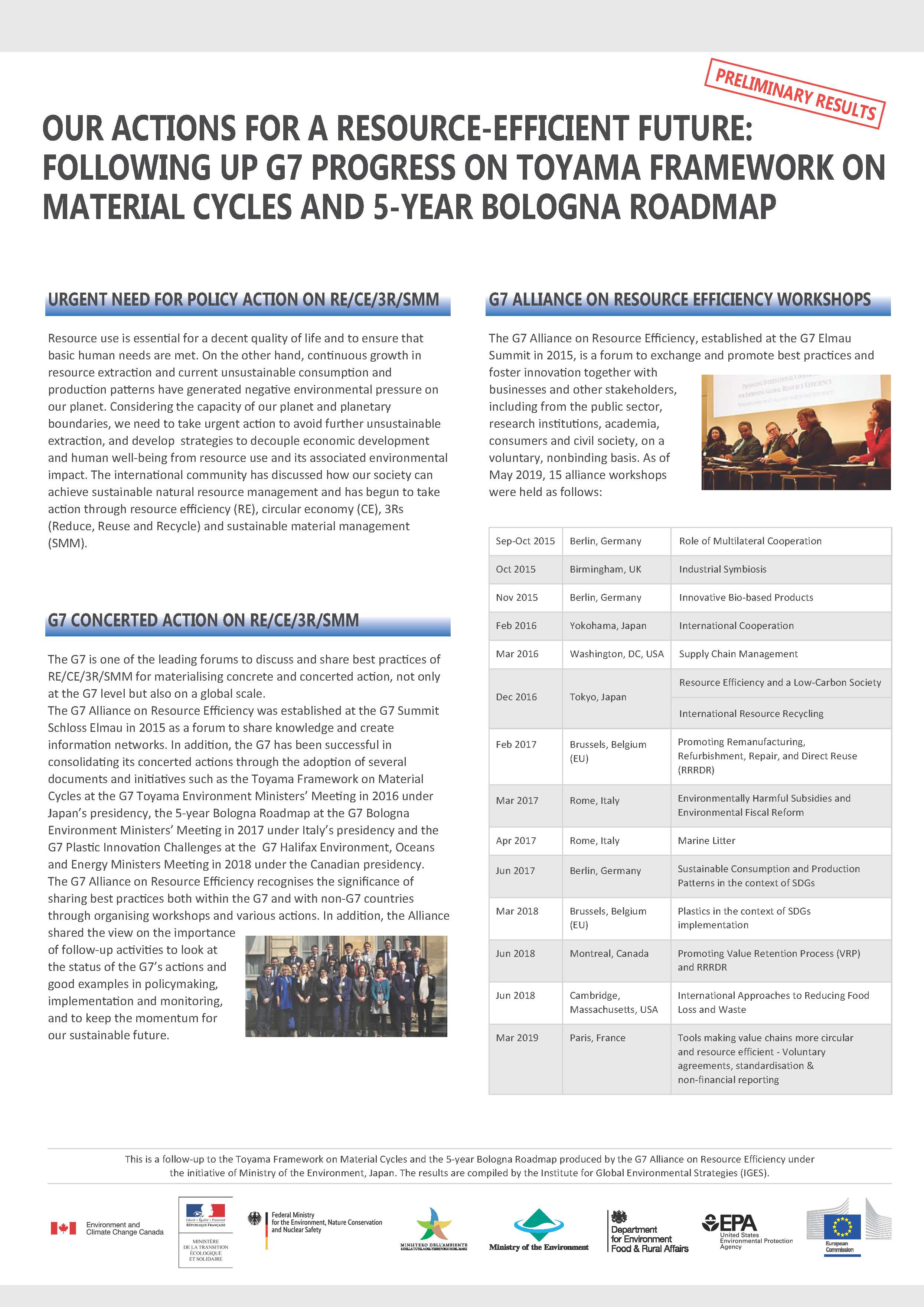
This factsheet was developed as a follow-up of the Toyama Framework on Material Cycles and the 5-year Bologna Roadmap produced by the G7 Alliance on Resource Efficiency under the initiative of Ministry of the Environment, Japan. The results were compiled by the Institute for Global Environmental Strategies (IGES). Full report on “Our Actions for a...
Book Chapter
In Global Environmental Outlook for Youth: Asia-Pacific
This Chapter highlights selected resilience and sustainability measures that can be implemented in cities and towns now to ensure that our communities, as well as future generations, will be able to deal with the difficult challenges our region faces. Sections 4.2 and 4.3 deal with building resilience of cities and towns to climate-related...