

Results 1801 - 1810 of 5565 (Sorted by date)
Non Peer-reviewed Article
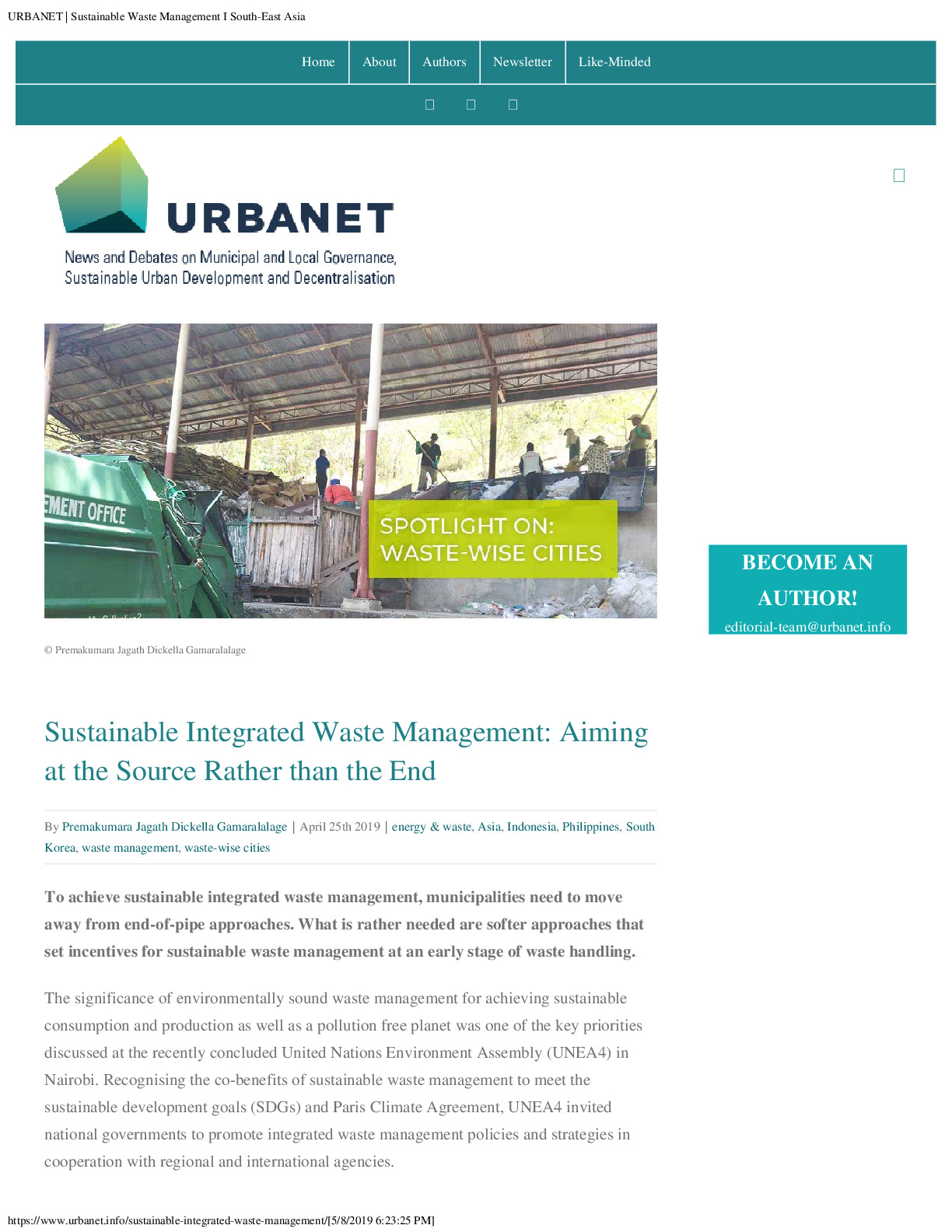
In URBANET
The significance of environmentally sound waste management for achieving sustainable consumption and production as well as a pollution free planet was one of the key priorities discussed at the recently concluded United Nations Environment Assembly (UNEA4) in Nairobi. Recognising the co-benefits of sustainable waste management to meet the...
Commentary (Op. Ed)

日本LCA学会誌
人間の福利を満たすレベルに充分な程度の経済発展や消費のあり方を希求する考え方。 持続可能性(Sustainability)に関連して充足性が議論される場合には、2つの大きな潮流がある。第1は、経済活動を際限なく拡大することへの反省を込めて、充足性が議論される場合である。ブータンの「Gross National Happiness」指標や、タイの「Sufficiency Economy(セータキット・ポーピアン)」の背景となっている。第2は、経済開発と資源利用ないしは環境負荷との「切り離し」に関する場合である。「切り離し」を実現する方法としては、これまで技術改良による効率性の改善が主流であったが、効率性の改善が消費や環境負荷の抑制につながらずに資源の総消費や環境負荷総量を高めてしまう...
Peer-reviewed Article
In Nature Sustainability
Sustainability and resilience for transformation in the urban century Remarks: DOI 10.1038/s41893-019-0250-1
Briefing Note
This briefing note provides a concise overview of the main outcomes of the Fourth United Nations Environment Assembly (UNEA4), held 11-15 March 2019 as well as an early discussion of its potential significance. The theme of this year’s meeting was “innovative solutions for environmental challenges and sustainable consumption and production”...
Training or Learning Material
Clean Air Asia (CAA) organised a training on the Guidance Framework for Better Air Quality in Mongolia to enable local-level air quality managers to implement strategies and programmes towards air quality improvement and climate change mitigation. To conduct the training, CAA invited IGES to deliver the co-benefits training for the representatives...
Peer-reviewed Article
In Applied Water Science
Achieving water security and availability for all is among the principle agenda of the UN Sustainable Development Goals. To achieve the goal of water security, particularly in rapidly expanding cities, identification of safe and sustainable water resources is an absolute necessity. The paper conducts an exploratory investigation in the...
Presentation
Japan-Europe Dialogue 2019
The slides were presented in the stakeholder workshop, Japan-Europe Dialogue 2019, held at YCU (Yokohama City University) in April 2019. This presentation tries to identify the current policy status of plastics/marine litter issues in the ASEAN region as an initial finding of the commissioned research project.
Policy Brief
T20 Japan Task Force 3: Climate Change and Environment
This policy brief suggests six priorities for developed and emerging economies represented by G20 countries to mainstream circular economy and society globally, as follows: 1) need to capture the momentum raised by public attention on marine plastic pollution; 2) raise the level of ambition of Extended Producer Responsibility; 3) provide policy...
Presentation
International Workshop on G20 Subsidies and Public Finance for Fossil Fuels
This presentation summarised the work experience from Japan case in G7 fossil fuel subsidy scorecard (https://www.odi.org/publications/11131-g7-fossil-fuel-subsidy-scorecard).
Conference Proceeding
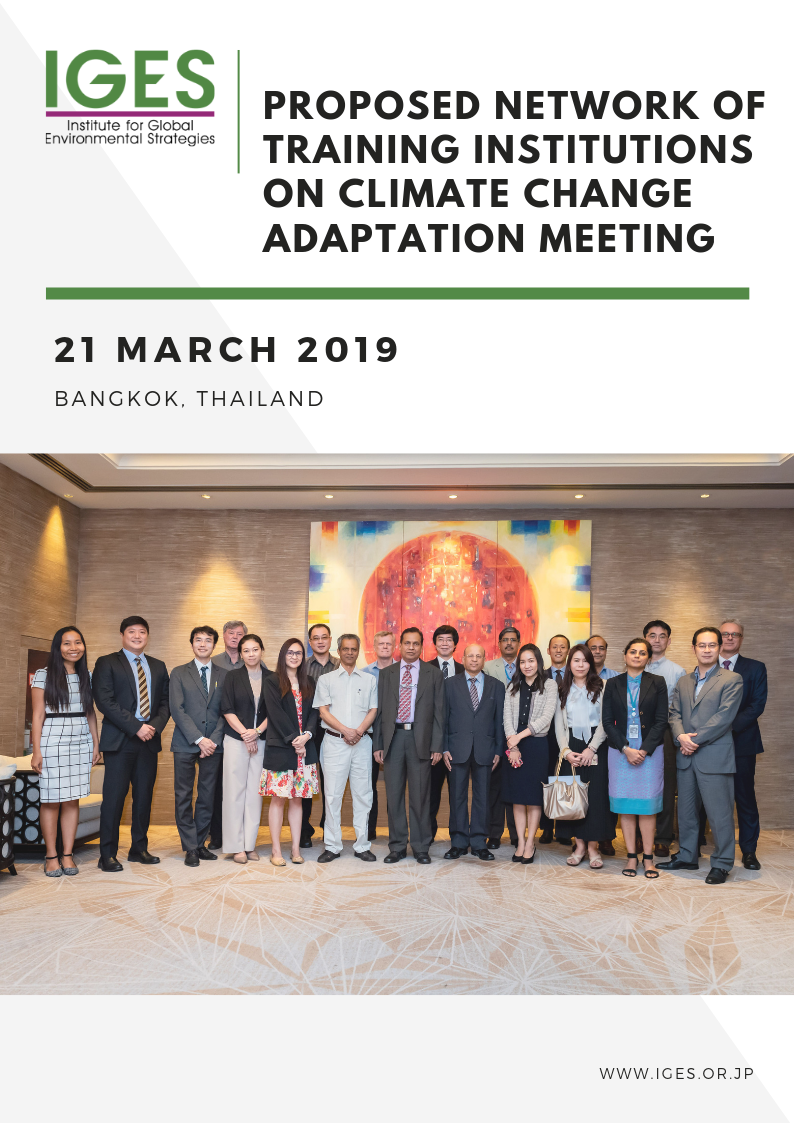
Despite the region’s vulnerability to climate change, there is a serious lack of capacity in Asia for developing quality project proposals for climate change adaptation that can attract financing, which largely hinders implementation of Paris Agreement and the 2030 Development Agenda. Capacity building programmes are needed so that local...