
Senior Research Manager
Research Topics & Areas of Expertise
Her current research is mainly on 3R policies and municipal solid waste management, food waste, single-use plastics, and sustainable food consumption and production in Asian countries.
Education
BS / Jul. 1994 Environmental Science of Nankai University, Tianjin, China
MD / Mar. 1998 Human and Environmental Studies of Kyoto University, Kyoto, Japan
PhD / Mar. 2001 Biosphere Informatics of Kyoto University, Kyoto, Japan
Results 21 to 30 of 122 (Sorted by date)
Presentation

The COVID-19 pandemic has led to an increased demand for SUPs that intensified pressure on an already out-of-control global plastic pollution. Asian cities are hotspots for tackling plastic issues for a number of reasons such as extensive coastline; rapid urbanization, rapid economic and population growth; fast growing of urban middle class...
Peer-reviewed Article
In Sustainability
The COVID-19 pandemic and the subsequent lockdown of cities have led to the rapid growth of online food delivery (OFD). Moreover, there are concerns that OFD platforms may impose offers on users in order to continue to increase their market share, leading to numerous environmental issues such as overconsumption and a significant increase in plastic...
Peer-reviewed Article
In Sustainability
Given the effort to reduce greenhouse gas (GHG) emissions, understanding the consumption patterns that facilitate and support changes is essential. In this context, household food consumption constitutes a large part of society’s environmental impacts due to the production and solid waste generation stages. Hence, we focus on applying the Life...
Policy Report
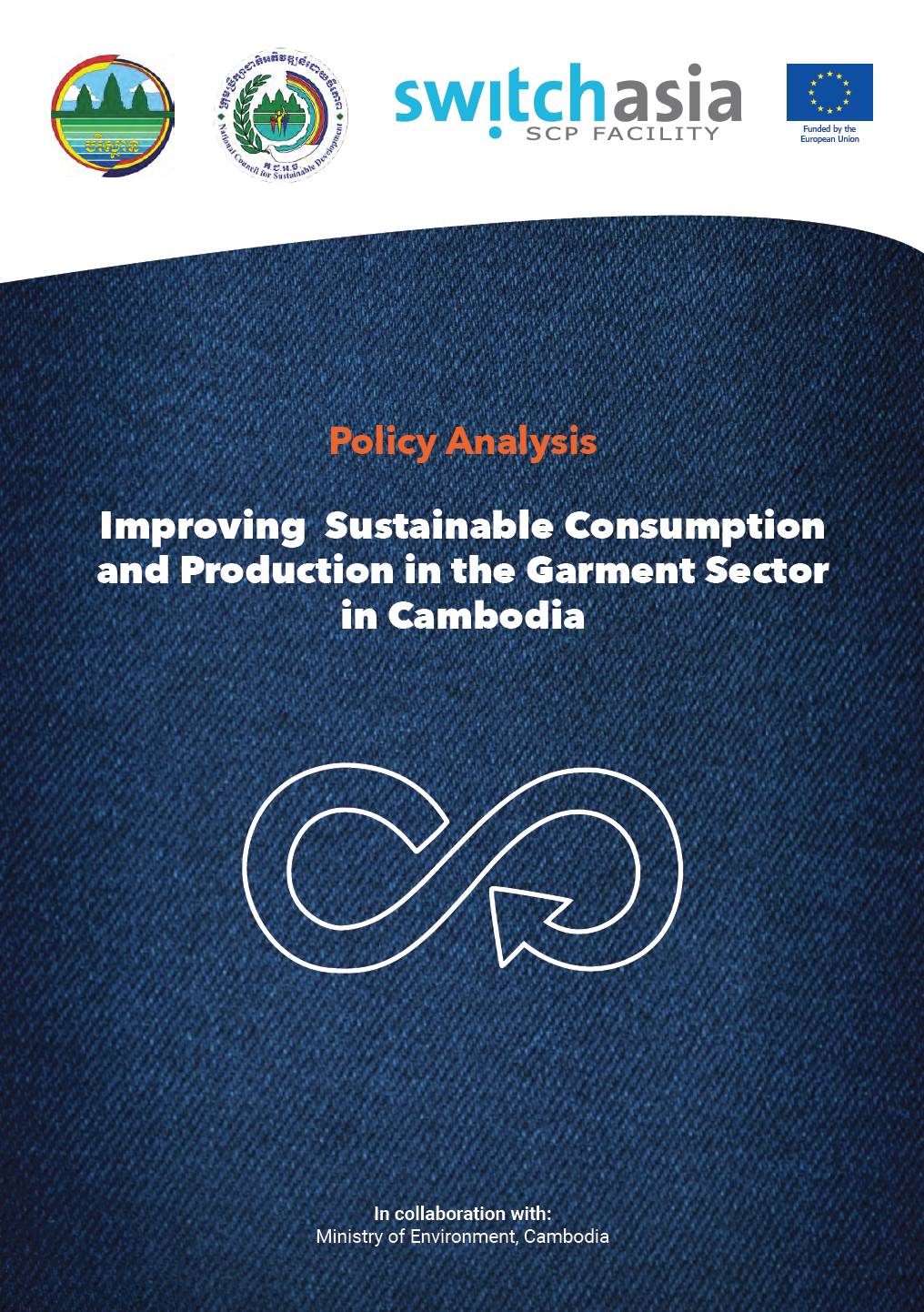
The objective of this report is to provide an analysis of the current policy environment for garment production in Cambodia, applying a systems lens to identify challenges and opportunities for enhancing the sustainability of the sector. To maintain the competitiveness of Cambodia’s garment sector in the global market, a shift to sustainable...
Book Chapter
In Food Loss and Waste Policy: From Theory to Practice
Reducing food loss and waste (FLW) has become a global issue. Japan was one of the first countries to address FLW issues by launching a policy initiative focused on FLW management in 2000. Since then, the amount showed a reduction, but this has levelled off in recent years. FLW remains a critical issue, owing to the country’s low food self...
Keywords:
Submission to Policy Process
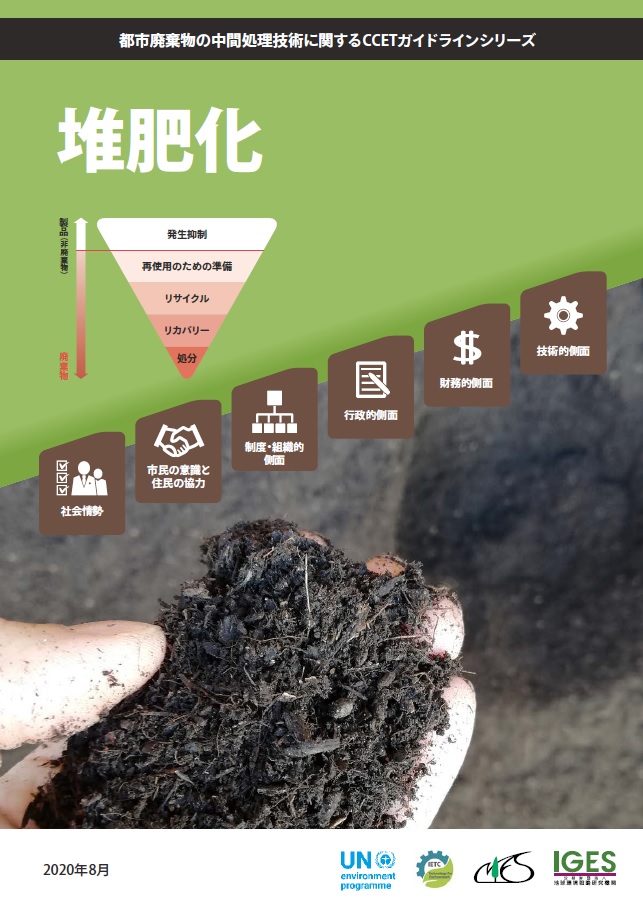
本ガイドラインは、アジアの開発途上国の都市を対象に、有機性廃棄物の発生源での分別と、都市廃棄物処理施設における好気性発酵による堆肥化の活用を図ることに焦点を当てている。 またこのガイドラインは、堆肥化の妥当性を検討するための技術的知見をほとんど、あるいは一切持っていない地方の政策立案者や意思決定者を対象に、廃棄物処理の改善に向けての適切な戦略の選択肢としての堆肥化の導入について、その実現可能性の評価を支援することを目的としている。 このガイドラインは、 (1)堆肥化についてその長所と短所、および持続可能な堆肥化の立案のための技術的および非技術的側面について必要となる諸条件を始めとする堆肥システムの全体像を説明し、 (2)堆肥化プロジェクトの導入可能性を検討するに際して...
Training or Learning Material
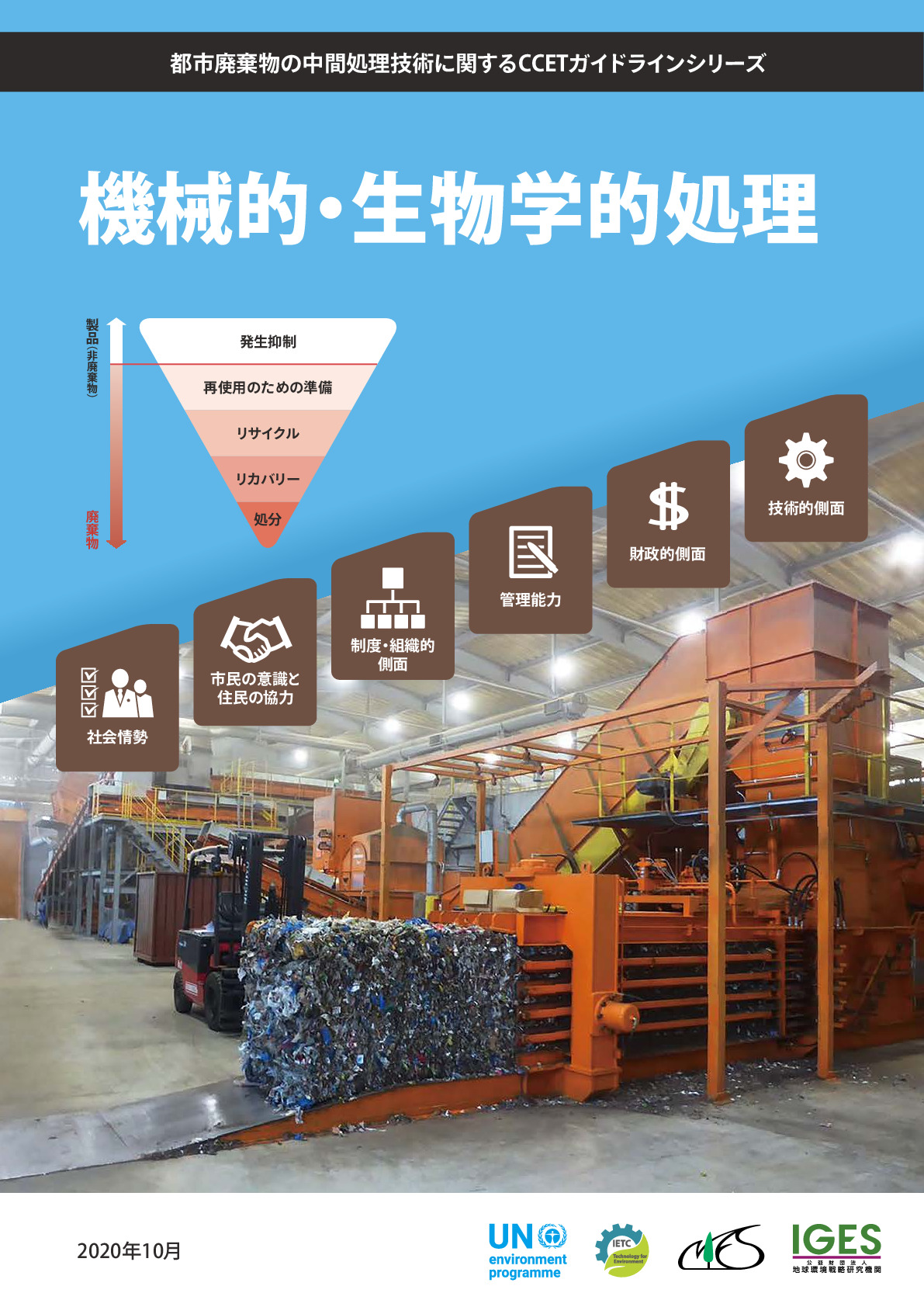
機械的・生物学的処理(MBT)は、投棄される廃棄物の量を削減するために埋立前に行う事前の処理手法である。MBTでは、文字通り機械的な破砕・選別プロセ スと、生物学的処理(好気性・嫌気性分解など)を組み合わせて処理を行う。MBTは、廃棄物処理という観点からは、系統的分別がされていない家庭から出る 未分別の廃棄物にも適用できるというメリットがある。MBT施設では、様々な目的のため多数のプロセスを様々な組み合わせで利用することができる。資源の観 点からは、廃棄物由来の固形燃料(RDF/SRF)の生産にもMBTを用いることができ、選別プロセスにより金属などのリサイクル資源を回収できるメリットもある。また、嫌気性消化によってバイオガスも回収できる。嫌気性消化プロセスによって生成される発酵残渣に加えて...
Submission to Policy Process
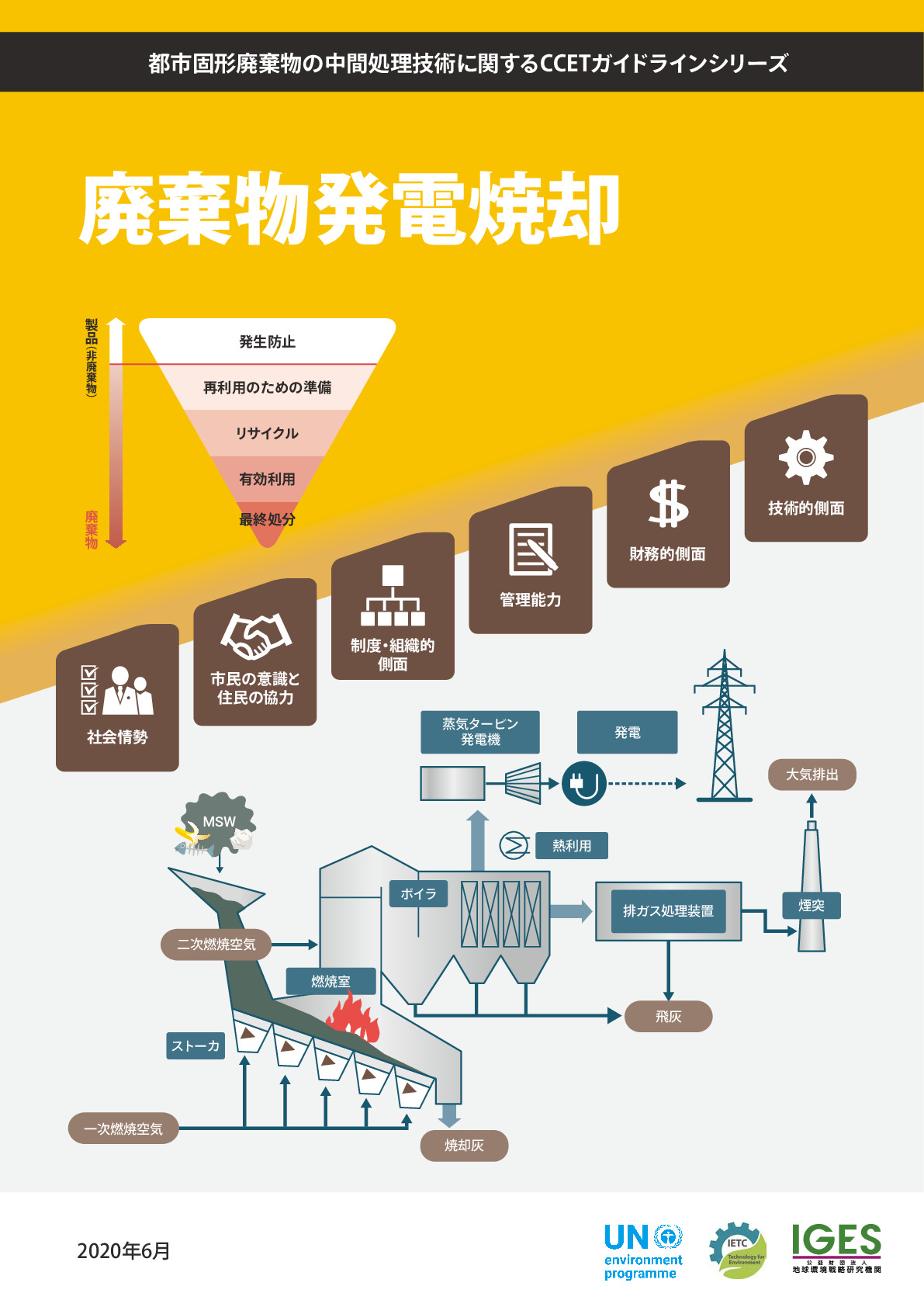
本ガイドラインは、アジアの開発途上国の都市において、主に家庭廃棄物と商業廃棄物であるMSWを対象とするWtE焼却技術に焦点を当てている。本ガイドラインは、WtE焼却について明確に理解する上で参考になる付加的な知識や情報を求める、国および都市レベルの意思決定者および政策立案者、住民やその他関係者が、廃棄物管理の改善に役立つ適切な選択肢としてWtE焼却技術導入の実現可能性について検討するのを支援することを目的としている。本ガイドラインは、 以下のことを提供する。 (1)WtE焼却技術を、そのメリットとデメリットを含め全体的に理解できるようにし、持続可能なWtE焼却プラントを計画する上での技術的および非技術的側面について説明する。 (2)WtE焼却技術の導入可能性を検討する際に...
Policy Report
![プラスチック・アトラス アジア [日本語特別版] 表紙](/sites/default/files/2022-05/%E3%83%97%E3%83%A9%E3%82%B9%E3%83%81%E3%83%83%E3%82%AF%E3%82%A2%E3%83%88%E3%83%A9%E3%82%B9%E6%97%A5%E6%9C%AC%E8%AA%9E%E7%89%88_1.jpg)
公益財団法人地球環境戦略研究機関( IGES )は、ハインリヒ・ベル財団、一般社団法人ゼロ・ウェイスト・ジャパンとのパートナーシップのもと、『プラスチック・アトラス 合成ポリマーの世界 ― 事実と統計 アジア [日本語特別版]』を発刊しました。 2019 年 11 月、ハインリヒ・ベル財団および Break Free From Plastic は、深刻なプラスチック汚染問題の背景にあるビジネスモデルや社会的仕組みなどを分析・考察し、簡潔かつ具体的な記述およびインフォグラフィックを用いて問題の本質をわかりやすく示した『 PLASTIC ATLAS 』を出版しました。 2021 年には、プラスチック生産・使用・廃棄に関して大きな役割をもつアジアに焦点を当て、地域特有の事情や課題に加えて...
Commissioned Report
本委託業務報告書は、以下の項目を取り扱う。 ①COVID-19からの社会転換の構築のための全国レベルの都市地域炭素マッピング手法と脱炭素化政策評価手法の開発 ②自治体のゼロカーボンシティ計画策定ニーズ・経済活動回復と脱炭素化を両立させるスマート社会実現方策の検討 ③大学・企業・自治体との連携による都市地域炭素マッピング等活用・連携体制構築 ④災害対策等にも汎用性があるゼロカーボンシティ計画策定のためのデータ整備
Results 1 to 1 of 1 (Sorted by date)
Project
Updated: March 2026
IGES Plastic Focus: Tackling Pollution and Advancing Circular Solutions
This special webpage highlights global developments in addressing plastic pollution, focusing on the growing importance of the circular economy as a solution. It also showcases IGES contributions to this agenda, including its environmental policy...