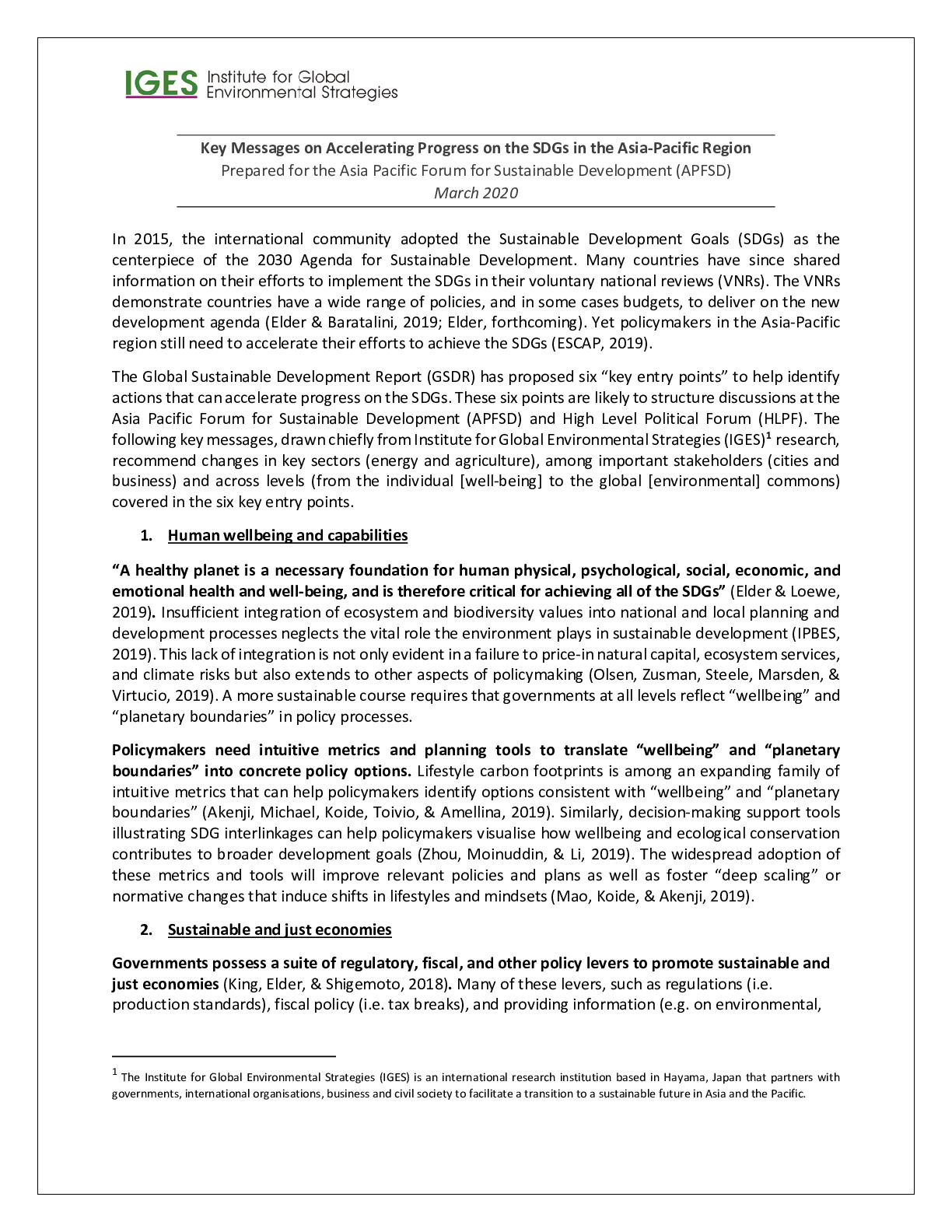
In 2015, the international community adopted the Sustainable Development Goals (SDGs) as the centerpiece of the 2030 Agenda for Sustainable Development. Every year the Asia Pacific Forum for Sustainable Development (APFSD) and High Level Political Forum (HLPF) offer an important opportunity to assess regional and global progress on the SDGs. The 14...

- Clear all
- Language: (-) English
- Publication Year: (-) 2020
Results 161 - 170 of 211 (Sorted by date)
In Plastic Waste and Recycling Environmental Impact, Societal Issues, Prevention, and Solutions
Eight of the world's top 20 countries as sources of marine debris are from Asia—China, Indonesia, the Philippines, Vietnam, Sri Lanka, Thailand, Malaysia, and India (Jambeck et al., 2015). In other words, the Asia-Pacific region is now recognized as a hotspot of plastic pollution of the oceans. These countries are facing typical challenges...
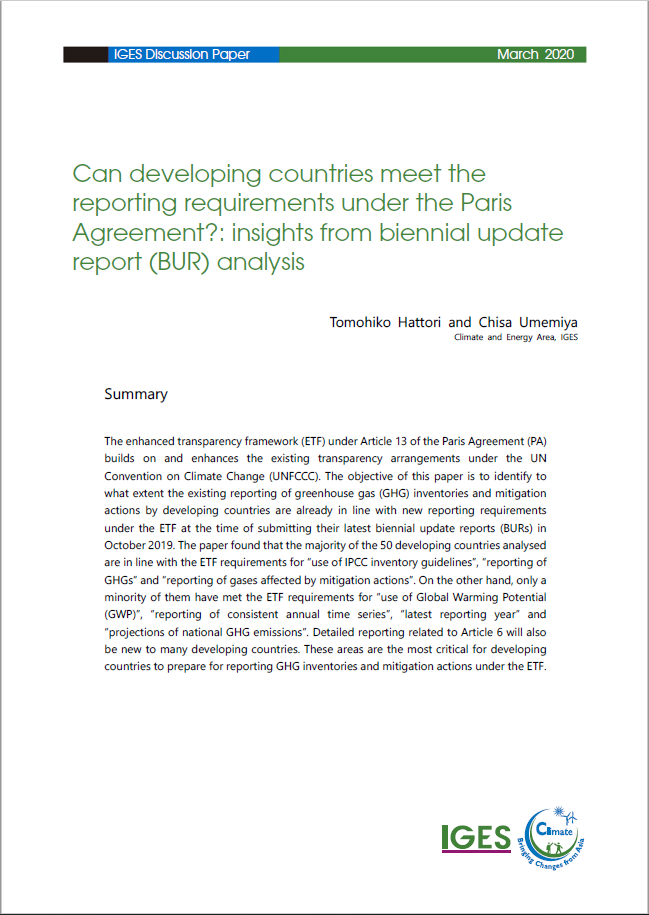
The enhanced transparency framework (ETF) under Article 13 of the Paris Agreement (PA) builds on and enhances the existing transparency arrangements under the UN Convention on Climate Change (UNFCCC). The objective of this paper is to identify to what extent the existing reporting of greenhouse gas (GHG) inventories and mitigation actions by...
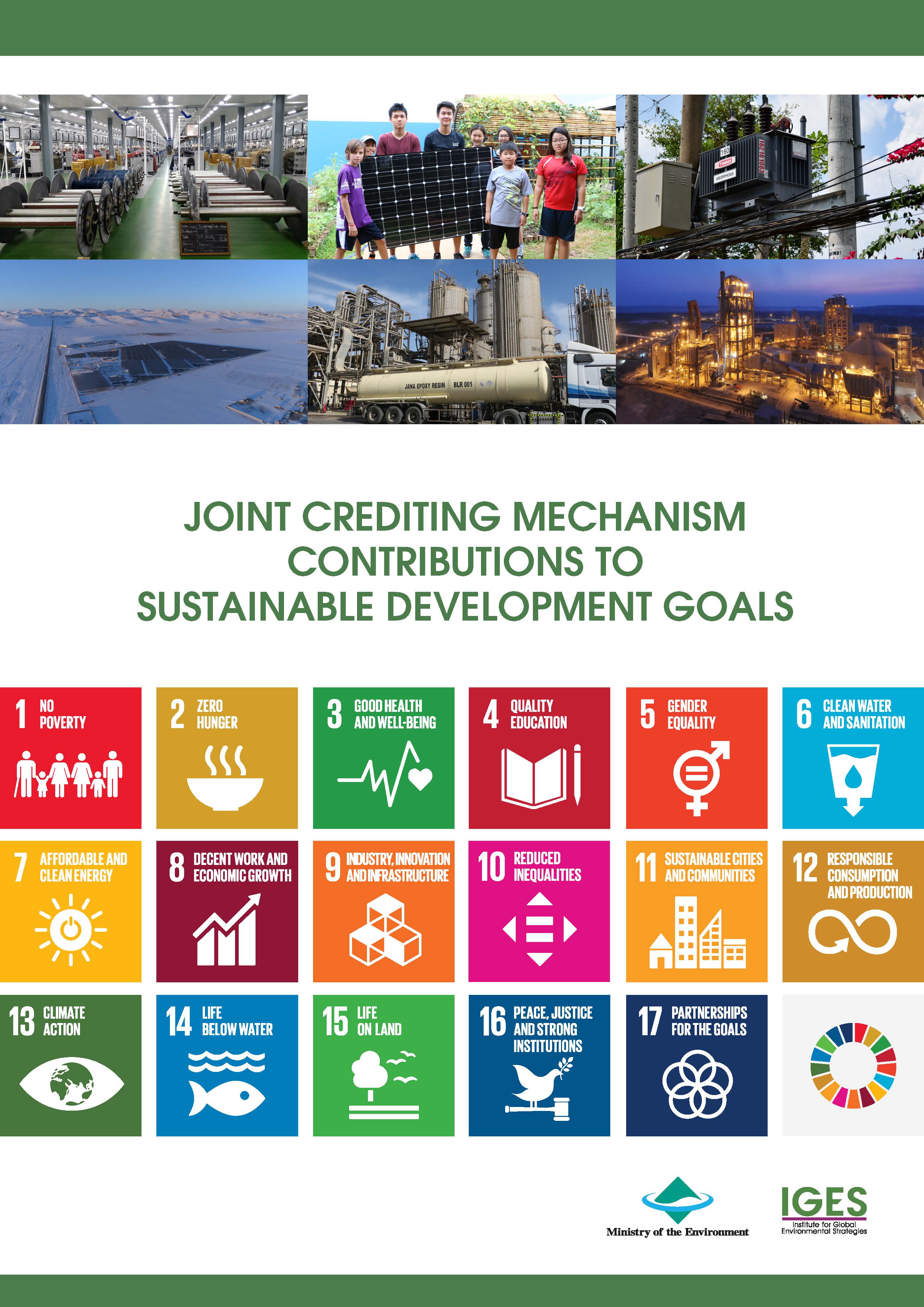
This report is the first publication to analyse the inter-linkage between Joint Crediting Mechanism (JCM) and Sustainable Development Goals (SDGs) and aims to clarify how the JCM contributes to SDG Goals and Targets. The JCM projects are mainly developed between a Japanese company and a local company in the partner country; therefore, we included...
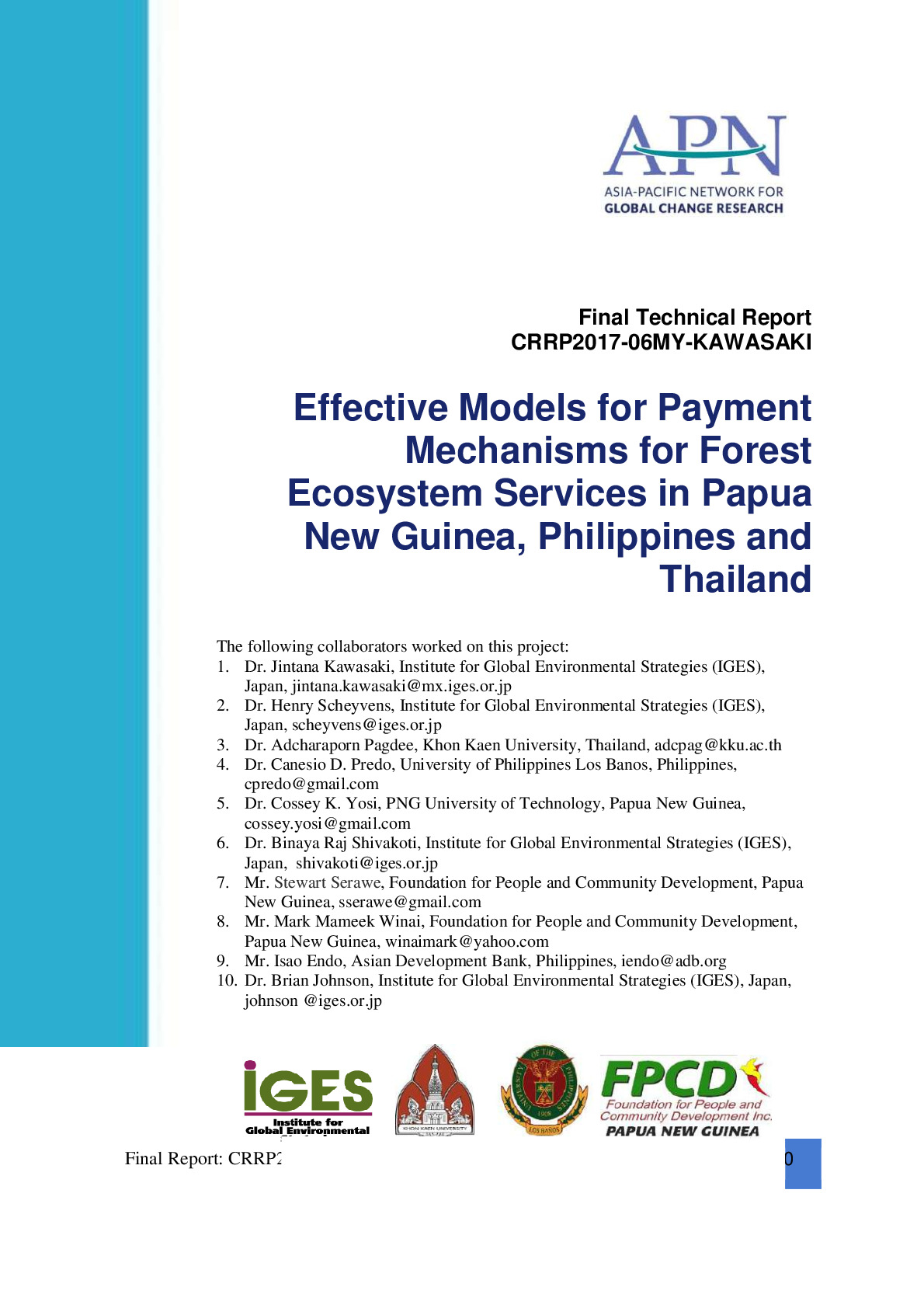
Although it is widely acknowledged that forests provide critical ecosystem services for human survival and well-being, in the Asia-Pacific region forests are being converted to other land uses and degraded at alarming rates. One underlying factor for this destruction of forests is market failure. Forests are cleared for other land uses or degraded...
In The Young Leaders in Sustainable Transport
This report was produced by Hirotaka Koike, a participant of the Young Leaders in Sustainable Transport in 2019. Advocacy must help convince key players, such as development agencies, NGOs, all levels of government, and the private sector, that sustainable transport has the true potential to change the current development trajectory. However, a...
This report is for FY2019 contract work with the Ministry of Environment, Japan as the Secretariat of the Asian Co-benefits Partnership (ACP) for the international partnership for promotion of co-benefits approach.
In MASHING UP
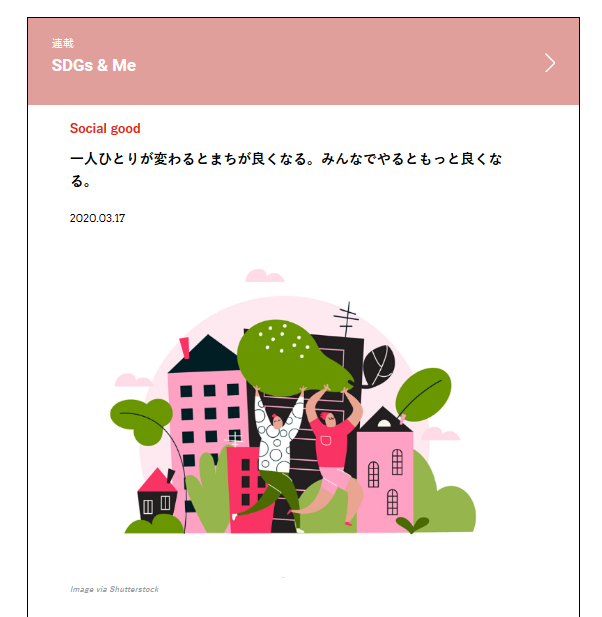
オンラインメディアで、女性から始めるダイバーシティをキーワードに、働き方やダイバーシティ、ジェンダー平等などを扱う記事などを載せているMASHING UPからの依頼に基づき、IGESでは、SDGs & Meという連載を展開しています。 本記事は、その一環として都市をテーマに、「一人ひとりが変わるとまちが良くなる。みんなでやるともっと良くなる」という切り口から個人がどう都市の持続可能性に貢献できるのか、取り上げました。
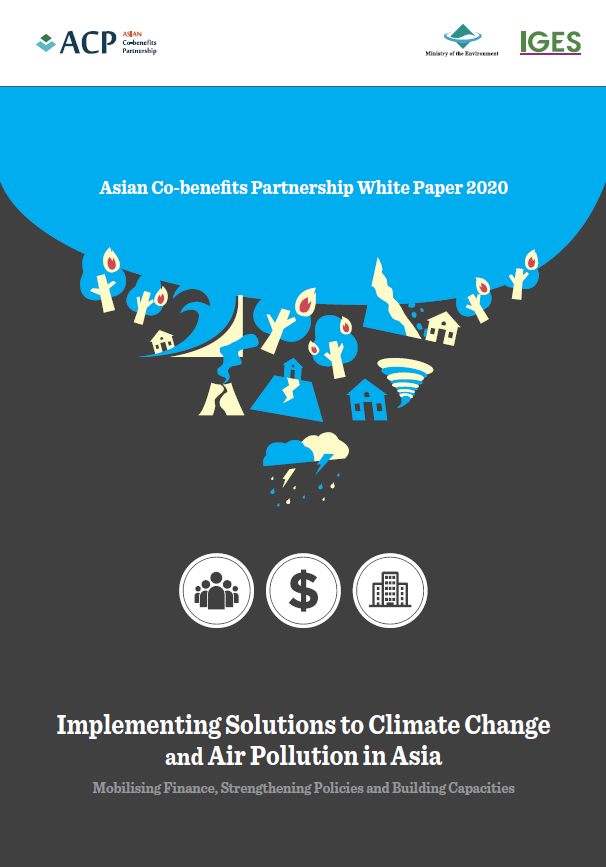
The ACP White Paper 2020 offers policymakers pragmatic recommendations on how they can mobilise finance, strengthen policies, and build capacities to implement at scale many of the 25 solutions in UNEP’s Air Pollution in Asia and the Pacific: Science-based Solutions.
In Managing Socio-ecological Production Landscapes and Seascapes for Sustainable Communities in Asia
This chapter contributes to improve an understanding of the effectiveness of different biodiversity science-policy interfaces (SPIs), which play a vital role in navigating policies and actions with sound evidence base. The single comprehensive study that was found to exist, assessed SPIs in terms of their ‘features’—goals, structure, process...